The diamond is one of the most requested tattoo shapes out there, and for good reason. It’s clean, it reads from across the room, and it carries real weight behind it. People aren’t just picking it because it looks good. They’re picking it because it means something.
a diamond tattoo stands for strength under pressure, value, and clarity. But like most tattoos, the meaning shifts depending on the person wearing it. This breaks down what that symbol actually carries, how people wear it, and what you should know before you sit down.
Core Symbolism: What a Diamond Tattoo Actually Means
The diamond is formed under extreme heat and pressure deep in the earth. That’s not just geology, that’s the whole point. Most people who get a diamond tattoo are marking a period of difficulty they came through harder and cleaner than before. It’s a survival symbol. Strength, resilience, unbreakable. Those are the words clients use when they walk through the door asking for one.
Beyond toughness, diamonds also represent clarity, purity, and high value. Some people connect it to self-worth: the idea that they are rare, that they don’t bend. Others tie it to loyalty and eternity, which is why diamond tattoos show up in couple and memorial pieces too. The symbol is versatile without being vague.
Historical and Cultural Background
Diamonds don't ask for pressure. They just outlast it.
Diamonds have been tied to power and royalty for centuries across Europe and South Asia. They adorned crowns, weapons, and religious objects. That association with prestige and incorruptibility runs deep in the cultural memory. When the symbol moved into tattooing, it carried those roots with it, especially in traditional and neo-traditional styles where bold outlined gems are a staple.
In playing card iconography, the diamond suit represents wealth and merchants. That reading shows up in tattoo culture too, particularly in old school flash and gambling-themed work. Some people in certain communities use diamond tattoos to signal loyalty or affiliation, though that meaning is highly context-specific and regional. If you’re not from that world, the symbol reads as personal strength, full stop.
Popular Design Variations
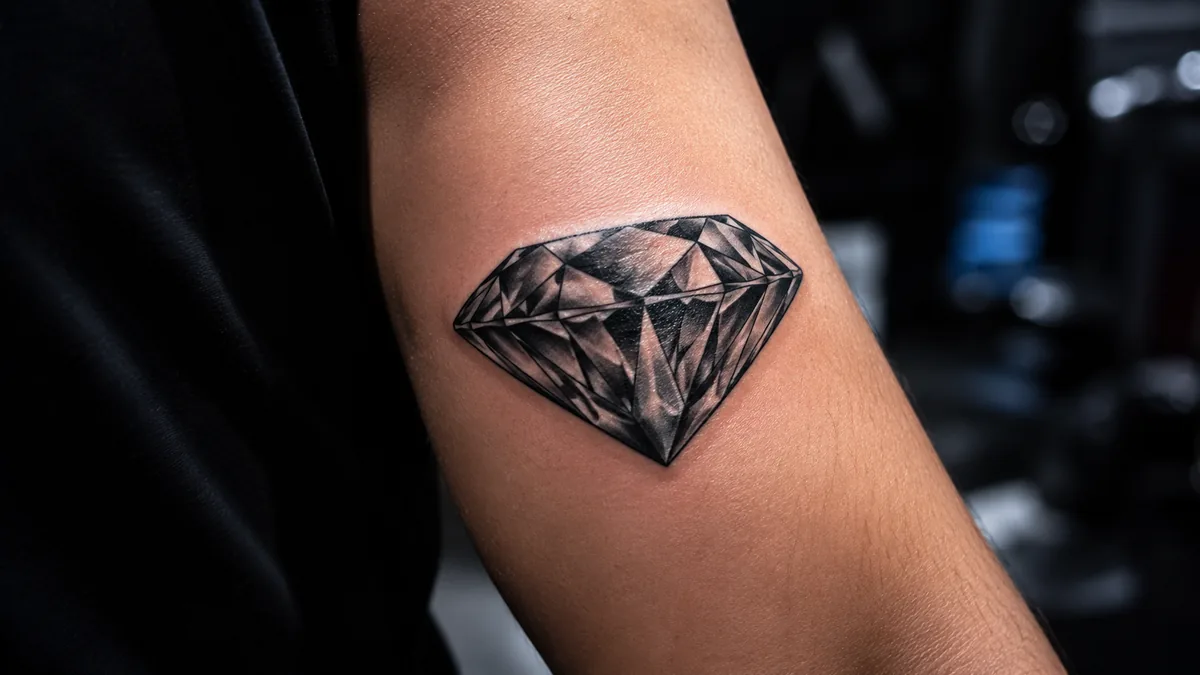
The classic faceted diamond outline is the most popular, and it works in almost any style. You’ve got the geometric version with sharp clean facets and bold lines, the old school version with thick black outlines and maybe a few solid color fills, and the fine line version with delicate strokes and minimal shading. Each one reads differently on skin. The geometric and old school versions age the best because bold will hold.
Some clients add elements inside or around the diamond: roses, flames, snakes, skulls, or a banner with a name or date. Others go for a cracked diamond, which shifts the meaning toward resilience after damage, beauty despite imperfection. Watercolor backgrounds behind a solid diamond outline give color without sacrificing the structure. A diamond with an eye inside it pulls in themes of vision, watchfulness, and protection.
Color vs. Black and Grey
Black and grey diamond tattoos are timeless. A solid black outline with whip shaded interior, or a fully negative space diamond that lets the skin do the work, both look sharp and age predictably. Black ink on a diamond heals nice and stays crisp for years, especially in a low-wear placement. If you want dimension without color, a skilled artist can pack in grey tones to simulate the facets catching light.
Color diamonds are a different conversation. Saturated jewel tones like sapphire blue, emerald green, ruby red, or classic white-and-clear highlights can look stunning fresh. The catch is that color fades faster than black, and the skin tone of the client matters a lot for how vivid those colors read. Pale pinks and light yellows lose the battle with time. If you’re going color, go bold and saturated, and budget for a touch-up down the line.
Best Placements and How It Ages
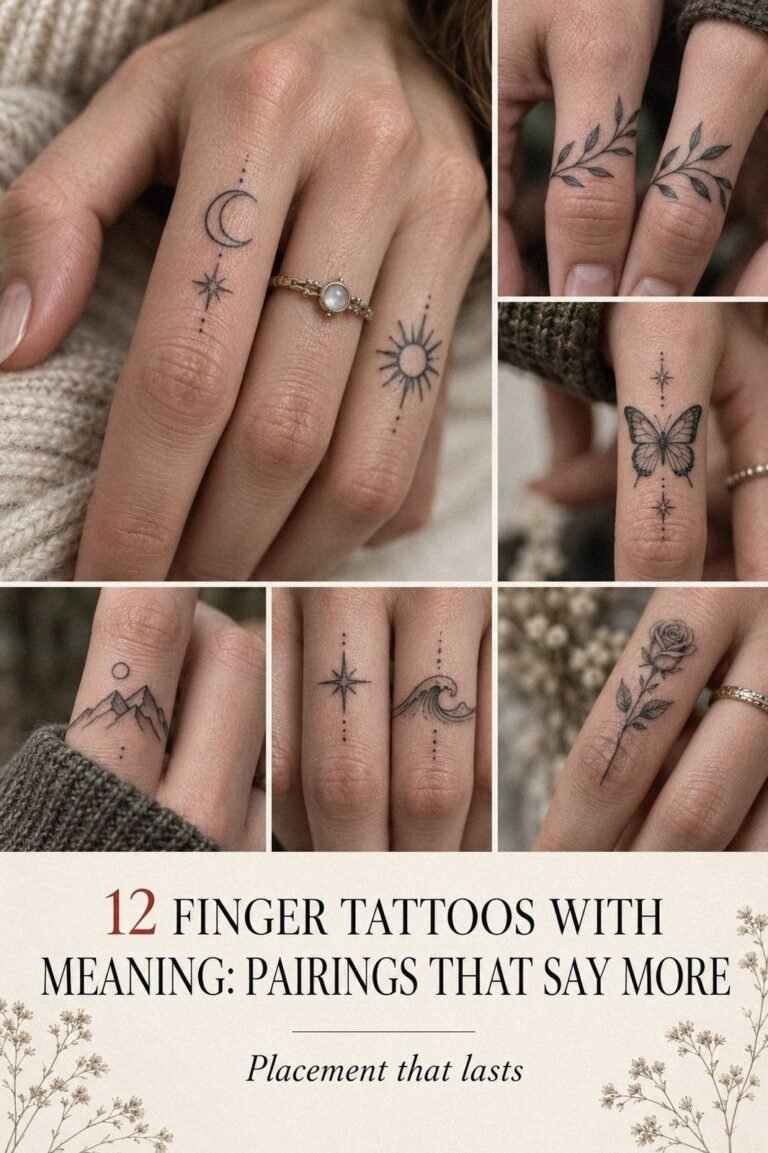
The diamond shape is versatile for placement because of its symmetry. Forearm, upper arm, chest, and calf are all solid choices. It reads clearly at most sizes and the geometry holds up well in those zones. Behind the ear and on the finger are popular for small fine line diamonds, but be real with yourself: fingers are high-wear and blowout is a genuine risk, especially with fine line work. A finger diamond will need refreshing.
The sternum and throat are popular for diamond tattoos right now, and they photograph well. Pain-wise, the sternum is spicy, the throat is not for the faint of heart. Knee and elbow ditches are some of the most painful spots on the body and the skin there moves constantly, so expect some spreading over time. Ribs are another spicy zone. For longevity and clarity, the upper arm and thigh are your best friends.
Style Pairings That Work
Geometric tattoo style was basically made for diamond shapes. Clean ruled lines, precise facets, sharp points. It suits people who want something structured and modern. Neo-traditional gives you thick outlines with illustrative depth, saturated color, and a sense of weight that reads strong on larger pieces. Fine line is trending hard right now and diamonds look delicate and elegant in that style, though they demand a skilled hand to stay clean as they heal.
Old school or traditional diamonds are a classic flash staple. Bold black outlines, limited palette, graphic and simple. They hold their shape over decades better than almost any other style. Blackwork diamonds, fully packed solid black with negative space details, look aggressive and bold. Realism-inspired diamonds with light refraction rendering are impressive when done right but require an artist who genuinely specializes in that technique. Do your portfolio homework before booking.
Who Gets Diamond Tattoos and How to Make It Personal
Diamond tattoos cross every demographic. Women get them, men get them, every age. They’re common in memorial pieces honoring someone lost, in couple tattoos marking a relationship, and in milestone pieces marking a hard chapter survived. The symbol is broad enough to hold a personal story without needing explanation, which is part of the appeal. You can wear it and know what it means to you without having to explain it to strangers.
To make it personal, think about what pressure you came through and let that guide the design choices. A cracked diamond says something different than a perfect one. Adding a specific gemstone color tied to a birthstone connects it to a person. A banner with a date or single word anchors the meaning. Talk to your artist about placement relative to other tattoos you have. A diamond dropped into an existing sleeve reads differently than a standalone piece on a bare arm. Context matters.