
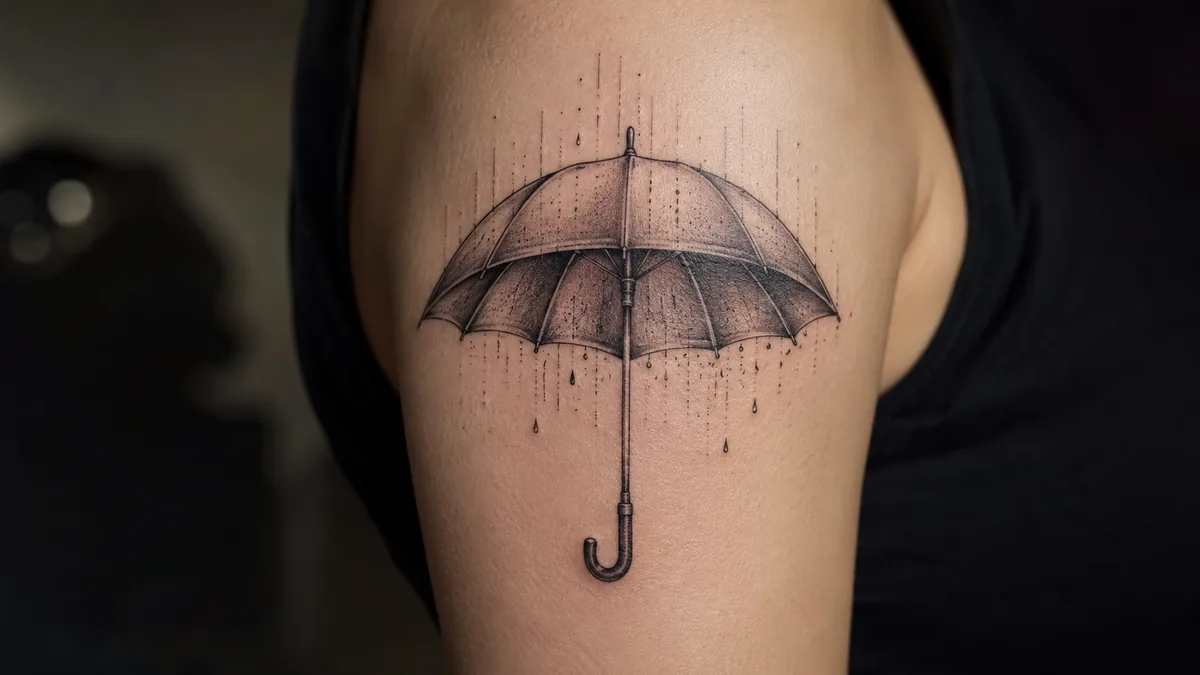
The umbrella tattoo is one of those designs that looks simple from across the room but carries a lot of weight. it’s about protection. Sheltering yourself, sheltering someone you love, being prepared for whatever gets thrown at you.
People get this one for a dozen different reasons, and almost all of them are solid. Some are grieving. Some are celebrating resilience. Some just love the aesthetic and the layered reads it offers. Whatever the reason, the symbolism holds up well on skin.
Core Meaning: Protection and Preparedness
The number one thing an umbrella tattoo means is protection. An umbrella exists to shield you from the storm, full stop. On skin, that translates to a personal symbol of being someone who prepares, who guards, who stands between loved ones and whatever is falling from the sky. It’s a quiet kind of strength, not loud or aggressive, just steady.
Preparedness is the other read. The person who always has their umbrella is the one who thought ahead. Clients who get this tattoo often describe themselves as the planner, the protector in their family or friend group. The one people call when things go sideways. That identity reads clearly in this design.
Resilience and Weathering Hard Times
You do not get an umbrella tattoo because life is easy.
Beyond just shielding others, the umbrella represents surviving your own storms. A lot of clients book this piece after a rough chapter: illness, loss, a relationship collapse, a mental health crisis they came through. The umbrella says, the rain hit me hard and I’m still standing. That’s not a small thing to put on your body.
Open umbrella facing up implies you caught what came down and held it. Tilted or held at an angle in the wind reads more like active struggle, fighting through rather than just enduring. Both are valid reads. Talk to your artist about posture and angle because those small choices change the entire emotional tone of the piece.
Solitude, Mystery, and Hidden Depth
There’s a melancholy angle to the umbrella tattoo that shows up a lot in fine line and black and grey work. An umbrella in the rain, no figure visible beneath it, reads as solitude. Not necessarily loneliness, but chosen aloneness. Introspection. The kind of person who processes things quietly and doesn’t need the whole room to know their business.
This mystery read comes partly from pop culture and partly from the visual itself. An umbrella obscures the person under it. It’s a natural symbol of privacy, of guarding your inner world. People who are deep, who feel misunderstood, who value their interior life often connect with this. It’s a more nuanced personal statement than it looks.
Cultural and Historical Context Worth Knowing
In many Asian cultures, especially Japanese and Chinese, the umbrella or parasol carries meaning around status, elegance, and protection from both sun and evil. Parasols appear frequently in traditional Japanese imagery, associated with geisha, nobility, and ceremony. If you’re going for a Japanese-influenced piece, those connotations are real and recognized.
In Western symbolism, umbrellas became tied to resilience and practicality during the Victorian era when they became everyday carry items for the middle class. The phrase ‘saving for a rainy day’ lives in the same symbolic family. More recently, the black umbrella became a symbol in Hong Kong protest movements, representing defiance and shielding from authority. Know your reads before you commit.
Design Variations: What Different Styles Communicate
Open umbrella is the most common. Clean, reads immediately, positive protection energy. Closed or folded umbrella has a more dormant, patient feel. Umbrella with rain falling is dramatic and emotional, hits hard in black and grey with whip shading on the raindrops. Umbrella with flowers, birds flying out, or butterflies underneath signals transformation, beauty surviving the storm, new life after hardship.
Fine line umbrellas look delicate and elegant, good for wrist or collarbone placements, but they require a steady hand and will need a touch-up down the road. Traditional or neo-trad umbrellas with bold outlines and saturated fills age like iron, especially if you keep them out of high-sun zones. Japanese-style parasols with florals and geometric backgrounds are a full-session piece but they’re stunning.
Color vs. Black and Grey
Black and grey is the dominant choice for umbrella tattoos and it makes sense. The mood this design usually carries is reflective, quiet, a little melancholy. Black and grey with smooth gradients and soft whip shading on rain or background clouds nails that tone perfectly. It heals clean, ages well, and reads from across the room without losing detail.
Color opens up a different lane. A bright red or yellow umbrella against a grey rainy background is a classic visual contrast that pops hard and communicates optimism, a point of warmth in a cold scene. Watercolor-style umbrellas look great fresh but be aware they can fade and blur faster than traditional saturated work. Your artist should be honest with you about longevity based on your skin tone and the specific technique.
Best Placements and How It Ages
The umbrella shape is naturally vertical with a curved top, which makes it versatile. Forearm, upper arm, and calf are the most common placements. It fits the forearm length well, stays readable, and those zones are low-wear with consistent skin texture. Inner arm placements look incredible but are a little spicy on the pain scale and see more friction from daily movement.
Avoid placing fine line or detail-heavy umbrella pieces in high-wear zones like fingers, hands, feet, or the inside of elbows. Those spots eat ink fast and blowout is a real risk with intricate work. A bolder, simpler umbrella outline with minimal internal detail will hold in trickier placements. Anywhere you get consistent sun exposure, commit to SPF after healing or the piece will fade faster than you want.
Who Gets This Tattoo and How to Make It Yours
This piece attracts a wide range of clients, caregivers, survivors, introverts, people who’ve been through it and come out the other side. Parents get it representing their role as protector. Nurses and social workers get it for the same reason. People coming out of depression or addiction get it as a marker of resilience. It’s a meaningful tattoo that doesn’t need to announce itself loudly.
To make it personal, add elements that anchor it to your story. A name or date worked into the handle. A specific flower tucked into the scene that means something to you. Rain with a break in the clouds above. Your artist can help you build a concept that goes beyond the stock design. The more specific you get, the more the piece belongs to you and nobody else.









