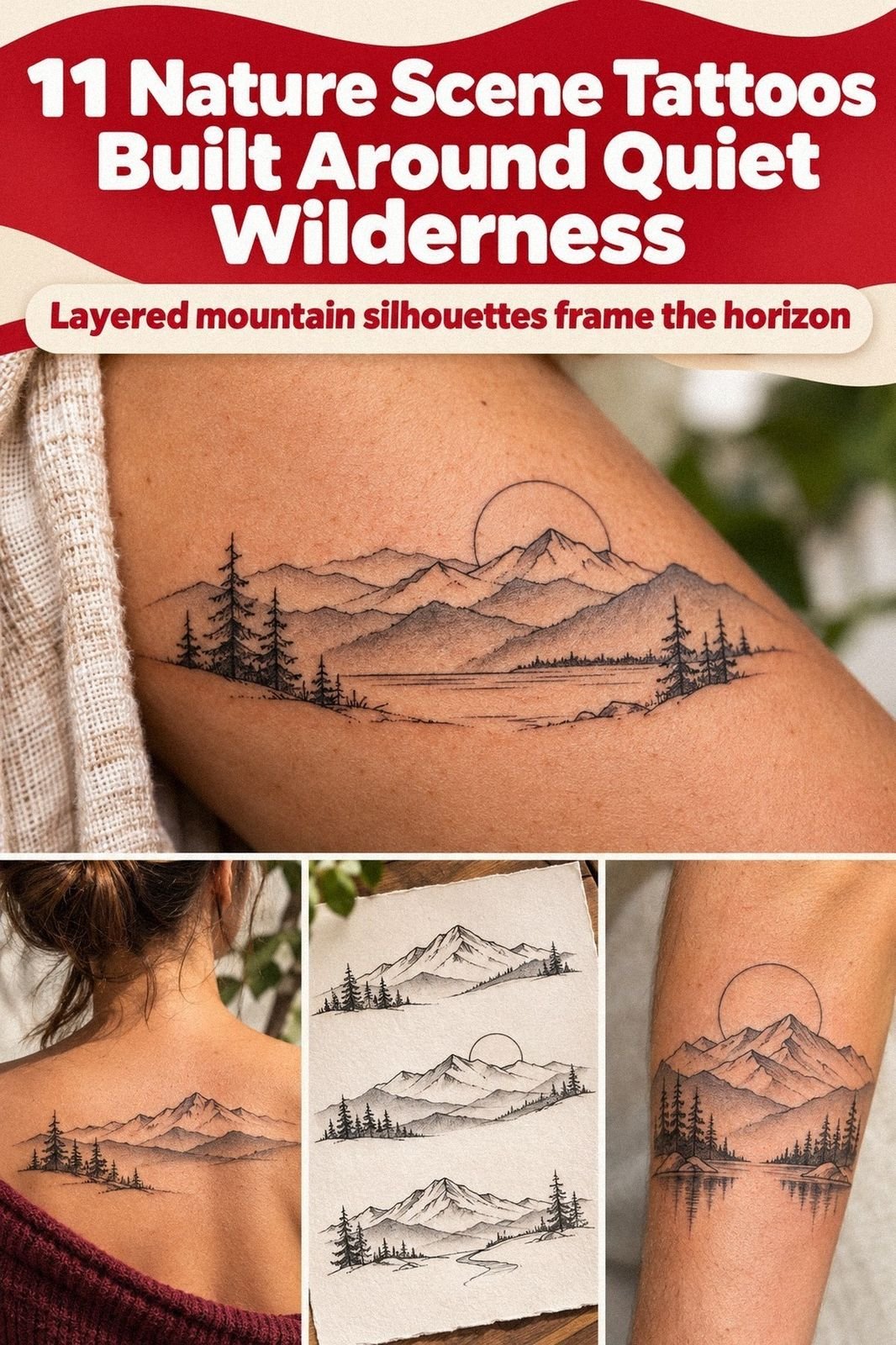
Nature scene tattoo designs can hurt less in one sitting when you choose a compact ankle or forearm piece, keep the session focused, and avoid the ribs, feet, hands, and sternum. I learned that after making my first design too detailed for its size. These ideas keep the linework crisp, personal, and easier to plan. Start here!
Editor’s note: The most successful nature tattoos usually have one clear focal point, enough breathing room, and a placement you can tolerate. A meaningful design doesn’t need to be enormous to feel powerful.
- Minimal Mountain Linework Nature Scene Tattoo: Follow the Horizon
- How Can a Watercolor Forest Stay Clear?
- Build a Botanical Horizon Around One Stem
- Blackwork Woodland: Let Contrast Win
- Behind the Ear, Start With Three Lines
- The Geometry Window: Frame the Landscape
- Which Moonlit Lake Details Should Stay?
- Fine Line Ribs: Leave the Horizon Open
- Choose Color Over Blackwork for a Wildflower Valley
- Stack Animal Silhouettes Into a Sleeve
- Negative Space: Let the Skin Speak
1Minimal Mountain Linework Nature Scene Tattoo: Follow the Horizon
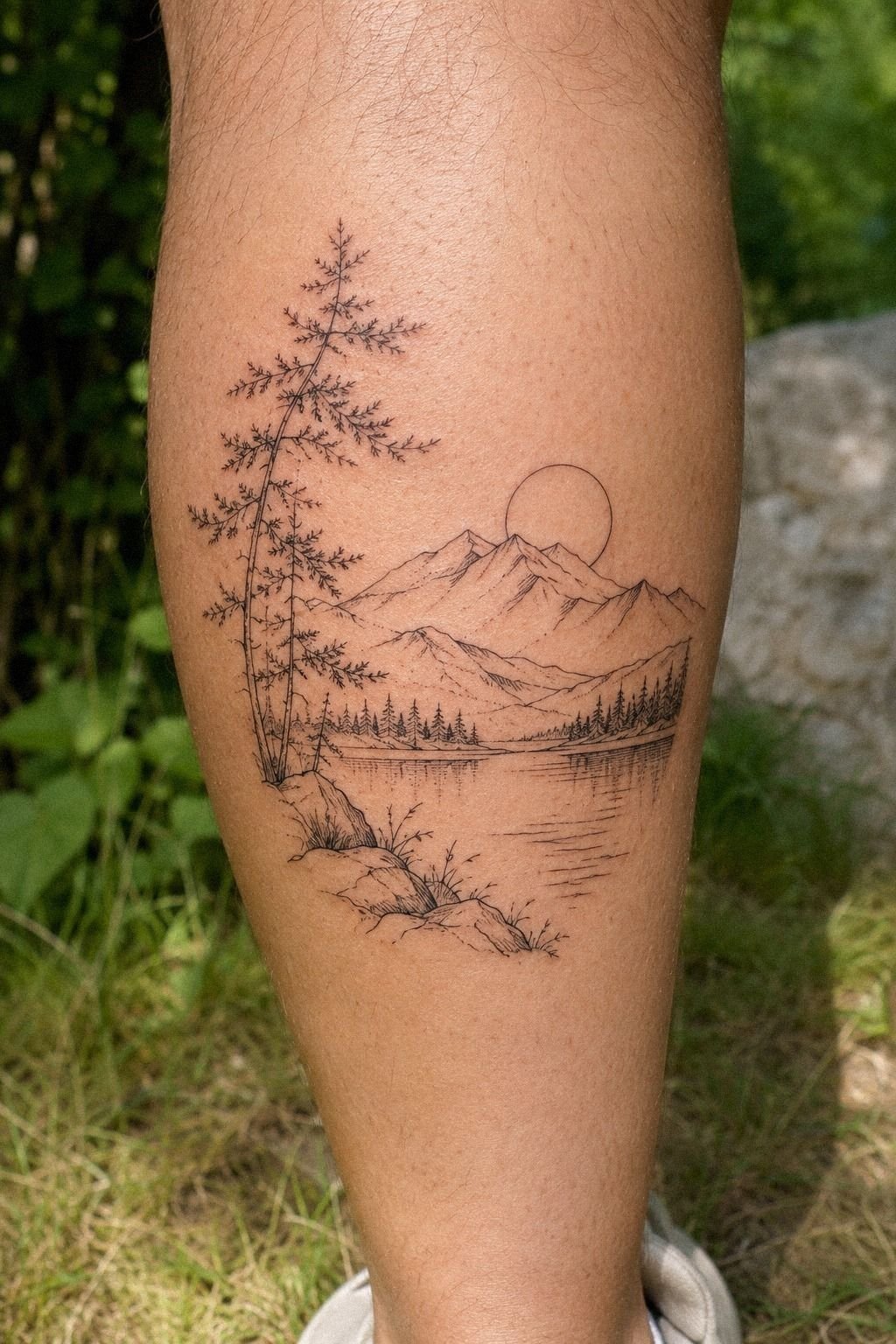
A minimal mountain outline on the ankle works because the design has a clear visual limit. The single-needle black linework reads cleanly when the narrow mountain range follows the ankle without wrapping too far around it. If you want a nature lover tattoo with personal meaning, choose one ridge connected to a real place.
Keep the peaks uneven. Perfect symmetry makes the piece look stiff, while three slightly different summits create an organic rhythm. I’d skip tiny trees packed beneath every peak because they’ll blur as the tattoo ages.
Your artist can leave open skin between the ridge and the ankle bone, which may make the appointment more manageable. A compact ankle placement can also keep the overall cost within a modest budget.
A small needle configuration can create this hair-thin effect, but your artist should decide the setup after seeing your skin and final size. You’ll want the mountain large enough for the lines to breathe. Minimal doesn’t mean careless.
For styling, choose a crisp horizon, one low sun, and no unnecessary shading. The result feels understated but still striking. You can pair the idea with a meaningful symbol from our Yggdrasil tattoo meaning guide if your mountain represents family roots.
The ankle is visible, so think about your daily routine before booking. If you’re in sandals often, sunscreen matters after healing. A slightly larger mountain may be worth the cost if it keeps the design readable for years.
2How Can a Watercolor Forest Stay Clear?
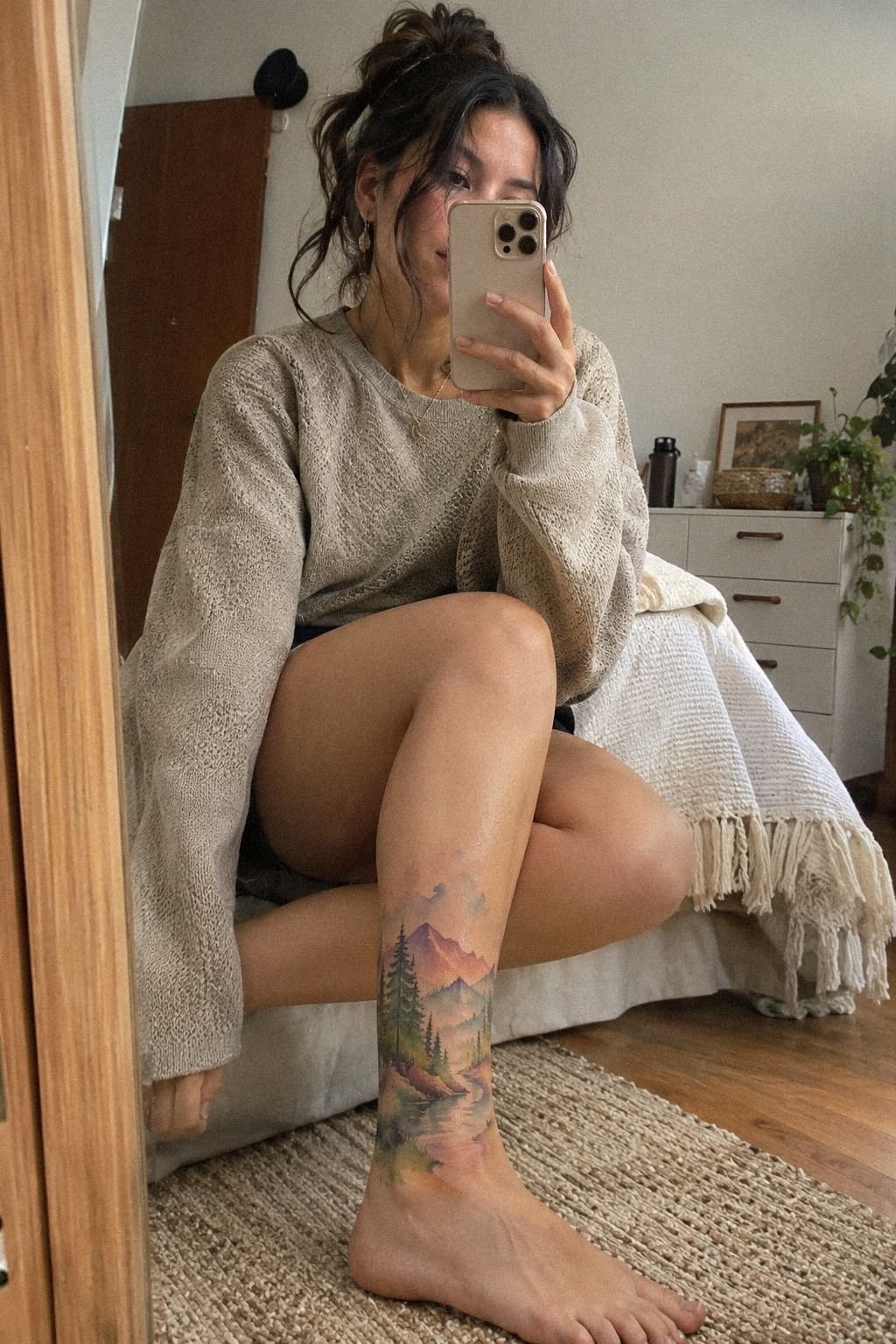
A watercolor forest can feel vibrant without becoming loud when the palette stays restrained. I’d use soft clay, linen, and muted brass-gold washes, with diluted watercolor pigment separated by open skin between the trees.
The strongest detail is the contrast between the pale color and fine dark marks. You’ll want the forest edge to remain irregular, because crowded watercolor shapes can turn muddy once the skin settles.
Watercolor tattoos don’t need to imitate a painted canvas exactly. A few branches, a pale sky wash, and one darker evergreen can create the whole landscape. My preference is a subtle, almost ethereal fade at the edges.
If you’re considering a colorful wild scene, save healed examples rather than judging only fresh saturation. That’s the honest way to decide whether the style is worth it. The yellow rose tattoo meaning guide may also help if you want one symbolic bloom hidden in the forest.
An ankle session can still feel sharp over bone, even when the tattoo is small. You’ll have an easier time if you sleep well, eat beforehand, and tell your artist when you need a pause. A calm session makes delicate color placement much easier!
3Build a Botanical Horizon Around One Stem

The botanical version uses hair-thin linework, one tall stem, narrow leaves, and a tiny open landscape tucked behind it. This is a sleek option if you want your nature scene tattoo to look personal without covering a large area.
Use a fine botanical grouping for the stem and keep the distant hills lighter in visual weight. I’d avoid adding a full sunset, birds, and mountains all at once. Your forearm has room, but the design still needs a focal point.
One expressive plant can say more than six unrelated objects. Let two leaves overlap the horizon slightly, then leave small breaks in the line. That negative space gives the composition graceful movement.
You’ll notice the piece feels more intricate when the skin interrupts it. This is also a good place to choose a symbolic plant such as rosemary, fern, olive, or wild grass.
If the plant carries spiritual meaning for you, compare it with the symbols discussed in our yantra tattoo meaning guide. Your reference should explain the feeling before the artist redraws it.
The forearm is usually more tolerable than the ribs or sternum, but everyone’s pain response differs. I’d choose the inner forearm only if you’re comfortable with visibility. It’s a polished location, and you won’t need to twist your body to show it.
4Blackwork Woodland: Let Contrast Win
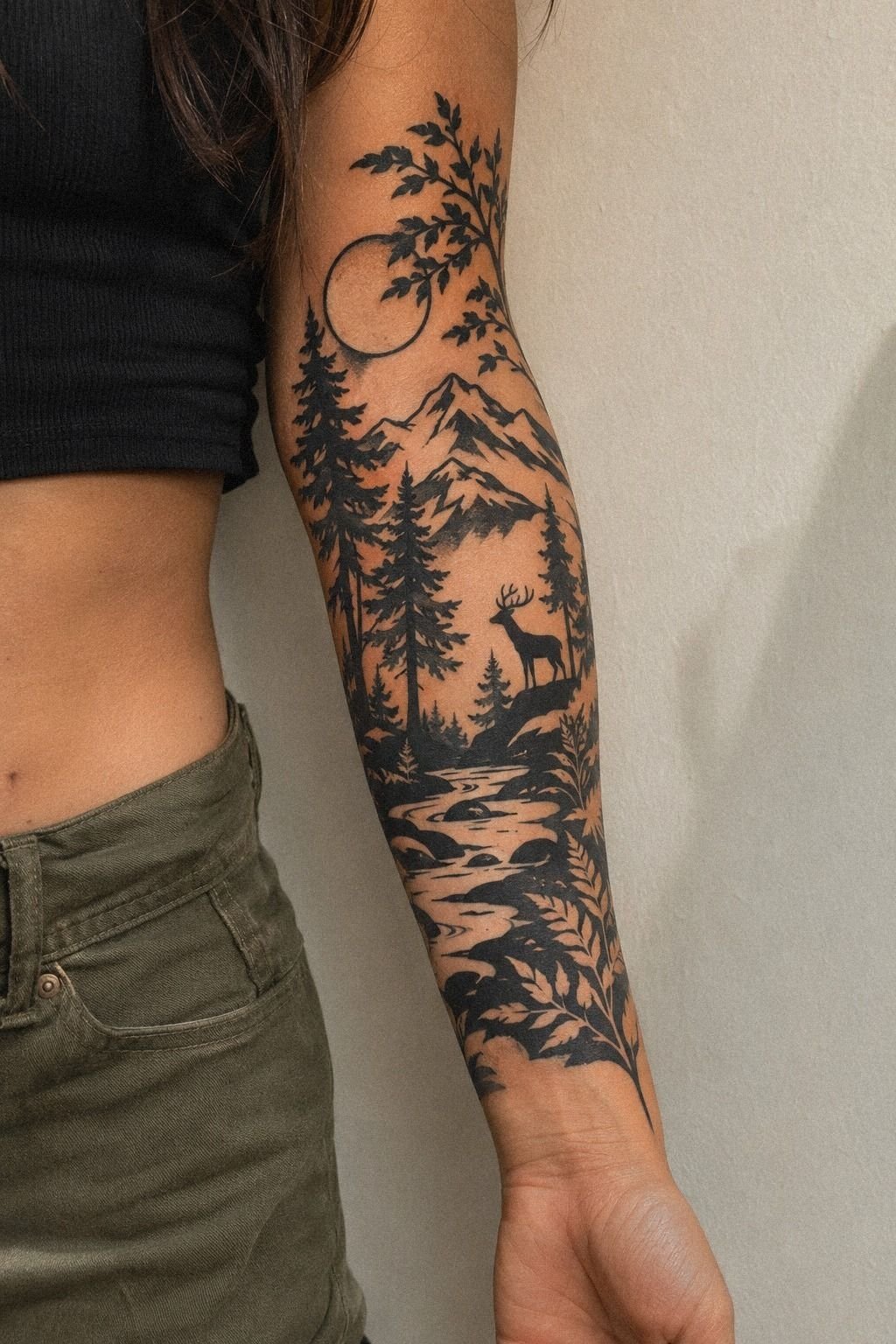
A blackwork woodland scene needs a strong anchor. Deep navy-black forest shapes create a bold foreground, while warm walnut-brown shading gives the distant woods space.
The contrast is fierce, but it doesn’t need to become aggressive. Your artist should protect the open skin around the branches so the composition remains readable.
I’d choose this approach over scattered grey trees because a solid shape will remain legible longer. Fine navy detail can soften, while a well-placed dark mass gives the scene a stable visual center.
Ask for clean edges rather than excessive texture. A few sharp pine tips, a low ridge, and one narrow opening in the canopy are enough. The design feels raw and powerful because it trusts contrast.
If you like woodsy tattoos with a darker mood, you can explore a sacred direction through our Yant tattoo guide. Adding a symbol only because it fills space usually weakens the story.
Blackwork can take more pigment than fine line, so your session may feel more concentrated even if the design is small. You’ll want an artist with healed blackwork examples. Paying for a specialist may be a better value than choosing the lowest appointment price.
5Behind the Ear, Start With Three Lines
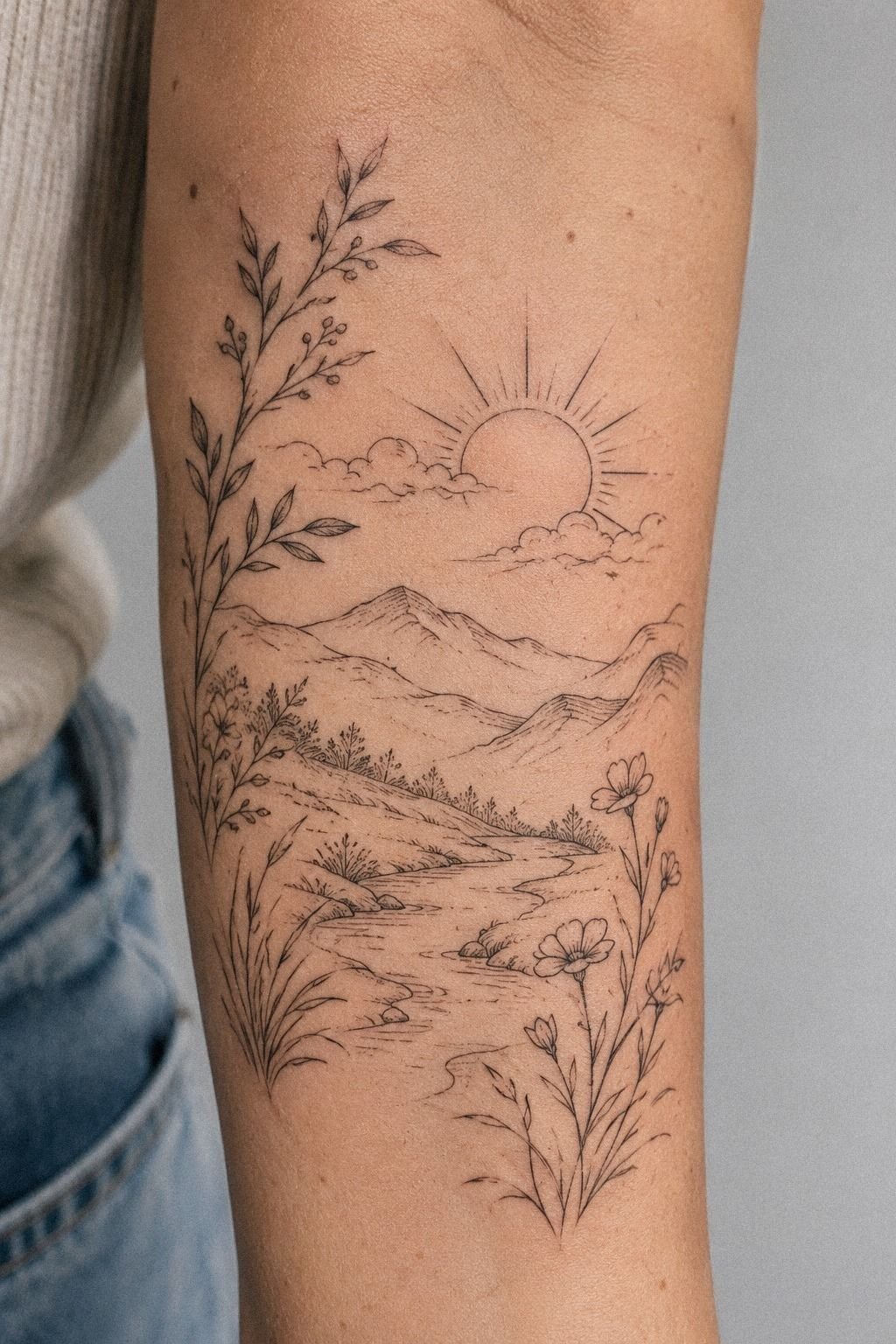
A tiny sunrise behind the ear works best when the design is dainty but still visible.
6The Geometry Window: Frame the Landscape
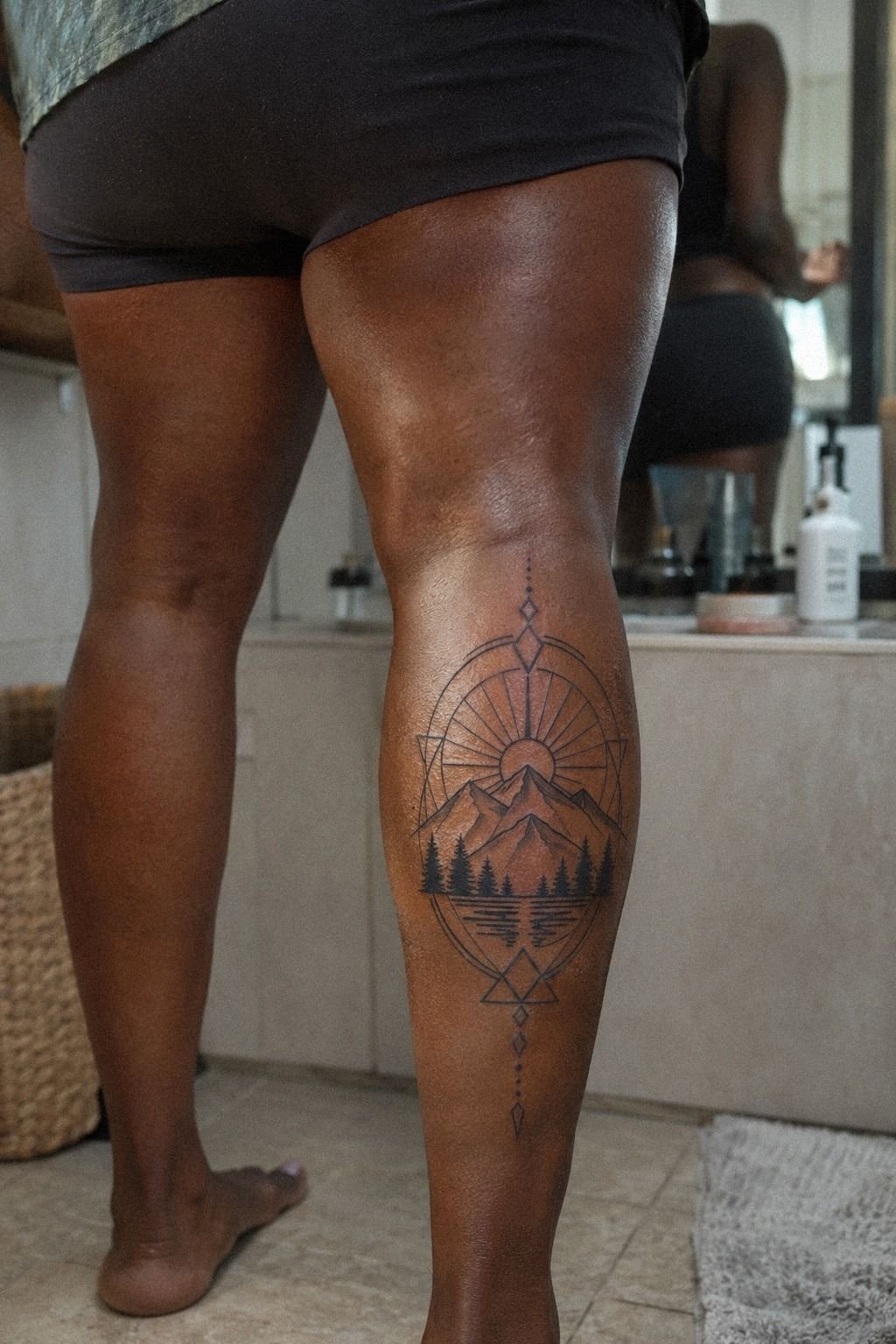
A geometric nature scene feels intentional when ruled lines frame the landscape without overpowering it. A precise geometric frame should act like a window, not a cage.
I’d leave the mountain and sun slightly irregular inside the border so the scene still feels alive. Perfectly measured lines around a perfectly measured landscape can look cold.
Your artist can balance precision with one flowing organic detail, such as a curved branch or uneven ridge. That contrast keeps the piece sharp without making it sterile.
Calf placement gives you more usable surface than the ankle, but the design still needs to follow the muscle. Ask for a stencil while standing and sitting. You’ll see whether the frame bends awkwardly when you walk.
If you’re comparing placements, the calf often offers strong value because it gives a small design more room to breathe. Our Yin Yang tattoo meaning guide may help if you want to introduce balance through sun and shadow.
Here are practical US reference points for planning:
You’ll still need to follow your artist’s aftercare instructions. Wash gently, moisturize as directed, and avoid sun and swimming while the surface heals. The geometry will look crisp when the skin is calm, so don’t rush it.
7Which Moonlit Lake Details Should Stay?
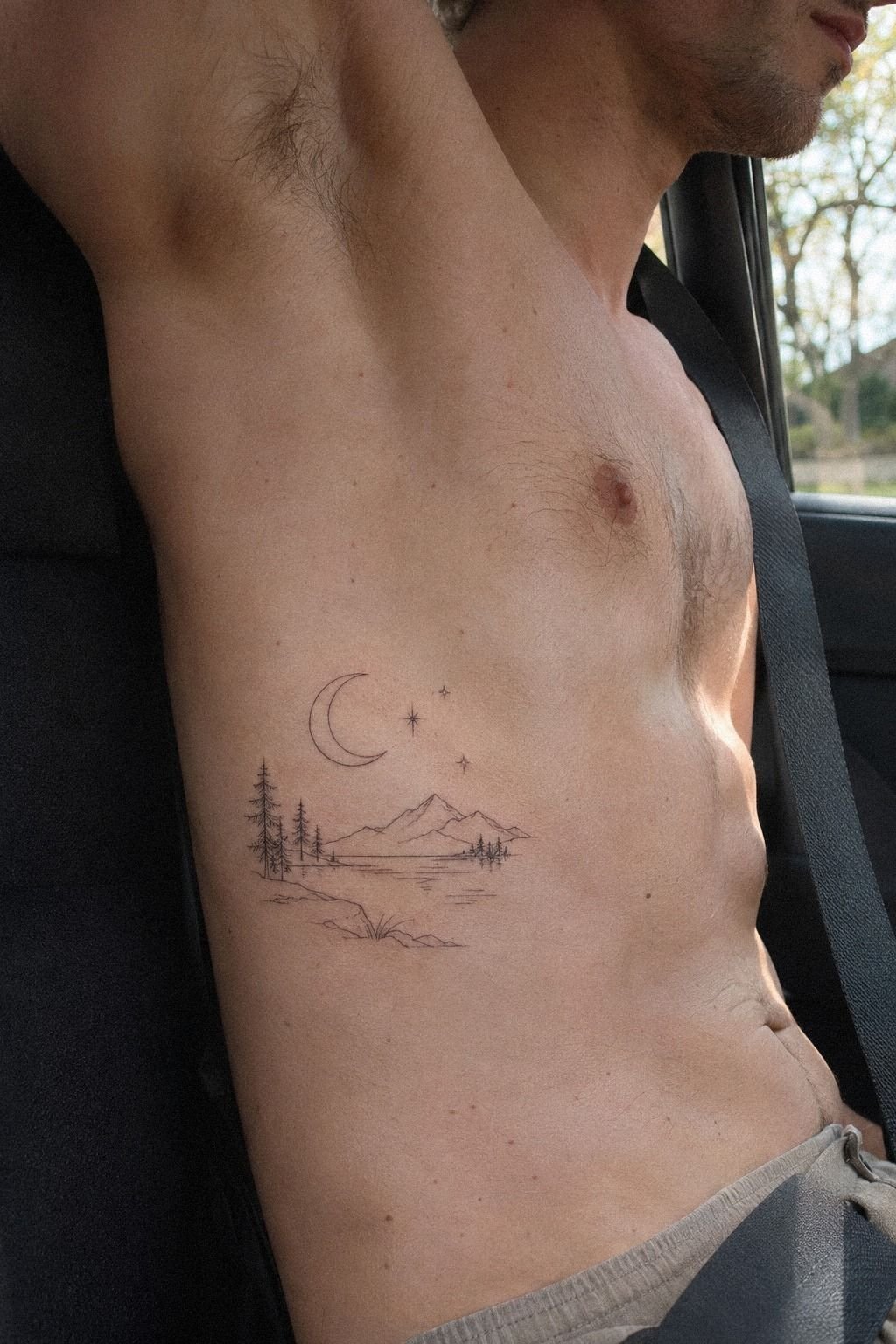
A moonlit lake can become haunting without carrying every possible detail.
8Fine Line Ribs: Leave the Horizon Open
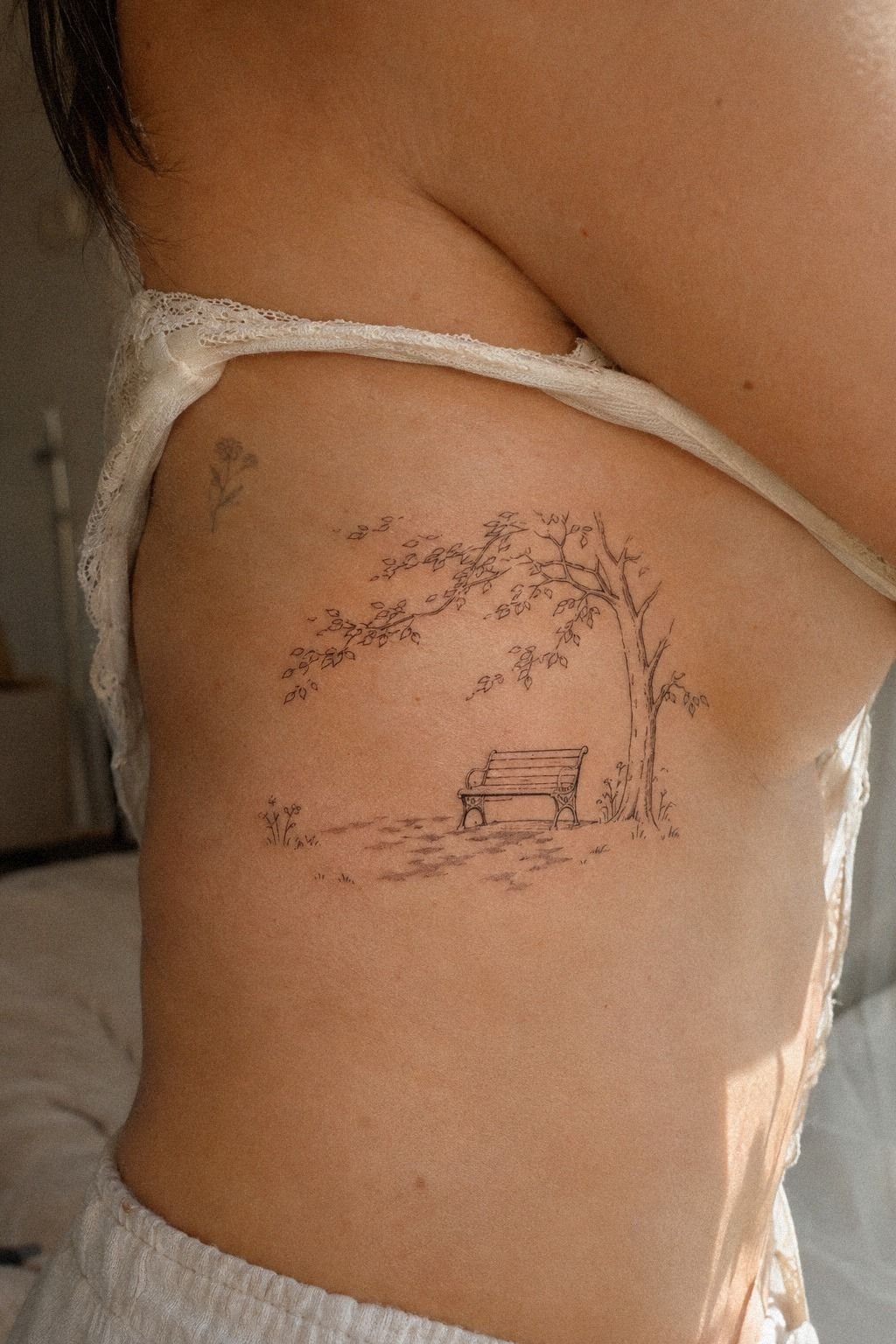
This fine line rib design uses a narrow landscape with distant hills, a small sun, and open skin between each element. The hair-thin black lines create a graceful effect when the scene isn’t packed too tightly.
Your artist should draw the horizon first and build outward from it. I’d avoid a heavy border because it can make the ribs feel visually crowded.
One imperfect hill, a small branch, and a quiet sky will create a more organic picture than a packed postcard. You’ll get a more polished result when the composition has room to pause.
Fine lines can soften or widen over time, especially when the design is too small or receives frequent UV exposure. A crisp stencil is useful, but healed work matters more than a perfect fresh result.
This could become a subtle scenery tattoo with a place-specific detail, such as a distinctive ridge or shoreline. If you want a symbolic counterpoint, look through our Yant tattoo guide before adding anything.
Ribs are a sensitive placement, so plan your clothes carefully. Loose fabric helps, and you’ll want to avoid friction while the surface heals. I’d rather pay for thoughtful sizing than save money on a cramped design.
9Choose Color Over Blackwork for a Wildflower Valley

A single stemmed flower with leaves and a small valley behind it combines botanical detail with landscape in one compact design. Midnight blue and copper pigment can give the flower a vibrant focal point, with ivory left as open skin around the valley.
I’d keep the valley in deep midnight blue or soft grey. If every part is saturated, the scene loses its hierarchy and the flower stops leading the eye.
Your artist can make the stem slightly curved so the piece follows the ankle. A straight stem may look stiff when your foot moves.
The valley should remain simple, with two hills and a small open sky. You’ll get a more elegant result when the background doesn’t compete with the flower.
For a personal variation, choose a wildflower from a place you know. Our yellow rose tattoo meaning article can help if your flower represents friendship, remembrance, or a bright turning point.
Color requires careful sun protection as the tattoo ages. You’ll want to use sunscreen once the skin is fully healed and follow your artist’s instructions during the first weeks. A small color accent can stay expressive without becoming an expensive session.
10Stack Animal Silhouettes Into a Sleeve
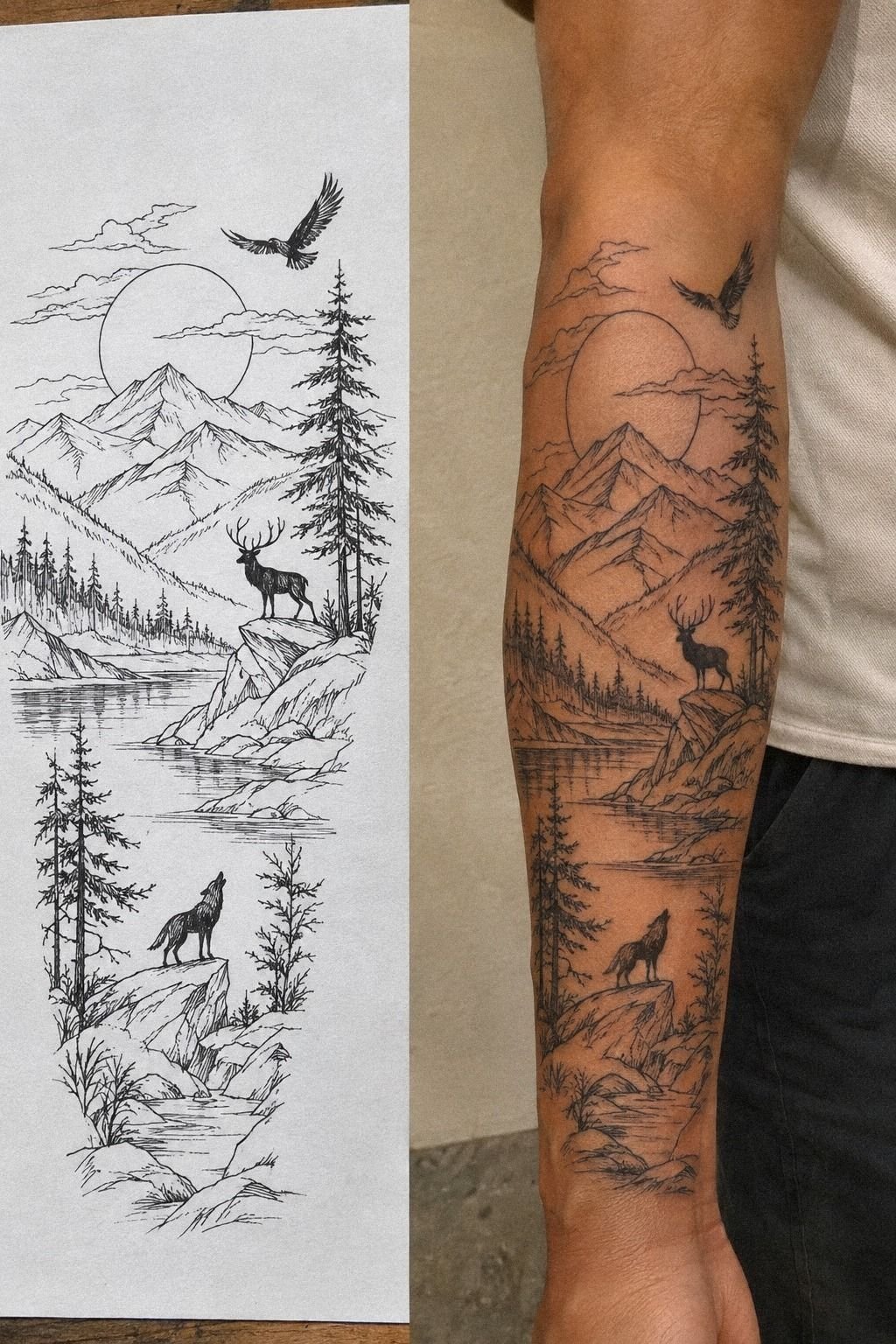
A nature sleeve becomes more readable when you build it from large shapes to small details. Start with deep sage animal silhouettes, then add trees, hills, and connecting lines.
I’d avoid placing every animal at the same height. A deer low in the scene, birds higher up, and one distant shape create a sharper visual rhythm.
A sleeve doesn’t have to be completed in one sitting. If you want less discomfort at each appointment, divide the composition into sections and let your artist plan the transitions.
Your first session might cover one forearm panel, while later work adds the surrounding landscape. That approach can make the budget easier to manage and gives you time to evaluate the healed result.
The silhouettes can represent wildlife, travel, or family. If you’re weighing a symbolic animal against a mythic figure, our Yggdrasil tattoo meaning guide may give you another direction.
Healed comparisons are more useful than perfect stencil work. You’ll see how line weight changes, where the dark pigment remains crisp, and whether the artist understands spacing. If the sleeve feels too ambitious, choose one animal with a small horizon behind it.
A focused piece can still feel iconic.
11Negative Space: Let the Skin Speak
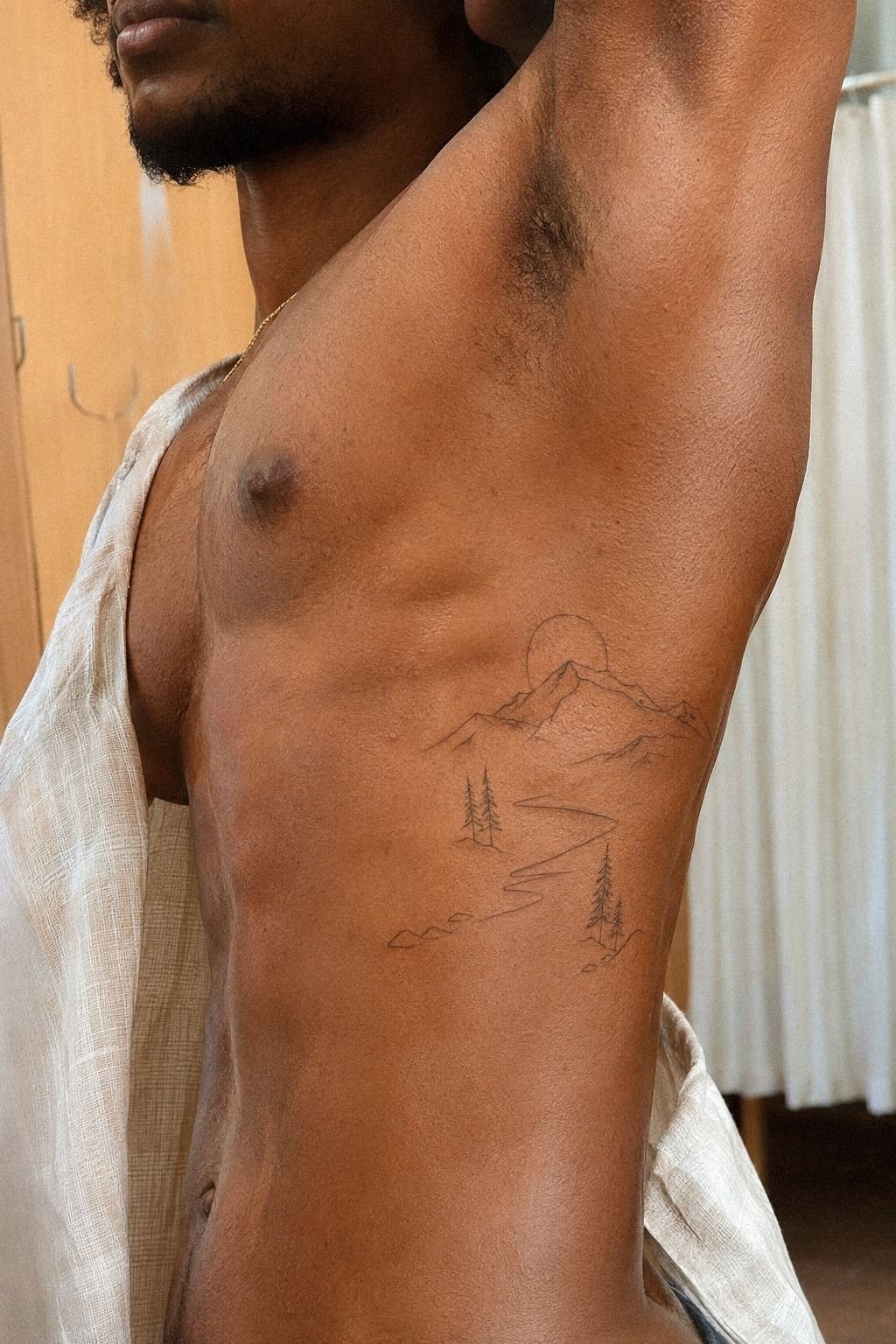
A negative space design depends on restraint. An open-skin composition can feel sharp and expressive when the branches, hills, and sky are separated by generous untouched areas.
I’d remove detail before adding more terracotta or olive pigment, especially around the horizon. Negative space only works when the empty areas are large enough to remain visible.
Your artist should test the stencil at the intended size and check how the lines curve over the ribs. You’ll want the scene to follow the body without losing its central shape.
This approach suits a nature lover tattoo that feels private and thoughtful. You can include a small moon, one tree, or a distant ridge, but every element needs a reason to exist.
If you want to connect the scene to a sacred or symbolic idea, read our YHWH tattoo meaning guide before choosing lettering or symbols. Your landscape should remain the main idea.
Rib placement may be more painful than forearm or shoulder placement, so keep the first session focused. Surface healing usually takes about 2 to 3 weeks, while complete healing can take about 2 to 3 months.
What I’ve Learned About Choosing a Nature Scene Tattoo
I used to think the most impressive nature scene had the most detail. That belief gave me a crowded first sketch, with trees, birds, a moon, water, and three different textures fighting for attention.
The better design was smaller and sharper. It had one horizon, one focal shape, and enough untouched skin to let the image breathe.
Now I start with placement. Your forearm, thigh, or shoulder will usually give you a more tolerable experience than ribs, feet, hands, or sternum, though no placement feels identical for everyone.
If you’re trying to finish in one sitting, a compact design with a clear silhouette gives your artist a better chance of working efficiently. You’ll also have a clearer idea of the likely cost before the appointment.
I ask to see healed work. Fresh tattoos can look exceptionally bold because the surface is new, but healed photographs show whether hair-thin lines stayed distinct and whether color settled evenly.
That’s where you’ll see the artist’s real control. A polished portfolio is helpful, but a healed portfolio is more persuasive.
Budget matters, too. Typical US boutique minimums sit around $50 to $100, while hourly rates often fall around $100 to $250.
Your artist, region, placement, and detail level can shift that range. I wouldn’t choose the cheapest appointment for a delicate piece. Clean sizing and thoughtful placement are worth protecting.
Finally, give yourself permission to remove details. A meaningful tattoo doesn’t need every memory represented in one piece.
Choose the mountain that reminds you of home, the flower tied to one person, or the moon from one important night. The quieter choice often becomes the more powerful one.
How I’d Compare Placement Options
For visibility and line clarity, I’d begin with the forearm. Forearm placement usually gives the artist enough room for a crisp horizon without requiring a long session.
The ankle suits tiny designs, especially a mountain or sunrise. You’ll need to accept that the skin sits close to bone and may feel sharper during the appointment.
The calf offers useful space for geometric or colorful scenes. It can be a strong value when you want more detail without moving into a full sleeve.
The ribs create the most private feeling, but they’re often a more intense choice. If you’re new to tattoos, you may want to compare the emotional impact with the practical discomfort first.
Before You Book a Nature Scene Tattoo
Bring two or three examples that show what you love about the style. A clear design brief helps your artist understand whether the priority is a mountain, plant, animal, moon, or color accent.
Ask how the design will change at your intended size. A detail that looks elegant on a large piece may become muddy when reduced to ankle scale.
You’ll also want to ask about deposits, appointment length, touch-up policies, and aftercare. The yellow rose tattoo meaning guide may help you clarify the symbolism before your consultation.
Choose an artist whose healed work matches your desired style and skin tone. If the portfolio only shows fresh tattoos, I’d keep looking.
How to Set a Tattoo Budget
A small nature scene may cost around $100 to $300, while a larger color piece or sleeve can rise substantially. The final price depends on region, artist experience, placement, detail, and appointment length.
Boutique minimums commonly begin around $50 to $100, and hourly rates may sit near $100 to $250. You’ll get a more useful estimate when you send the approximate size and placement.
The lowest price isn’t automatically the best value. For delicate linework, a skilled artist may be worth paying more for because composition and spacing affect the finished result.
If you’re comparing two ideas, ask which design will age more clearly at the same budget. Our Yin Yang tattoo meaning guide can also help if balance is central to your concept.
What Healing Really Requires
The surface usually heals in about 2 to 3 weeks, while complete healing can take about 2 to 3 months. Gentle aftercare protects the lines during that period.
Follow your artist’s instructions, wash gently, moisturize as directed, and avoid sun and swimming early on. You’ll want to resist picking or rubbing the area while it settles.
Color and fine line both benefit from sensible sun protection after healing. A tattoo can remain elegant and vibrant when you treat the skin carefully.
If you’re uncertain about an aftercare step, ask your artist directly. Our YHWH tattoo meaning guide is for symbolism, not a substitute for professional aftercare instructions.
The Questions I Get Asked Most
How much does a Nature Scene Tattoo usually cost?
I’d expect a small US nature scene tattoo to cost about $100 to $300, though boutique minimums may begin around $50 to $100 and hourly rates often sit near $100 to $250. Your final price depends on the artist, region, placement, size, color, and detail.
Are Nature Scene Tattoos a good idea for a first tattoo?
Yes, I think a small nature scene can be a meaningful first tattoo when you choose a clear design and tolerable placement. Forearm, thigh, and shoulder placements are often easier starting points than ribs, feet, hands, or sternum, though everyone’s experience differs.
How do I choose a tattoo artist for Nature Scene Tattoos?
I’d choose an artist with healed examples of the exact style you want, then check line quality, hygiene, and stencil placement. A healed portfolio tells me more than a fresh photograph. I’d also ask how the artist handles your skin tone and preferred placement.
How much do Nature Scene Tattoos hurt?
I’d expect ribs, feet, hands, and sternum to feel more intense for many people, while forearm, thigh, and shoulder placements are often more tolerable. Your experience will vary with placement, session length, sleep, stress, and personal sensitivity.
How long does a Nature Scene Tattoo take to heal?
I’d allow about 2 to 3 weeks for surface healing and about 2 to 3 months for complete healing. Gentle washing and aftercare protect the lines during that period. I’d follow the artist’s instructions and avoid sun and swimming early on.
What’s the best placement for a Nature Scene Tattoo?
I’d start with the forearm if visibility, line clarity, and a generally more tolerable session matter most. The ankle suits a tiny design, while the ribs create a private placement that may feel more intense. Choose placement around your lifestyle, not only the design.
Where can I book a Nature Scene Tattoo?
I’d book directly with a reputable tattoo artist or licensed studio after reviewing the portfolio and consultation details. Direct studio booking lets you confirm availability, pricing, deposits, hygiene practices, and aftercare without relying on paid recommendations.
Where I’d Start First
If I had to pick one, I’d start with the minimal mountain linework tattoo. It has the clearest silhouette, needs less shading, and suits a focused ankle or forearm session.
Pin it for later and compare it with our nature-inspired Yggdrasil tattoo reference before you book. If the design still feels meaningful after a few days, it may be the right one for you. Choose the idea you’ll still feel proud to carry, even when the trend has moved on!