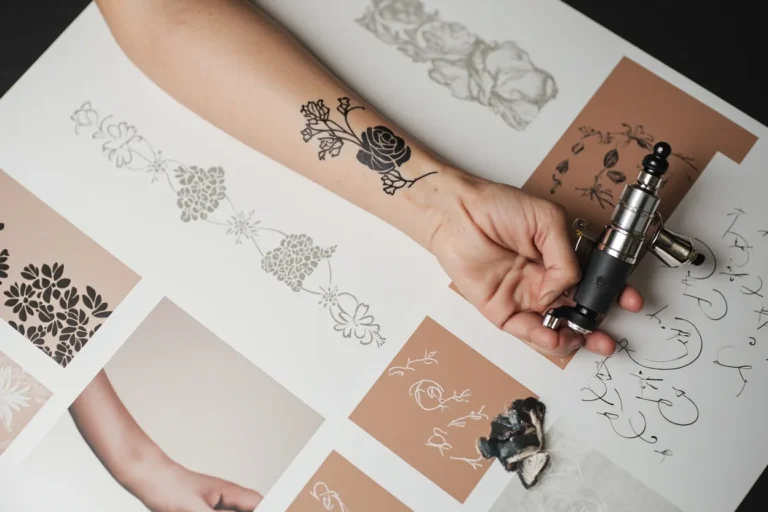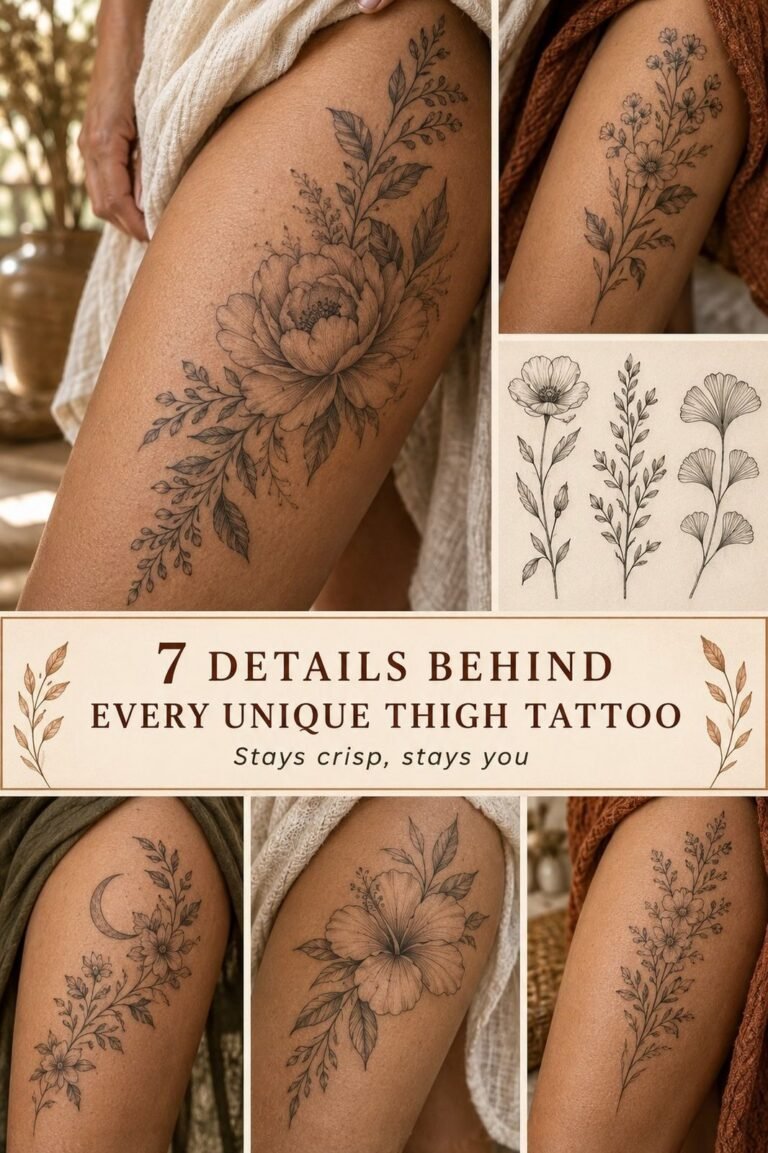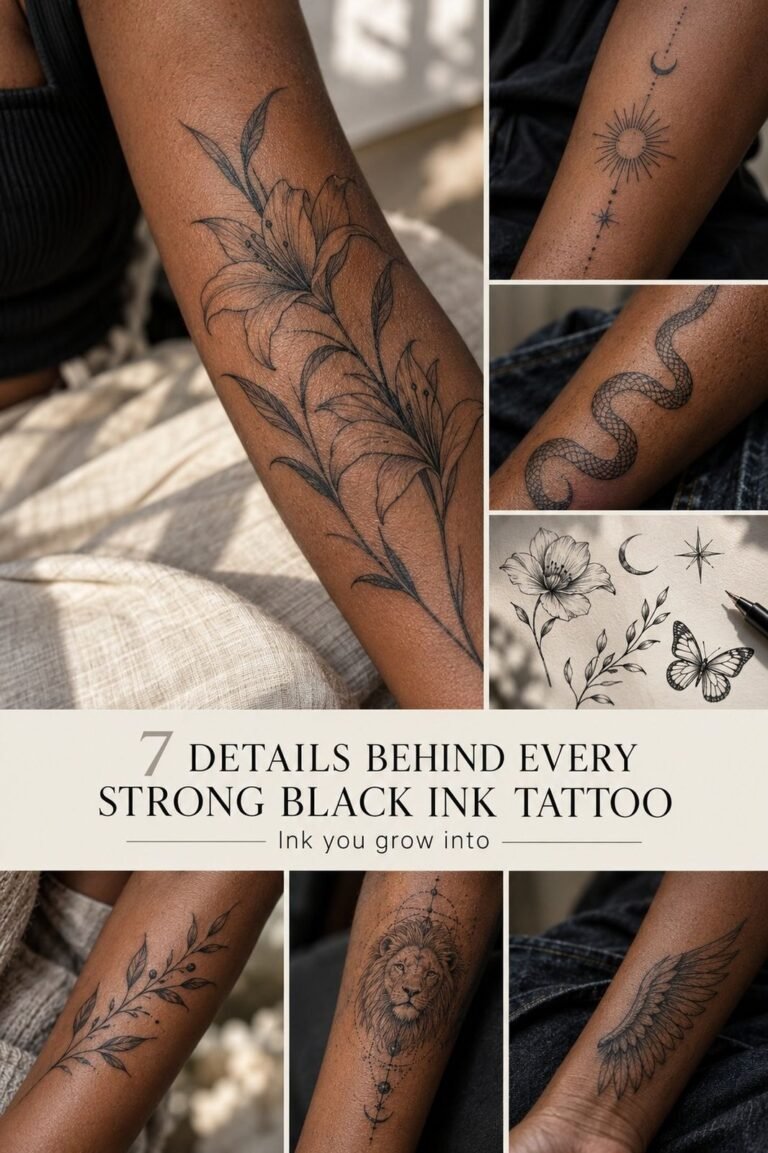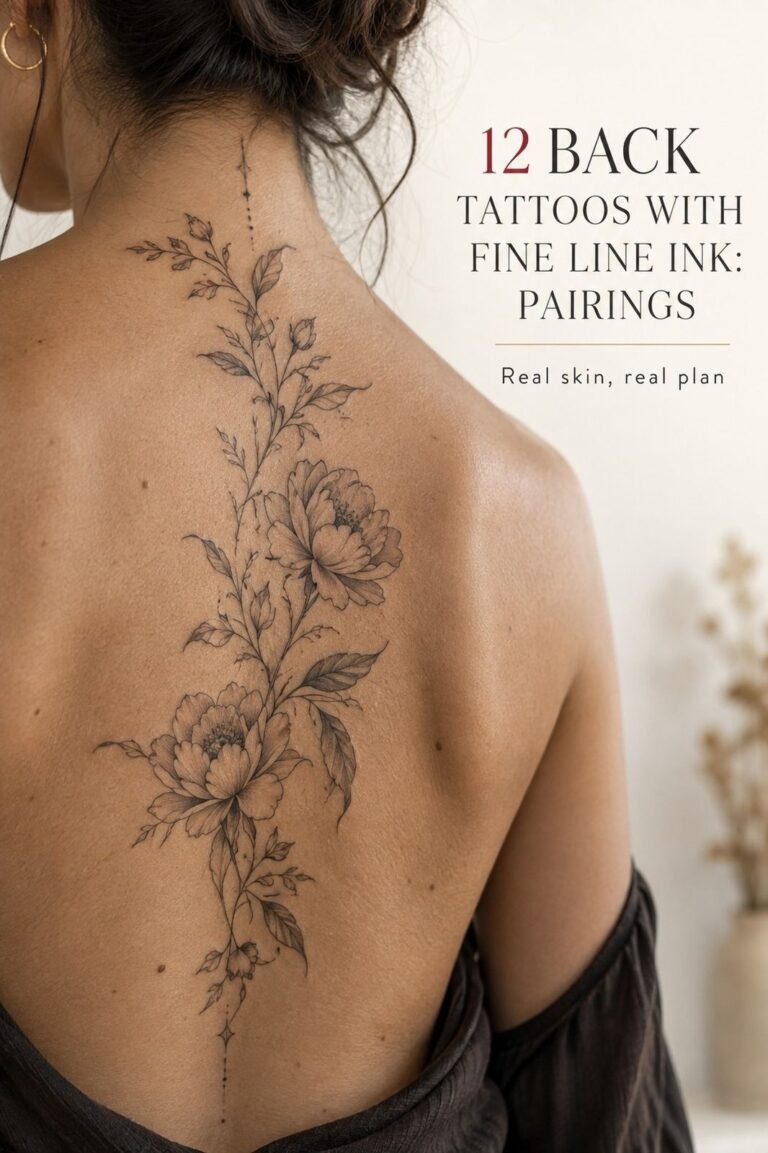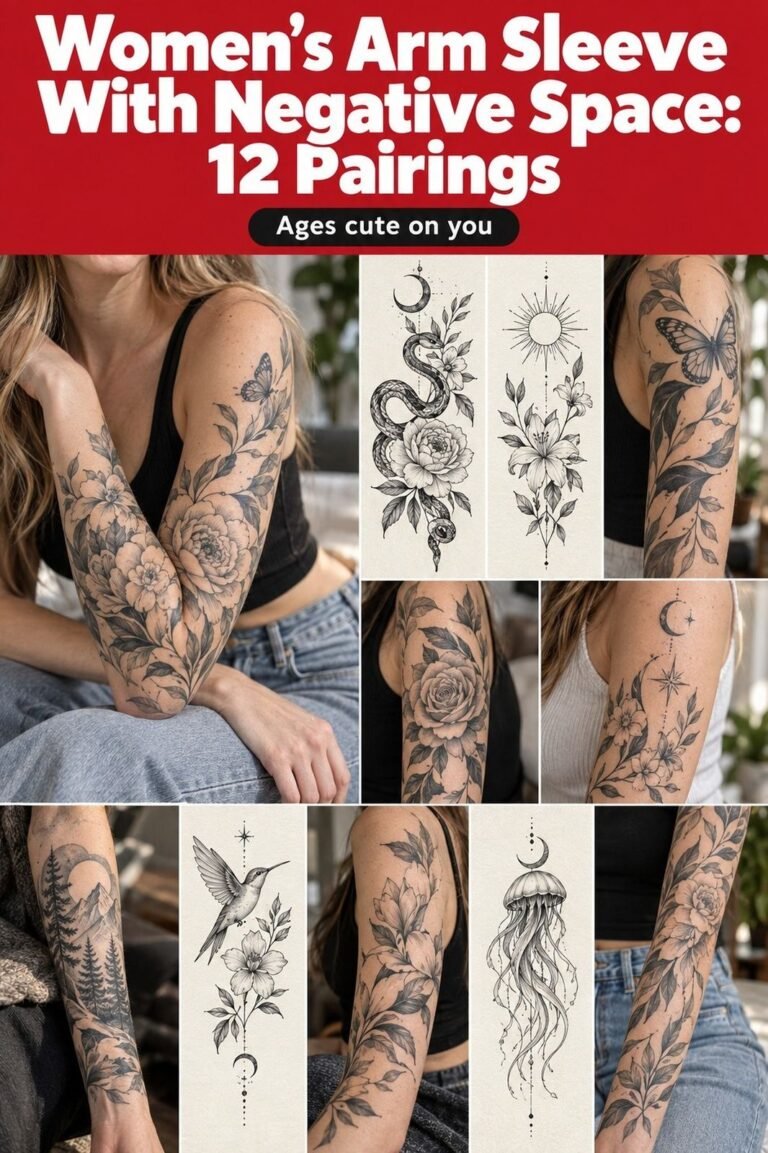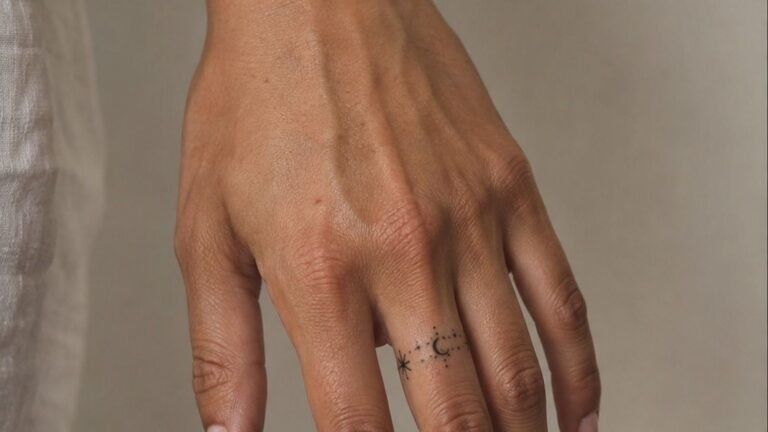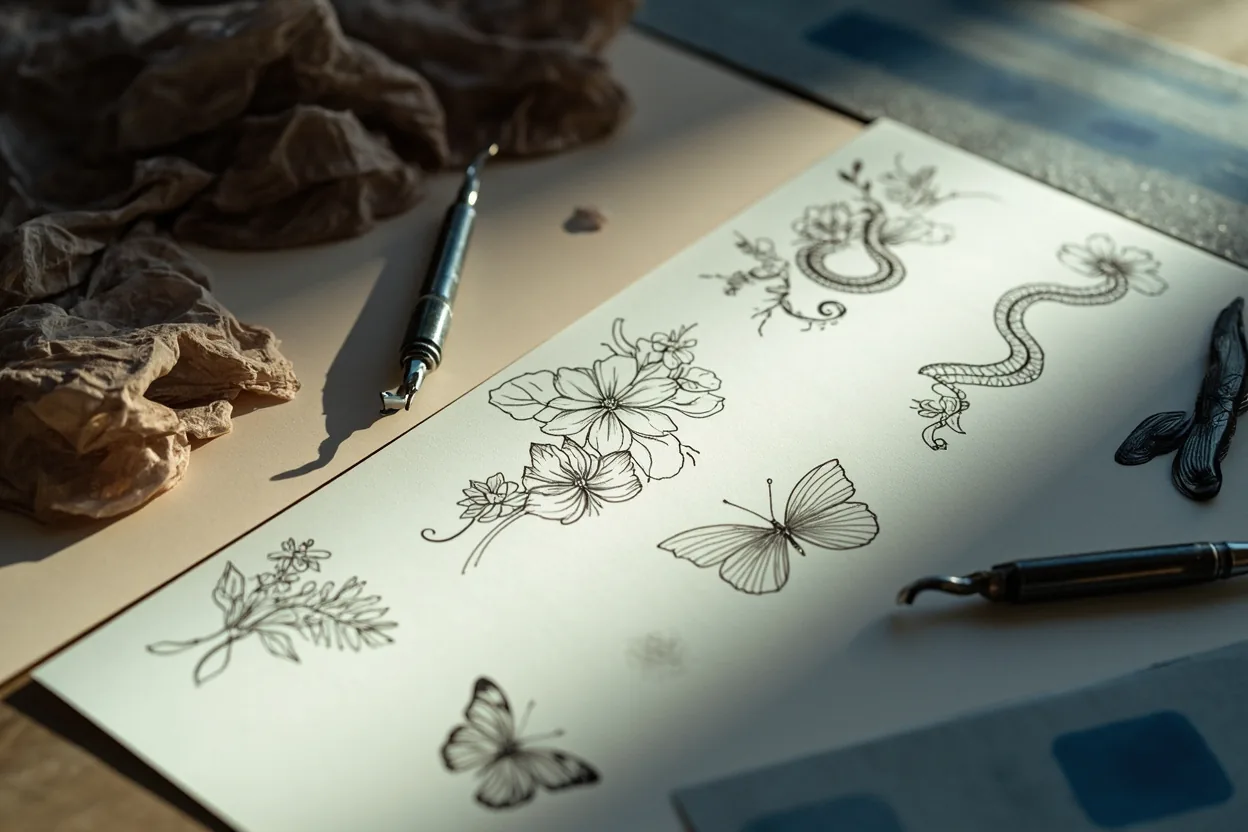
Forearm tattoos for women work well when the design uses visibility as a strength instead of trying to hide a weak concept.
Quick answer: Good forearm tattoos for women include florals, script, fine line symbols, snakes, butterflies, birth flowers, ornamental marks, and blackwork designs. Visibility makes placement and scale important.
Forearm Tattoos For Women placement options
Placement changes the whole tattoo: pain, visibility, aging, clothing friction, and how much detail the artist can safely fit.
| Direction | Best use | Watch out for |
|---|---|---|
| Outer forearm floral | Visible statement | Needs size |
| Inner forearm script | Personal phrase | Lettering angle |
| Snake | Long movement | Scale |
| Birth flower | Meaningful soft design | Petal detail |
| Blackwork symbol | Graphic confidence | Contrast |
How to make it work on real skin
The forearm does not hide anything, that is exactly the point.
Forearm tattoos are easy to photograph, which is why weak designs spread fast online. Choose one that still works without a pose.
The forearm gives enough room for clean fine line work, but ultra-tiny detail still ages poorly.
Forearm Tattoos for Women: Placement, Size and Style: pain, friction, and aging
This placement changes how the tattoo heals and how often it gets seen. Pain is only one factor; friction, sun, clothing, and movement matter just as much.
Ask the artist to explain what they would simplify for this body area. If the design needs every tiny detail to work, it may need more size or a different placement.
- Check visibility in normal clothes.
- Decide inner or outer forearm.
- Ask for healed fine line examples.
- Leave space if you may build a sleeve.
Mistakes to avoid
Do not choose forearm placement for a design you are unsure about seeing daily.
Do not let a long design fight the arm line.
Pain, visibility, and aging checkpoints for this placement
A strong forearm tattoos for women decision starts with the boring constraints: how visible it is in normal clothes, how much the skin moves, how often the area rubs, and whether the design has enough size to heal cleanly.
Use the visual references as a filter, not a shopping cart. Compare Outer forearm floral, Inner forearm script, Snake, Birth flower, and Blackwork symbol by how they sit on the body. If the design only works in one cropped photo, it may not work when you stand, bend, dress, or age.
| Reference to compare | What to inspect | Decision rule |
|---|---|---|
| Outer forearm floral | Visible statement | Needs size |
| Inner forearm script | Personal phrase | Lettering angle |
| Snake | Long movement | Scale |
| Birth flower | Meaningful soft design | Petal detail |
| Blackwork symbol | Graphic confidence | Contrast |
Best-fit styles for this body area
Fine line can work when the area has enough room and low friction. Blackwork and traditional designs are safer when the placement bends, rubs, or needs to read from a distance. Florals, snakes, birds, and ornamental work usually succeed when the artist lets the design follow the natural body line instead of forcing a flat sticker shape.
Ask the artist to place the stencil while you are standing in a normal posture. For joints, ribs, shoulder, chest, hip, and neck placements, check the stencil from more than one angle before the needle starts.
Who should slow down before choosing it
Slow down if this would be your first tattoo, if the placement is highly visible, if you are choosing it mostly for a social photo, or if the design needs tiny detail to make sense. None of those are automatic no-go signals, but they are reasons to ask more questions.
Visual reference note: Save at least three examples: one fresh tattoo, one healed tattoo, and one placement photo from farther away. Close-ups sell the idea; distance tells you whether the tattoo really reads.
Reader questions before you book
Is this a good first tattoo placement?
It depends on visibility, pain tolerance, and if you are ready to live with the placement daily. For neck, hands, ribs, sternum, knees, and feet, most first-timers should be extra cautious.
How big should the tattoo be?
Large enough that the smallest important detail has breathing room after healing. If the artist says it needs more size, treat that as professional design advice, not upselling.
What should I ask during the consultation?
Ask about pain, fading, clothing friction, healing logistics, touch-up policy, and whether the artist has healed examples from the same placement.
How do I avoid a tattoo that looks pasted on?
Choose a design that follows the body line. Curves, muscle shape, bone structure, and joint movement should affect the stencil.