
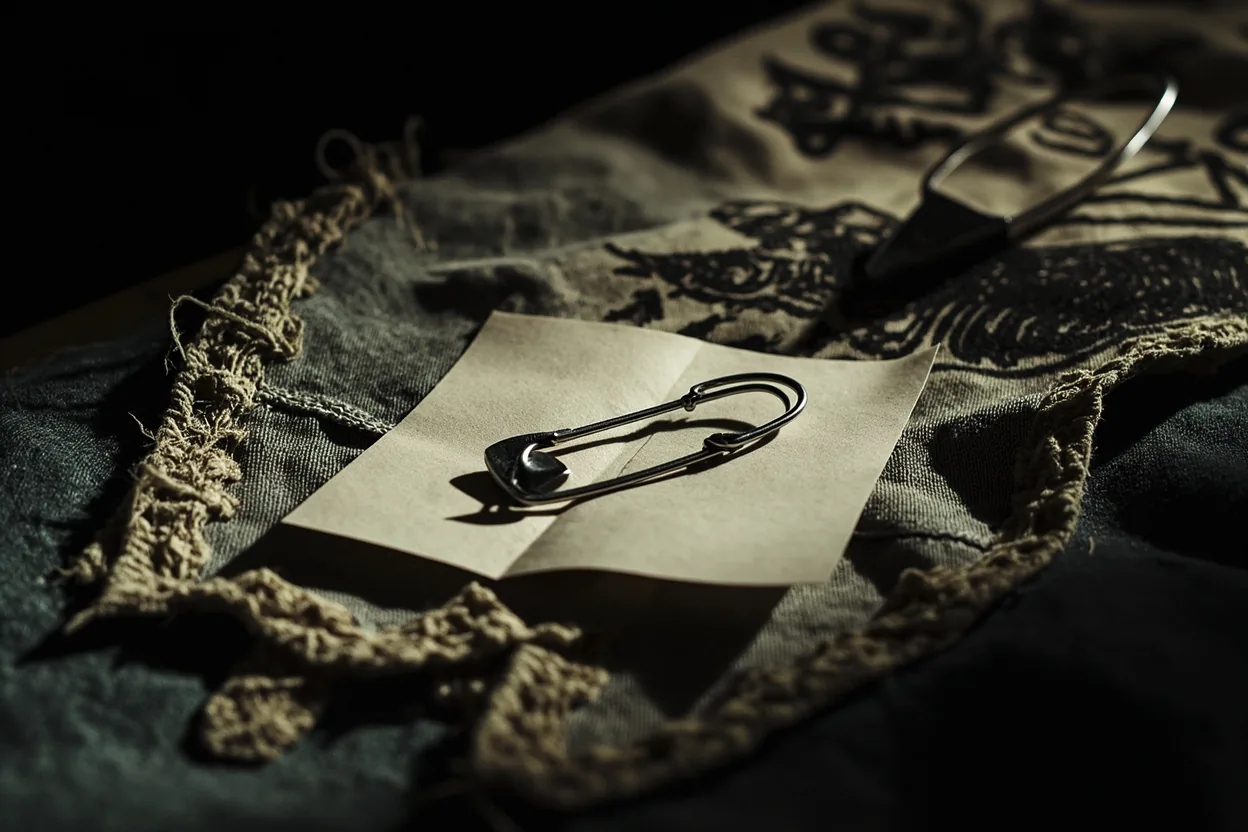
A safety pin tattoo holds more than fabric. It can signal that you are a safe person, that you have mended yourself, or that you stand with someone else. The meaning shifts with how you draw it, where you place it, and who sees it.
Where the Symbol Comes From
The safety pin itself is a 19th-century invention, the kind of modest object that becomes invisible through everyday use. Walter Hunt patented the familiar clasp design in 1849, though the form had earlier parallels. That practical history matters because the tattoo inherits the object’s plainness: it is not ornate, not heroic, not obviously sacred. It is a tool for holding things together temporarily.
The punk connection is the layer most people recognize. In 1970s Britain, safety pins appeared on ripped clothing sold by Vivienne Westwood and Malcolm McLaren at their King’s Road shop, then migrated onto the bodies of fans and musicians. The Sex Pistols, the Clash, and the broader scene used the pin as deliberate provocation: cheap, sharp, anti-fashion. Whether those early adopters meant political solidarity or pure visual shock is still debated, and the tattoo carries that ambiguity. What is clear is that the symbol traveled from subculture wardrobe into permanent skin, softened by time but still carrying an edge.
The solidarity meaning has more recent roots. After the 2016 United States presidential election, some Americans began wearing safety pins to signal allyship with immigrants, Muslims, and others facing hostility. The gesture drew criticism too, for being performative without action, and the tattoo inherits that tension. It can mean “I am here for you” or it can mean “I want to be seen as good.” The difference lies in what you do alongside the ink.
What the object actually does
A safety pin closes a gap without healing it. It holds, it does not fix. That distinction is useful for a tattoo. If you have survived something and want to mark the survival without claiming complete resolution, the symbol fits. The clasp keeps the point from causing harm; the point remains capable of it. That duality, protection and potential danger coexisting, gives the design its quiet emotional weight.
Design Choices That Change the Meaning
The same outline can read as delicate punk, working-class tool, or gentle promise depending on execution. Start with line weight. A single-needle fine line safety pin, drawn at roughly actual size, feels personal and quiet. It works on the inner wrist, the collarbone, the back of an arm, places you see privately. The risk is scale: below about one inch, the clasp mechanism becomes a blur of grey within a few years. Skin moves, ink spreads, and a pin becomes a smudge.
Bolder versions, built with solid black or traditional tattoo weight, read more defiantly. They suit the forearm, the calf, the upper arm, places where the symbol confronts the viewer. A blackwork safety pin can reference punk graphics directly, or it can feel more like an industrial object, something from a workshop rather than a stage.
Adding elements without cluttering
One addition usually works better than three. A single flower threading through the pin softens it without dissolving the edge. A piece of torn fabric, a patch shape, a small word in your own handwriting, a direction arrow: these change the meaning without requiring explanation. Avoid the temptation to stack symbols until the pin becomes a charm bracelet. The power of the object is its plainness. Overdecorate it and you lose the reference.
Color is worth considering carefully. All black keeps the object recognizable and ages cleanly. A single accent, red for blood or warning, yellow for caution, a soft green for growth, can direct the meaning without overwhelming the form. Full color rarely improves this particular design; the safety pin is not a naturally vivid object, and forcing it into bright palettes can feel like a different tattoo wearing the wrong name.
Placement and Who Sees It
Visibility is a choice about conversation. A safety pin on the wrist or forearm invites questions, some welcome, some exhausting. If your meaning is solidarity or allyship, that visibility may be the point: you want the symbol to function in public, to be noticed by people who need it. But understand that you cannot control who notices. Someone who finds the gesture empty or self-congratulatory may read it that way regardless of your intention.
Hidden placements shift the meaning inward. A pin on the rib, the hip, the inner ankle, the back of the neck: these are reminders to yourself, or marks shared only with chosen people. The memorial function works better here, or the personal repair narrative. A pin on the body where only you see it says “I know what this means” rather than “I want you to ask.”
Technical realities of specific spots
Fingers and hands look compelling in photographs but heal poorly. The safety pin’s straight lines and small details blur faster on hands than almost anywhere else. If you must place it there, accept that it will need refreshing, and consider a simplified version without the clasp mechanism. Ribs and spine carry more pain and more movement; the pin can distort with breathing and stretching. The upper arm and outer calf offer the most stable canvas for detailed work that stays readable.
Working With an Artist
Bring the meaning, not a finished drawing. A good tattoo artist has drawn objects before and knows how to make them sit on skin. What they need from you is the emotional center: protection, repair, solidarity, punk identity, or something you do not yet have words for. That center determines angle, weight, negative space, and whether the pin should look closed or open.
Ask to see the stencil at actual size on your body before the needle touches skin. A design that looks balanced on a screen or flash sheet can feel wrong once it maps onto your particular curves and movement. The safety pin is a straight object; on a curved surface, the artist may need to bend it slightly so it appears straight to the eye. That is a technical choice you should trust them to make.
Request one stripped-back version and one with atmosphere. For this symbol, the simpler version almost always ages better. The atmospheric version, with shading, texture, or background elements, may photograph beautifully on day one but soften into confusion over years. The pin is a line drawing at heart; respect that.
Before You Decide
Consider whether you want this tattoo to be legible to strangers or reserved for people who know your story. Consider whether the punk reference matters to you, and if so, whether you have any connection to that history or are borrowing an aesthetic. The symbol is common enough that it will not shock anyone, but it is specific enough that people will ask. Have an answer prepared, or at least know that “I just like how it looks” is a valid one.
Think about scale honestly. Small feels safe for a first tattoo, but too small fails. The safety pin needs enough room for the head, the clasp, and the gap between them to remain distinct. On most bodies, that means at least an inch and a half, often two. Trust your artist when they tell you a design will not hold.
Finally, sit with the meaning of holding. A safety pin does not heal what it closes. It keeps things in place until a better solution arrives, or until the fabric itself strengthens. If that temporary, imperfect quality resonates with where you are, the tattoo will carry weight beyond its simple shape.
Frequently Asked Questions
What does a safety pin tattoo mean?
It most often signals solidarity, personal protection, or the idea of holding yourself together. The meaning shifts with style and placement: a fine line version tends to read as private and delicate, while bold blackwork carries more punk defiance.
Is a safety pin tattoo a good first tattoo?
It can be, if you avoid the common mistake of going too small. The pin’s details need enough scale to stay readable after healing. Choose a placement you are comfortable seeing daily, and trust your artist on minimum size.
What style ages best for this design?
Clean outlines with solid contrast age better than fine detail or heavy shading. A simplified silhouette stays recognizable for years; a version packed with texture may look striking at first but soften into confusion.
Where should I place it?
Wrist and forearm make the symbol visible and conversational. Rib, hip, and inner arm keep it private. Avoid fingers and hands unless you accept that the detail will blur and need refreshing.
Does the punk history matter?
The 1970s British punk connection is real, but you do not need to claim it. The symbol has moved beyond that origin. What matters is whether you understand the reference and whether it aligns with your own story.









