
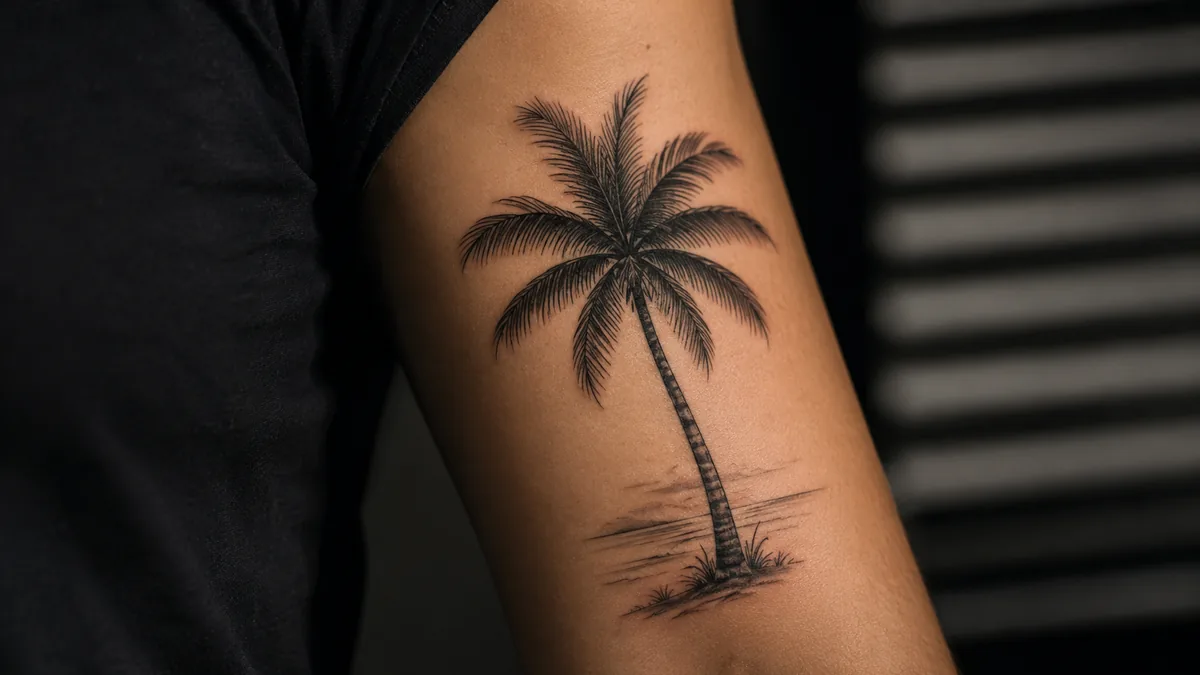
A palm tree tattoo is one of those pieces that looks simple on the surface but carries a lot of weight. It is not just a beach vibe. It speaks to freedom, survival, and a mindset, not just a postcard aesthetic.
People have been tattooing palms for decades, from surfers and sailors to travelers who want a permanent reminder of somewhere they felt alive. The symbolism runs deeper than most folks expect, and the design options are wider than a single silhouette at sunset.
Core Meaning: What a Palm Tree Tattoo Actually Symbolizes
The palm tree has carried meaning long before tattoo culture picked it up. it represents resilience. Palm trees bend hard in hurricanes but rarely uproot. That flexibility under pressure is exactly why people who have survived rough chapters in life gravitate toward this image. It is not about being tough and stiff. It is about bending without breaking.
Beyond survival, the palm stands for freedom, warmth, and a life lived on your own terms. A lot of clients bring in palm tree references when they are marking a transition, moving countries, leaving a bad situation, or committing to a new chapter. It reads as optimism without being cheesy about it.
Historical and Cultural Roots Worth Knowing
The palm bends to the hurricane, and that is exactly the point.
In ancient cultures across the Middle East and North Africa, the palm tree was a genuine symbol of victory and prosperity. Roman soldiers returned from battles carrying palm fronds as tokens of triumph. In Christianity, Palm Sunday references that tradition directly. The date palm specifically was tied to fertility, abundance, and life-sustaining nourishment across multiple desert cultures because it provided food, shade, and building material in brutal climates.
In Polynesia and Pacific Islander cultures, coconut palms were sacred and central to daily survival and spiritual life. Polynesian tattoo traditions are among the oldest in the world, and while the palm was not always a literal motif in those designs, the symbolism of the tree as provider and protector runs through those cultures genuinely. If you are pulling from Pacific Islander tradition, do it with awareness and respect for what that lineage means.
Design Variations: One Tree, Many Reads
The silhouette palm at sunset is the classic move and it still holds up. Clean, bold, reads from across the room. The variation list is long though. Single trunk with fronds blowing one direction gives it motion. A cluster of three palms pulls a more tropical island-scene feel. A lone palm on a small island surrounded by water is deeply personal for a lot of people, that solitary-but-at-peace imagery. Fine line palm trees have exploded in popularity, especially for smaller placements on ribs, inner arm, or ankle.
Geometric palms with linework grids or dotwork shading sit in the neo-traditional and blackwork space. Watercolor palms work well for people who want the beach feel without a heavy outline. Traditional American style palms with thick black outlines and flat color are bold and age reliably. Whatever style you pick, make sure the fronds have enough space to breathe. Cramped fronds are one of the most common mistakes on small palm tattoos, and they turn into a blob in two years.
Black and Grey vs. Color: Which Holds Better
Black and grey palms are the workhorse choice. They age predictably, hold contrast well, and fit naturally into larger sleeve or chest compositions. A skilled artist using whip shading on the trunk texture gives it dimension without overcrowding the design. Black and grey silhouettes with a negative space sun or moon behind them are consistently solid pieces that look clean five years out.
Color palms can be gorgeous, especially with a saturated orange and pink sunset behind them. The catch is placement. Color in high-wear zones like hands, wrists, or feet fades faster and needs touch-ups sooner. If you want a bold tropical sunset palm, put it somewhere that stays out of friction daily, like an upper arm, shoulder, or thigh. Lighter yellows and pinks in the sky portion will soften quickest, so make sure your artist uses pigments they trust for longevity.
Placement and How It Ages on Skin
The forearm is a natural home for a single palm tree, especially a taller design with a curved trunk. It reads well, heals nice on that flat real estate, and stays visible without being aggressive. The calf is another go-to, giving you room for a full scene with a horizon line. Spine placements work well with a tall single trunk that follows the body natural line, though that placement is legitimately spicy and not everyone first choice.
Ribs work for smaller fine line palms but expect some pain and some movement in the skin as it heals. Inner bicep is a lower-wear zone and holds detail well for a more delicate piece. Avoid palms with intricate frond detail on fingers, toes, or the tops of feet if you want it to still look like a palm tree in three years. High-wear zones destroy fine detail fast. Bold will hold. Simple silhouettes survive those zones better than anything complex.
Who Gets Palm Tree Tattoos and What They Are Usually Saying
Surfers, travelers, and people who moved their whole lives to a warmer coast get palm tattoos to mark that identity. People who grew up in Florida, California, Hawaii, or anywhere palms are part of daily life often get them as hometown pride. This one crosses every demographic, from first-timers on vacation to heavily sleeved collectors adding a tropical piece to an arm built over years.
The deeper personal meaning usually comes down to a few themes: survived something hard, chasing a life that feels free, or this place changed me. Some clients pair a palm with coordinates of a meaningful location or with a small phrase underneath. Others keep it completely clean, just the tree, because the image carries enough on its own. That restraint often makes for the strongest piece.
Making It Personal and Going Beyond the Generic
If you want your palm to feel like yours and not a flash sheet repeat, think about what the tree is doing. A palm bent hard in wind tells a different story than a perfectly upright one in still air. A palm with roots showing speaks to groundedness. A lone palm on a tiny island surrounded by open water hits differently than a beach scene with chairs implied. The composition choice is where your meaning lives.
Talk to your artist about what surrounds the tree, the sky, the light source, whether there is water, whether it is day or night. A full moon behind a palm reads very differently than a rising sun. Adding personal elements, a specific type of palm native to a place that mattered to you, or incorporating the tree into a larger travel or nature sleeve, makes the piece go from generic to genuinely yours. That conversation in the consultation is where the tattoo actually starts.









