
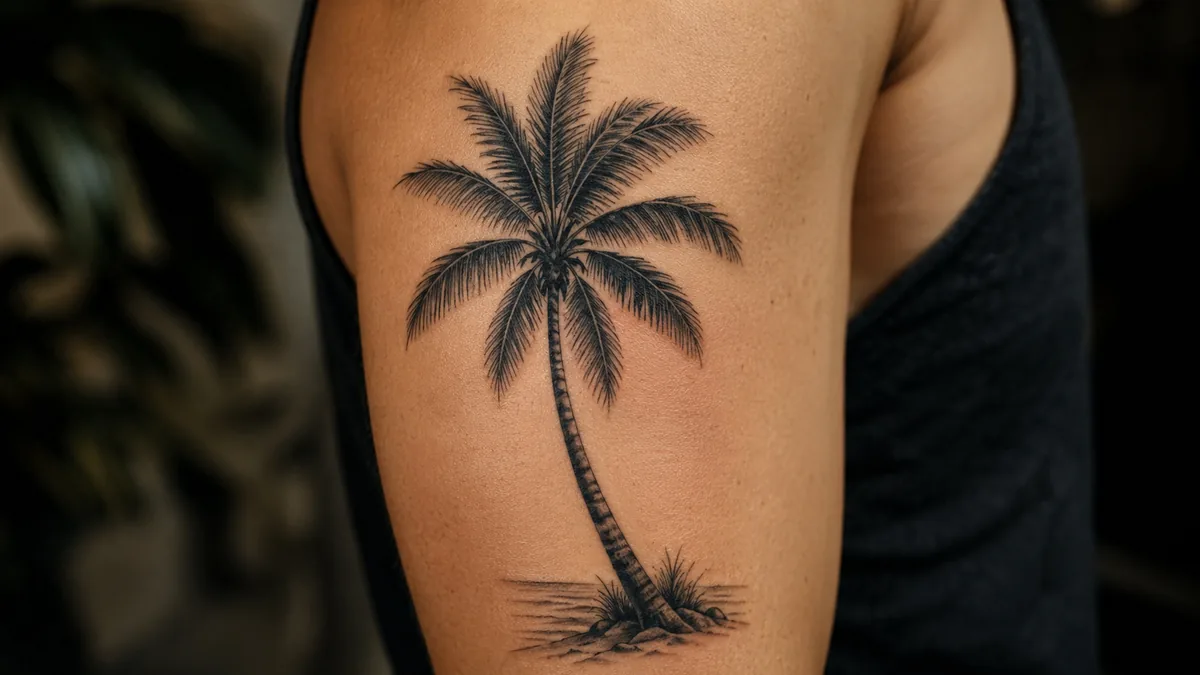
A palm tattoo sits in one of the most charged spots on the human body. Hands are how we work, pray, fight, heal, and reach out to people. Putting ink right on the palm carries weight if you’re going small and fine line or bold and saturated.
The meaning of a palm tattoo depends on the design, the hand, and the person wearing it. But across cultures and styles, a few core themes keep showing up: fate, protection, identity, and power. Let’s break it down.
Core Symbolism: What a Palm Tattoo Actually Represents
The palm has always been tied to the idea of destiny. Think of palmistry, the ancient practice of reading the lines on your hand to predict your future. Getting a tattoo on the palm is a direct nod to that concept, the idea that your fate is literally written on your hand. A lot of people get palm tattoos to claim that narrative, to say they’re the ones writing their own story.
Beyond fate, the open palm is a universal symbol for protection, blessing, and offering. An upward-facing open hand says ‘I have nothing to hide’ or ‘I give freely.’ A downward palm reads more like a shield. These dual readings make the palm one of the most versatile placements for meaning-heavy work.
Cultural and Historical Background
The palm is the only canvas that shows the world exactly what you're made of.
The Hamsa, a palm-shaped amulet with an eye in the center, comes from Middle Eastern and North African traditions and is one of the oldest protective symbols still in heavy tattoo rotation today. It appears in both Islamic and Jewish cultural contexts, and while the specific backstory varies, the core meaning is consistent: ward off the evil eye, bring protection and good fortune. Getting a Hamsa tattooed on the actual palm doubles down on that symbolism in an obvious, intentional way.
In many Indigenous American traditions, the handprint is a sign of presence and identity, a mark that says ‘I was here.’ Henna traditions from South Asian and North African cultures have decorated the palms for centuries during weddings and celebrations, connecting palm decoration to joy, fertility, and spiritual protection. These aren’t trends. They’re deep-rooted practices that modern tattoo clients draw from consciously.
Popular Design Variations
Geometric and mandala-style work is big on the palm right now. The natural shape of the hand lends itself to radial, symmetrical designs that look intentional and clean when placed dead center. An eye in the middle of the palm, whether a realistic eye or a stylized one, reads as all-seeing and protective. Minimalist single-line work, small symbols like moons, arrows, or runes, also shows up constantly. Fine line pieces look sharp fresh but require a committed aftercare game to hold.
Bold traditional designs, old school stars, roses, anchors, work better on the palm than people expect because the thick outlines survive the wear cycle longer. Black and grey realism is a flex if your artist can pull it off, but it softens fast. Script is popular but risky because fine letterforms on a high-movement, high-friction zone tend to blur into mush within a year or two without touch-ups.
Color vs. Black and Grey on the Palm
Black and grey is the safer long-term bet for palm tattoos. The palm skin is thick, constantly folded, and exposed to friction every single day. Saturated color on this zone fades faster than almost anywhere else on the body. That doesn’t mean color is off the table, it means you need to go bold and solid. Thin washes of color will ghost out fast. Heavy fills of black or primary colors have a better shot at staying readable.
If you’re set on color, go saturated and simple. A bright red traditional rose or a clean yellow star with strong black outlines will hold better than a watercolor gradient that fades to nothing in eight months. Your artist should pack the color hard and your commitment to touch-ups should be high. Treat a palm tattoo like a maintenance piece, not a set-it-and-forget-it situation.
Placement Specifics and How Palm Tattoos Age
The center of the palm is the most dramatic placement but also the toughest. It’s a high-wear zone with thick callused skin that fights ink retention. Expect to come back for at least one touch-up, often two. The heel of the palm and the outer edge toward the pinky side are slightly more forgiving. The upper palm, closer to where the fingers meet the hand, gets less direct friction and holds a bit better.
Blowout is a real risk here. The skin on the palm has a complex structure and if your artist goes too deep or the needle drags, lines spread. You want an artist who has done palms before, not someone trying it for the first time on your hand. Bold lines hold best. Fine line on the palm looks incredible for about six months, then it requires honest maintenance or it becomes an unintentional blur piece.
Pain Level and the Process
Palm tattoos are spicy. No sugarcoating it. The palm has a high density of nerve endings and the skin is thin over bone in certain spots. The center of the palm hits different from the fleshy base of the thumb to the bony central area. Most people rate it a solid seven to nine out of ten, especially along the life line and heart line zones where the skin folds and stretches under the needle.
The other thing that makes it rough is ink rejection. Palm skin doesn’t accept ink the same way your forearm or ribs do. Your artist may need to go over areas multiple times in a single session, which adds time and discomfort. Healing is also active, you’re using your hands constantly, which means the skin moves, cracks, and sheds faster than a stationary placement. Keep it moisturized, keep it out of sun and water, and follow your artist’s aftercare to the letter.
Who Gets Palm Tattoos and How to Make It Personal
Palm tattoo collectors tend to fall into a few camps. You’ve got the heavily tattooed person filling in the last visible spots. You’ve got the person who wants something deeply symbolic in a place only they usually see, a private reminder on a constantly active part of the body. And you’ve got the bold statement crowd who wants something that shows every time they gesture, shake hands, or hold something up.
To make a palm tattoo personal, tie the design to the meaning of the hand itself. What do your hands do? What have they built, healed, or held? A mechanic might go with a clean gear or tool motif. A musician might place a sound wave or a clef. A parent might get a symbol connected to their kid. The placement already carries weight. The design should add a second layer that makes it yours and nobody else’s.









