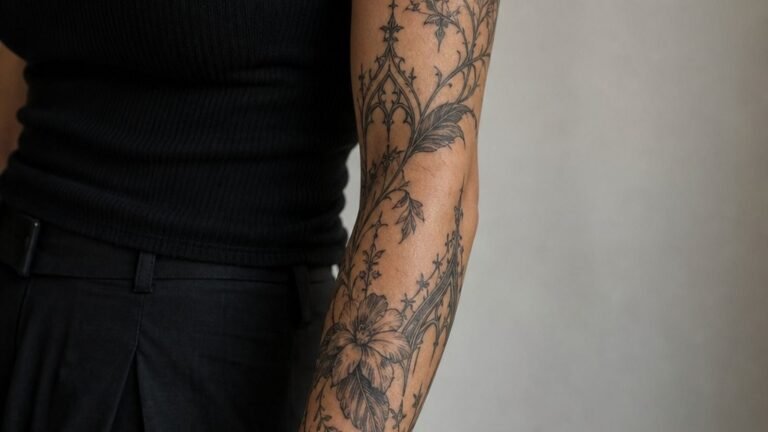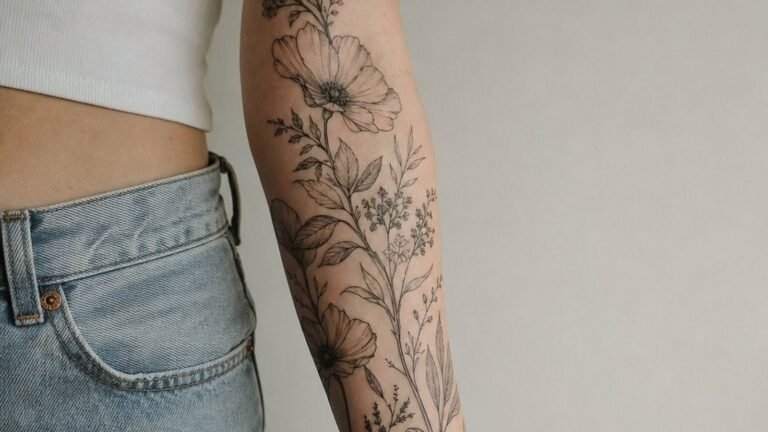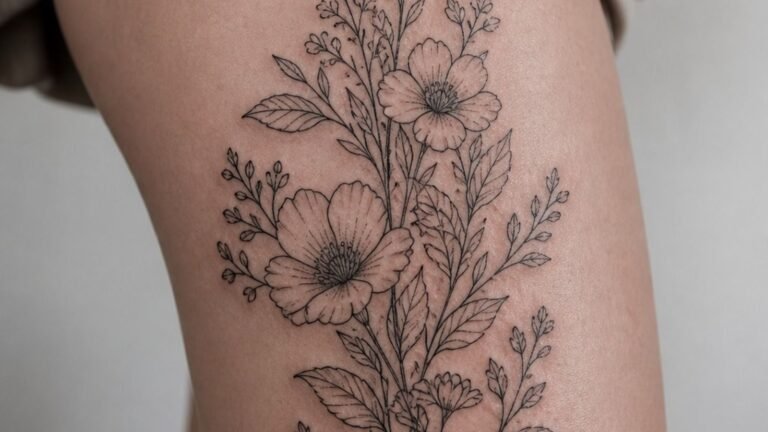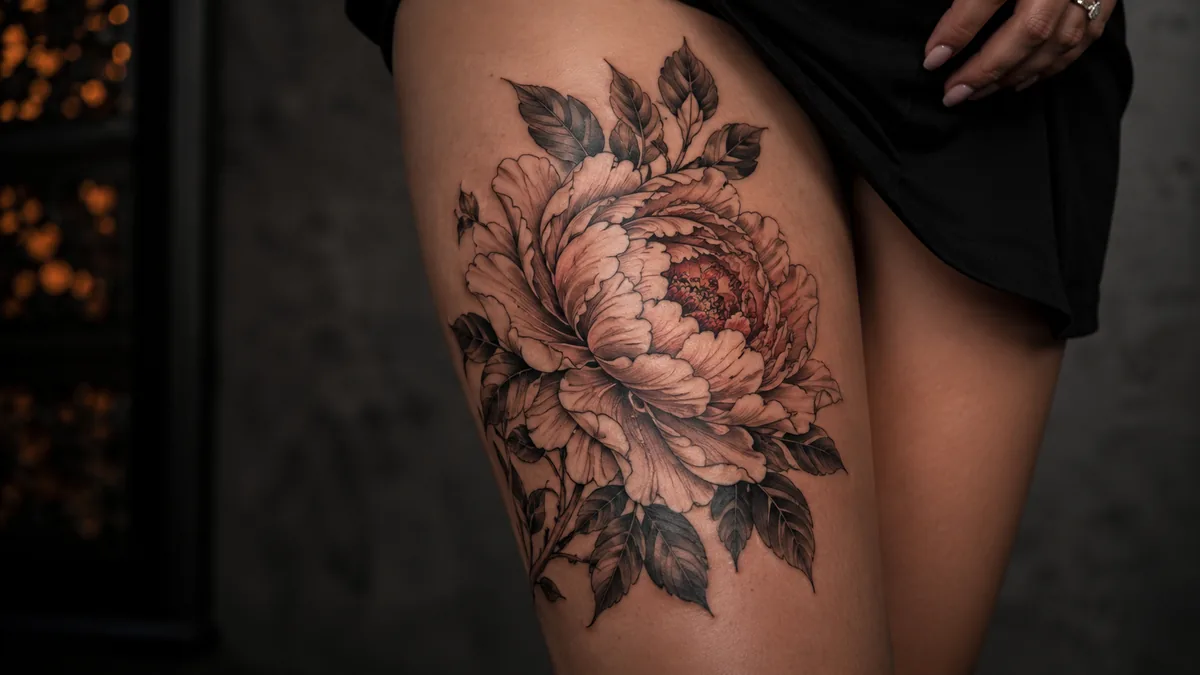
The peony is one of the most loaded flowers you can put on your skin. Prosperity, romance, good luck, feminine strength, this flower carries real weight, and it’s been doing that for centuries. It’s not just pretty. There’s a reason it keeps showing up in traditional sleeves, delicate fine-line pieces, and everything in between.
If you’re drawn to it for the meaning or just because a fully-opened peony looks incredible tattooed in soft pink on a thigh, you’re not making a shallow choice. This flower has a story. Here’s what it actually means and how to wear it right.
Core Symbolism: What a Peony Tattoo Actually Means
At its heart, the peony tattoo stands for prosperity, good fortune, and abundance. It’s long been associated with wealth and a full, rich life. Alongside that, it carries romantic meaning, love, passion, and deep affection. Not the greeting-card kind. The real, lasting kind.
It also reads as beauty and honor. In a lot of traditional contexts, wearing a peony says you value the good things in life without apology. Some people get it to mark a turning point, landing something big, surviving something hard, stepping into a version of themselves they’ve been working toward.
Historical and Cultural Background
A peony does not whisper, it blooms loud and means every word.
The peony has the deepest roots in East Asian traditions. In China, it’s called the ‘king of flowers’ and has represented imperial wealth and high social status for over a thousand years. It’s a fixture in classical Chinese painting, embroidery, and ceremony. In Japan, where it’s called the botan, it carries meanings of bravery, good fortune, and a fearless approach to life. Japanese traditional tattooing pulled the peony in early, often pairing it with dragons, tigers, or koi.
In Western cultures, the peony shows up tied to romance and prosperity too, though the mythology is lighter. Greek myth names it after Paeon, a physician to the gods. The flower was thought to have healing properties. That healing angle resonates with people getting it after illness, grief, or a hard chapter they came through.
Popular Design Variations
The most classic approach is Japanese traditional, with bold outlines, saturated color, and that characteristic layered-petal construction that reads from across the room. It pairs naturally with water, clouds, snakes, and phoenix motifs. Neo-traditional pushes the drama further, deeper shading, more contrast, sometimes jewel tones. Both age well because the bold lines hold.
Fine line peonies are everywhere right now, especially single-needle work with soft gradients and minimal shading. They’re stunning when fresh but require a skilled hand and a good placement choice, fine detail in high-wear zones blows out fast. Watercolor-style peonies skip the outline entirely, which looks great fresh but tends to fade and spread within a few years. Know what you’re signing up for.
Color vs. Black and Grey
Color peonies are a serious commitment. When they’re done right, saturated pinks, soft peaches, deep reds with clean transitions, they’re some of the most striking tattoos out there. The layered petals give a skilled artist real room to play with highlight and shadow. A color peony heals nice when the artist understands skin tone and doesn’t overwork the area.
Black and grey peonies trade the romance of color for longevity and a different kind of elegance. Whip shading and soft gradients can make the petals look three-dimensional without a single drop of color. They tend to age more predictably than color work, especially if you’re in a sunny climate or just not disciplined about sunscreen. Both styles are strong choices, it comes down to your skin, your artist’s strengths, and what you want long-term.
Best Placements and How It Ages
The thigh is the gold standard for a peony. Flat, low-wear skin, enough real estate to let the petals breathe, and you control who sees it. The shoulder and upper arm work great too, good surface, flexes well with the anatomy. The ribcage is a popular pick for a reason, even though it’s spicy. The skin there ages well, and the vertical shape of the torso suits a blooming flower naturally.
Avoid the inner wrist, fingers, and feet for detailed peony work. High-wear zones chew up fine detail fast, and you’ll be back for touch-ups sooner than you think. The back and chest are excellent for larger compositions, a peony climbing the shoulder blade or spreading across a sternum piece holds up over time. Whatever the placement, keep it moisturized and out of direct sun. That’s how color stays saturated and black and grey stays crispy.
Who Gets Peony Tattoos and How to Make It Personal
Peonies cross every demographic. Women get them most often, drawn to the femininity and strength in the same image. Men carry them in traditional Japanese sleeves where the cultural weight is front and center. It’s not gendered, it’s personal. People get peonies to mark births, relationships, losses, and fresh starts. The symbolism is flexible enough to hold almost any intention you bring to it.
To make yours personal, think about what you’re actually putting in it. Color choice matters: red reads as passion and love, pink as romance and grace, white as purity or new beginnings, deep burgundy as honor and depth. Adding a specific bud alongside a full bloom can signal growth or potential. Talk to your artist about what the piece is for. The best tattoos have a layer underneath the image. The peony gives you room to put something real there.