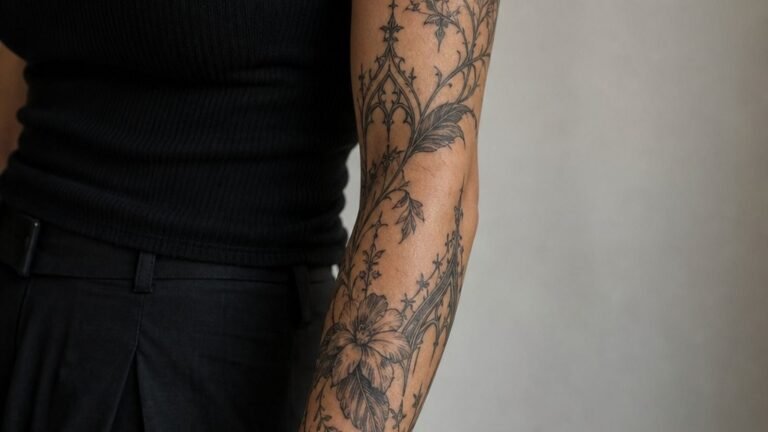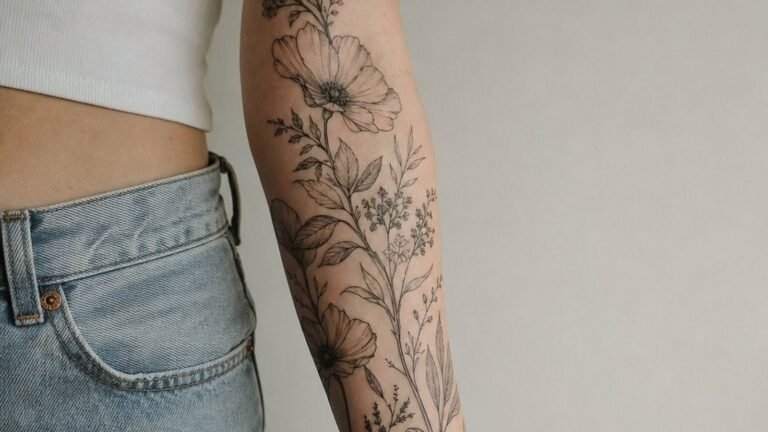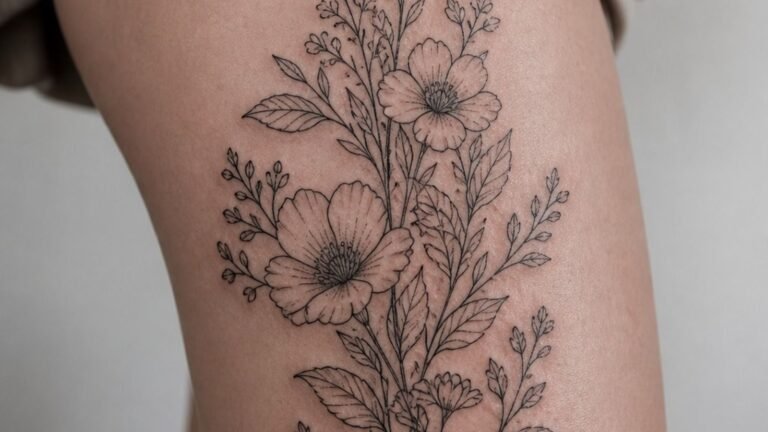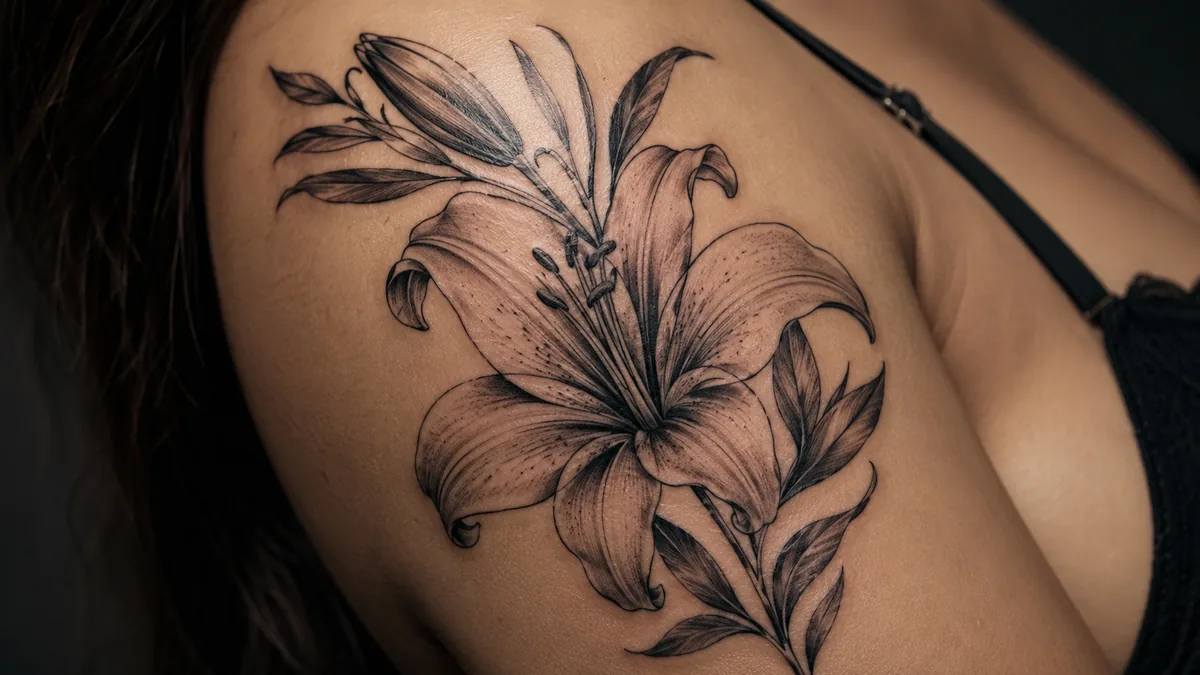
The lily is one of those flowers that carries real weight. People have been using it to mark births, deaths, weddings, and everything in between for thousands of years. As a tattoo, it lands differently depending on the type of lily, the color, and the person wearing it.
There’s no single meaning. A white lily on someone’s forearm might be a tribute to a lost parent. A tiger lily on a thigh might be pure celebration of strength. That range is exactly what makes lily tattoos worth talking about.
Core Symbolism: What a Lily Tattoo Actually Means
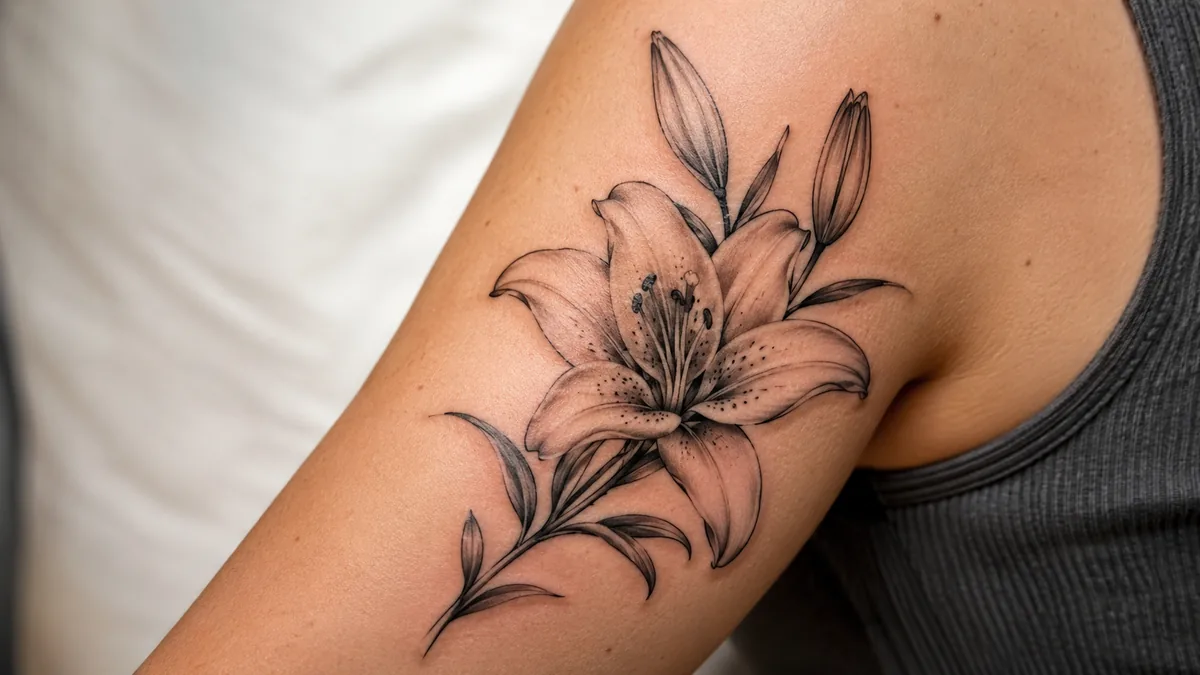
The lily has three big symbolic lanes: purity, rebirth, and passion. White lilies lean hard into innocence and spiritual devotion. They show up in memorial pieces because of their long association with the soul moving on. Red and orange lilies flip to passion, desire, and confidence. That shift is real and recognized across most cultures, not something tattoo shops invented.
Rebirth is the third thread. The lily dies back every winter and comes back strong. A lot of people getting through something hard, whether a health scare, a toxic relationship, or a rough stretch of years, pick the lily specifically for that cycle. It reads as resilience without spelling it out.
Cultural and Historical Background
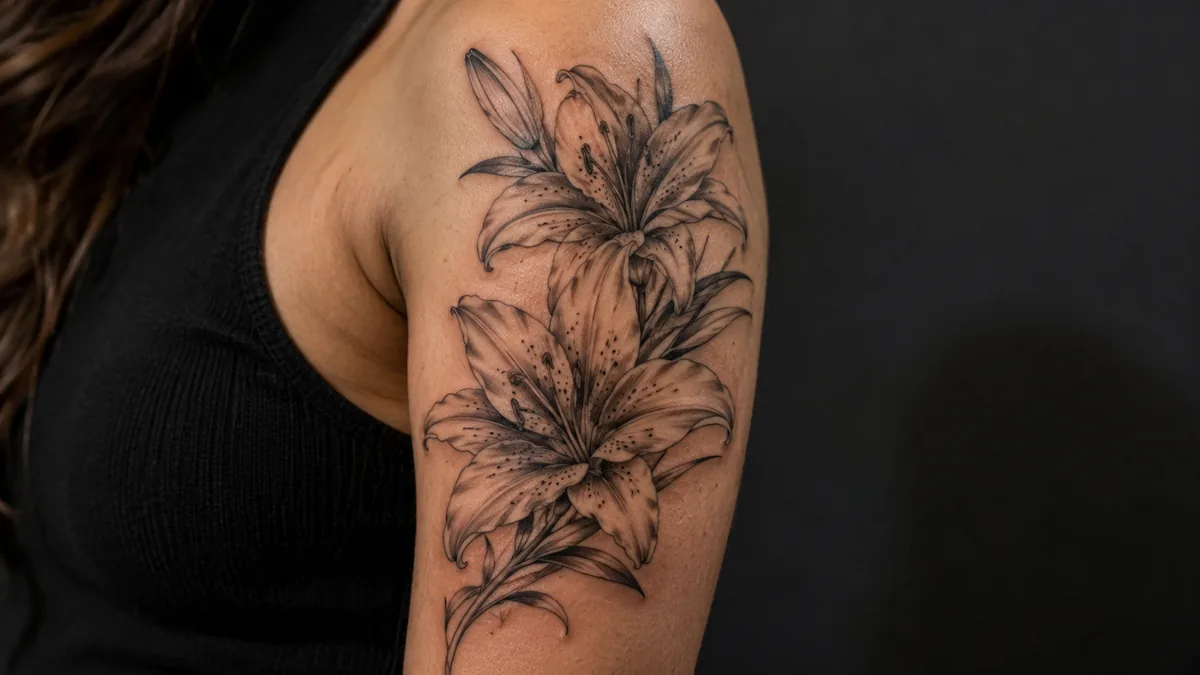
Every lily variety tells a different story, make sure yours is the one you mean to tell.
In ancient Greece the lily was tied to Hera, queen of the gods, and associated with motherhood. Early Christian iconography adopted the white lily as a symbol of the Virgin Mary, representing purity and grace. That’s where a lot of Western funeral and memorial use of the flower traces back. Japanese culture connects the lily, particularly the spider lily or higanbana, to the afterlife and the passage between worlds, which is why you see it so often in memorial Japanese-style pieces.
Egyptian and Chinese traditions both worked the lily into art and ritual for centuries, linking it to fertility and good fortune. These aren’t obscure associations. They’re baked into mainstream tattoo symbolism whether the client knows the full history or not. When someone picks a lily, they’re tapping into something genuinely old.
Popular Design Variations and Styles
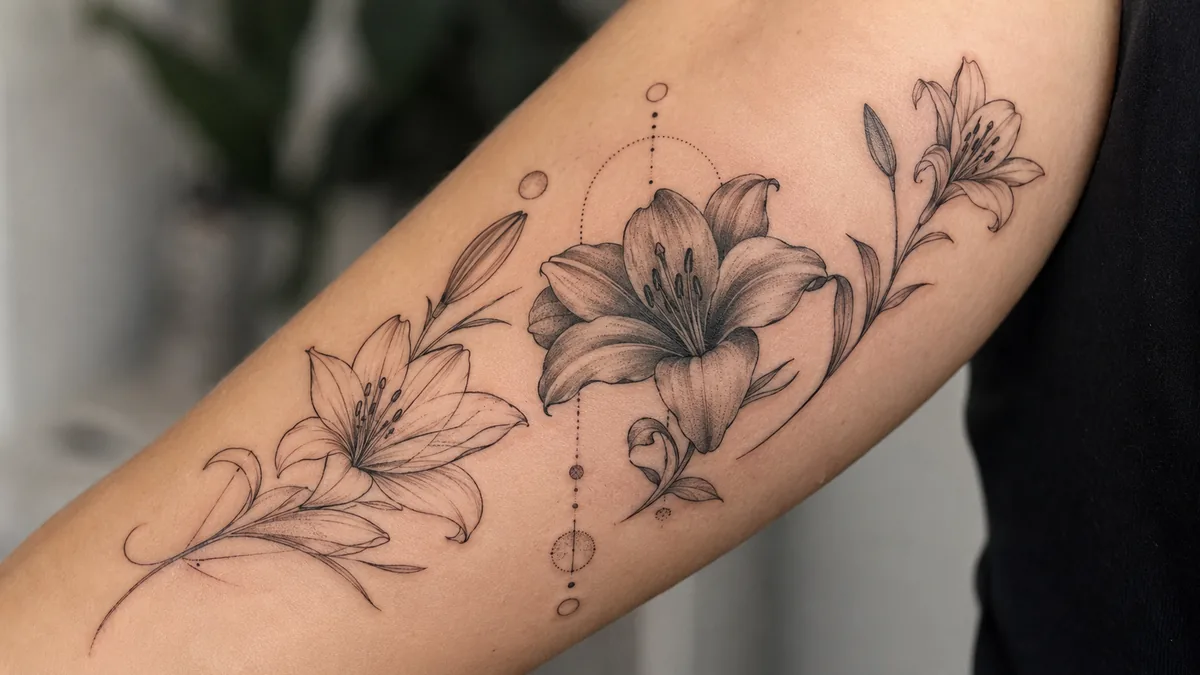
Tiger lily, calla lily, and water lily are the three you’ll sketch most often after the standard day lily. Tiger lilies have that spotted, curling petal look that translates beautifully in bold American traditional or neo-trad with thick black outlines and saturated orange fill. Calla lilies are long, elegant, single-petal forms that suit fine line and blackwork. Water lilies, pushed along by Monet and Japanese woodblock prints, fit Japanese and illustrative realism styles really well.
For realism, the lily is a top-tier subject. The layered petals give you depth, the stamens give you focal detail, and the whole composition reads from across the room when sized right. New school lilies exaggerate the petal curl and color contrast into something almost animated. Whichever style you’re going for, the lily’s natural structure rewards clean, crispy line work. Don’t skimp on the outline.
Color vs Black and Grey
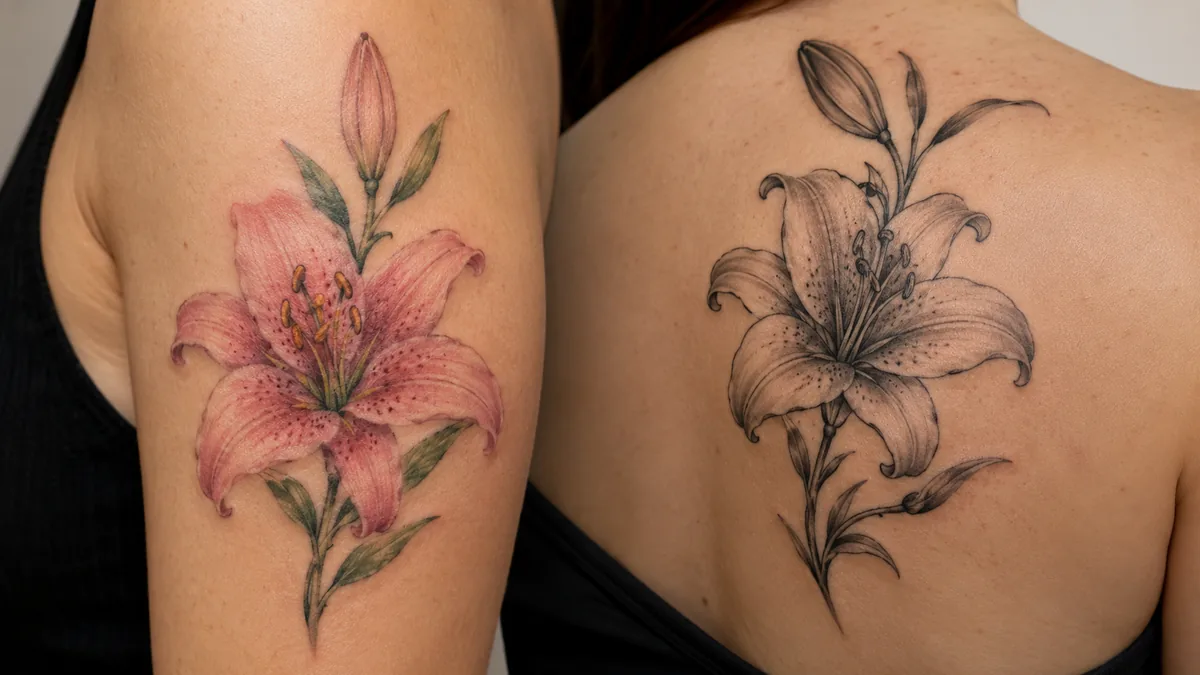
Color lilies are bold. A fully saturated tiger lily in orange, red, and black is one of those pieces that still reads sharp ten years out if it was done right. The trick is keeping the petals distinct. Muddy packing in the mid-tones kills the piece faster than anything else. For color, choose an artist who separates values clearly and doesn’t overwork the skin. Bold will hold applies here more than almost any other floral subject.
Black and grey lilies are quieter but they don’t lose meaning. A white lily rendered in black and grey with soft whip shading and clean edges carries the same purity symbolism with a more somber, intimate feel. That tone fits memorial work perfectly. Fine line single-needle lilies are having a moment right now. They’re gorgeous fresh, but placement matters a lot for longevity on something that delicate.
Placement and How It Ages
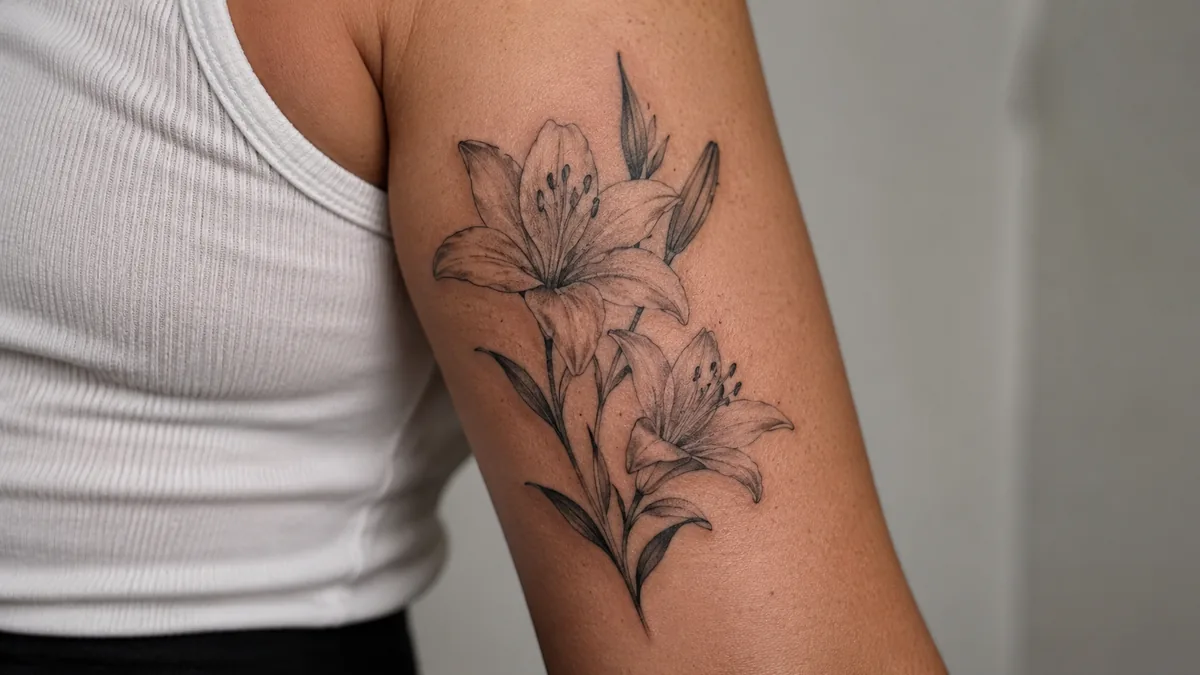
The upper arm, forearm, calf, and thigh are the workhorses for lily placements. These zones offer flat, stable skin that takes detail well and doesn’t distort much over time. A realistic lily on the outer calf ages exceptionally well because the skin there is relatively stable and low-wear. The thigh is a great canvas for a larger composition with leaves and stems. Ribs will give you a beautiful placement fresh but the skin shifts more over decades.
High-wear zones like fingers, feet, and the inner wrist fade faster, and fine line work in those spots can blur into a gray smudge inside five years. If someone wants a delicate fine line lily on a wrist, have that conversation upfront. Inner bicep, collarbone, and sternum are spicy spots that attract a certain kind of client. Sternum pieces especially suit the calla lily’s vertical form. Placement is part of the design, not an afterthought.
Combining the Lily With Other Elements
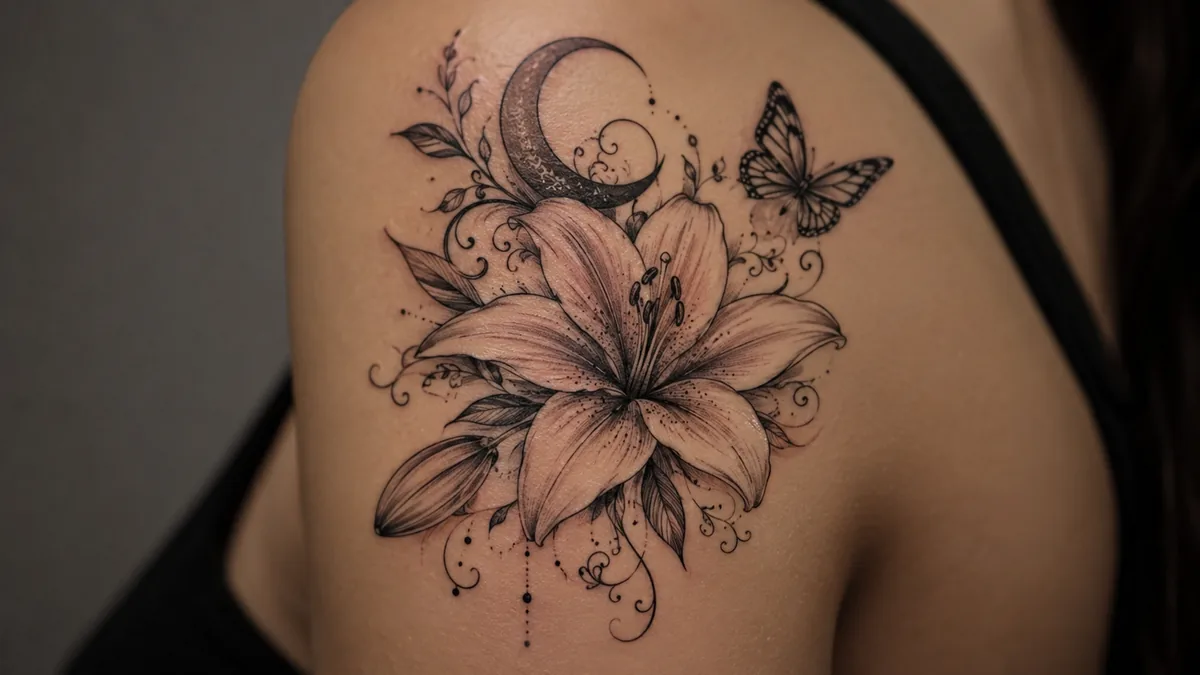
Lilies pair well with a short list of elements that actually reinforce the meaning. Butterflies push the rebirth angle harder. Skulls turn a white lily into a life-and-death contrast that works in Day of the Dead style or just as a bold standalone statement. Koi and water lilies together are nearly a genre of their own in Japanese-influenced work, and for good reason: both carry transformation symbolism that compounds.
Snakes wrapped around lily stems have a long history in Western tattooing and carry a dual meaning of temptation and renewal. Names and dates are common additions for memorial pieces. If a client wants to add text, push for a clean font that doesn’t compete with the petal detail. The lily should stay the subject. Typography should support it, not fight it for attention.
Who Gets Lily Tattoos and How to Make It Personal
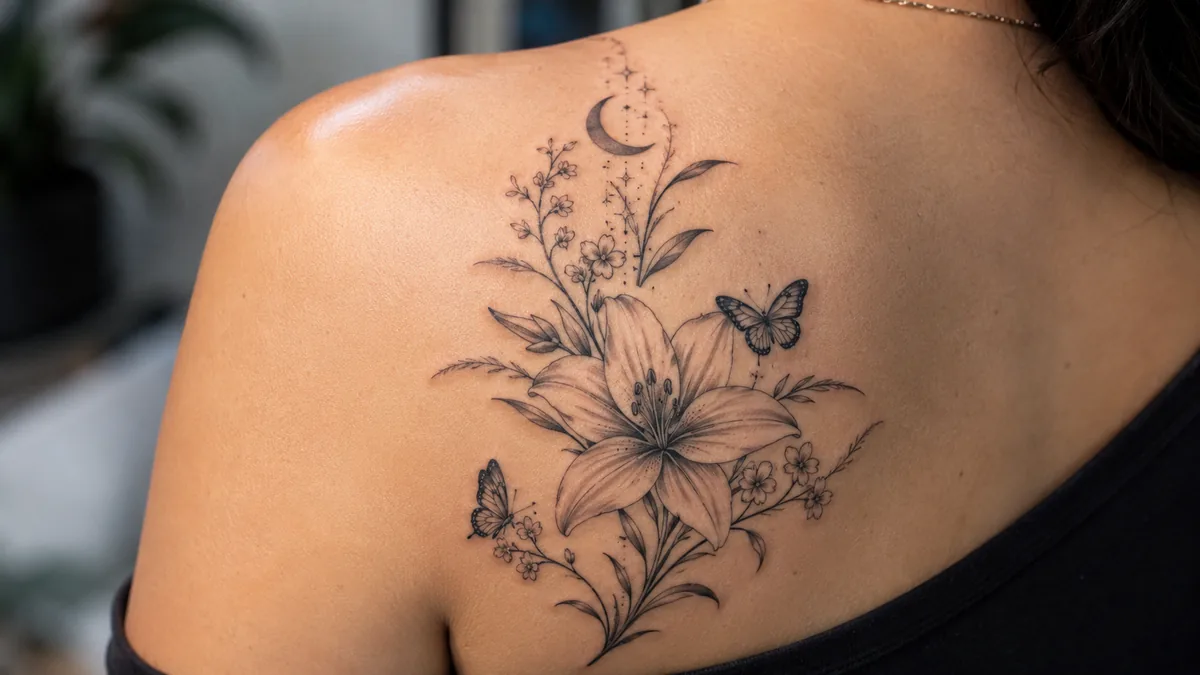
Lily tattoos cross demographics more than most floral subjects. Men get them, women get them, every age group. The association range is wide enough that it doesn’t read as belonging to one type of person. Memorial clients lean toward white or yellow lilies with soft black and grey rendering. Clients celebrating strength or a new chapter tend toward tiger lilies or bold color. Someone honoring a Japanese cultural background might request a spider lily with specific placement tied to their heritage.
The most personal lily tattoo is one where the client knows why they chose that specific variety, that specific color, and that specific placement. A good artist asks those questions. The difference between a generic floral filler piece and something that means something for the next forty years is usually just that conversation. Get the meaning right, nail the placement, use an artist whose healed work you’ve actually seen. That’s the whole job.