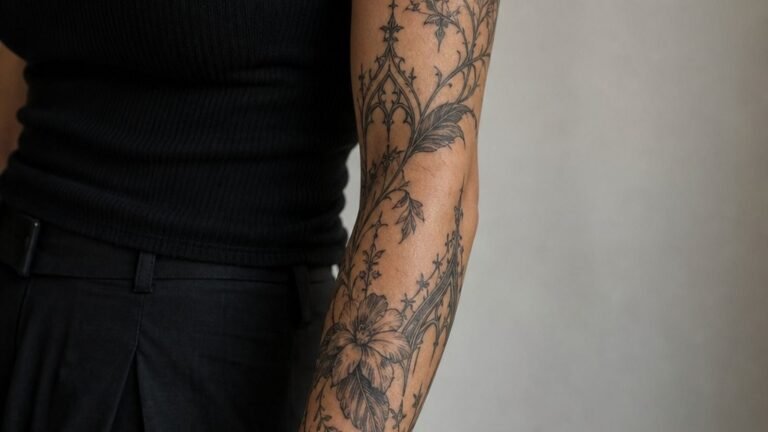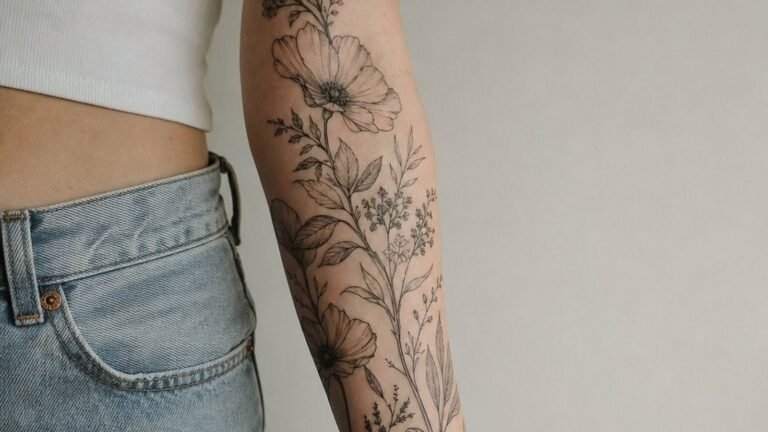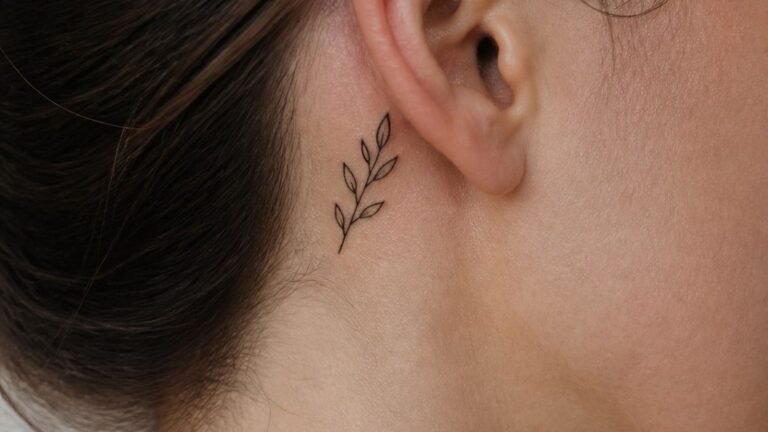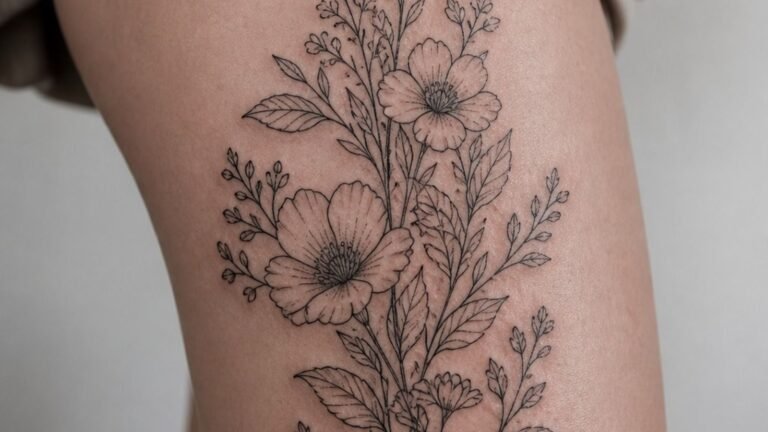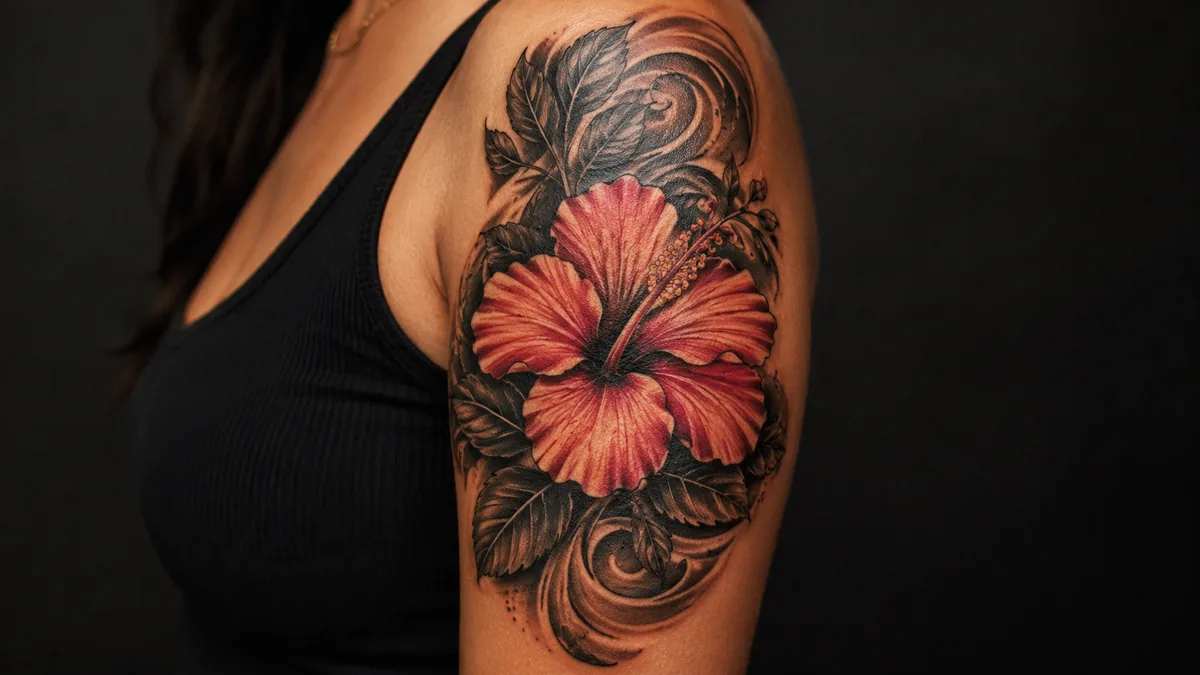
The hibiscus is one of those flowers that actually carries real weight as a tattoo. It’s not just pretty. Across multiple cultures, this bloom stands for beauty, passion, fleeting life, and feminine power. People get it for all kinds of reasons, and the meaning usually comes through loud and clear no matter the style.
If you’re drawn to a big saturated tropical piece or a tight fine-line black and grey version, the hibiscus translates well on skin. It reads from across the room, heals nice when done right, and ages better than a lot of floral work. Here’s what it actually means and how to make it yours.
Core Symbolism: What the Hibiscus Actually Represents
The hibiscus most commonly stands for beauty, delicate femininity, and the idea that good things don’t last forever. That last part is rooted in the flower’s real biology. A hibiscus bloom only opens for one day. That’s not a metaphor someone invented. It’s literally what the plant does. So as a tattoo, it carries an honest message about living fully, embracing the present, and not holding too tight to things that pass.
Beyond impermanence, the hibiscus also signals passion and desire in several traditions. It’s a bold, unapologetic flower. Big petals, strong color, dramatic form. People who get it tend to lean into that energy. It works as a statement about personal power, attractiveness, and confidence. It’s not a shy flower, and it doesn’t make a shy tattoo.
Cultural and Historical Background
The hibiscus blooms one day and falls, that's exactly why it makes such a powerful tattoo.
Hawaii is where most Americans connect the hibiscus first. The yellow hibiscus, Pua Aloalo, is the official state flower of Hawaii, and the flower has deep roots in Hawaiian culture as a symbol of hospitality, welcome, and the spirit of aloha. Wearing a hibiscus behind the left ear traditionally signals you’re in a relationship. Right ear means you’re available. That detail shows up a lot in tattoo consultations, though not everyone commits to that reading in their ink.
In South and Southeast Asia, particularly in Malaysia, the hibiscus is the national flower, called Bunga Raya. It symbolizes courage, unity, and national pride there. In Chinese culture, the hibiscus represents wealth and fame. In Victorian floriography, it meant delicate beauty. The symbolism shifts depending on where you look, but the common threads are beauty, vitality, and a certain boldness that suits the flower’s look perfectly.
Popular Design Variations
The most requested version is a single large hibiscus bloom, usually Hawaiian or tropical style, with wide open petals and a prominent stamen. That’s the one that reads strongest from a distance and holds up best as a standalone piece. Some clients add leaves or buds for more movement and to fill a larger area, like a sleeve panel or a thigh wrap. Others stack multiple blooms for a garden feel, which works especially well on the back or ribs.
Realistic botanical hibiscus tattoos have been trending hard, where the artist renders every vein in the petal and every bit of texture in the stamen. That style demands a steady hand and good skin. Fine-line single-needle hibiscus pieces are popular for smaller placements, like the wrist, ankle, or behind the ear. Neo-traditional versions punch up the outline weight and push the color saturation. Any of these reads as a hibiscus. The style choice is mostly about how long you want it to last.
Color vs. Black and Grey
Color hibiscus tattoos are the classic call. Pink, red, orange, yellow, and deep magenta are the most requested. Red reads passion and desire. Pink reads softer, more romantic. Yellow and orange bring that sunny Hawaiian energy. A saturated red or fuchsia hibiscus with a tight black outline is one of those pieces that stays crispy for years if you take care of it and stay out of the sun. Bold color with bold linework will hold. Thin color fills with minimal outlines will fade and spread.
Black and grey hibiscus tattoos are a legitimate option and honestly underrated. Done with good whip shading and clean line structure, a black and grey hibiscus has a timeless, almost botanical illustration quality. It also ages more predictably than color on most skin tones. If you’re going fine line without fills, expect some softening over the years. That’s not a flaw, that’s just how fine line work behaves. Plan for it and the piece still looks intentional a decade later.
Best Placements and How It Ages
The thigh is the top pick for a reason. Low-wear skin, good canvas size for a full bloom, and the piece stays out of the sun most of the time. Shoulder and upper arm are strong choices too. Good visibility, solid muscle structure underneath, and they hold ink well. The ribcage and hip give you a dramatic placement with natural flow, and the hibiscus shape fits those curves. Fair warning, ribs are spicy. That placement earns its reputation.
Avoid putting fine-line hibiscus work on high-wear zones like the fingers, inner wrist, or feet if longevity matters to you. Those areas see constant friction and sun, and delicate work breaks down fast. A bolder, more solid piece can survive those spots better, but you’ll likely need touch-ups. Wherever you place it, sunscreen is your best long-term investment. UV is what kills color and softens outlines faster than anything else your tattoo will face.
Who Gets the Hibiscus and Why
A lot of people getting hibiscus tattoos have a personal connection to Hawaii or another tropical place. It marks time spent there, a move, a memory, or family roots. Others are drawn purely to the symbolism: living fully, being present, embracing beauty without pretending it lasts forever. That message resonates across a wide range of people, which is part of why the hibiscus has stayed consistently popular in studios for decades.
Women get this tattoo more often than men statistically, but that split has narrowed. Men getting botanical work in general has been on a steady rise, and the hibiscus fits that trend. If you want to make the piece genuinely personal, add a detail that ties it to your story. A specific color that means something to you, a second element like a hummingbird or a wave, or a placement that connects to a memory. The hibiscus is versatile enough to carry extra meaning without losing its core identity.