
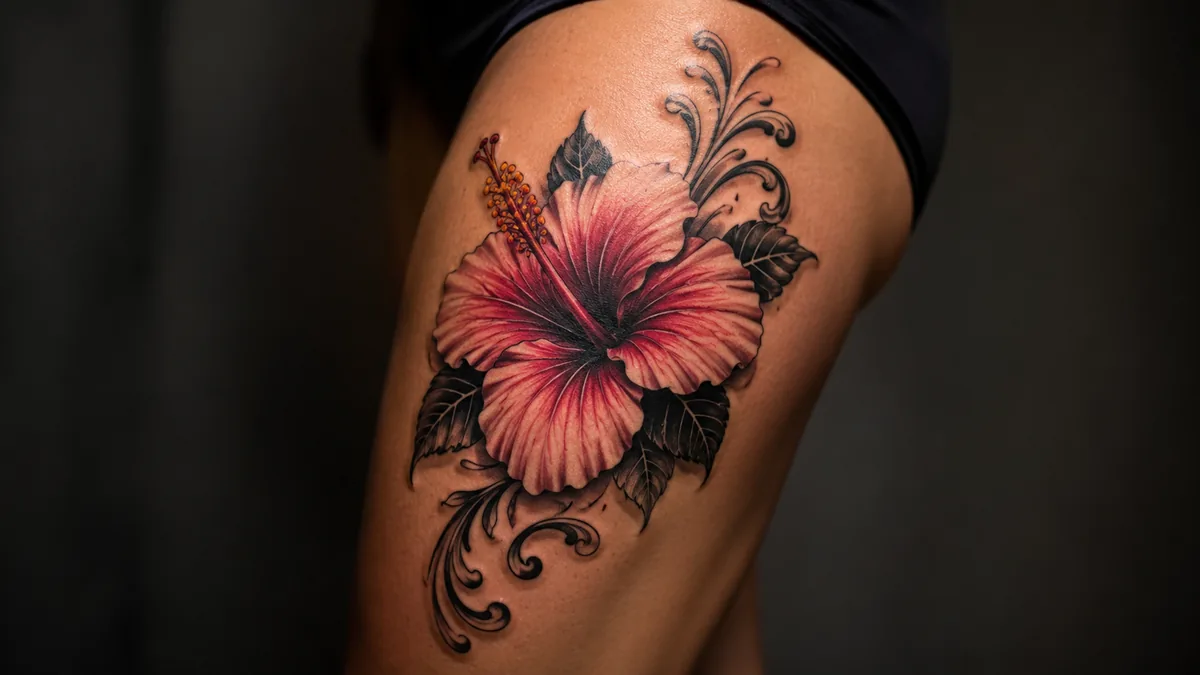
The hibiscus is one of those flowers that carries real weight. It’s not just pretty ink. Across cultures, this flower signals beauty, passion, fleeting youth, and a deep connection to place. People get hibiscus tattoos for a reason, and that reason is almost never random.
If you’re drawn to a bold tropical bloom or a delicate fine-line piece, understanding what the hibiscus means helps you own it. This is the full rundown, straight from the chair.
Core Symbolism: What the Hibiscus Actually Means
The hibiscus is universally tied to beauty, femininity, and the idea that some things don’t last forever. The flower blooms for only one day in the wild. That short lifespan feeds a symbolism around living in the moment, appreciating what’s here right now, and not clinging to things that pass. It’s a flower that says be present without spelling it out.
On a tattoo, that translates into themes of grace, confidence, and personal power. It also carries strong associations with love and desire, especially in Hawaiian and South Asian traditions. It reads as both soft and bold at the same time, which is exactly why it works so well as body art.
Cultural and Historical Background
A hibiscus lasts one day on the vine. On skin, it lasts forever.
Hawaii made the hibiscus iconic. The yellow hibiscus, pua aloalo, is the official state flower of Hawaii since 1988. In Hawaiian culture the flower represents royalty, respect, and hospitality. It’s been worn in hair to signal relationship status too, flower behind the right ear meaning available, left ear meaning taken. That’s genuine folk tradition, not marketing.
In Malaysia the hibiscus, called bunga raya, is the national flower and symbolizes national pride, courage, and unity. In South Korea it appears on national emblems. Across South Asian and Caribbean cultures it ties to femininity, beauty rituals, and spiritual offerings. Each of these roots is real, and knowing which one connects to your background makes the tattoo carry more personal truth.
Popular Design Variations
The traditional five-petal hibiscus is the classic choice. It reads clean from across the room and holds detail well. A lot of clients go for a single large bloom as a focal piece, maybe with a couple of buds or leaves to give it flow. Others stack a vine of hibiscus flowers up the arm or down the ribs for a fuller composition. Neo-traditional interpretations thicken the outlines and push the colors into jewel tones, giving it a graphic pop.
Fine line hibiscus tattoos have blown up over the last few years. Crispy thin lines, minimal shading, delicate petal texture. They look stunning fresh but require a skilled artist because those lines show every wobble. Tribal-style hibiscus pulls from Polynesian design with bold black fills and geometric patterns integrated around the bloom. Watercolor hibiscus uses soft washes of pigment to mimic the look of a painted flower. Each style changes the mood completely.
Color Choices and What They Signal
Red hibiscus is the most requested. It amplifies the passion and desire symbolism, and saturated red reads strong on most skin tones. Pink softens it toward romance and femininity without losing impact. Yellow hibiscus leans into the Hawaiian connection and gives a cheerful, warm energy. Orange and coral work beautifully in neo-traditional styles. Purple hibiscus is less common, which makes it stand out, and it carries associations with mystery and spiritual depth.
Black and grey hibiscus hits different. You lose the tropical color story, but you gain longevity and versatility. A well-executed black and grey hibiscus with fine whip shading on the petals is genuinely striking. It also ages more predictably than heavy color, especially in high-wear zones. If you want the piece to hold its detail over ten years, black and grey is a serious contender. Bold will hold, always.
Best Placements and How It Ages
The shoulder, upper arm, and thigh are the top placements for hibiscus tattoos. Flat, relatively low-friction surfaces mean the ink settles evenly and heals nice. A large bloom on the shoulder blade or upper back gives the design room to breathe and reads beautifully. Hip and ribcage placements are popular too, though the ribs are spicy, some of the most painful real estate on the body.
Fine line hibiscus on the wrist, forearm, or ankle looks gorgeous fresh but ages faster in those high-wear zones. Sun exposure, skin friction, and natural skin movement all break down fine lines over time. If you want longevity on a smaller piece, go slightly bolder with the line weight than you think you need. Blowout risk is real on thin skin areas like the inner wrist. Talk to your artist about the right weight for your skin tone and lifestyle.
Who Gets Hibiscus Tattoos and Why
This one spans a wide range of people. You see it on folks with Hawaiian or Pacific Islander roots using it as a cultural anchor. You see it on people who spent formative time in tropical places and want a permanent connection to that. Others pick it purely for the aesthetic, a bold flower that sits well in many styles. Plenty of clients connect with the live-in-the-moment symbolism after a loss, an illness, or a major life shift.
It’s also popular as a first tattoo because it scales well. A small hibiscus on the ankle or collarbone is manageable for someone testing the water. A full sleeve anchor built around hibiscus works for heavily tattooed collectors. The flower is flexible enough to sit in both spaces without feeling out of place. It’s genuinely one of the more versatile designs in the flash book.









