The grizzly bear tattoo is one of the most loaded pieces you can put on your body. It reads raw power, plain and simple. People who wear it aren’t looking for something delicate. They want a symbol that says they’ve been through hell and came out standing.
The grizzly carries a specific weight that other bear tattoos don’t quite match. It’s not a black bear, not a panda. The grizzly is the North American apex predator, the one that doesn’t back down. That’s exactly why people choose it.
Core Meaning: Power, Survival, and Ferocity
The number one meaning behind a grizzly bear tattoo is raw, unfiltered strength. Not gym strength. Life strength. The kind you build when things go sideways and you keep moving. People getting this piece are usually marking a period of serious adversity they pushed through, a loss, an illness, a stretch of life that nearly broke them.
The secondary meaning is ferocity in defense. Grizzlies are famous for protecting their cubs with everything they have. A lot of parents, especially mothers, get this tattoo as a direct statement about protecting their kids. It’s not subtle, and it’s not meant to be.
The Warrior and the Wild: Historical and Cultural Weight
A grizzly doesn't ask permission to take up space, neither should you.
Across many Indigenous North American cultures, the bear, including the grizzly, has been a sacred figure for centuries. In some Plains and Pacific Northwest traditions, the bear represented a warrior spirit, healing power, and a connection between the human world and the natural one. Bear clans, bear ceremonies, and bear medicine were real, respected practices. If you’re drawing on that tradition, do your research and do it respectfully.
Outside Indigenous context, the grizzly has been a symbol of the American West since the frontier era. California’s state flag still carries a grizzly bear. It represented untamed wilderness, independence, and a landscape that did not yield easily. That pioneer grit reading still lives in the tattoo today.
Design Variations: Roaring, Stoic, Geometric, and Everything Between
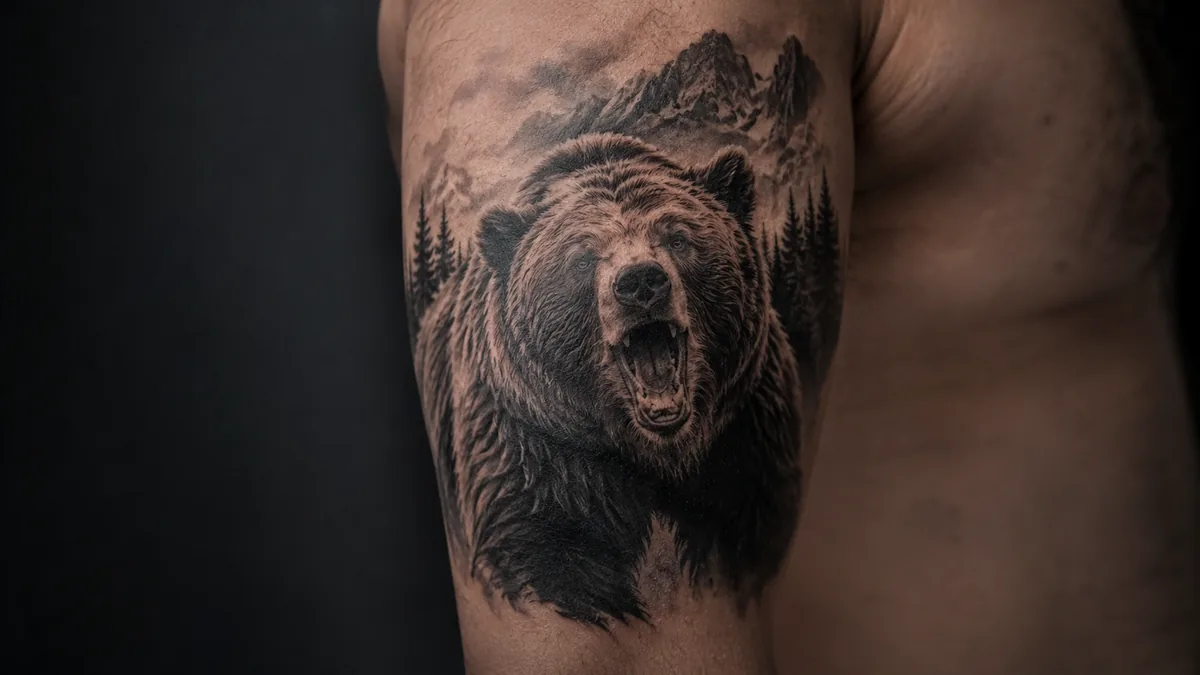
The most popular design is the roaring grizzly portrait, mouth open, teeth out, full aggression. It reads from across the room and photographs clean. Next is the stoic forward-facing portrait, usually in black and grey, which trades aggression for quiet authority. That one feels more like a totem than a war cry. Both work, they just say different things about the wearer.
Geometric grizzly tattoos break the bear into bold shapes and linework, popular with folks who want something more modern and graphic. Watercolor style grizzlies exist but they age rougher since soft edges and bleeds spread over time. Traditional American style grizzlies with bold outlines and saturated color hold up the best long term. Bold will hold always applies.
Black and Grey vs. Color: What Works on Skin
Black and grey is where the grizzly bear shines hardest. A skilled artist using whip shading can build incredible fur texture, depth in the eyes, and weight that makes the tattoo feel three-dimensional. It ages predictably, heals nice, and looks solid for decades with minimal touch-up. This is the safest long-term choice for most placements.
Color can be stunning, especially warm browns, amber, and burnt orange tones that hit the natural grizzly palette. Saturated color with clean outlines holds well if the artist packs it heavy. Avoid pale or pastel interpretations on a grizzly. It fights the energy of the subject. If you’re going color, go bold or go black and grey.
Placement: Where It Lives Best and How It Ages
The upper arm and shoulder are the classic home for a grizzly portrait. Good canvas, lower pain, and the muscle contour frames the piece naturally. The back is where you go when you want the full scene, grizzly in its habitat, mountains, river, forest, and the space to do it justice. Chest placements hit different, more personal, closer to the heart, and that fits the protective meaning well.
High-wear zones like hands and feet will degrade faster. Fine line grizzlies in those spots blow out and fade within a few years. For a subject this detailed, keep it out of the ditch of the elbow and the back of the knee if you want it crispy long-term. The thigh and calf are solid alternative placements that age well and give the artist room to work.
Pain by Zone: What to Expect in the Chair
A grizzly bear tattoo is usually a larger, detailed piece, which means seat time matters. The upper arm and outer thigh are your most manageable zones, steady pain, nothing spicy. The chest gets more intense, especially as you move toward the sternum. The ribs are notoriously spicy, long lines over bone with every breath making it worse.
The spine and shoulder blade area fall somewhere in the middle. Not fun, but doable for most people. The inner bicep is more sensitive than people expect. If your artist needs to work into the armpit or the back of the knee for any reason, that’s where most people tap out first. Know your zone before you book the session.
Who Gets It and How to Make It Personal
The grizzly tattoo attracts people who’ve been through something real. Veterans, cancer survivors, parents, people rebuilding after a breakdown. It’s also popular with outdoors people, hunters, hikers, folks from the Pacific Northwest, Montana, Alaska, Colorado, places where the grizzly is part of the regional identity. It carries regional pride the same way a longhorn or a wolf does in other parts of the country.
To make it personal, talk to your artist about adding specific elements. A cub next to the grizzly shifts the meaning to parenthood. A salmon in the mouth is true to Pacific Northwest ecosystem imagery. A mountain range in the background roots it to a specific place. Birth flowers integrated into the linework, or a specific setting like Yellowstone or Glacier, move it from a stock grizzly to your grizzly.