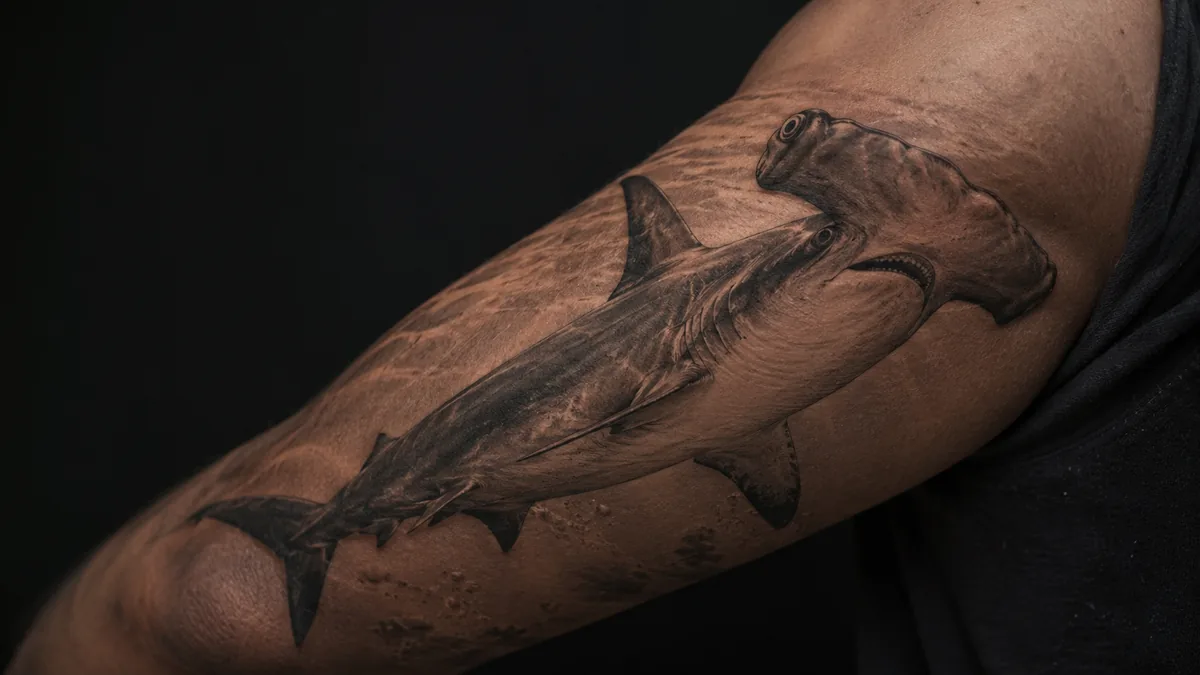
The hammerhead shark tattoo is one of the more visually striking designs in the ocean-themed genre. That wide, flat cephalofoil head reads instantly from across the room, and the shape carries real weight in terms of symbolism. People don’t get this tattoo because it looks cool on a Pinterest board. They get it because the hammerhead stands for something specific.
If you’re drawn to its predator energy, its connection to Hawaiian culture, or the way it represents seeing the bigger picture, the hammerhead tattoo has layers. Let’s break down what it actually means and how to wear it well.
Core Symbolism: What the Hammerhead Actually Represents
The hammerhead shark is built different from every other shark. That wide-set head gives it 360-degree vision, which is where a lot of the symbolism comes from. People associate this tattoo with perception, awareness, and the ability to see the full picture when others have tunnel vision. It’s a design that says you don’t miss things.
Beyond vision, the hammerhead carries strong predator energy, persistence, and forward momentum. It doesn’t back down, it doesn’t stop moving, and it hunts with intention. A lot of people choose this tattoo to represent relentlessness, the kind of focus that comes from knowing exactly what you want and not stopping until you get it.
Strength, Balance, and the Shape That Sets It Apart
The hammerhead doesn't follow the current, it cuts its own path through the water.
That hammer-shaped head isn’t just visually distinct, it’s also a stabilizer. The cephalofoil works like a wing, giving the hammerhead better maneuverability and balance in the water than most sharks. Tattoo collectors who know this detail love the idea of wearing something that represents controlled power, strength paired with balance rather than raw aggression alone.
This makes the hammerhead a solid choice for people who want a predator tattoo that isn’t just about dominance. It’s a more nuanced read than a great white or a bull shark. The balance angle resonates with athletes, martial artists, and anyone who’s worked hard to build both strength and discipline over time.
Hawaiian and Polynesian Cultural Roots
In Hawaiian culture, the shark, known as mano, is considered an aumakua, a family guardian spirit. Certain families claim the hammerhead specifically as their ancestral protector. The hammerhead’s wide head and exceptional sensing abilities made it especially respected among Hawaiian fishermen and navigators. Getting a hammerhead tattoo in a traditional Hawaiian or Polynesian style is a direct nod to that protective, ancestral lineage.
Polynesian tattoo traditions use geometric fills and bold black patterns to represent ocean connection, navigation, and spiritual protection. If you’re going that route, do it with respect and research. Work with an artist who understands the iconography, because the placement, direction, and surrounding motifs all carry meaning in traditional Polynesian work. It’s not just decoration in that context.
Popular Design Styles and How They Change the Read
A traditional American tattoo hammerhead, done in bold outlines with solid fills and a limited palette, leans hard into the power and fearlessness angle. The lines stay clean, the piece reads clearly even on heavily textured skin, and it ages well. Bold will hold, and a traditional hammerhead done right will still look sharp fifteen years later. Neo-traditional takes that foundation and adds painterly shading, richer color, and more anatomical detail without losing the graphic readability.
Black and grey realism is another strong choice. A detailed hammerhead rendered in tight whip shade and smooth gradients can look almost photographic, which plays up the raw, natural power of the animal. Fine line hammerheads exist too, but they’re riskier long-term. Thin lines in high-movement areas like wrists and inner arms are prone to blowout and fading, so talk to your artist honestly about what will hold.
Color vs Black and Grey: Which Holds Better
Black and grey is the more durable call for a hammerhead, especially if you’re going large scale. Saturated black ink reads from a distance, heals consistently, and holds up through sun exposure and skin aging better than color. A solid black hammerhead silhouette can be incredibly graphic and bold without any color at all. High contrast is your friend with this design.
Color hammerheads, especially with deep ocean blues, teal, and warm skin tones on the belly, can look incredible fresh off the machine. They require more aftercare and touch-up over time, and they’ll need sunscreen religiously. Lighter colors like turquoise and white highlights fade fastest. If you want color, go with an experienced artist who uses quality inks, and budget for a touch-up around the two to three year mark.
Best Placements and How the Tattoo Ages by Zone
The hammerhead shape is naturally long and horizontal, which makes the forearm, thigh, shin, and chest strong placements. The wide head gives you a natural anchor point, and the body of the shark can taper nicely toward the inner arm or wrap slightly around a limb. Upper backs and shoulder blades work great for larger pieces where you want the full anatomy to read clearly. These are all lower-wear zones that age well.
High-wear areas like hands, fingers, feet, and inner wrists are spicy and they fade faster. Knees and elbows are notoriously rough for healing and retention because the skin folds and stretches constantly. Ribcage placements are also worth discussing with your artist since thin skin over bone means some people find that area heals unevenly. For a first tattoo or a design you want to stay crispy long-term, stick to the meatier zones.
Who Gets This Tattoo and How to Make It Personal
Surfers, divers, and ocean people gravitate toward this design naturally. Military veterans, particularly Navy, also connect with the hammerhead as a symbol of controlled aggression and mission focus. But you don’t need an ocean background to wear it. Anyone who identifies with the core meanings, seeing the full picture, moving forward without stopping, being the apex in their own environment, can claim this tattoo honestly.
To make it personal, think about what you’re anchoring the symbolism to. Adding meaningful coordinates, a birth date in the negative space, or pairing the hammerhead with specific Polynesian patterns that connect to your family can give the piece a story beyond just the animal. Talk to your artist before you finalize anything. A good shop conversation about what this means to you will always produce a better tattoo than just pointing at flash on the wall.