
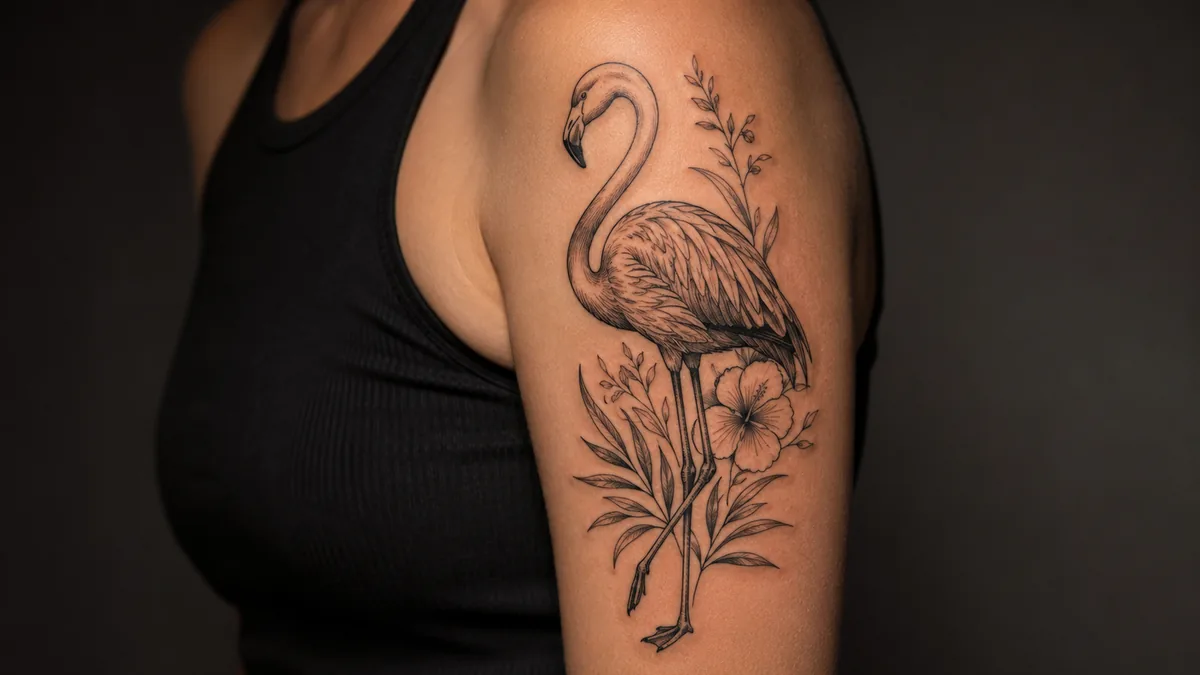
The flamingo tattoo has a clear identity. It reads bold, it reads feminine without being fragile, and it carries genuine symbolism that goes back centuries. People aren’t just picking it because it looks pretty on a calf, though it does look great there.
The flamingo stands for balance, grace under pressure, confidence, and not blending in. That’s the short version. Below is the full breakdown of what it means, where it comes from, how it holds on skin, and how to build one that actually says something.
Core Meaning: What a Flamingo Tattoo Actually Symbolizes
The flamingo’s most recognized meaning is balance. The bird literally stands on one leg for hours without flinching, and that image translates directly into tattoo symbolism: staying steady when things get hard. It’s also tied to confidence and individuality because the flamingo doesn’t hide. It’s loud, it’s pink, it holds its ground in a crowd.
A second strong reading is social connection and community. Flamingos live in massive flocks and thrive together. A tattoo can carry that meaning too, representing loyalty to a group, a family, or a chosen community. These two angles, individual confidence and collective belonging, aren’t contradictory. They coexist in the same bird.
Grace and Beauty Without Fragility
One leg planted, head high, that's not a bird, that's a whole philosophy.
People reach for flamingo tattoos when they want to express elegance that has a backbone. The flamingo isn’t soft. It’s a filter feeder that lives in caustic alkaline lakes, survives intense heat, and flies hundreds of miles at night. The grace is real, but it’s built on toughness. That combination resonates with a lot of clients.
This duality makes the flamingo tattoo a solid choice for people who’ve been through something and came out standing. It’s not a victim symbol and it’s not a warrior symbol. It’s something in between: resilient, composed, and unashamed about standing out. That’s a specific feeling and a good tattoo captures it.
Cultural and Historical Background
Ancient Egyptians associated the flamingo with the sun god Ra because of its fiery pink-red coloring. They used it as a hieroglyphic representation of red and as a symbol of the sun itself. That’s a real historical connection, not invented mythology, and it gives the flamingo a legitimate ancient lineage if you want that layer in your piece.
In Roman times, flamingo tongue was considered a delicacy, which says more about Rome than the bird. In modern Latin American and Caribbean cultures, particularly Cuba and the Yucatan, the flamingo is tied to coastal identity and natural beauty. For clients with roots in those regions, the flamingo can carry genuine personal and cultural weight.
Popular Design Variations and Styles
Traditional American style flamingos hit hard. Bold black outlines, flat saturated pinks and corals, minimal shading. They read from across the room and bold will hold over decades. Neo-traditional builds on that with more dimension, decorative feather detail, and richer color palettes, still plenty of line weight to keep it crispy as it ages.
Fine line flamingos are trending right now, especially in single-needle black and grey or blush pink. They look clean out of the gate but require a skilled hand and low-wear placement to age well. Watercolor flamingos go heavy on soft color bleed with minimal outline, which is gorgeous fresh but can get muddy by year five. Realism-style portraits of flamingos work beautifully on larger canvases like the thigh or ribcage where the artist has room to work.
Color vs. Black and Grey
Full color is the natural home for a flamingo tattoo. That pink-to-coral gradient, sometimes with orange or red tones in the wings, is what makes the image iconic. A saturated color flamingo done right is a statement piece. Make sure your artist has a portfolio showing healed color work, not just fresh shots. Color in high-wear zones like hands or feet will fade faster and need touch-ups.
Black and grey flamingos work well and carry a more subdued, introspective energy. The whip shading on feathers in black and grey can look incredibly detailed and clean. Some artists add a single pop of muted pink in an otherwise monochrome piece, which is effective without going full color. Both approaches are solid. It comes down to whether you want the bird to announce itself or whisper.
Best Placements and How It Ages
The thigh is the best canvas for a flamingo. It gives the bird room to stretch its neck and legs naturally, the skin is relatively stable as you age, and it’s a low-wear zone so color stays saturated longer. The calf is the second best call, especially for a standing flamingo in traditional style. The upper arm and shoulder work well for medium-sized pieces.
The ribcage and sternum are popular but spicy, and the stretched skin during breathing can distort fine-line work over time. Feet and hands are high-wear and not recommended for detailed color work. Wrists and inner arms are mid-tier. Wherever you place it, avoid heavy sun exposure during healing and use SPF on it long-term. Saturated pink especially breaks down under UV.
Who Gets Flamingo Tattoos and How to Make It Personal
Flamingo tattoos skew toward people who’ve built confidence on their own terms, often after a period of trying to fit in and deciding not to bother anymore. They’re common in the LGBTQ+ community partly because of the flamingo’s association with Pride-era kitsch culture and partly because the symbolism of standing out unapologetically lands hard. That’s a real cultural connection, not just aesthetic.
To make yours personal, think about what specific meaning you’re anchoring to. Balance after hard times, community and love, cultural heritage, or just the pure joy of a beautiful, ridiculous, perfectly designed creature. Add elements that reinforce that story: a specific flower, a moon, a landscape it’s standing in. Keep it focused. One clear image with tight execution beats a crowded design every time.









