
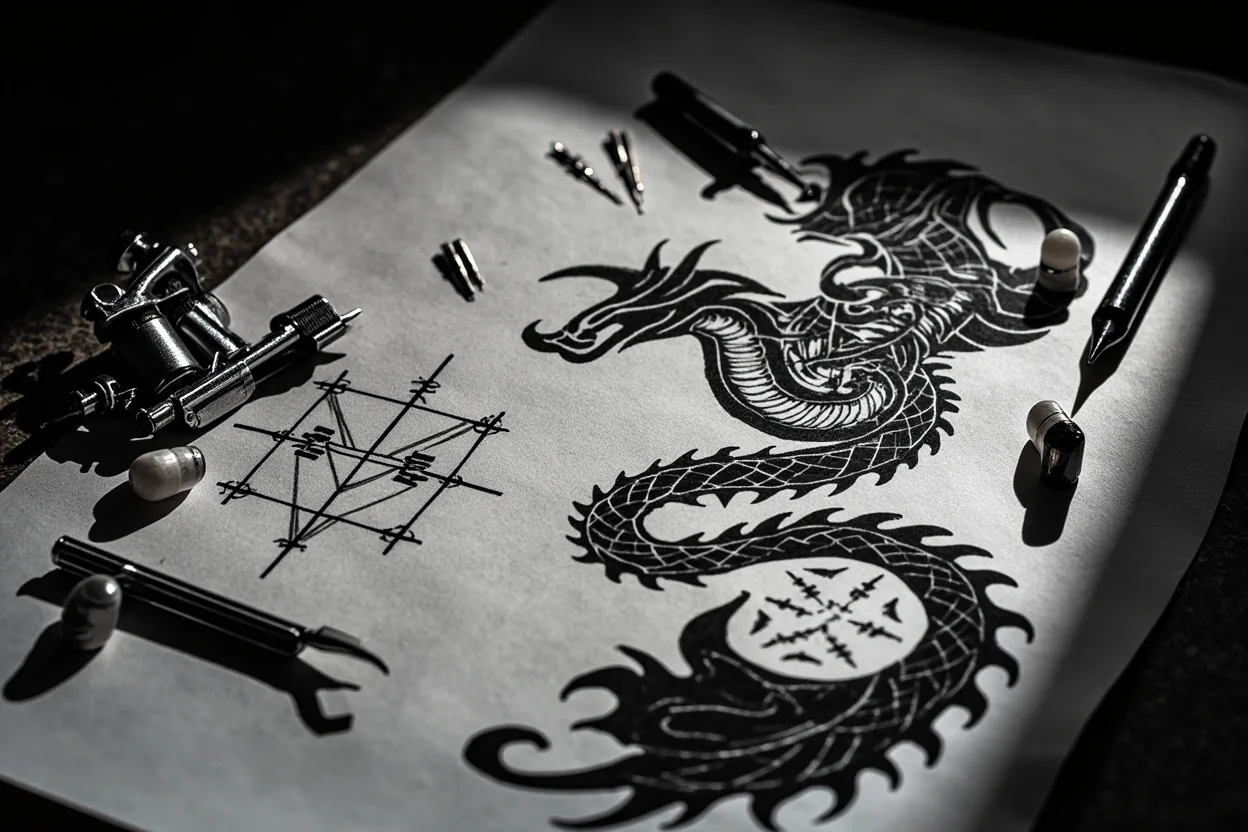
Masculine tattoo ideas get generic fast when every concept becomes a lion, clock, compass, skull, or warrior. Those symbols can work, but only when the design has a reason and a strong composition.
Quick answer: Good masculine tattoo ideas include traditional motifs, Japanese animals, blackwork, geometric designs, meaningful objects, snakes, dragons, eagles, abstract marks, and large placements that use scale and structure instead of generic symbolism.
Masculine tattoo directions
Masculine does not have to mean aggressive. It can mean grounded, structured, dark, restrained, or classic.
| Direction | Best fit | What to watch |
|---|---|---|
| Blackwork | Graphic strength | Avoid flat blocks |
| Traditional | Classic durable motifs | Needs bold outlines |
| Japanese animal | Power and protection | Needs context |
| Geometric | Control and structure | Precision matters |
| Personal object | Meaning without cliche | Simplify the reference |
Geometric blackwork, botanical linework, and portrait realism are three directions that consistently read masculine without leaning on overused imagery. Geometric suits forearms and chests because the hard angles fill space cleanly and hold up in high-wear zones. Botanical, especially large-scale fern or thistle work in black and grey, photographs well and ages predictably because thick stem lines anchor the design even when fine detail softens after a few years.
Portrait realism is a different beast. It demands a specialist, takes two to three sessions on anything larger than a palm, and costs anywhere from $800 to $2,500 depending on complexity. Placement matters hard here. Bicep and thigh skin moves less than elbow or knee skin, so portraits stay crisp longer. Avoid putting tight realism over joints if you plan to keep it clean past year five.
Strength comes from composition
The most masculine tattoo in the room is the one nobody else could wear.
A tattoo does not become stronger because it uses a stronger animal. It becomes stronger when the shape, scale, and placement work.
If you want the tattoo to feel masculine but not generic, choose a less obvious symbol from your actual life: a tool, place, family object, pattern, or old photo detail.
A strong silhouette is the real difference between a tattoo that reads from across the room and one that looks like a blob after ten years. Your artist should be able to hold the stencil up, squint at it, and still recognize the subject. If the detail only works up close, the piece will lose its story as the skin ages and lines migrate slightly. Bold outer edges with controlled interior shading is the move, not the reverse.
Negative space is one of the most underused tools in masculine tattooing. Leaving skin untouched inside a design creates contrast without adding more ink. It also reduces healing time because you’re not saturating the whole panel. On ribs or sternum, where skin is thinner, selective negative space prevents blowout risk in spots where heavy packing can push ink sideways under the skin. Talk to your artist about where to let the skin breathe.
Booking checks
Ask the artist to push the idea past the obvious version.
- Ask what makes the composition different from common references.
- Ask if the design needs more size to feel strong.
- Ask how it will age on the chosen placement.
- Ask whether future sleeve plans matter.
Before you book, pull your artist’s healed work, not fresh photos. Fresh tattoos always look crispy and saturated. Healed work tells you if their lines stay tight after two months and whether their black and grey retains depth or turns muddy grey. Ask specifically for healed examples in the style you want. Any solid artist has them and will share without hesitation.
Check placement logistics before your appointment, not after. Calves and outer thighs are low-wear, heal faster, and are less spicy than ribs or sternum. If this is your first large piece, starting in a forgiving zone lets you gauge your pain tolerance and see how your skin heals before committing to a tougher spot. Bring a snack, stay hydrated the day before, and sleep well. Artists notice when clients are running on nothing and it affects how your skin takes ink.
Generic traps
A simpler tattoo with better scale and linework often feels more confident.
The compass, the anchor, the wolf howling at the moon, the roman numerals of a birth year, the geometric lion, these aren’t bad tattoos because they look terrible. They’re traps because they’re everywhere, and everywhere means your tattoo stops being yours the moment you walk out the door. If your first instinct is one of these, ask yourself what it actually means to you and whether a more specific image could carry the same weight with more personal value.
Barbed wire on the bicep and tribal bands with no cultural connection are the two classics that most experienced collectors end up wanting covered later. Both are difficult to laser and expensive to cover because they sit in high-visibility spots with saturated black. If you’re drawn to band-style work, there are clean blackwork patterns, traditional Japanese hane motifs, and custom geometric banding that accomplish the same visual goal without the baggage. A good artist will push you toward something that’ll still feel right in fifteen years.









