
The daffodil is one of the most loaded flowers you can put on your skin. It’s the first bloom that pushes through frozen ground in late winter, and that timing is the whole point. People who get daffodil tattoos are usually marking something they came through, something that nearly buried them but didn’t.
The meaning is consistent across most cultures: renewal, hope, and the kind of strength that doesn’t look tough from the outside. It’s a quiet statement, not a loud one. That contrast is exactly why it works so well as a tattoo.
Core Symbolism: What a Daffodil Tattoo Actually Means
The daffodil stands for new beginnings, rebirth, and hope after hard times. It blooms first, before anything else, so the association with starting over is earned, not invented. A lot of clients come in wanting this tattoo after recovery, grief, or a major life shift. The flower communicates all of that without spelling it out.
It also carries meanings of resilience and inner strength. The plant survives cold, comes back every year, and doesn’t need much to thrive. For a tattoo, that translates into something personal but universally readable. Anyone who sees it on your arm already has a sense of what it might mean, even if they don’t ask.
Cultural and Historical Background
The daffodil doesn't wait for permission to bloom, and neither should you.
In Welsh tradition, the daffodil is the national flower and a symbol of pride and prosperity. St. David’s Day on March 1st is when Welsh people wear them, so for anyone with Welsh roots, this tattoo carries a heritage layer that goes beyond general symbolism. That’s a real cultural connection, not a stretch.
In Chinese culture, the daffodil is tied to good luck and prosperity, especially around the Lunar New Year. It blooms right around that time of year, which reinforced the association. In Western flower language, the Victorian-era practice of assigning meanings to blooms, daffodils represent regard and unrequited affection, though most clients today are coming in for the rebirth angle, not the Victorian one.
Popular Design Variations
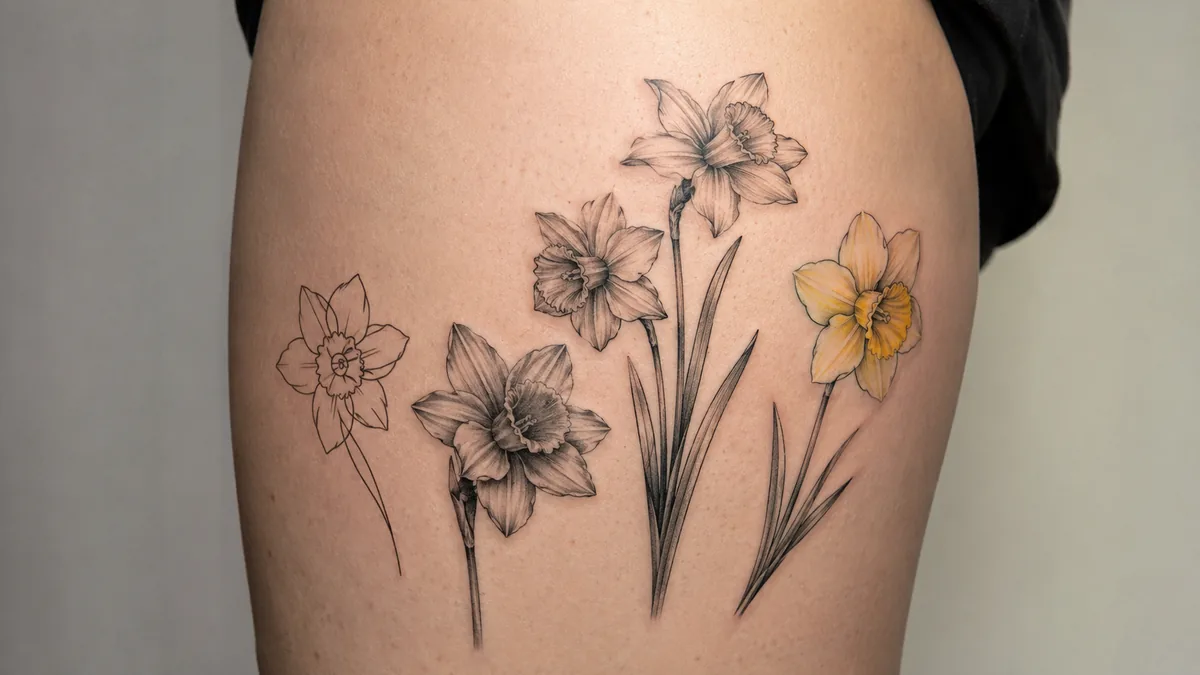
The most requested version is a single stem with one open bloom, clean and minimal. Fine line work suits this flower well because the trumpet shape and the six outer petals give an artist enough structure to work with without needing heavy fill. A single daffodil done in crispy fine lines reads elegant and holds its shape well if it’s placed right.
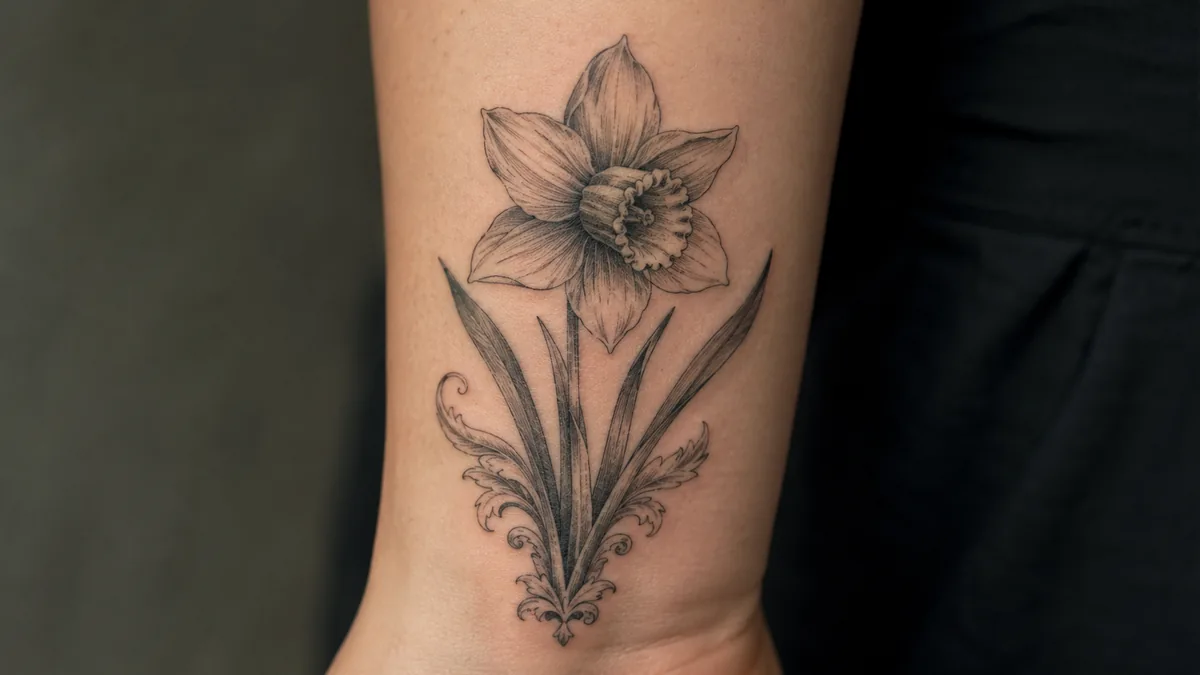
Botanical illustration style is another strong option, detailed and almost scientific, with visible veining in the petals and a realistic trumpet. Some clients go the opposite direction and request a neo-traditional daffodil with bold outlines, punchy color, and stylized proportions. Both work. Watercolor style is popular too, though it tends to soften and spread over time in a way that traditional and fine line don’t.
Color vs. Black and Grey
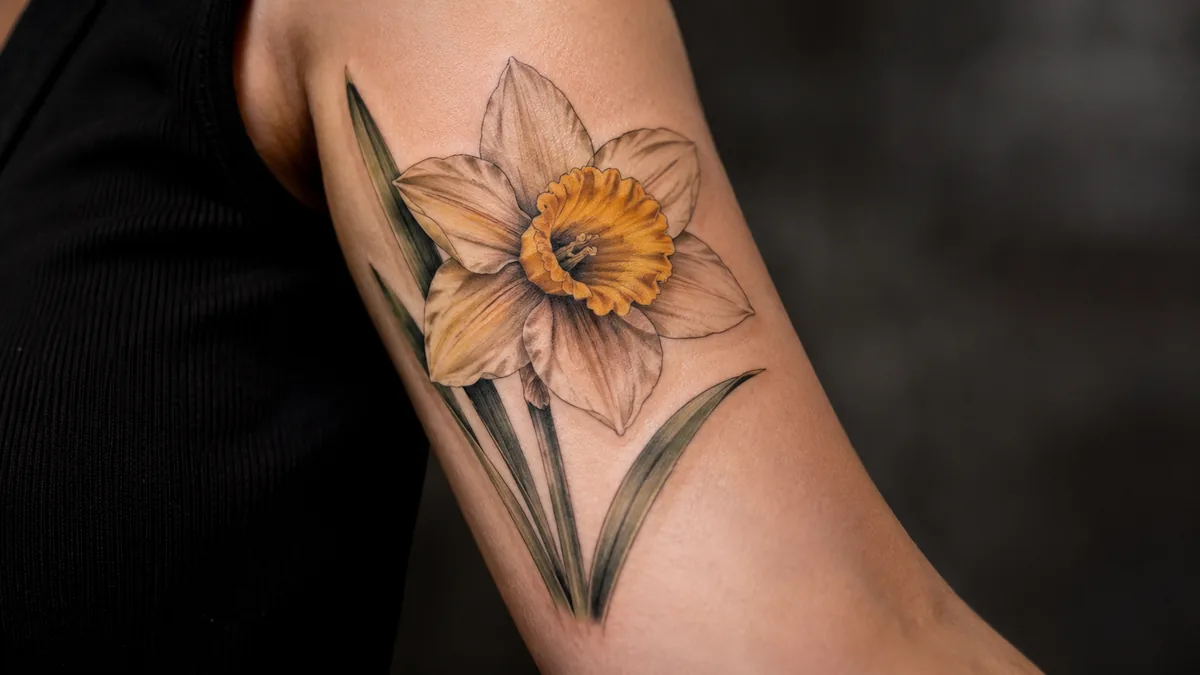
Daffodils are yellow, and a saturated yellow tattoo done well is genuinely striking on skin. A skilled artist can layer yellow with orange at the trumpet and add white highlights to make it pop. The challenge is that yellow pigment can fade faster than other colors, especially on lighter skin tones, and needs touch-ups more often than a black and grey piece would.
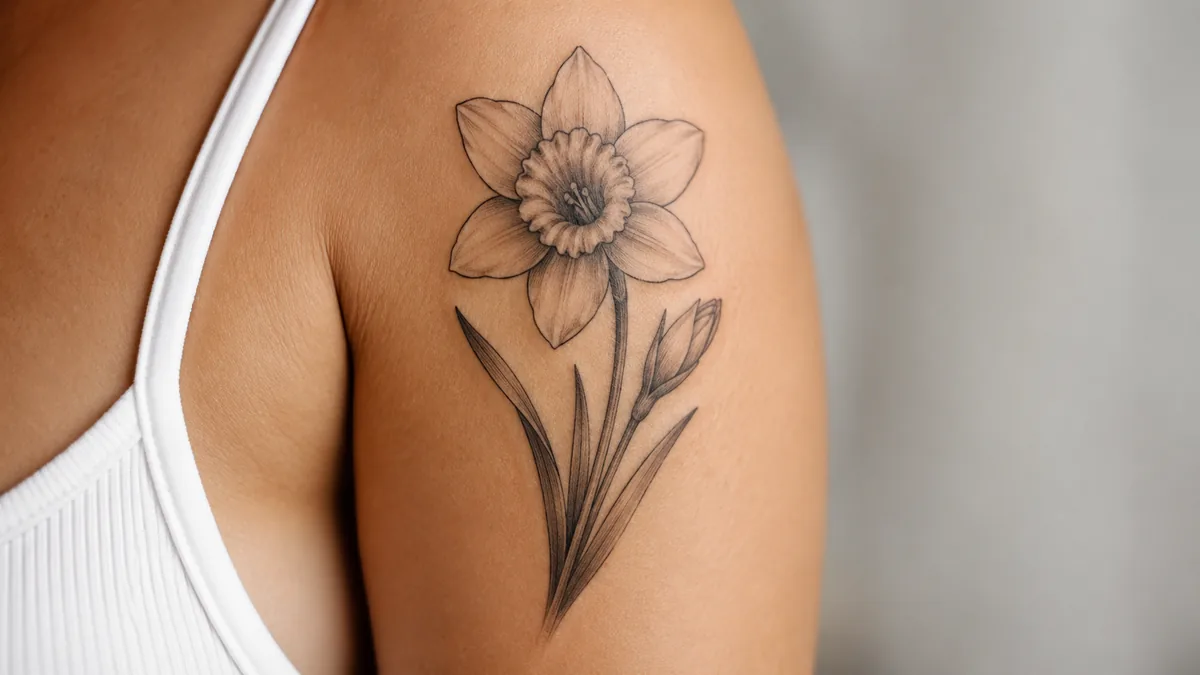
Black and grey daffodils are just as popular and they age better. A solid black and grey botanical daffodil with careful grey wash shading holds for years. You don’t lose the flower’s identity without the color because the shape is so recognizable. If you’re picking a placement that gets a lot of sun or friction, black and grey is the more durable call long-term.
Best Placements and How It Ages
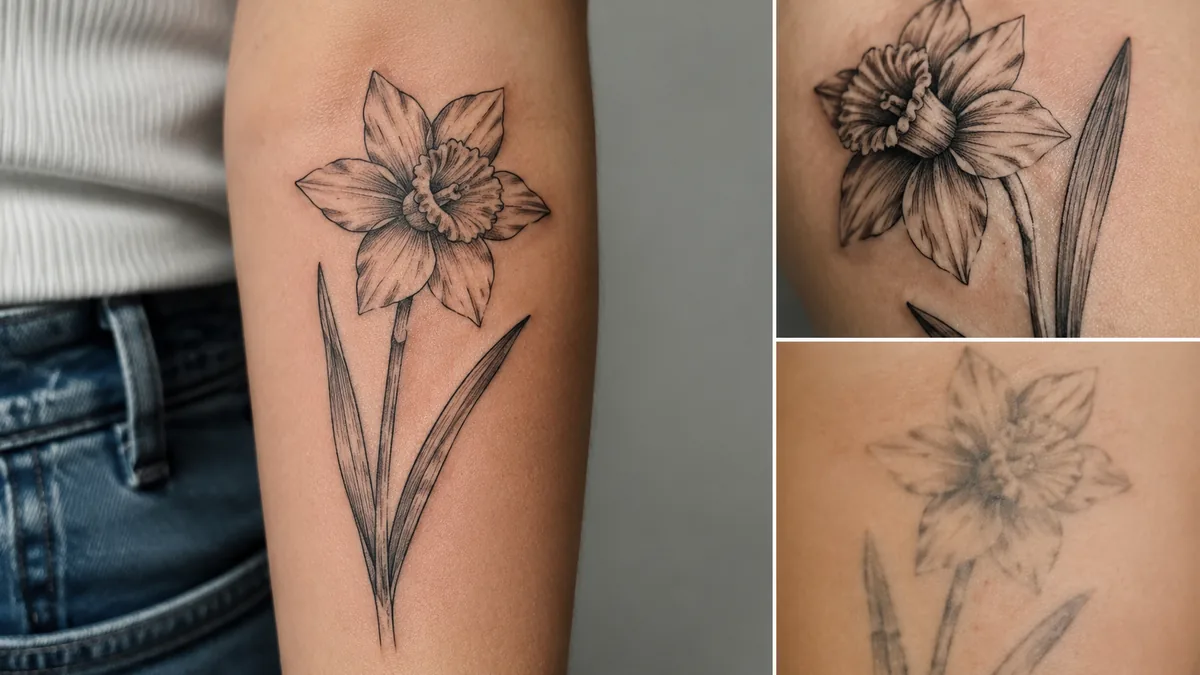
The forearm, upper arm, and calf are the most common spots for daffodil tattoos, and for good reason. These are low-to-medium wear zones with enough flat surface for the stem and bloom to sit naturally. A single stem works especially well on the inner forearm, where it can run vertically and look intentional. The ribcage and sternum are popular for larger botanical pieces, though those spots are spicy on the pain scale.
Avoid high-wear zones like fingers, palms, and the sides of feet if you want the detail to last. Fine line work in those spots will blur and blow out faster than the ink can fully settle. Behind the knee and the inner wrist are manageable but need touch-ups. For a flower with this much fine petal detail, you want skin that stays protected and doesn’t fold or stretch constantly.
The Daffodil as a Grief and Recovery Tattoo
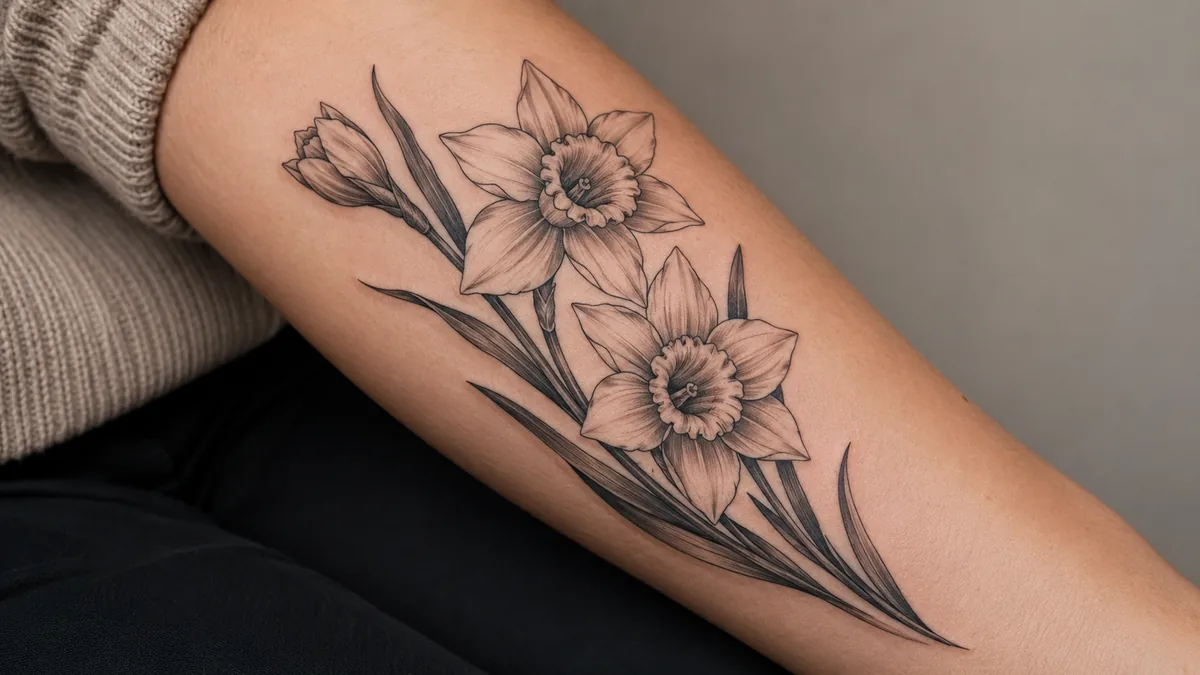
A significant portion of daffodil tattoos are memorial pieces or recovery markers. The daffodil is the official flower of cancer awareness in many countries, particularly associated with the American Cancer Society’s daffodil campaign, so it shows up as a tribute to people lost to cancer or as a survivor’s tattoo. That connection is real and widely recognized.
Beyond cancer, clients use the daffodil to mark sobriety anniversaries, the end of abusive relationships, or surviving mental health crises. The symbolism fits all of those stories without being graphic or heavy-handed. It’s one of the reasons this tattoo skews toward people who want meaning over flash, something they’ll look at on a hard day and feel steadied by.
Who Gets Daffodil Tattoos and How to Make Yours Personal
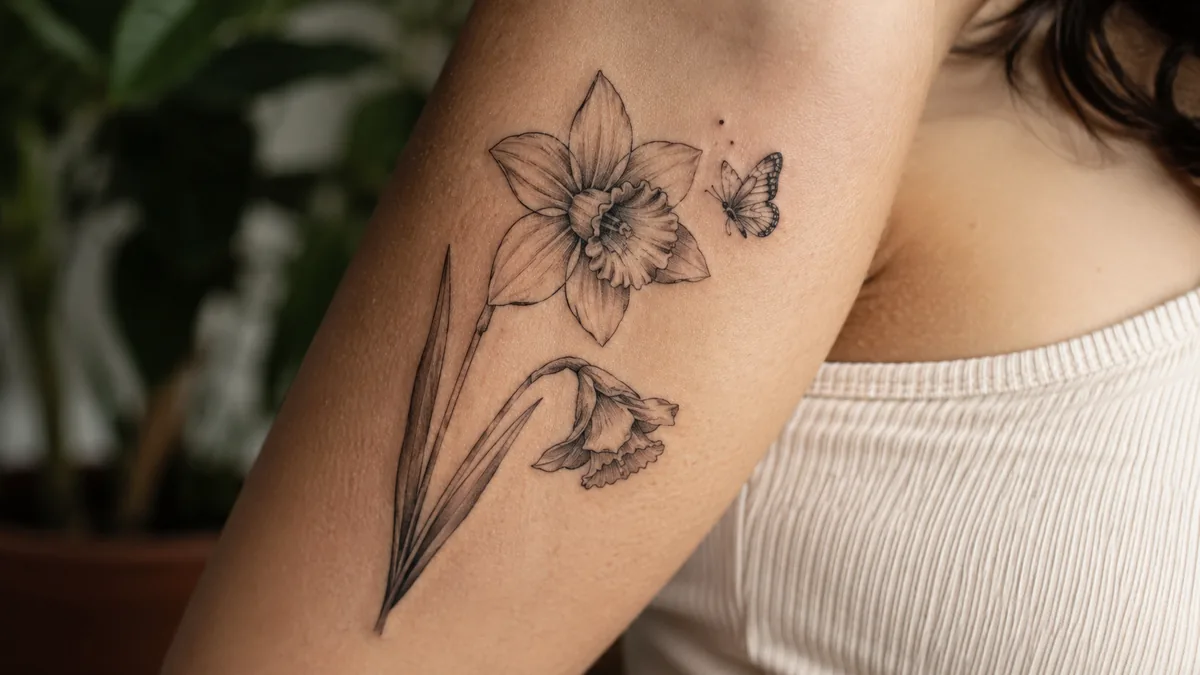
Daffodil tattoos cross demographics more than most flower tattoos. They’re not coded as exclusively feminine the way roses sometimes read. Men, women, and nonbinary clients all come in for them. The design choice, whether that’s a stark minimalist line drawing or a lush full-color botanical, does more to set the tone than the flower itself.
To make it yours, think about what the flower means to you specifically and let that drive the design details. A client marking a parent’s death might want a single stem with a birth month date worked into the roots. Someone celebrating five years sober might want the bloom opening from a cracked surface. Talk to your artist about those details. That conversation is where the tattoo stops being a daffodil and starts being your story.









