
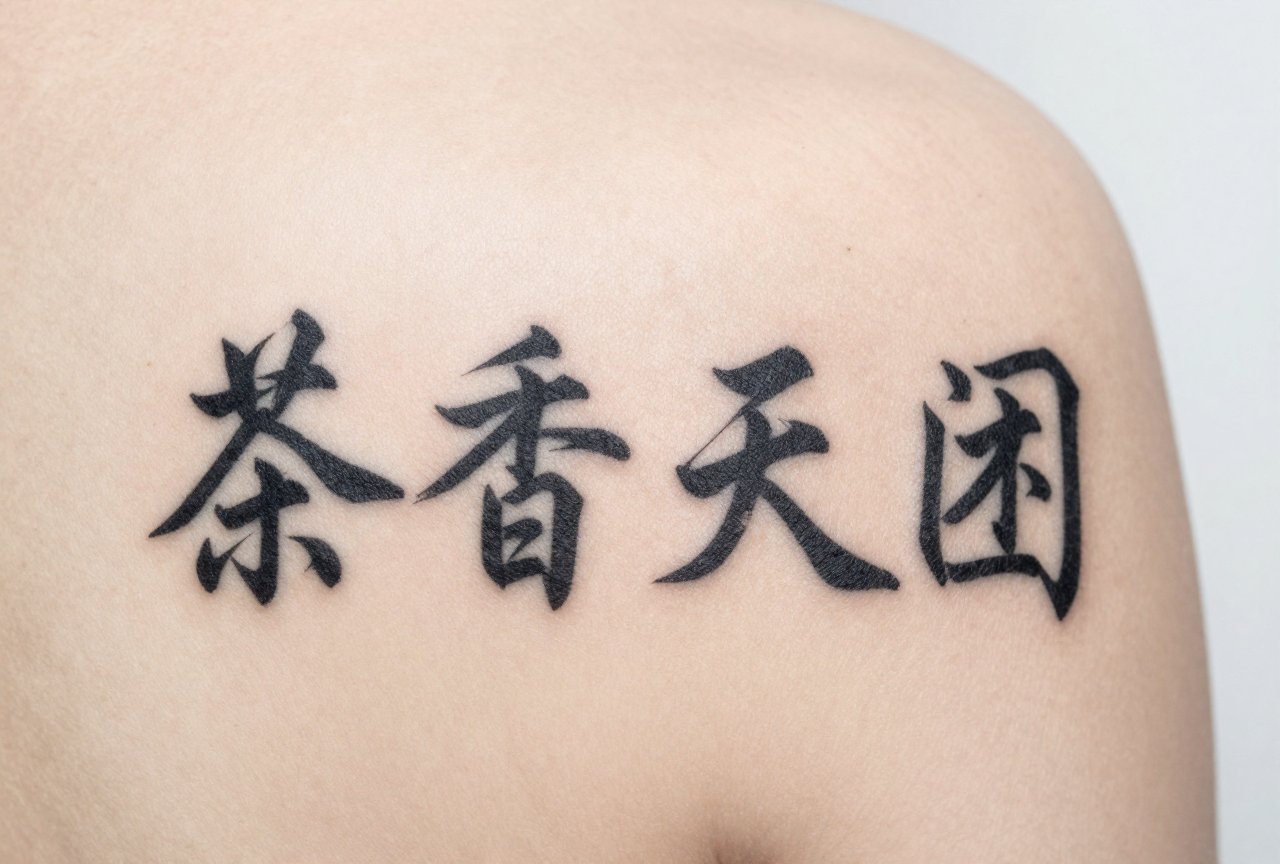
A Chinese words tattoo is a permanent inscription of a single character or short phrase rendered in traditional or simplified Chinese script, chosen for its layered meaning, aesthetic balance, and cultural resonance. These tattoos typically express core life values, emotional states, or philosophical concepts that the wearer wishes to embody or remember. The meaning extends far beyond literal translation into visual poetry, where each stroke carries centuries of calligraphic tradition.
Symbolism & History
Chinese characters evolved from oracle bone inscriptions over three thousand years ago, making them one of humanity’s oldest continuous writing systems. Their pictographic and ideographic origins mean many characters retain visual echoes of their original meanings. This historical weight gives Chinese word tattoos a sense of timeless authority that alphabetic scripts rarely achieve.
The symbolism operates on multiple levels:
- Semantic meaning: The direct definition of the word or phrase
- Visual balance: The harmony of strokes within an imagined square frame
- Cultural association: Literary, philosophical, or historical connections
- Personal narrative: The wearer’s private reason for selection
Popular choices include 愛 (ài/love), 力 (lì/strength), 勇 (yǒng/courage), 和 (hé/harmony), and 福 (fú/good fortune). Philosophical phrases from Confucianism, Buddhism, and Daoism also appear frequently, such as 無為 (wúwéi/effortless action) or 知行合一 (zhīxíng héyī/unity of knowledge and action).
Common Variations & Styles
The visual execution dramatically affects how a Chinese words tattoo reads aesthetically and culturally. Calligraphic styles range from formal to expressive.
- Kaishu (regular script): Clean, balanced, highly legible; ideal for single characters or first tattoos
- Xingshu (running script): Flowing, semi-cursive; suggests movement and spontaneity
- Caoshu (cursive script): Highly abstract and expressive; risks illegibility but maximizes artistic energy
- Lishu (clerical script): Ancient, flattened character forms with distinctive “silkworm head and swallow tail” strokes
- Seal script (zhuanshu): Oldest standardized style, symmetrical and ceremonial; favored for its archaic dignity
Some wearers combine characters with complementary imagery: lotus flowers with 蓮 (lián/purity), koi fish with 堅 (jiān/perseverance), or bamboo with 節 (jié/integrity). Others integrate characters into larger compositions where the script becomes graphic element rather than isolated text.
Best Placements
Chinese characters possess inherent rectangular proportions that suit certain body locations particularly well. The vertical orientation of many compositions favors placement along the body’s natural vertical axes.
- Spine: Accommodates vertical phrases; the body’s central channel echoes the calligraphic column
- Inner forearm or wrist: Visible for personal reminder; single characters read clearly at small sizes
- Ribcage: Private, protected; the character’s containment mirrors the body’s hidden core
- Upper back between shoulders: Traditional placement for strength and protection imagery
- Ankle or behind ear: Delicate, intimate; suits smaller characters with personal rather than public significance
Placement should account for stroke complexity. Characters with many strokes (such as 龍/lóng/dragon) require sufficient space to maintain clarity; simplified characters or those with fewer strokes tolerate smaller scales better.
Who Chooses This Tattoo / Personal Meanings
The demographic for Chinese words tattoos spans heritage wearers, martial arts practitioners, philosophy students, travelers, and those drawn purely to aesthetic beauty. Motivation significantly shapes appropriate selection.
- Cultural reconnectors: Chinese diaspora members reclaiming language and identity
- Martial artists: Discipline names, technique concepts, or school mottos
- Philosophy enthusiasts: Key terms from studied texts, rendered as embodied reminders
- Survivors and transformers: Single characters marking life transitions (rebirth, resilience, release)
- Aesthetic collectors: Appreciators of calligraphy as visual art form
Personal meaning often involves negotiation between accessible translation and private significance. The character 忍 (rěn/endurance) might publicly suggest patience while privately memorializing a specific endured hardship. This layered readability is part of the tattoo’s enduring appeal.
Similar Symbols
Wearers considering Chinese words tattoos often explore related symbolic systems before committing.
- Japanese kanji: Shared characters with divergent pronunciations and cultural associations; requires careful distinction
- Sanskrit devanagari: Sacred Hindu and Buddhist terms; similar spiritual gravitas with different visual culture
- Arabic calligraphy: Flowing, connected script; often chosen for religious phrases or poetic lines
- Latin phrases: Western classical equivalent for philosophical concepts; more immediately legible to local audience
- Tibetan script: Mantras and Buddhist terms; associated with specific spiritual lineages
Each alternative carries different cultural loading and audience interpretation. Chinese characters occupy a unique position in Western tattoo culture due to their long history of martial arts cinema exposure and accessible calligraphic beauty.
Final Thoughts
A Chinese words tattoo succeeds when character selection, calligraphic style, and bodily placement align with genuine personal significance. The centuries of cultural weight behind each stroke reward thoughtful research and respectful engagement. Work with artists experienced in Asian script tattooing, verify meanings with multiple native sources, and choose a character that resonates beyond trend or surface aesthetic. The best Chinese word tattoos become living inscriptions, daily encountered reminders of what the wearer values most.
Related Tattoo Meanings
- Asian Tattoo Meaning: Symbolism, Culture, and Personal Expression
- Lightning Bolt Tattoo Meaning: Power, Speed Sudden Change
- Symbols Tattoo Meaning: A Guide to Iconic Ink and Personal Significanc
- Explore all tattoo symbol meanings









