
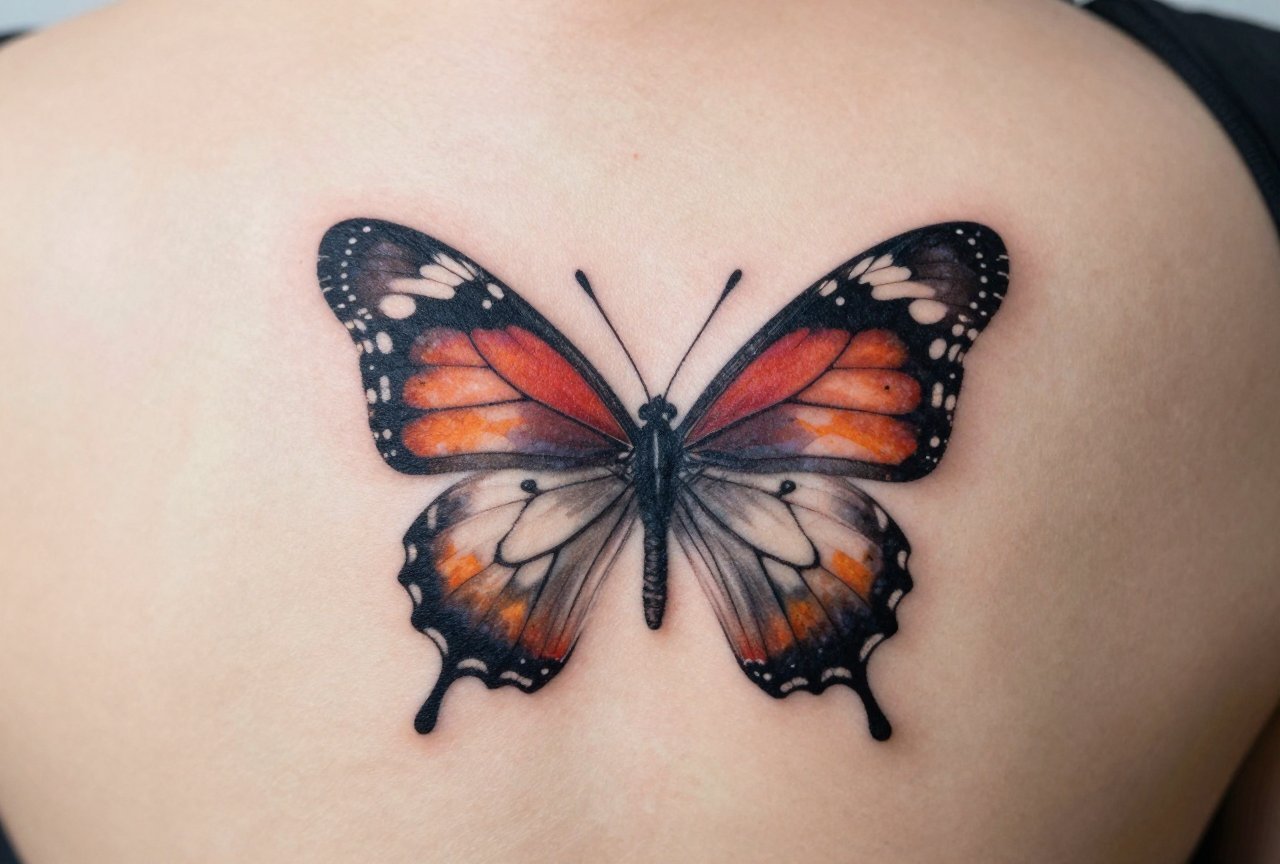
A realistic butterfly tattoo isn’t a cartoon outline with flat purple wings. It’s the moment when ink catches light hitting actual chitin scales, when antennae cast soft shadows against skin, when that split-second of a monarch mid-flight gets frozen in pigment. Done right, these pieces blur the line between tattoo and nature photography. Done wrong, they look like a sticker melted in the sun. This guide covers what separates the two, straight from shop floor experience.
Origins & History
Butterflies have been tattooed for millennia across cultures, but the realistic approach is a relatively modern development. Traditional Japanese work featured stylized butterflies as symbols of transformation and the soul. Sailor Jerry and his contemporaries rendered them as bold, graphic flash. The photorealistic version emerged in the 1990s and 2000s as tattoo machines, needles, and pigments evolved to support finer detail and smoother gradients.
The Photo-Reference Revolution
Before high-resolution digital cameras and internet reference libraries, artists worked from memory or painted flash. Realism required access to crisp source material. Once macro photography of insects became widely available, a handful of pioneering artists started replicating what they saw. The style caught fire around 2010, spreading through Instagram and convention portfolios. Today, a realistic butterfly is a standard request in most shops, though the quality bar keeps rising as collectors become more educated.
Symbolism That Actually Matters
Clients mention metamorphosis, lost loved ones, recovery, freedom. The meaning is personal, but here’s the shop reality: artists care less about your story than whether you’ll sit still for the detail work. That said, a piece with genuine emotional weight tends to get treated with more care. Artists remember the memorial butterflies. The impulse “I just thought it was pretty” ones blur together.
Key Characteristics & Motifs
What makes a butterfly tattoo “realistic” versus illustrative or traditional? Specific visual markers separate the styles.
- Scale texture: Tiny overlapping plates that catch light differently than flat color. Done with stippling, fine line clusters, or whip-shading at varying densities.
- Translucent wing membranes: The thin areas where veins show through, often rendered with negative space or extremely light washes.
- Dimensional body: Segmented thorax and abdomen with actual roundness, not a flat oval with lines.
- Natural poses: Wings folded at rest, or captured in asymmetric flight positions. Symmetrical spread-eagle butterflies read as clip art.
- Shadow integration: The butterfly casts a soft shadow on the skin beneath it, grounding it in the composition.
Common companion elements include botanical backgrounds (milkweed for monarchs, specific host plants), dewdrops, or atmospheric depth. Some artists incorporate the butterfly emerging from chrysalis, though that risks narrative clutter if overdone.
Color vs Black and Grey
This decision changes everything about how the piece ages, how long it takes, and how much it costs.
Color Realism
Monarch orange, morpho iridescent blue, swallowtail black and yellow. Color hits different. The trade-offs: more sessions, more money, more maintenance. Bright pigments like yellows and light oranges tend to fade faster than darker tones. White highlights for scale sheen almost always disappear or yellow within five years. Experienced artists compensate by building saturation deeper than the final desired look, anticipating that fade. Expect 3-5 hours minimum for a palm-sized color piece, often split across two sessions for larger work.
Black and Grey
Subtle, sophisticated, and significantly more forgiving over decades. A master black and grey artist can suggest iridescence through value contrast alone, those shifts from deep charcoal to skin-tone mid-tones. The best examples look like charcoal drawings on skin. Healing tends to be cleaner, touch-ups less frequent. For collectors with darker skin tones, black and grey often provides better visibility and longevity than color that can muddy or disappear entirely.
Personal take: if you want that specific morpho blue, go color and accept the maintenance. If you want timeless elegance, black and grey wins. I’ve seen twenty-year-old black and grey butterflies that still read beautifully. Color ones from the same era often need serious refresh work.
Best Placements
Butterfly anatomy dictates certain placements. The wing shape follows natural body curves or fights them.
- Shoulder blade: Classic. The scapula’s flat plane accommodates a wings-spread pose. Moves beautifully with the arm. Watch for bra strap irritation during healing.
- Forearm: Visible, conversational. Inner forearm ages faster from sun and friction. Outer forearm holds detail better long-term.
- Ribcage: Painful, no doubt. But the vertical space suits a butterfly in flight, ascending or descending. Skin here stretches and shifts with breathing, so simpler compositions work better than hyper-detailed micro-realism.
- Thigh: Large canvas, relatively low pain. Excellent for multi-element scenes with botanical backgrounds. Heals well, protected from sun.
- Behind the ear / neck: Trendy, small. Realism at this scale is genuinely difficult. What looks crisp at week three often blurs by year three. Artists either love or hate these placements.
- Hand: Bold choice. Fast fade zone, frequent touch-ups needed. Some artists refuse outright. Others specialize in it. The butterfly shape actually works with hand movement better than many subjects.
One placement that rarely works: the lower back tramp stamp position with realistic style. The association is too strong, and the horizontal compression distorts natural wing proportions. Artists will try to talk you out of it.
Who It Suits
Realistic butterfly tattoos work across genders, ages, and styles. The determining factor isn’t identity but commitment to the aesthetic. This style demands a certain collector mindset.
Good fit: you appreciate fine art photography, you understand that realism requires maintenance, you’re patient with long sessions, you have a specific species or personal reference in mind. Bad fit: you want it tiny and cheap, you expect it to look exactly like the reference photo forever, you’re covering old tribal work with heavy black lines underneath.
Skin type matters. Extremely dry or sun-damaged skin doesn’t hold fine detail well. Artists may suggest slightly larger scale or more graphic interpretation. That’s not upselling. That’s professional judgment based on what will actually look good in five years.
Modern Variations
The style keeps evolving as artists push boundaries.
Double Exposure & Composite
Butterfly silhouette filled with landscape, galaxy, or portrait elements. Technically demanding. The realistic outer form provides structure while interior content adds personal meaning. Requires an artist comfortable with both realism and illustrative composition.
Biomechanical Hybrids
Mechanical gears and pistons visible through torn wing membranes. Popular in the 2010s, still requested. The contrast between organic and machined textures creates visual tension. Hard to execute without looking like a video game concept art reject.
Scientific Illustration Style
Labels, Latin names, pinned specimen presentation. Appeals to entomologists, biologists, the scientifically inclined. Can feel cold or clinical if not warmed with thoughtful composition. Often done in color with vintage paper-toned backgrounds.
Motion Blur & Multiple Exposures
Capturing wing beats as ghosted sequences. Requires significant skin real estate. Stunning when pulled off. Frequently requested, rarely done well.
Choosing an Artist
This matters more than any other decision. Realistic butterfly work lives or dies on the artist’s specific skills.
- Check their healed work, not just fresh photos: Instagram favors fresh, saturated, slightly swollen pieces. Ask to see one-year-healed examples. Any artist worth booking has these.
- Look for insect or botanical specialization: Animal portrait artists don’t always translate to insect scale texture. The skills overlap but aren’t identical.
- Ask about their reference process: Do they work from single photos? Composite multiple sources? Shoot their own reference? The best ones do the latter.
- Discuss their approach to aging: A thoughtful artist will point out which details will soften, which colors will shift, and how they build for longevity.
- Budget realistically: Quality realism isn’t cheap. A palm-sized piece from a specialist runs $400-800 minimum, often more in major cities. Hourly rates for established artists range $150-300+. Anyone charging significantly less is cutting corners on time, experience, or both.
Shop culture note: walk-ins asking for realistic butterflies same-day get side-eyed. This style requires reference preparation, stencil time, and mental focus. The artist who says “sure, I can knock that out in an hour” is not the artist you want.
Final Thoughts
A realistic butterfly tattoo is a commitment to a specific visual language. It asks for patience in the chair, care during healing, and realistic expectations about how ink lives in skin over decades. The best pieces I’ve seen combine technical mastery with genuine love for the subject. You can tell when an artist has studied actual butterflies, not just photos of other tattoos. There’s a difference in how the antennae curve, how the wing edges wear, how light lands.
Take your time finding the right artist. Bring reference that matters to you. Trust their guidance on size and placement. And once it’s done, wear sunscreen like your tattoo’s life depends on it. Because over enough years, it does.
Related Style Guides
- Chicano Tattoos: Style Guide
- Joker Tattoo Meaning: The Wild Card, the Jester and Dark Humor as Armo
- I Asked For Simple Mehndi, The Tiny Wrist Detail Changed It
- Explore more
Frequently Asked Questions
How much does a realistic butterfly tattoo typically cost?
A small realistic butterfly tattoo usually ranges from $150 to $400, while larger, more detailed pieces can cost $500 to $1,500 or more depending on the artist’s skill level and location. Highly renowned realism artists may charge significantly more due to their expertise in capturing lifelike detail and color gradients.
What body placements work best for realistic butterfly tattoos?
The shoulder blade, upper back, and forearm are popular choices because they provide enough flat surface area for the wings to spread naturally and showcase intricate detail. Some people also choose the ribcage or thigh for larger designs that allow for more dramatic shadowing and dimensional effects.
Do realistic butterfly tattoos fade faster than other styles?
Realistic tattoos with soft color gradients and subtle shading can fade more noticeably over time compared to bold traditional styles because they rely on delicate tonal variations. Proper aftercare, sun protection, and occasional touch-ups every few years will help maintain the crisp detail and bold colors.
Can a realistic butterfly tattoo be done in black and grey instead of color?
Yes, black and grey realistic butterfly tattoos are stunning and often emphasize texture, shadow, and form through expert shading without relying on color. This approach can actually age more gracefully and suits people who prefer a more understated or classic aesthetic.









