You want to tattoo. Not just doodle on paper, actually push ink into living skin and watch someone wear your art for life. That’s the dream. But the path from “I draw pretty well” to ” licensed tattooer” is longer, weirder, and more humbling than most people expect. There’s no fast track. No online course that replaces shop time. This guide walks you through what actually works, what artists really think, and how to avoid the traps that waste years.
Learn to Draw, Then Learn to Draw Differently
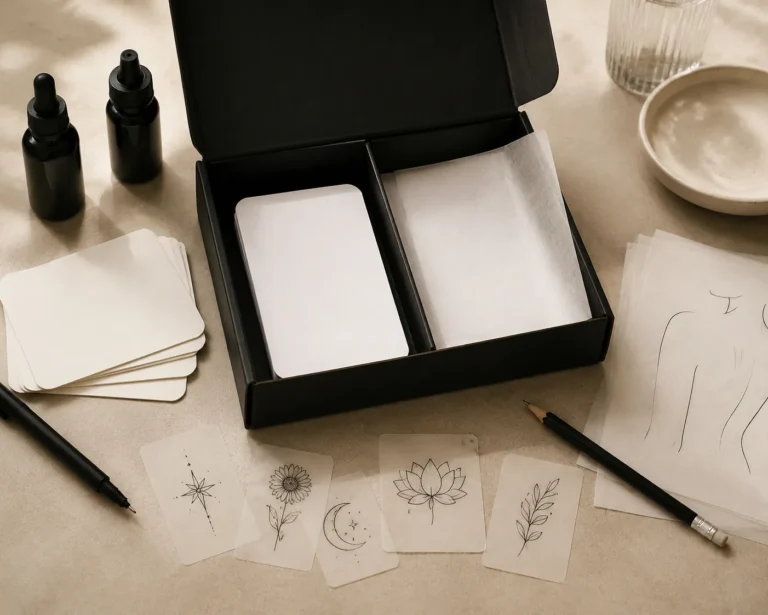
Your Instagram sketchbook full of anime portraits? That’s a start. But tattoo art lives on bodies, not flat paper. Skin curves, stretches, and sags. A design that pops on Bristol board can turn to mush wrapped around a calf. You need to learn tattoo-specific design: bold lines that read from ten feet, shading that ages instead of turning to gray soup, negative space that lets the skin breathe.
Study What Actually Gets Tattooed
Walk into any busy shop and look at the flash on the walls. Traditional Americana. Bold blackwork. Clean script. These styles endure because they work on skin. Study Paul Rogers, Sailor Jerry, Ed Hardy. Not to copy them, to understand why their lines hold. Draw roses until you hate them. Then draw fifty more. The artists who skip this foundation? They plateau hard in year three when their Instagram tricks stop working on actual humans.
Build a Portfolio That Shows Range
Your portfolio should scream “I can adapt.” Include:
- Traditional designs with thick outlines and limited color
- Black and gray shading studies (smooth gradients, not muddy)
- Lettering in multiple styles, script, block, serif
- Designs scaled for different placements: forearm, thigh, ribs, back
- Healed tattoo photos if you have any (even practice skins count)
Leave out your watercolor pet portraits unless they’re tattoo-ready. Clean pages, actual bound portfolio, not a phone scroll. Old school? Maybe. But most shop owners are old school too.
Get an Apprenticeship, The Only Real Way In
Here’s the truth nobody wants: you cannot learn tattooing from YouTube. Machine tuning, skin tension, needle depth, cross-contamination prevention, these are tactile, contextual skills. You need someone watching your hands, correcting your angle, stopping you before you blow out a line on a real person.
Finding the Right Mentor
Apprenticeships vary wildly. Some shops charge tuition (controversial, but common). Others are unpaid, sometimes for a year or more. The worst ones are free labor with no teaching. The best ones are brutal, generous, and powerful.
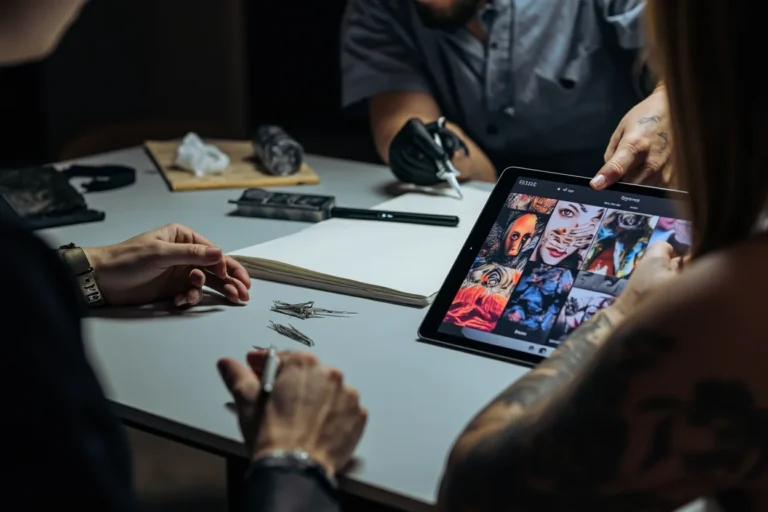
Visit shops in person. Get tattooed by artists you respect. Ask questions after your session, when they’re wiping down, not mid-tattoo. Bring your portfolio. Be prepared to hear “no” for months. The artist who finally says yes? They’ll remember your persistence.
What Apprenticeship Actually Looks Like
Your first six months, you might not touch a machine. You’ll mop floors, sterilize tubes, make stencils, and watch. So much watching. You’ll draw flash for the shop. You’ll run errands. This isn’t hazing, it’s learning the rhythm of a shop, the flow between stations, how to read a client’s energy when they’re nervous.
When you finally start on practice skin (oranges, pig ears, synthetic pads), your lines will wobble. Your shading will be patchy. Your mentor will make you do it again. And again. The ones who quit here? They weren’t meant to stay.
Understand Your Machines and Materials
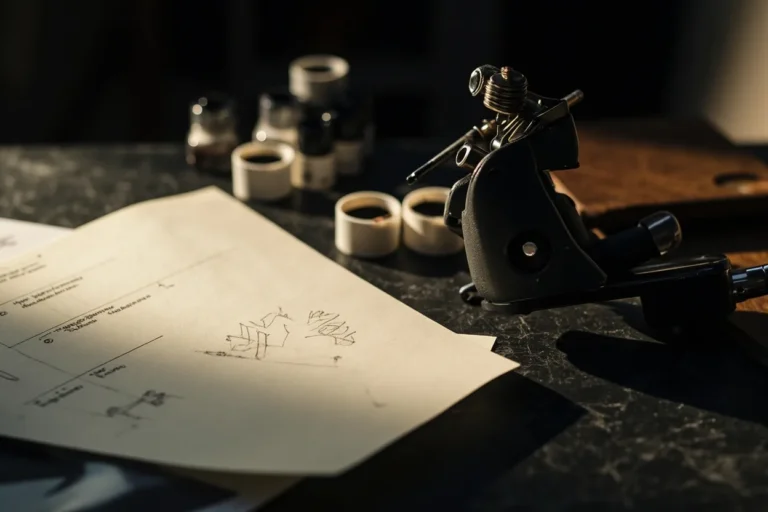
Rotary or coil? Liner or shader? Cartridge needles or standard? These aren’t just preferences, they’re tools for specific jobs. Most apprentices start with coil machines because they teach you to feel the machine’s vibration, to understand how needle grouping affects line weight. Rotaries are quieter, smoother, but hide some of the feedback that helps you learn.
Needle Basics That Matter
- Round liners (RL): outlines, details, fine work
- Round shaders (RS): soft shading, whip shading, texture
- Magnums (M1/RM): color packing, smooth gradients, larger fills
- Flat needles: geometric work, bold lines, some traditional styles
Needle depth varies by skin type. Ribs and inner bicep? Thin, sensitive. Heels and palms? Thick, tough. You’ll learn to read skin like a farmer reads soil, by touch, by sight, by the sound of the machine.
Learn Shop Culture and Professional Standards
Every shop has its own ecosystem. Some are loud, chaotic, family-style. Others are quiet, appointment-only, almost clinical. Neither is wrong. But you need to fit somewhere, or build your own space eventually.
Hygiene and Bloodborne Pathogens
This isn’t optional. Most states require a bloodborne pathogens certification and sometimes a separate tattoo license. You’ll learn about autoclave sterilization, ultrasonic cleaning, barrier protection (clip cord covers, machine bags, dental bibs), and single-use needle policies. Cross-contamination isn’t a theoretical risk, it’s how artists get sick and shops get shut down.
Your setup should be spotless. Your station should look like surgery prep. Clients notice, and they talk.
Client Interaction: The Hidden Skill
You’ll tattoo people who cry, who faint, who talk nonstop, who go silent and scary. You’ll tattoo memorial pieces that wreck you emotionally. You’ll tattoo cover-ups of bad decisions and worse execution. How you handle these moments, whether you push through or pause, whether you comfort or stay professional, defines your reputation.
Some truths you’ll learn:
- Never promise a tattoo won’t hurt. It always hurts. Some spots just hurt more.
- Aftercare instructions should be simple, written, and repeated. Most infections come from client error, not your work.
- Touch-ups are normal. Build them into your pricing or offer one free within a window.
- Deposits save your schedule. No-shows kill your income.
Practice, Build, and Eventually Specialize
Your first hundred tattoos will be smaller than you want, simpler than your dreams, and humbling as hell. Do them anyway. Each one teaches you something: how a line heals on oily skin, how red fades on dark skin tones, how a design flows (or doesn’t) when the client moves.
Document Everything
Take fresh photos. Take healed photos at six weeks, six months, a year. This is your real portfolio, proof that your work holds. Many apprentices skip the healed documentation and regret it when they try to move shops or raise prices.
Find Your Lane
After a few years, you’ll gravitate toward what you love. Maybe it’s photorealistic black and gray. Maybe it’s bold traditional. Maybe it’s tiny fine-line stuff that didn’t exist when your mentor started. Specialization lets you charge more, attract better clients, and actually enjoy your workday. But don’t specialize too early, you need the foundation to support it.
Key Takeaways
Becoming a tattoo artist is a slow, stubborn craft. There’s no shortcut around apprenticeship, no substitute for hands-on hours, and no faking the knowledge that comes from watching hundreds of tattoos heal. Draw constantly. Find a mentor who challenges you, not just one who accepts you. Learn your machines like a mechanic learns engines. Respect the hygiene standards, your career depends on them. Build a portfolio that shows range, then document your growth with healed work. And remember: every artist you admire started with wobbly lines on practice skin, mopping floors at 10 PM, wondering if they’d ever be ready for the real thing. You will be. Keep going.
Related Tattoo Guides
- How to Know If Your Tattoo Is Infected: A Real Guide
- How to Remove Temporary Tattoo: Complete Guide
- How to Shower With a New Tattoo: A Complete Guide
- Explore more
Frequently Asked Questions
Do I need to go to art school to become a tattoo artist?
No, art school is not required, but you need strong drawing skills and a solid portfolio. Many successful tattoo artists are self-taught or have taken specific tattoo apprenticeships instead.
How do I find a tattoo apprenticeship?
Visit local shops with your best artwork, be persistent but respectful, and expect to work unpaid for 1-3 years. Avoid shops that ask you to pay thousands upfront for training, as these are often scams.
What equipment should I buy first as a beginner?
Do not buy machines until you have secured an apprenticeship. Your mentor will guide you on proper equipment and many apprentices start with practice skins and basic supplies provided by the shop.
How long does it take before I can tattoo real clients?
Most apprentices tattoo their first real clients after 6 months to 2 years of practice on fruit, synthetic skin, and themselves. Your mentor will decide when your linework, shading, and hygiene skills are ready for paying customers.