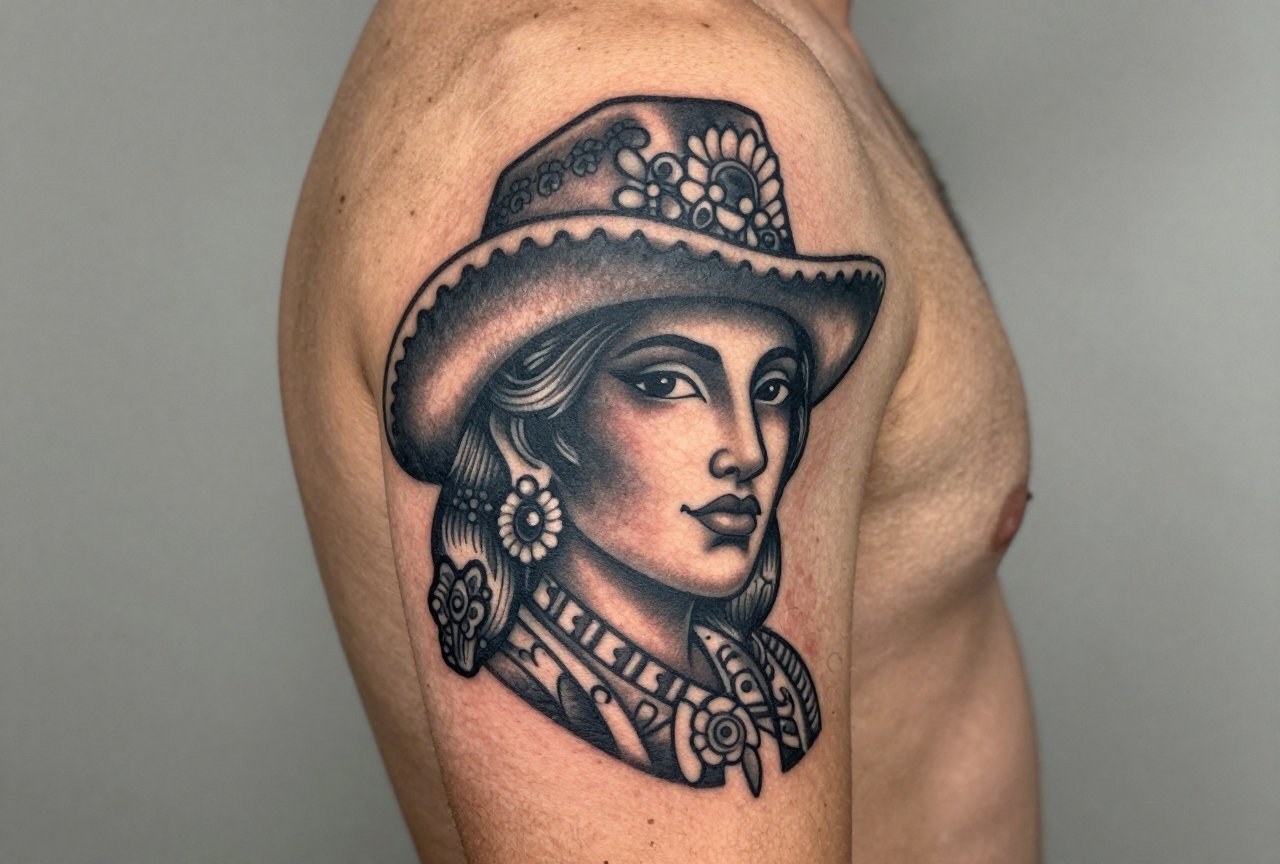
Chicano Mexican tattoos aren’t a trend you pick off a Pinterest board. They’re born from Pachuco culture, lowrider scenes, prison art, and barrio identity, refined over decades into one of the most technically demanding styles in tattooing. Think smooth black and grey gradations so soft they look like charcoal on skin. Religious virgins, payasa girls, ornate lettering, and street scenes that tell stories without a single word of explanation. If you’re drawn to this work, you’re not just choosing aesthetics. You’re stepping into a lineage.
Origins & History
The roots run deep and complicated. Chicano tattooing emerged from Mexican-American communities in Los Angeles, San Diego, and Texas during the 1940s and 1950s. Pachucos, sharp-dressed, defiant youth, started marking themselves with small crosses, dots, and initials using hand-poked methods. By the 1970s, the style exploded inside California prisons, where artists had nothing but guitar strings for needles and cigarette ash mixed with water for ink.
What came out of those constraints was extraordinary. Artists learned to do everything with black ink. No color options meant mastering value, contrast, and smooth wash work that could make a portrait glow on brown skin. When these artists hit the streets, they brought that discipline to professional shops. The style went from underground to iconic, though the mainstream often borrowed without understanding.
From Barrio to Mainstream
Here’s where it gets tense. By the 1990s, magazines like Lowrider Arte and tattoo conventions started showcasing Chicano work to wider audiences. White artists began copying the imagery, payasas, clown faces, ornate script, without the cultural grounding. Some Chicano artists embraced the exposure; others saw theft. The debate still simmers in shops today. If you’re white or non-Mexican and want this style, the respectful move is learning the history and seeking artists from the culture, not just grabbing flash off a wall.
Key Characteristics & Motifs
Chicano work has visual signatures you recognize immediately once you’ve seen enough of it.
- Black and grey realism: Not “kind of grey.” True Chicano black and grey uses smooth transitions from deep black to skin tone, often with no solid black outlines at all. The best pieces look like photographs that’ve been gently smudged.
- Religious iconography: The Virgin of Guadalupe, praying hands, rosaries, crosses with draped cloth. These aren’t decorative, they’re devotion, protection, identity.
- Payasas and female portraits: Beautiful women with tear drops, bandanas, dramatic makeup. Sometimes joyful, sometimes mournful. The payasa is a specific archetype: the Chicana clown, smiling through pain.
- Lettering and script: Ornate, flowing text, names, neighborhoods, “Mi Vida Loca,” RIP tributes. The letters themselves become illustration, wrapped in filigree or smoke.
- Street and car culture: Lowriders, palm trees, city skylines, dice, money, guns rendered with almost religious reverence.
- Filigree and ornamental framing: Swirling decorative borders that connect pieces, fill backgrounds, or frame portraits like church windows.
The common thread? Everything means something. Even the decorative elements carry weight. That filigree might represent family connections. The placement of a tear drop on a payasa’s face changes her whole story.
The Language of Symbolism
Chicano tattooing operates like visual code. Three dots by the eye (the mi vida loca dots) once signaled gang affiliation; now they’re often worn more broadly, though that history matters. Clocks stopped at specific times memorialize deaths. Skulls with particular expressions aren’t generic, they’re specific people. If you’re getting this imagery, learn what it says. Your artist should be willing to teach you.
Color vs Black and Grey
Purists will tell you real Chicano work is black and grey only. They’re mostly right. The style’s foundation is built on that limitation, and the technical mastery required to make skin glow without a drop of color is what separates good artists from great ones.
That said, some contemporary Chicano artists incorporate color selectively. Deep reds for roses or blood. Muted teals and golds for religious halos. It’s not common, and when it happens, the color usually serves the black and grey rather than competing. Think accent, not explosion.
On darker skin tones, black and grey actually performs beautifully, better than many color palettes. The contrast against brown skin creates natural luminosity. A skilled artist knows how to adjust their grey wash values for individual melanin levels. This is shop knowledge, not theory. Ask to see healed photos on skin similar to yours.
Best Placements
Chicano tattoos have traditional strongholds on the body, though contemporary collectors push boundaries.
- Full back pieces: The Virgin of Guadalupe, massive religious scenes, or detailed lowrider portraits. The flat canvas lets artists build depth that photographs terribly but stops people in person.
- Chest panels: Praying hands, names across pectorals, ornate script following collarbone lines. Heals tricky here, movement and sweat test the work.
- Arms and sleeves: Most common entry point. Single portraits, clowns, lettering, or full narrative sleeves telling life stories.
- Hands and fingers: Letters, small crosses, three dots. High visibility, fast fade. Artists often warn: hand work needs touch-ups, sometimes within a year or two.
- Neck and face: Traditional in the culture but serious commitment. Most reputable artists won’t do neck or face work on someone without substantial existing coverage.
Placement carries meaning too. The chest over the heart for mothers, children, lost ones. The back as the heaviest spiritual load. Arms as what’s visible to the world, what you carry forward.
Who It Suits
Let’s be direct. This style was created by Chicano artists for Chicano communities. The imagery, the symbolism, the cultural references, they belong to a specific experience. If you’re outside that culture, getting Chicano work requires thoughtfulness, not just appreciation.
That doesn’t mean automatic exclusion. It means doing the work. Learning history. Supporting Chicano artists directly. Avoiding imagery that claims experiences you haven’t lived, specific gang references, particular neighborhood claims, memorials for strangers. The ornamental and religious elements, approached with genuine respect, are more accessible. A Virgin of Guadalupe by a devout Catholic with Mexican heritage? Different conversation than a payasa on a white college student who thinks it looks “edgy.”
Your artist should have this conversation with you. If they don’t, that’s a red flag.
Modern Variations
The style’s evolving, as living art does. Some artists blend Chicano black and grey with Japanese composition, creating massive back pieces with cross-cultural flow. Others incorporate photorealism techniques from European schools, pushing detail to microscopic levels. Digital design tools let artists map complex lettering and ornamental frames with precision impossible in the hand-drawn era.
There’s also a deliberate return to roots. Young Chicano artists are reviving hand-poked methods, prison-style boldness, and imagery that rejects mainstream polish. It’s political, personal, and raw. The best shops honor both directions, the refined and the rough.
Chicano Style in Global Tattooing
Walk into a shop in Berlin, Tokyo, or São Paulo and you’ll find artists doing Chicano-influenced work. Some studied with California masters. Others learned from magazines and YouTube. The quality varies wildly. The respect varies more. International collectors often miss the cultural weight, seeing only beautiful technique. If you’re browsing artists globally, look for those who’ve apprenticed in Chicano shops or who openly credit their teachers by name.
Choosing an Artist
This matters more than usual. Chicano black and grey is unforgiving. A mediocre color piece can hide mistakes in saturation; a bad grey wash looks muddy, blotchy, and aged within months. You need someone who lives in this style.
- Portfolio check: Healed photos, not just fresh work. Black and grey changes dramatically as it settles. Ask specifically for pieces 6+ months old.
- Smooth transitions: Look for no visible lines between grey values. The shift from dark to light should feel like breathing, not steps.
- Lettering quality: Script is make-or-break. Shaky lines, inconsistent spacing, or letters that blur together show an artist who hasn’t put in the hours.
- Cultural fluency: Can they explain the imagery? Do they know the history? An artist who treats this as just another style to monetize will give you hollow work.
- Shop reputation: Chicano tattooing has strong community networks. Good artists know each other. Ask around, check who’s guesting where, who trained whom.
Expect to wait. The best Chicano artists often book months out. They’re worth it. This is permanent. A rushed black and grey portrait of your mother will haunt you daily.
Final Thoughts
Chicano Mexican tattoos carry weight that goes far past technique. The smooth gradations, the religious devotion, the street narratives, they’re all part of a culture that built beauty from marginalization. If you’re drawn to this work, engage with it honestly. Learn the names: Freddy Negrete, Mister Cartoon, Chuey Quintanar, Jun Cha. Visit the shops in East LA, San Diego, Santa Ana. Listen more than you speak.
Get the work for real reasons, with real respect, from real practitioners. The skin you wear afterward will tell that truth whether you intended it or not.
Related Style Guides
- Religious Tattoo Ideas That Actually Mean Something
- Realistic Butterfly Tattoos: Complete Style Guide
- Chicano Tattoos: Style Guide
- Explore more
Frequently Asked Questions
What defines the Chicano tattoo style and where did it originate?
Chicano tattoo style emerged from Mexican-American communities in Southern California during the 1940s and 1950s, particularly among Pachuco culture and later lowrider communities. It features fine-line black and grey shading, religious iconography, payasa faces, Aztec and Mayan imagery, and script lettering that reflects cultural pride and identity.
Why are Chicano tattoos mostly black and grey instead of colorful?
The black and grey aesthetic originated from prison culture where inmates had limited access to colored ink, using only black ink diluted with water to create grey washes. This constraint became a distinctive artistic tradition that tattoo artists deliberately maintain today for its classic, photorealistic quality.
What is the difference between Chicano and Mexican traditional tattoos?
Chicano tattoos specifically reflect Mexican-American bicultural experience and barrio identity, while Mexican traditional tattoos draw more directly from indigenous Mesoamerican symbols, folk art, and nationalist imagery. Chicano style incorporates elements like lowriders, clown faces, and Old English lettering that speak to the Chicano civil rights movement and urban American experience.
Are Chicano tattoos considered cultural appropriation if worn by non-Mexican people?
This is a debated topic within the community, as many Chicano tattoo artists view the style as sacred cultural expression tied to specific historical struggle and identity. Non-Mexican individuals should research deeply, respect the origins, support Chicano artists directly, and avoid designs with deeply personal significance like specific neighborhood affiliations or religious imagery without understanding.