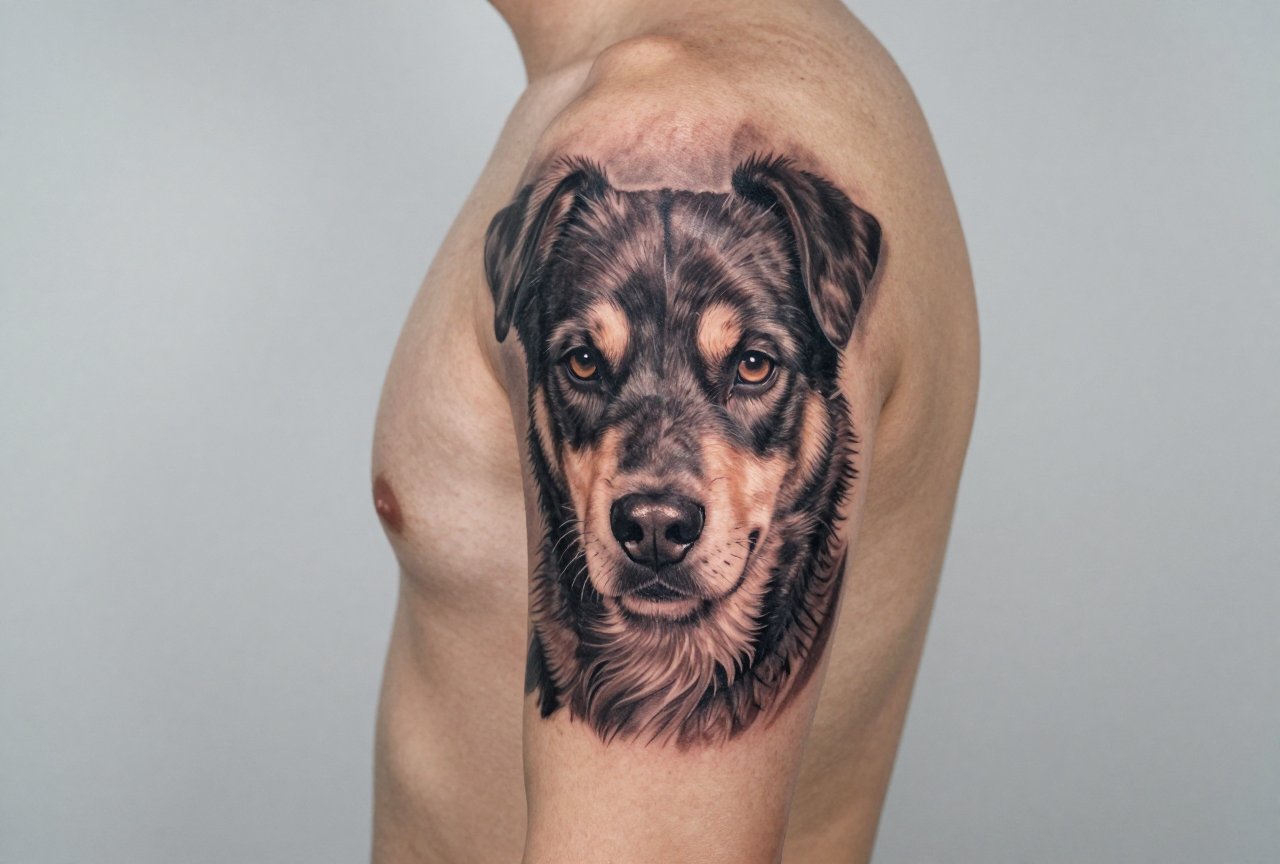
Hyper realistic tattoos are exactly what they sound like, ink that tries to trick your eye into seeing a photograph, a sculpture, or a living thing on skin. I’ve spent years trying to push that boundary in my chair, and I’ll tell you straight: this style demands more from the artist and more from the client than almost anything else we do. The best pieces make you want to reach out and touch them. The worst look like mushy grey blobs after two summers. Here’s what actually matters.
Origins & History
Realism in tattooing didn’t start with Instagram. It grew out of the black and grey Chicano tradition in Southern California during the 1970s and 80s, those soft, smoky portraits of religious figures and lost loved ones that still hang in shops from East LA to San Diego. Those artists were working with single-needle machines and homemade inks, building tone through patience and repetition.
The hyper realistic offshoot really took off in the late 1990s and 2000s when artists started borrowing from airbrush techniques, oil painting theory, and even medical illustration. Equipment got better, coil machines that could hit softer, rotary machines with more consistent give, cartridges that let us switch needle groupings mid-session without breaking stride. I remember the first time I saw a Paul Acker portrait in person at a convention. The depth was unreal. Everyone in the room stopped walking.
From Underground to Mainstream
What changed everything was social media, honestly. Before 2010, you had to travel to specific shops or conventions to see the best realism work. Now a kid in Nebraska can study Dmitriy Samohin’s skin textures for hours. That’s democratized the learning but also flooded the market with artists who can mimic a photograph without understanding the structure underneath. I see this a lot, technically clean work that falls flat because there’s no anatomical knowledge holding it up.
Key Characteristics & Motifs
Hyper realism isn’t just “detailed.” There’s a specific language to it:
- Micro-contrast: The jump from light to dark happens in tiny increments, sometimes within a single square inch of skin
- Soft edges: Unlike traditional or neo-traditional work, there’s rarely a hard outline holding shapes together
- Texture replication: Skin pores, fabric weave, rust on metal, individual hair strands, if the reference has it, the tattoo tries to match it
- Depth illusion: Through careful value placement, flat skin reads as three-dimensional form
Common subjects include portraits (human and animal), movie and music icons, religious figures, mechanical objects with reflective surfaces, and nature photography, flowers, skulls, eyes. The eye motif especially, I’ve tattooed dozens. Clients want that uncanny, following-you-across-the-room effect.
What Holds Up vs. What Fades
Here’s the truth from someone who’s watched pieces age five, ten, fifteen years: the ultra-fine details that make hyper realism impressive are the first things to go. Individual eyelashes at 1/16th inch scale? Gone by year three. That subtle grey tone in the background that separates the subject from negative space? It often softens into a haze. The core structure, the big value shapes, the correct anatomy, the strong light source, those are what keep a piece readable decades later. I tell clients this every consultation. Plan for the fade, not the fresh photo.
Color vs Black and Grey
This is the question I get most often, and my answer depends on what they’re actually after.
Black and grey hyper realism is more forgiving. It ages cleaner, requires fewer sessions, and works on more skin tones. The limitation is obvious, no color. But within that constraint, a skilled artist can create temperature variation through warm vs. cool blacks, silvery highlights, and the natural undertone of the client’s skin showing through.
Color hyper realism is a different beast entirely. You’re mixing tattoo pigments, which behave differently than oil paint or digital color. Skin is translucent and alive and healing and sun-exposed. That saturated crimson in your reference photo? It might heal to a dusty rose. That electric blue eye? It might need a touch-up every few years to stay vivid. I love doing color realism on willing clients, but I make sure they understand the maintenance commitment.
Skin Tone Considerations
Darker skin doesn’t mean you can’t get realistic work, it means the approach changes. I have to design for how pigment sits in melanin-rich skin, which often means bolder contrast choices, less reliance on subtle grey washes, and sometimes incorporating the natural skin tone as part of the value range rather than fighting it. Artists who say “realism only works on light skin” are lazy or uninformed. I’ve seen stunning portrait work on Fitzpatrick V and VI skin by artists who actually understand their medium.
Best Placements
Not all skin is equal canvas for this style.
- Upper arm/outer bicep: Flat, stable, minimal distortion with movement. Ideal for portraits
- Forearm: Visible, but beware the wrist twist, composition needs to account for that
- Thigh: Large, relatively flat area, good for bigger pieces with breathing room
- Chest/upper back: Can work for large compositions, but skin texture changes and stretching over time affects fine detail
- Calf: Surprisingly good if the client isn’t super muscular, the shape holds
I avoid hyper realism on fingers, sides of the neck, and anywhere with constant friction or sun exposure. The detail loss is too rapid, and touch-ups can only do so much. Stomach and rib pieces are possible but challenging, skin movement there is relentless.
Who It Suits
Hyper realism isn’t for the impulse buyer. These sessions run long, eight, twelve, twenty hours for a substantial piece. The cost reflects that. You’re looking at specialist rates, not shop minimums. I’ve turned down clients who wanted a full sleeve portrait in two sessions because I knew the result would disappoint both of us.
The ideal client has a specific reference they care deeply about, a parent who passed, a pet, a moment frozen in a photograph they took themselves. The emotional connection sustains you through the discomfort and the expense. Without that anchor, I’ve seen buyers regret the choice when the novelty wears off and they’re left with a stranger’s face on their arm.
It also suits people who understand aftercare as ongoing maintenance, not a two-week event. Sunscreen, moisturizing, touch-ups every few years. Realism is a relationship, not a transaction.
Modern Variations
The style keeps mutating. Some artists are blending hyper realism with graphic elements, photographic subjects emerging from geometric frames, or splitting a portrait with abstract color fields. Others are pushing into 3D anaglyph effects, double exposures, or surreal combinations that could only exist in tattoo form.
Biomechanical realism, flesh peeling back to reveal machinery underneath, has its own lineage going back to H.R. Giger, but contemporary artists are rendering those mechanical elements with photographic precision that would have been impossible twenty years ago. I’ve dabbled in this; the reference gathering alone takes days.
There’s also a growing trend toward “micro-realism”, tiny, single-needle pieces that read as photographs from six inches away. Cute for Instagram, but I warn clients: these have serious longevity issues. The pigment load is minimal, the detail is extreme, and in five years you’re often left with a soft suggestion of what was there.
Choosing an Artist
This matters more for hyper realism than perhaps any other style. A mediocre traditional tattoo still reads as a tattoo. A mediocre realism piece reads as a mistake.
Look at healed work, not just fresh photos. Ask to see pieces that are two, five, ten years old. Any artist worth booking will have these. If they only show fresh work, they’re either inexperienced or hiding something.
Study their specific subject expertise. Someone who crushes animal portraits might struggle with human skin tones. An artist who does incredible black and grey might not have the color theory background for your full-color piece. I send pet portrait clients to a colleague who specializes in fur texture because I know he’ll do better than me.
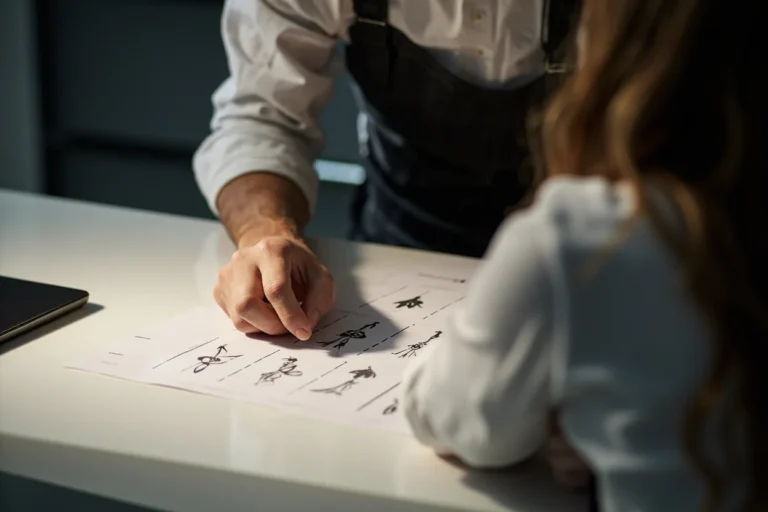
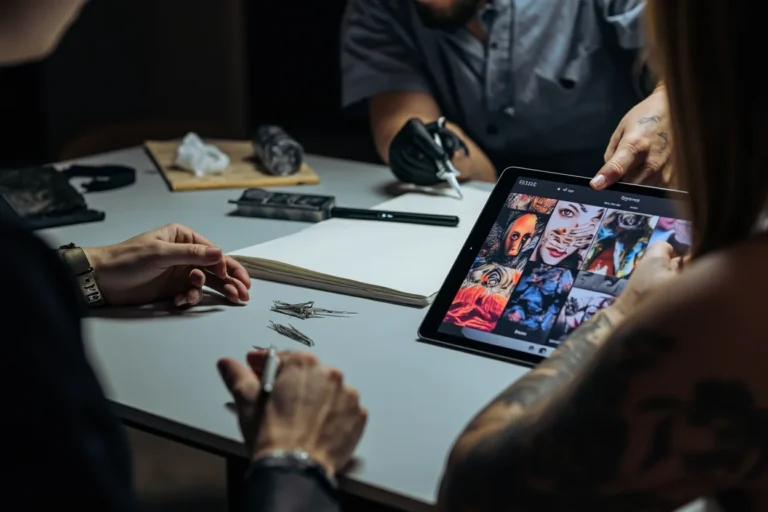
Consultation quality tells you everything. Do they talk about your skin specifically, your lifestyle, how the piece will age? Or do they just nod at your reference and quote a price? The first type is who you want.
Red Flags to Avoid
- Artists who promise exact photographic replication, skin isn’t paper, and honest ones know this
- Shops that won’t discuss touch-up policies upfront
- Anyone rushing you into a booking without proper design discussion
- Portfolio with only large-scale pieces when you want something small, they might not understand the scaling problem
Final Thoughts
Hyper realistic tattooing sits at the edge of what’s possible with pigment and needle. When it works, it’s breathtaking. When it fails, it’s heartbreaking for everyone involved. The gap between those outcomes comes down to honest consultation, technical skill, and realistic expectations from both sides of the chair.
I’ve watched this style evolve from a rare specialty to something clients request weekly. That popularity has raised the overall skill level in the industry, but it’s also created pressure to produce work that photographs well before it heals well. The best artists I know, the ones whose pieces I’m still proud to have near me after a decade, prioritize the long game over the immediate post.
If you’re considering hyper realism, sit with the reference. Live with it on your wall for six months. If it still moves you, find the right artist, save the money, book the sessions, and commit to the aftercare. The result won’t be a photograph on skin. It’ll be something stranger and more alive than that, ink that becomes part of you, changing slowly, telling time in its own way.
Frequently Asked Questions
How long does a hyper realistic tattoo take compared to other styles?
Most of my realism pieces run 2-4 times longer than a traditional tattoo of the same size. A palm-sized portrait might be 4-6 hours. Large work gets split across multiple sessions, sometimes months apart, to let skin recover. Rushing destroys the detail you’re paying for.
Do hyper realistic tattoos hurt more than other styles?
Pain level depends more on placement than style, but realism sessions are longer, which means more cumulative discomfort. The shading techniques use more needle passes in the same area to build smooth tones. I tell clients to mentally prepare for endurance, not a quick sting.
Can you cover up an old tattoo with hyper realism?
Sometimes, but it’s limited. Realism needs clean skin to create those subtle value shifts. Heavy existing blackwork or saturated color usually blocks that. I occasionally use realism elements in a larger cover-up design, but pure photorealistic cover-ups are rare and require very specific circumstances.
Why does my healed realism tattoo look different from the fresh photo?
Fresh tattoos are swollen, saturated, and often photographed under perfect lighting. Healing brings settling, some pigment loss, and your skin’s natural tone integrating with the ink. A good artist designs for the healed state, not the fresh photo. That difference is normal, not a failure.
Related Style Guides
- Realism Tattoo Artists: A Working Artist s Guide
- Realistic Angel Tattoos: A Working Artist s Guide
- Realistic Owl Tattoos: A Working Artist s Guide
- Explore more