Realistic palm tree tattoos hit different than their traditional or tribal cousins. I’ve tattooed palms on ribcages, forearms, calves, and once on a guy’s entire shoulder cap after he surfed Pipeline for the first time. The goal isn’t just a tree, it’s the way late afternoon light fractures through those fronds, the fibrous roughness of the trunk, the particular slump of a coconut palm leaning into trade winds. Done right, this style transports you. Done poorly, it looks like clip art from a t-shirt kiosk in Daytona Beach. Let me walk you through what actually matters.
Origins & History
Palm imagery in tattooing has roots in multiple traditions. Pacific Islander tattooing featured palm fronds and botanical elements as symbols of sustenance and connection to land. Sailors got palm trees to mark Pacific crossings or tropical deployments. But the realistic version? That’s a relatively recent development, riding the wave of photorealism that exploded in the 1990s and early 2000s.
I remember when realistic nature tattoos started dominating shop portfolios. Clients would bring in vacation photos instead of flash sheets. The shift from stylized to photographic changed everything about how we approach palm trees specifically. Suddenly we weren’t just drawing a symbol, we were reproducing a moment someone actually lived.
From Sailor Jerry to Photo Reference
Traditional palm tattoos were simple: bold outline, limited color, readable from across the bar. The realistic style demands the opposite approach. We study how light actually behaves on those curved fronds, how shadows pool between the trunk’s ridges, how distant palms soften in atmospheric haze. I’ve spent twenty minutes just staring at reference photos with clients, figuring out which specific angle of frond catches the feeling they’re after.
Why Palms Specifically
There’s something about palm trees that triggers immediate emotional response. Unlike oak or pine, palms signal escape, vacation, a different life rhythm. Clients rarely get realistic palm trees because they love dendrology. They get them because that week in Kauai changed something, or because their grandmother’s Florida backyard smelled like jasmine and coconut, or because they grew up landlocked and the ocean represents everything they reached for.
Key Characteristics & Motifs
Realistic palm tree tattoos live or die on specific technical choices. Here’s what separates the good from the forgettable:
- Frond architecture: Coconut palms have feather-like pinnate leaves; fan palms spread like hands. Getting the species wrong breaks the realism immediately.
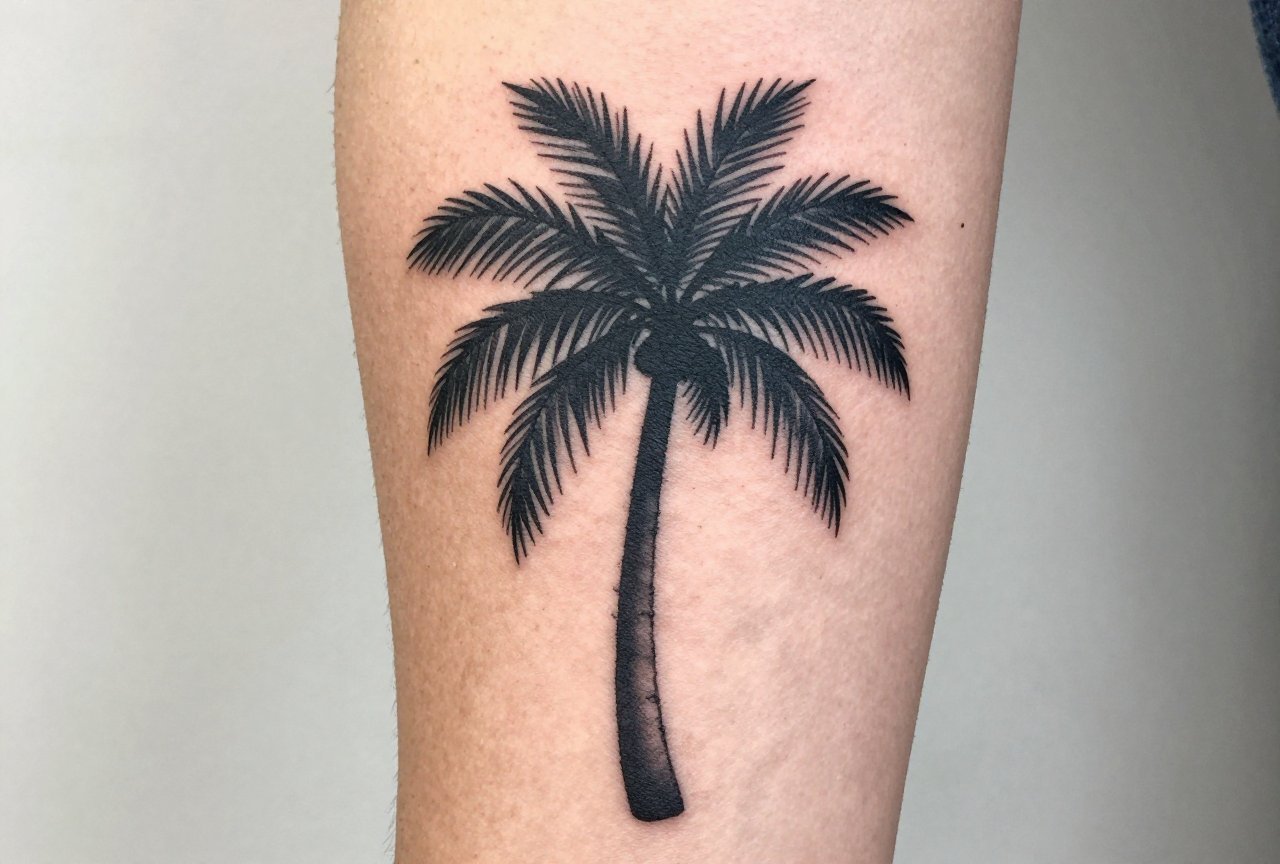
- Trunk texture: Real palm trunks aren’t smooth. They’re ringed, fibrous, sometimes scarred where old fronds detached. We build this with whip shading and fine line variation.
- Light direction: Consistent light source is non-negotiable. I’ve seen pieces where fronds glow from above while the trunk reads from the left, total failure.
- Negative space: Sky showing through fronds creates that lace-like quality. Over-solid fronds look flat and graphic.
- Atmospheric perspective: Background palms should soften, lose contrast, cool in tone. Sharp background elements kill depth.
The best realistic palm pieces I’ve done incorporate environmental context: beach sand catching the trunk’s shadow, a sliver of ocean horizon, maybe a specific cloud formation. These aren’t distractions, they’re anchors that make the palm belong somewhere real.
Color vs Black and Grey
This choice fundamentally changes the tattoo’s emotional register. In my chair, I see the split pretty clearly.
Color Realism
Color palms hit that saturated vacation-photo feeling. The specific blue-green of healthy fronds, the warm ochre of dead lower fronds, that particular tropical sky gradient. Color demands more sessions, more saturation, more maintenance. The greens especially, tattoo greens are notoriously tricky. They can shift blue or muddy out depending on skin undertone and sun exposure. I always warn clients: that bold frond color will settle 20-30% softer than it looks fresh.
Black and Grey
Black and grey palm trees carry more melancholy, more timelessness. They read like old photographs, like memory rather than present experience. The technique relies heavily on smooth gradation and understanding warm vs cool grey tones. I love doing these on clients who want something that won’t compete with other tattoos or who specifically request that faded-polaroid aesthetic. They age cleaner, generally. Less risk of the color-shift lottery.
My personal recommendation? If your reference is that golden-hour iPhone shot from your honeymoon, consider color. If it’s a black and white photo of your dad’s surfboard leaning against a palm in 1974, black and grey is your answer.
Best Placements
Realistic palm trees need room to breathe. The detail work in frond tips and trunk texture doesn’t compress well.
- Outer forearm: Classic placement. Natural vertical orientation, easy to show or hide, enough real estate for a single specimen with some environment.
- Calf: Excellent for larger scenes. I’ve done full beach panoramas wrapping the calf, palm as focal point. The muscle curve can enhance the trunk’s natural lean.
- Ribcage/side: Painful, but the long vertical space suits tall palms perfectly. The trunk can follow the body’s natural line.
- Shoulder cap to upper arm: Great for palms viewed from below, looking up through fronds toward sky. Dramatic perspective.
- Thigh: Underrated. Huge canvas, manageable pain, easy healing. I’ve done some of my best palm work on thighs.
What doesn’t work: wrists, fingers, behind the ear. The detail simply can’t resolve at that scale. You’ll get a green blob with sticks, not a palm tree.
Who It Suits
Realistic palm trees aren’t for everyone, and I say that as someone who loves doing them. They work best for clients with genuine connection to the imagery, not just “I like beaches.” The style demands commitment to aftercare and sun protection. Realistic tattoos with fine detail and smooth shading show sun damage faster than bold traditional work. If you’re a lifeguard or construction worker who won’t wear sunscreen, we’ll have this conversation.
Skin tone matters too. Very dark skin can absolutely carry realistic palms, but we adjust approach: stronger contrast, more reliance on texture and negative space, sometimes incorporating dotwork or stipple techniques that read clearly. I’ve had beautiful results on deep skin tones by emphasizing the graphic structure within the realism rather than chasing subtle grey gradations that won’t hold.
Modern Variations
The style keeps evolving. Lately I’m seeing:
- Double exposure palms: Tree silhouette containing ocean waves, sunset colors, or constellation maps inside the frond shapes. Technical challenge but striking when executed.
- Split realism/abstraction: Half the palm photographic, half dissolving into geometric shapes or brush strokes. Appeals to clients who want contemporary edge.
- Micro-realism palms: Tiny, usually single frond studies. Requires exceptional needle control. Trendy but risky for longevity, those hairline details blur over years.
- Palm silhouettes with realistic environments: The tree itself simplified, but the sky behind it rendered in full color realism. Nice compromise for clients wanting something cleaner.
I did a piece last year where the palm was realistic but the ocean below was done in Japanese wave pattern style. Client was a graphic designer. The contrast worked because both elements were executed with conviction. Half-measures kill these hybrids.
Choosing an Artist
This is where I get passionate. Not every realism artist can do palms. Not every nature artist can do realism. You need both.
What to Look For
Check their portfolio for: botanical accuracy (do their trees look like real species or generic “trees”?), light consistency, environmental context, healed results. Ask to see healed photos specifically. Fresh palms look impressive; healed palms reveal whether the artist understands how ink settles and spreads. I always show healed work when clients ask. Any artist who won’t is waving a red flag.
Red Flags
Beware artists who promise to reproduce your iPhone photo exactly. Tattoo is translation, not photocopy. The medium has limitations: skin texture, ink behavior, dimensional change as you move. Good artists explain how they’ll adapt the image, not just assure you it’ll be “identical.” Also watch for portfolios where every palm faces the same direction, same lighting. That indicates they’re working from limited reference, not understanding the subject.
Consultation matters. I spend 30-45 minutes on palm tree consultations, pulling reference, discussing species, light source, emotional tone. If your artist rushes this, find another.
Final Thoughts
Realistic palm tree tattoos occupy this interesting space between landscape art and personal symbolism. They test an artist’s ability to render organic forms, manage complex light, and create atmosphere, all on a surface that moves, stretches, and ages. I’ve been tattooing fifteen years and palms still challenge me, which is exactly why I keep doing them. The best ones feel like windows, not decorations. They carry humidity and salt and that specific silence of afternoon heat.
If you’re considering one, do the work: find reference that actually means something, choose your approach honestly, respect the technical demands, and find an artist who gets it. The difference between a palm tree you tolerate and one you love for decades comes down to these choices. I’ve watched clients stare at their fresh palm tattoo in the mirror and actually smell the ocean again. That’s the goal. That’s what we’re chasing.
Frequently Asked Questions
How long does a realistic palm tree tattoo typically take?
A palm with moderate detail runs 3-5 hours for black and grey, 4-6 for color. Full scenes with environment can take multiple sessions. I always quote conservatively, realism can’t be rushed.
Do palm tree tattoos fade faster than other realistic designs?
The fine frond tips and subtle sky gradations are vulnerable to sun and time. You’ll need consistent SPF and occasional touch-ups to keep that crisp detail. It’s manageable, but not optional.
Can you add a realistic palm tree to an existing beach-themed sleeve?
Absolutely, but it requires planning. I need to match the existing style’s approach to light, contrast, and detail density. Bring photos of your current work when we consult so I can integrate properly.
What’s the most common mistake people make with palm tree tattoos?
Choosing generic reference. The best palms come from specific moments, your photo, your light, your memory. Stock images produce stock tattoos. Bring something that actually happened to you.
Related Style Guides
- Chicano Sleeve Tattoos: A Working Artist s Guide
- Traditional Military Tattoos: Complete Style Guide
- Beautiful Tattoo Ideas That Actually Work
- Explore more