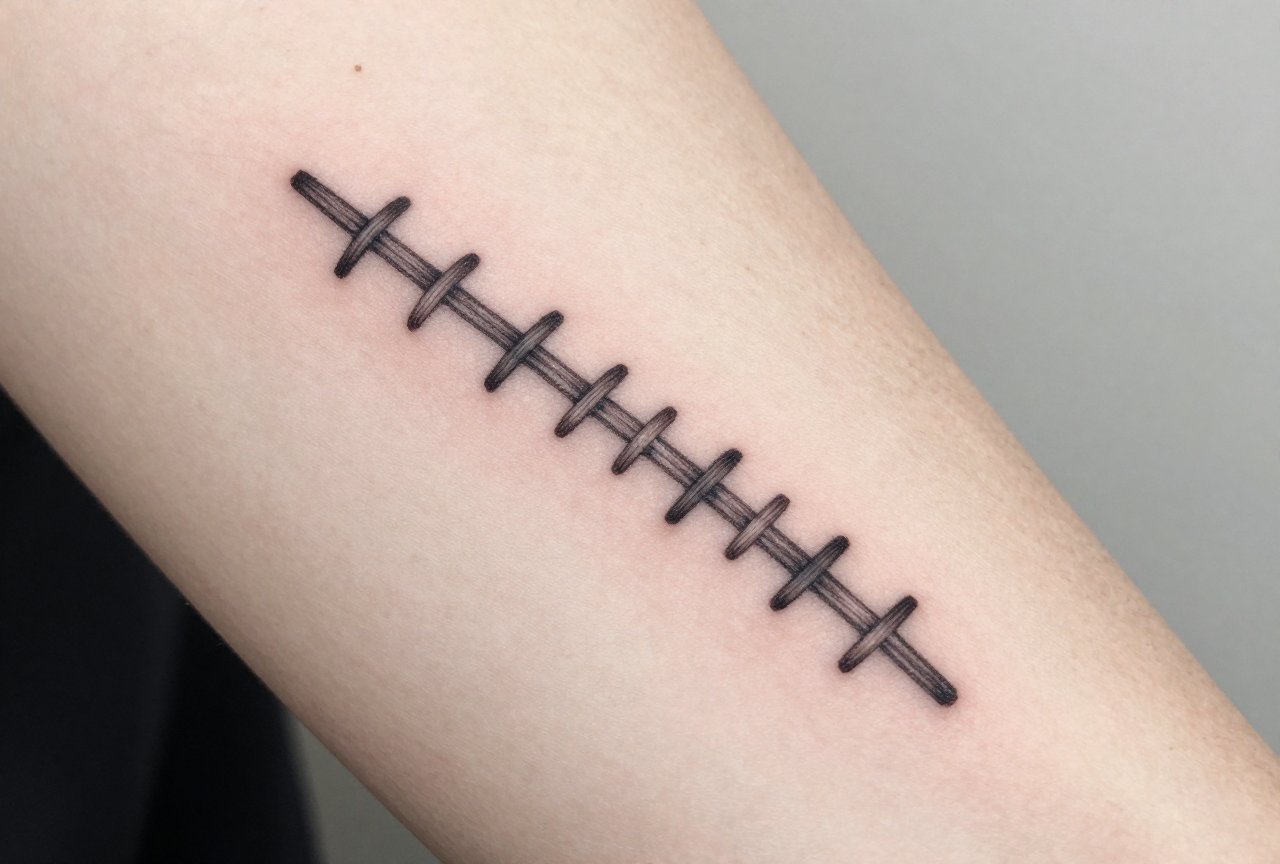
A stitches tattoo means you’ve survived something, literally or figuratively, and you’re not hiding it. It’s the visual language of mending: torn skin pulled back together, the body’s own repair made visible. Most people who get this design are marking a physical injury, a mental health struggle, addiction recovery, or any period where they felt ripped apart and had to sew themselves back together.
Symbolism & History
The image of stitches goes way back before tattoo shops existed. Sailors stitched their own wounds. Civil War surgeons worked fast with coarse thread. Frankenstein’s monster, maybe the most famous stitched figure in Western culture, wasn’t just horror; he was about unnatural repair, about being rebuilt from dead parts. That metaphor still lands hard for people who’ve had to reconstruct themselves after trauma.
In my chair, I’ve heard every version of this story. The guy who got stitched up after a motorcycle wreck and wanted the scar framed in ink. The woman marking five years clean, the stitches crossing her wrist like a closure she chose herself. The kid who attempted suicide and wanted the hospital sutures reimagined as something intentional, beautiful even.
What the Thread Actually Represents
Not all stitches mean the same thing. Context changes everything:
- Medical sutures: Recovery, gratitude for modern medicine, a specific event
- Rough cross-stitching: Punk ethos, DIY repair, rejecting polished aesthetics
- Stitches pulling skin closed: Trauma survived, body as repair site
- Broken stitches, torn: Ongoing struggle, something that didn’t hold
- Stitches with objects inside: Hidden pain, swallowed secrets, compartmentalized damage
Color matters too. Black thread reads as classic, stark, documentary. Red thread suggests fresh wound, active pain, or sometimes heart-specific metaphors. I’ve done white thread on dark skin that looked like actual scar tissue, uncanny and effective.
The Frankenstein Connection
People reference Shelley more than you’d expect. Not the Hollywood bolt-neck version, but the idea of being assembled from fragments, of not choosing your pieces but having to make them function. It’s a surprisingly common framework for adoptees, for abuse survivors, for anyone who feels their identity was constructed rather than grown organically.
Common Variations & Styles
I’ve tattooed stitches in probably fifteen different ways. Each style carries its own weight.
Realistic Medical Sutures
These look like actual hospital work: the entry and exit points, the slight swelling around each puncture, the knot tied off to one side. Takes a steady hand and good reference photos. The best artists add subtle bruising, that yellow-green bloom around fresh wounds. This style ages well if the line work is crisp, blurry medical tattoos look like infections, not art.
Cartoon & Graphic Styles
Thick black outlines, exaggerated X-shaped cross-stitches, sometimes with that little zigzag thread pattern you see in old cartoons. These read as lighter, more approachable. I’ve done them on comedians, on nurses who need to laugh at their own profession, on people who want the concept without the gore. They hold up better over time because the bold lines have room to soften.
Integrated Designs
Stitches as part of something larger: a heart sewn back together, a skull cracked and repaired, a map with torn edges stitched down. The thread becomes a design element rather than the whole subject. These take longer, cost more, but they’re the ones people stare at across the room. The heart variations are probably 40% of what I do in this category.
- Stitched mouth: Silence, secrets, being shut up or choosing not to speak
- Stitched eyes: Willful blindness, seeing what you shouldn’t have, trauma response
- Stitched doll or puppet: Control, manipulation, feeling like someone else’s toy
- Stitched flowers/plants: Growth despite damage, nature’s resilience
Best Placements
Where you put this matters more than with most designs. Stitches need context, skin to read as skin, tension to read as tension.
Over actual scars: This is the most powerful placement and the most technically challenging. The tattooed sutures follow or frame the real ones. I’ve worked on burn scars, surgical scars, self-harm scars. The skin texture changes how ink sits. Sometimes we need to go heavier, sometimes lighter. Always a consultation first, always honesty about what will hold.
Wrists and forearms: High visibility, which is often the point. People want this seen. It’s a conversation starter, a warning, a badge. The inner wrist hurts, thin skin, nerves close, but people sit through it. I’ve watched clients cry and still ask for more detail.
Ribs and torso: Larger canvas, more narrative room. Good for the heart designs, for bigger integrated pieces. The movement of breathing makes stitches look alive, which is either cool or unsettling depending on your taste.
Thighs: Private but accessible. Common for sexual trauma survivors who want the mark without public exposure. I’ve had clients who need to show partners, therapists, themselves in mirrors, thigh placement serves that.
Hands and fingers: Fast fade, high pain, but immediate visibility. The classic “stitched finger” like a cartoon injury. I talk most people out of this unless they understand it’ll need touch-ups every couple years.
Who Chooses This Tattoo / Personal Meanings
After fifteen years, I can spot the categories but never assume individual stories. The patterns exist; the people deviate.
Medical Trauma Survivors
Car accidents, surgeries, emergency interventions. They want to reclaim the narrative. The hospital saved them; the tattoo makes it theirs. I did one on a guy who’d had open-heart surgery at nineteen, his chest looked like a battlefield, and we turned the scar into a zipper with stitches alongside. He opens his shirt at parties. It’s his thing now.
Mental Health & Recovery
Depression, anxiety, addiction, eating disorders. The invisible wounds made visible. This group often wants the stitches to look rough, handmade, not clinical. The imperfection is the point. They weren’t fixed by clean systems; they scraped through. I tell these clients the truth: the tattoo won’t fix anything either, but it might help you remember you survived.
Artists & Subculture Folks
Horror fans, punks, people who just like the aesthetic. That’s valid too. Not every tattoo needs a trauma narrative. Some people think stitched dolls look cool. They do. The meaning can be pure visual preference, and I never push the therapy angle on someone who just wants something that looks badass.
Similar Symbols
Clients often browse these before settling on stitches, or combine them:
- Kintsugi: Japanese gold repair of broken pottery. More elegant, less visceral. Same concept: visible mending as beauty.
- Scarification: The actual body modification, not tattooed. More permanent, more extreme, harder to reverse.
- Broken chains: Freedom rather than repair. Often paired with stitches, broke free, then healed.
- Phoenix imagery: Rebirth from destruction. More heroic, less gritty. Stitches are about the process; phoenix is about the outcome.
- Semicolon: The mental health awareness symbol. Often combined with stitches in suicide survivor pieces, pause, then continue, then mend.
We see a lot of combination pieces now. Semicolon turning into a stitched thread. Kintsugi gold lines alongside black sutures. People are building personal symbol systems, not just choosing from a menu.
Final Thoughts
A stitches tattoo is never just decoration. Even when someone claims it’s purely aesthetic, the choice of this particular image says something about what they find beautiful, which, at bottom, is about what they find true. The body as something that tears and gets put back together. The evidence of repair as more interesting than unbroken perfection.
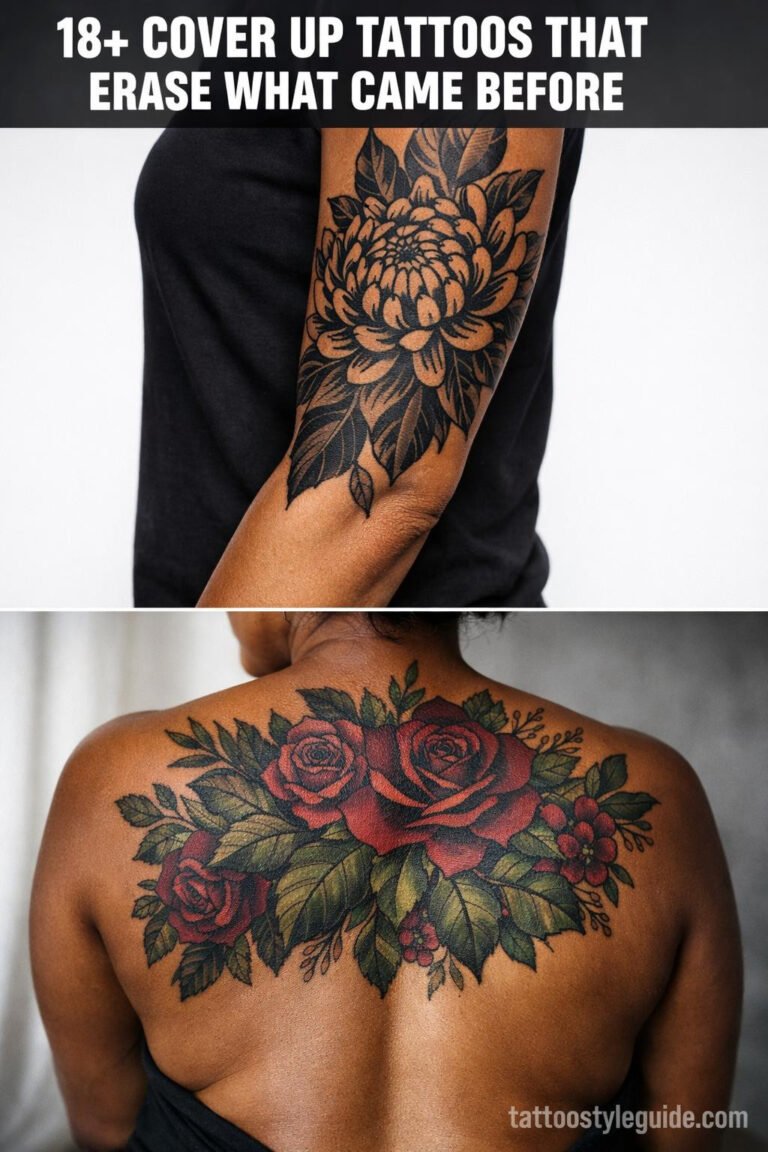
I’ve watched people shake in my chair getting these, not from pain but from the weight of what they’re claiming. I’ve watched them cry after, relief and something else mixed together. I’ve done cover-ups of these too, when the meaning shifted, when the survival became something they wanted to stop carrying so visibly. Both choices make sense.
If you’re considering this, bring reference photos of real sutures if you want realism. Bring art if you want stylized. Most importantly, bring the story, whether you tell it out loud or not, the artist needs to understand what kind of mending you’re asking for. The thread we choose changes the whole piece.
Frequently Asked Questions
Do stitch tattoos over real scars hurt more than regular tattoos?
Usually, yes. Scar tissue has different nerve density and texture. Some spots feel numb, others hypersensitive. I always do a small test area first and adjust technique. The skin also holds ink differently, so we often need multiple sessions for full saturation.
Will a stitches tattoo look like a real wound to other people?
Depends on style and placement. Hyper-realistic medical sutures can absolutely confuse people at first glance. I’ve had clients say strangers asked if they needed help. If that bothers you, go more stylized or graphic, or place it where clothing usually covers it.
How well do fine stitch details hold up over years?
Thin lines and tiny knots are the first things to blur. I build in some thickness to thread lines, especially on areas that move a lot or get sun exposure. A good stitch tattoo should still read clearly at ten years, even if the ultra-fine realism softens.
Is it weird to get a stitches tattoo if I haven’t had major trauma?
Not at all. I tattoo plenty of horror fans and aesthetic-driven clients who just like the visual. The only issue is when someone claims a survival story they don’t have, that feels off in the consultation. Wanting the image because it looks cool is its own valid reason.
Related Tattoo Meanings
- Supernatural Tattoo Meaning: Symbols, Styles Ink That Lasts
- Tattooed Tattoo Meaning: Ink About Ink
- Teddy Bear Tattoo Meaning: Comfort, Memory, and Childhood Inked
- Explore more