
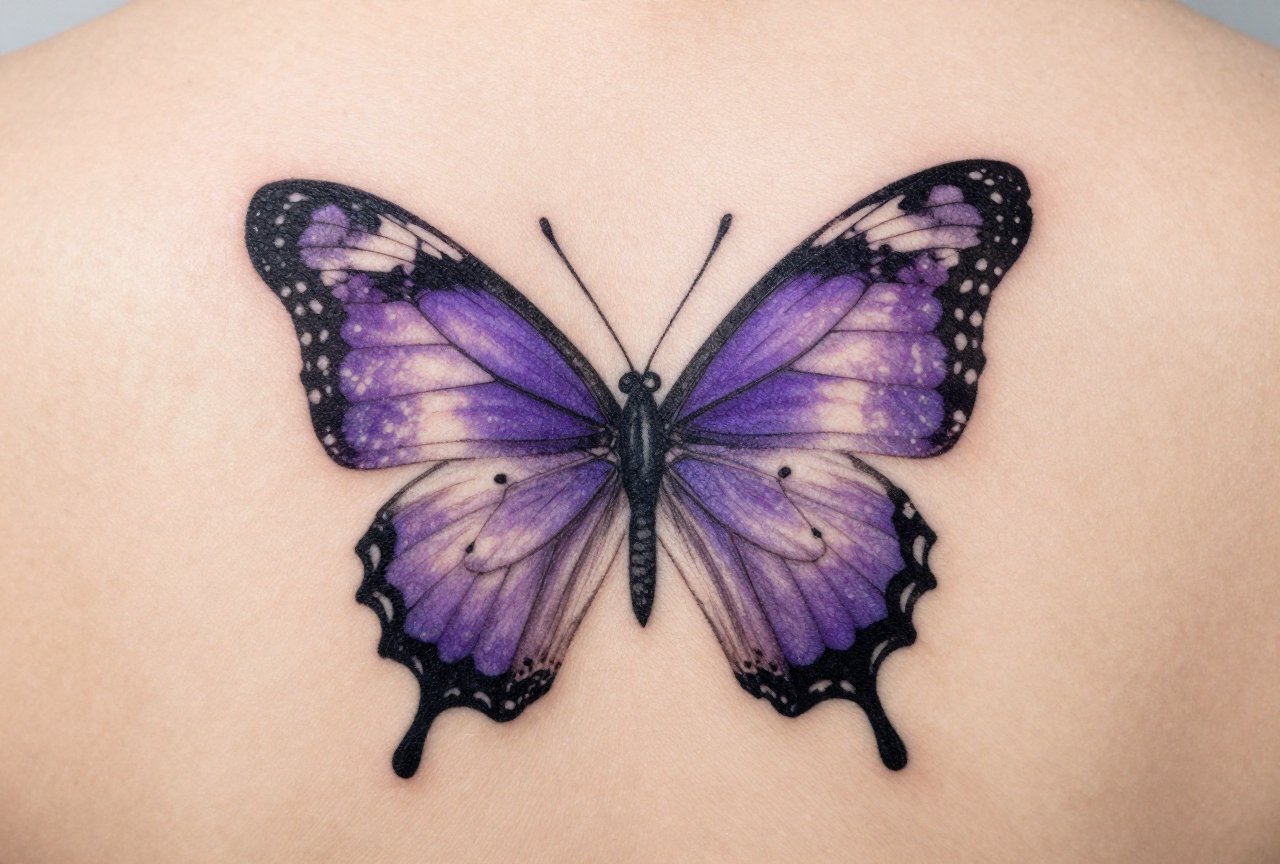
A purple butterfly tattoo carries deep meaning: transformation, spiritual awareness, and the courage to change. The butterfly itself speaks to metamorphosis, while purple adds layers of mystery, intuition, and sometimes grief or remembrance. I’ve tattooed dozens of these on clients who’ve survived something, lost someone, or finally recognized their own strength.
Symbolism & History
Butterfly imagery in tattooing goes back decades, but the purple variation really took off in the 1990s and 2000s as color ink improved and symbolism got more personal. Before that, most butterfly tattoos were black and grey or basic primary colors. Purple changed the conversation.
The Color Purple in Tattoo Culture
Purple ink sits in an interesting spot. It’s not as forgiving as black. It can fade to a muddy brown or pinkish tone depending on your skin’s undertone and the sun exposure you get. I’ve watched a bold violet turn almost grey on olive skin after five years of beach living. That said, when it holds, it’s gorgeous. Purple historically connects to royalty, but in my chair, clients rarely mention kings and queens. They talk about spirituality, creativity, and feeling different from everyone around them.
The butterfly’s meaning is more universal:
- Transformation and personal growth
- Freedom from past constraints
- The soul or spirit in many cultures
- Resilience after hardship
- Remembrance of lost loved ones
Combine the two and you get something that feels both delicate and heavy. That’s the tension that makes this design work.
Spiritual and Cultural Roots
Some clients mention the “purple butterfly effect” in grief communities, families who’ve lost infants use the symbol to connect and remember. Others reference Celtic traditions where purple butterflies were thought to carry souls. I don’t push any single interpretation. I listen, then design around their story. The meaning lives in the person, not the Pinterest board.
Common Variations & Styles
There’s no single way to execute this. I’ve done purple butterflies that fit on a fingertip and others that span entire shoulder blades. Style completely changes the feel.
- Watercolor: Splashes of violet and lavender without hard outlines. Looks fresh for 2-3 years, then softens significantly. I warn clients about this every time.
- Neo-traditional: Bold purple fills with black line work and maybe some ornamental elements. Holds better long-term. The purple pops against the black.
- Realistic: Monarch or morpho references with actual purple species coloration. Needs a skilled artist. I’ve seen these go wrong when someone tries to copy a photograph without understanding how ink sits in skin versus how light hits a wing.
- Minimalist line work: Single needle, tiny, maybe just the silhouette filled with light purple. Popular behind ears and on wrists. Fades fast but the commitment is low.
- Tribal fusion: Less common now, but still requested. Black tribal patterns with purple accents. Hard to pull off without looking dated.
We see this a lot: clients bring reference photos of butterflies that are actually blue or black in nature, then ask for “purple instead.” That’s fine, but I always explain that nature’s color chemistry and tattoo pigment behave differently. A purple monarch won’t look like a monarch anymore. It becomes its own thing. Most people are cool with that.
Best Placements
Placement affects meaning more than people realize. A purple butterfly on the ribs, hidden, private, usually marks something personal. Same design on the forearm, visible to everyone, tends to be about declaration and pride in the journey.
High-Detail Areas
Shoulder blades and upper backs give space for wing detail and gradient purples. The skin there is relatively stable, doesn’t stretch as much as stomach or thigh. I’ve done beautiful pieces there with soft purple fading into almost white at the wing edges. The healing is straightforward too, clients can keep it clean without contorting too much.
Small and Intimate
Behind the ear, inner wrist, ankle bone. These spots hurt more than people expect. The purple needs to be saturated enough to read, but too dense and it blurs. I tell clients: small purple tattoos often need touch-ups. The color just doesn’t have the staying power of black in tiny spaces. If you’re committed to the placement, budget for a refresh in 3-5 years.
Foot tattoos? I try to talk people out of them. Purple ink on feet fades to almost nothing within a couple years. The skin there sheds constantly, and shoes rub. Save your money.
Who Chooses This Tattoo / Personal Meanings
After fifteen years in shops, I can spot patterns but never assume. The purple butterfly attracts a specific energy though.
- People who’ve survived something medical, surgery, illness, mental health crisis
- Those grieving a loss, especially pregnancy or infant loss
- Anyone who’s made a massive life change: sobriety, leaving a religion, coming out
- Artists, musicians, people who identify as “different” and want that visible
- Parents getting matching tattoos with adult children who’ve chosen their own path
A woman I tattooed last year put hers over self-harm scars. The purple covered the pale lines, and the butterfly’s body aligned with the worst of them. She didn’t explain until I was wiping the stencil. We adjusted the angle so the wings spread across the scar tissue rather than cutting through it. That’s the kind of design decision you can’t make from a template.
Another client got a tiny purple butterfly after her grandmother died, grandma had a garden full of purple flowers and always said butterflies were “visits from heaven.” She cried when I finished. That’s normal. I keep paper towels and time built into the appointment.
Similar Symbols
Clients sometimes waffle between a purple butterfly and something adjacent. Here’s how I break it down in consultations:
- Blue butterfly: More about joy, lightness, specific causes like thyroid disease awareness. Less spiritual weight than purple.
- Black butterfly: Grief, mourning, sometimes rebellion. Heavier, less hopeful.
- Dragonfly: Similar transformation theme but more about adaptability and living in the moment. People who want dragonflies usually reject the butterfly’s perceived femininity.
- Phoenix: Bigger, bolder, more fire and destruction before rebirth. The butterfly is quieter about its struggle.
- Moth: Night, attraction to flame, sometimes self-destructive tendencies. The purple butterfly sits in lighter territory.
- Lotus: Growth from mud, more Eastern spiritual tradition. Less about personal change, more about enlightenment.
I’ve had people combine symbols, purple butterfly with lotus petals, or emerging from a semicolon. Those mashups tell more specific stories. The purple butterfly is flexible enough to play well with others.
Final Thoughts
A purple butterfly tattoo isn’t trend-chasing. It’s held steady in popularity because the meaning actually matters to people. I’ve watched it outlast tribal armbands, infinity symbols, and even the semicolon trend that peaked a few years back. The purple butterfly endures because transformation never stops being relevant.
If you’re considering one, spend time on the why before the design. The best purple butterflies I’ve done came from clients who knew exactly what the color and creature meant to them. The worst ones came from people who picked it off a wall because it looked pretty. Tattoo ink is permanent, but its power comes from your intention. Get the meaning clear, find an artist who listens, and let the purple fade however it fades. Even faded, it marks something real you lived through.
Frequently Asked Questions
Does purple ink fade faster than other colors in butterfly tattoos?
Purple can fade to brown or pink depending on your skin tone and sun exposure. It generally needs more touch-ups than black or dark blue, but proper aftercare and sunscreen help it hold longer. I always tell clients to budget for a refresh in 3-5 years.
What’s the difference between a purple butterfly and a monarch butterfly tattoo meaning?
Monarch tattoos often connect to migration, family heritage, or specific causes like Alzheimer’s awareness. Purple butterflies lean more personal, spiritual growth, grief, or transformation without the cultural baggage of a specific species. The color shift changes the conversation entirely.
Can a purple butterfly tattoo cover scars effectively?
It depends on the scar age and texture. Raised or dark scars won’t hold ink well, but faded flat scars can be incorporated into the design. I’ve aligned butterfly bodies and wing patterns to flow with scar tissue rather than fight it. Always consult an artist who has scar cover-up experience.
Is a purple butterfly tattoo too feminine for a man?
Tattooing has moved past rigid gender assignments. I’ve tattooed purple butterflies on men who connected to the meaning, sobriety, surviving loss, spiritual awakening. Style matters more than subject. A bold neo-traditional execution with heavy black reads differently than a delicate watercolor piece.
Related Tattoo Meanings
- Scorpio Tattoo Meaning: Power, Mystery Transformation
- Traditional Japanese Cloud Tattoo Meaning: Wind, Change Spirituality
- Phoenix Tattoo Meaning: Rebirth, Resilience Rising Strong
- Explore more









