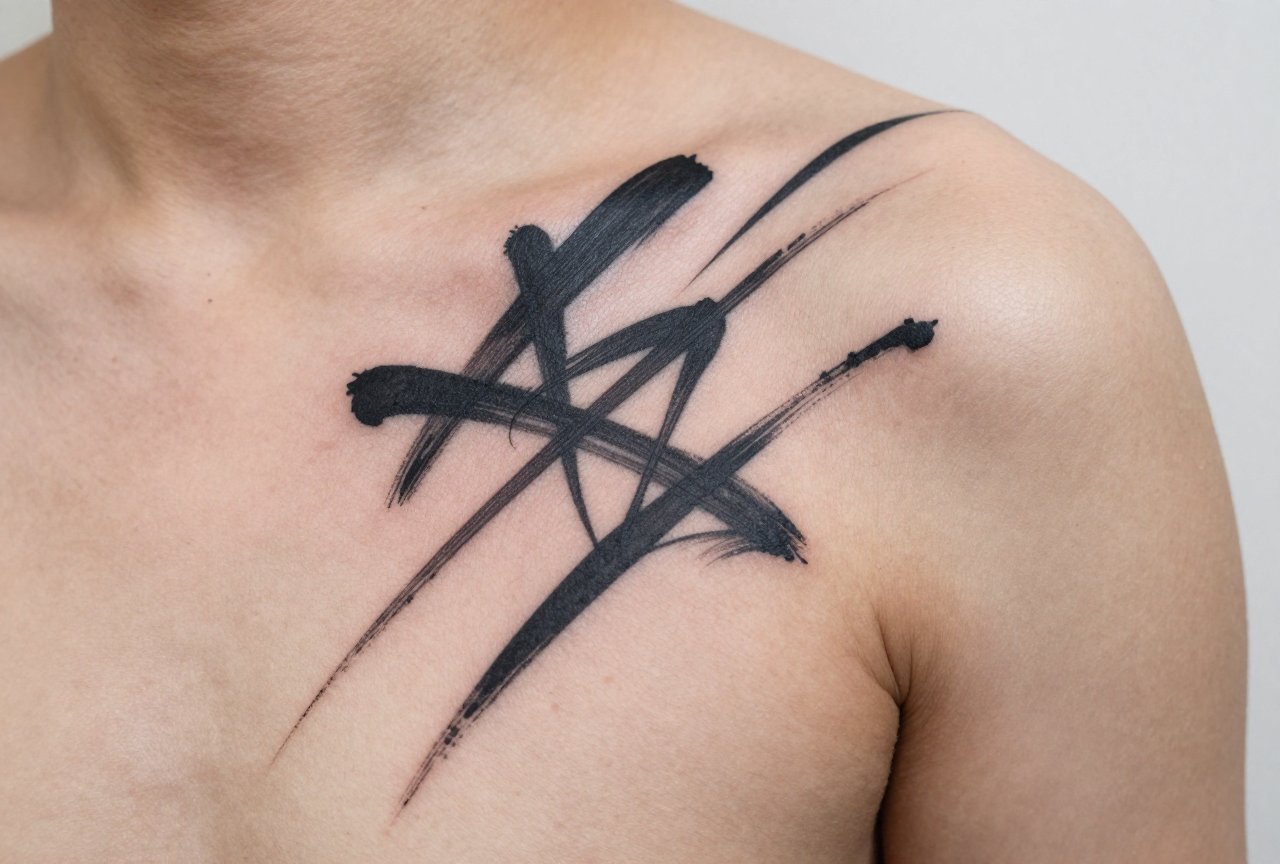
Abstract blackwork is exactly what it sounds like: heavy black ink, no recognizable subject matter, and a deliberate rejection of traditional tattoo imagery. I’ve been tattooing these for years, and the clients who sit for them are a specific breed, people who want the body as canvas, not billboard. Think solid black shapes that flow with muscle structure, dotwork gradients that trick the eye, and negative space used like a sculptor removing marble. This style lives or dies on application. Bad blackwork doesn’t age; it blurs into bruise-colored mush. Good blackwork stays crisp for decades because the artist understood saturation, skin type, and how black behaves differently on a bicep versus a shin.
Origins & History
Blackwork isn’t new. Indigenous tattooing traditions from Polynesia to Borneo used heavy black pigment in geometric and abstract patterns for thousands of years. What we call “abstract blackwork” today emerged from artists deliberately stripping away the figurative, no turtles, no tigers, no pin-up girls, just pure form and contrast.
From Tribal to Contemporary
In the 1990s, tribal dominated. Thick black armbands, Celtic knots, Maori-inspired sleeves. A lot of it was badly applied, poorly researched, and culturally appropriative. The modern abstract blackwork movement was partly a reaction against that, artists wanted the visual weight of black without the stolen symbolism. I started seeing real abstract pieces around 2010, mostly from European artists who’d trained in graphic design before picking up machines. They treated skin like paper and ink like paint. The shift was deliberate and ideological: black for black’s sake, pattern for pattern’s sake.
Graphic Design Meets Skin
Today’s best abstract blackwork artists come from illustration, architecture, and printmaking backgrounds. They understand negative space instinctively. I’ve watched clients bring in Bauhaus posters and say “something like this, but on my ribs.” The translation isn’t simple. Paper doesn’t stretch, bruise, or sweat. Skin does. The artists who succeed here are the ones who respect that translation process.
Key Characteristics & Motifs
Walk into any shop and ask for abstract blackwork, and you’ll get wildly different results depending on who’s holding the machine. Here’s what defines the style when it’s done with intention:
- Solid black saturation: No greywash, no soft edges. The black should be dense enough that you can’t see skin tone through it fresh, and it should heal to a uniform dark.
- Geometric precision or deliberate organic chaos: Some artists use perfect circles, straight lines, mathematical repetition. Others use flowing, amorphous shapes that follow body contours. Both are valid; mixing them badly is a common mistake.
- Negative space as design element: The skin left untouched is as important as the skin filled. I tell clients: “we’re tattooing what isn’t there too.”
- Dotwork and stippling: Used for texture, gradient, or soft transitions between solid black and bare skin. Done well, it’s hypnotic. Done poorly, it looks like a rash.
- Large scale commitment: Abstract blackwork rarely works as tiny pieces. The impact comes from coverage, repetition, and optical effects that need room to breathe.
Common motifs include sacred geometry, optical illusions, biological patterns (cellular structures, neural networks), and pure abstraction, shapes that reference nothing external. I’ve tattooed pieces that look like topographical maps, sound waves, and nothing at all. The best ones make you feel something without naming it.
Color vs Black and Grey
This is straightforward: abstract blackwork doesn’t use color. Period. If you see red or blue accents, you’re looking at something adjacent, maybe neo-tribal, maybe ornamental, but not this style. Black and grey shading is also generally avoided, though some artists use extremely dark greywash for subtle depth. In my chair, when someone asks for “abstract blackwork with some grey,” I pause. Usually they want ornamental blackwork, or they haven’t seen enough healed examples to understand why pure black hits harder and ages better.
Black ink is carbon-based and stable. It doesn’t fade to muddy greens like some blues, or to peachy ghosts like reds. On darker skin tones, pure black creates contrast that actually reads. On very fair skin, it can look almost blue-black when fresh, settling to true black as it heals. I’ve tattooed abstract pieces on every Fitzpatrick type, and the saturation requirements vary enormously, what works on a Scandinavian forearm needs completely different needle grouping and speed on melanin-rich skin.
Best Placements
Not every spot works for this style. I’ve had to talk clients down from placements that would ruin the design.
Where It Thrives
The flat planes: thighs, outer arms, calves, upper back. These areas hold solid black well, don’t distort excessively with movement, and give the artist a consistent surface. I love doing large abstract pieces on thighs, there’s room for repetition, the skin is relatively forgiving, and clients can conceal or show as needed. The outer forearm is classic for smaller commitments, though anything below the elbow gets more sun and wear.
Where It Struggles
Ribs, inner biceps, stomachs, and joints. These areas stretch, compress, and twist. Geometric precision becomes geometric frustration. I’ve seen perfect circles on ribs that look like eggs when the client breathes. Solid black on stomachs, especially after weight fluctuations, can develop patchy saturation and weird texture changes. That said, some artists specialize in organic abstract work specifically for these challenging spots, using the body’s movement as part of the design. It takes a specific skill set and honest client expectations.
Who It Suits
Abstract blackwork demands a certain personality. I’ve tattooed software engineers, dancers, architects, and more than a few people who simply said “I don’t want to explain my tattoo to strangers.” That’s actually common. Representational tattoos invite conversation: “What does it mean?” “Why a wolf?” Abstract blackwork shuts that down. The meaning, if there is one, is private or nonexistent.
It also suits people who can handle long sessions. Filling large areas with solid black is physically demanding, both for the artist and the client. The vibration is intense. The healing is wet and messy. I’ve had clients tap out on thigh pieces that looked simple on paper but required three hours of consistent saturation. Pain tolerance matters. Commitment matters more. This style is hard to cover or remove. Laser on dense black is possible but expensive and unpredictable.
Modern Variations
The style keeps splintering. What I see in shops now:
- Brutal blackwork: Aggressive, heavy, almost violent application. Thick lines, solid fills, no refinement. Popular in Eastern Europe, spreading fast. Heals rough, looks powerful.
- Ornamental blackwork: Decorative patterns inspired by henna, lace, or architectural details. More feminine-coded in client requests, though the best artists transcend that.
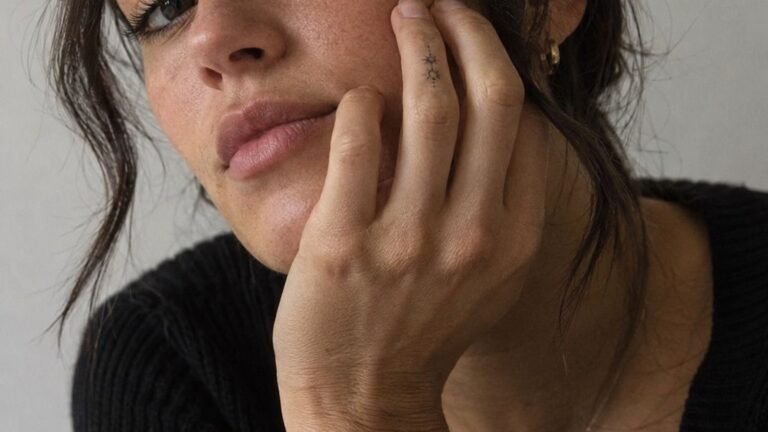
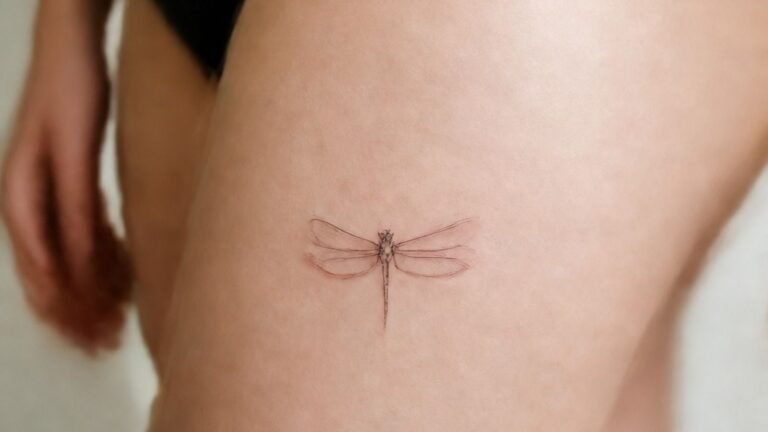
- Minimalist abstract: Sparse black lines, lots of untouched skin. Requires perfect execution, every flaw shows. Popular with younger clients, risky for longevity.
- Biomechanical abstraction: Organic shapes that suggest machinery or anatomy without depicting it. Hard to do well; easy to make look like tangled rope.
I’ve noticed more clients requesting “abstract blackwork sleeves” that incorporate scar cover-up. The density works for camouflage, but the design has to account for scar texture or it looks like blackwork over scar, not integrated skin.
Choosing an Artist
This is where I get serious. Not every black tattoo is good blackwork. Instagram filters lie. Fresh tattoos look bolder than healed ones. Here’s what I tell people:
- Look at healed photos, not just fresh. Ask for them specifically. Any artist doing this style should have one-year-plus examples.
- Check line weight consistency. Wobbly lines in geometric work mean poor machine control or rushed skin tension.
- Ask about needle grouping. For solid black, I use 15 round liners or magnums depending on area size. Artists who don’t know their grouping for specific effects are guessing.
- Consider travel. The best abstract blackwork artists are concentrated in Berlin, London, Los Angeles, and increasingly Mexico City. Budget for it if you want top-tier work.
- Consultation quality matters. If they don’t measure your body part, don’t discuss how the design moves with you, or don’t explain aftercare specifically for heavy saturation, keep looking.
We see this a lot: clients come in wanting to fix abstract blackwork done cheap. The fix is usually bigger, blacker, and more expensive than starting fresh would have been. Solid black is unforgiving. There’s no hiding a mistake with shading or color tricks.
Final Thoughts
Abstract blackwork is tattooing reduced to its most basic elements: ink, skin, pattern, time. No narrative safety net, no recognizable image to carry meaning. That purity is what draws people in and what makes it risky. Done well, it’s some of the most striking, timeless work in contemporary tattooing. Done poorly, it’s a permanent reminder that boldness without skill is just damage. I’ve spent years learning to saturate black properly, to design for the body rather than against it, to know when a piece needs more and when it needs to stop. The best abstract blackwork I’ve done, clients come back years later and the black is still black, the shapes still read, the skin healthy underneath. That’s the goal. Everything else is just conversation.
Frequently Asked Questions
How painful is abstract blackwork compared to other tattoo styles?
It’s generally more intense because of the dense saturation and repeated passes over the same area. The vibration from filling large black sections is what gets people, not just the needle itself. Thighs and outer arms are manageable; ribs and stomachs are rough.
Can abstract blackwork be done as a small tattoo?
Technically yes, but it rarely works well. The visual impact comes from scale and repetition. Small abstract pieces often look like random black blobs once healed, and they don’t age with the same dignity as larger compositions.
How long does dense blackwork take to heal?
The surface usually closes in 7-10 days, but the full settling period where black reaches its true healed tone is closer to 4-6 weeks. Heavy saturation means more plasma and ink shedding initially, don’t panic when the first week looks patchy.
Will abstract blackwork look good on darker skin tones?
Absolutely, but the approach changes. I use different needle configurations and slower speeds to ensure proper saturation without overworking the skin. The contrast is actually more dramatic on melanin-rich skin when done correctly.
Related Style Guides
- Traditional Japanese Tattoo Artists: A Real Shop Guide
- Artistic Tattoo Designs That Actually Work on Skin
- Sunlight Tattoo Designs That Actually Work
- Explore more