
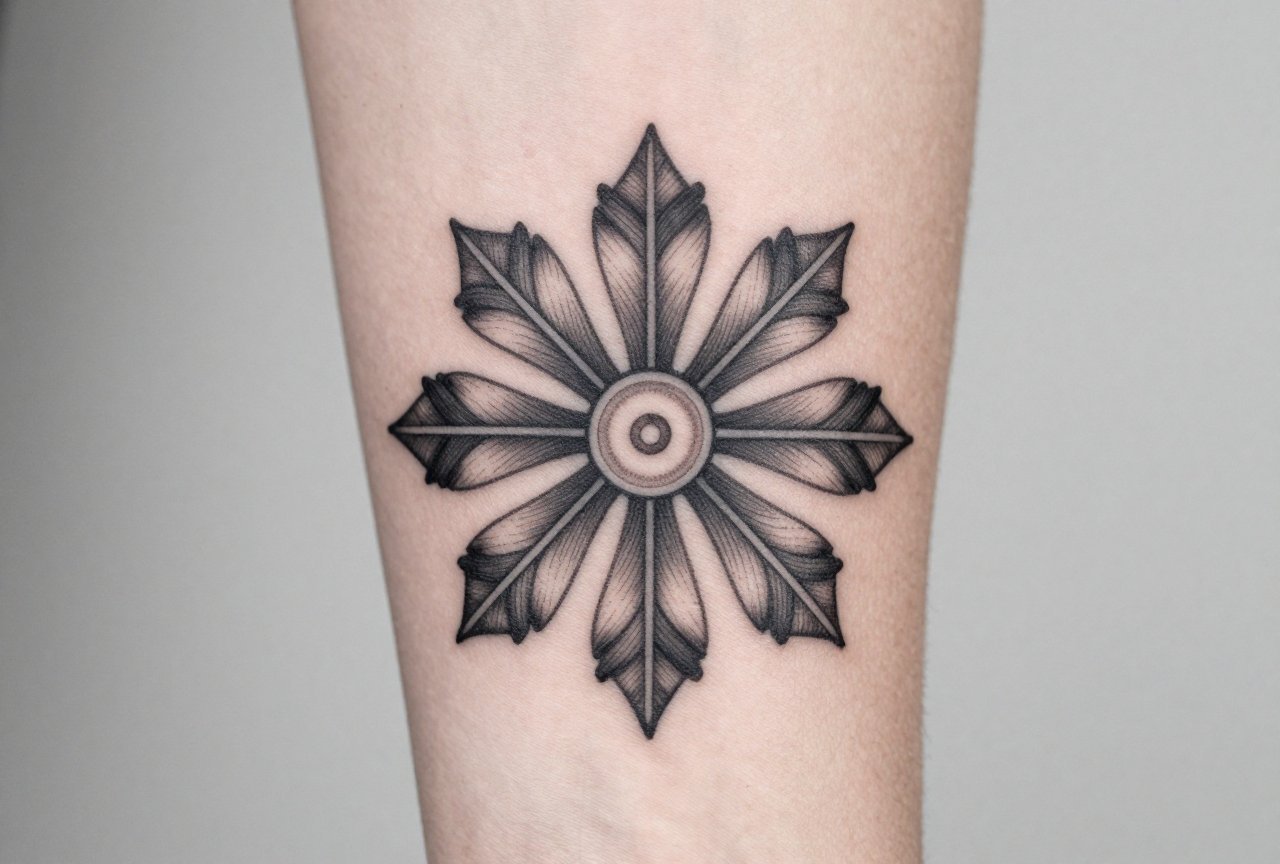
A resilient tattoo means one thing above all: you survived something that tried to break you. It’s not about being untouched by life, it’s about the cracks, the repair, the continued existence. I’ve tattooed this concept on survivors of illness, addiction, abuse, and plain old brutal luck, and the word carries different weight every single time.
Symbolism & History
Resilience as a tattoo concept doesn’t have ancient roots like anchors or crosses. It’s a modern psychological word that’s become visual language. People want the idea of bouncing back made concrete on their skin.
What the Word Itself Conveys
“Resilient” comes from the Latin resilire, to leap back, rebound. In my chair, I’ve seen clients choose this word after divorce, after prison, after losing a child, after getting clean. The word functions as a private contract. They don’t always want to explain the story. The tattoo does the talking when they can’t.
Common visual pairings include:
- Kintsugi-style cracks with gold repair lines
- Bent but unbroken trees, especially pines weighted by snow
- Phoenix imagery (though that’s become almost cliché in some shops)
- Barbed wire transforming into flowers or vines
- Storms with intact anchors or lighthouses
How Symbolism Shifts by Culture
Japanese clients sometimes reference the daruma doll, weighted bottom, always rising. Celtic knotwork appeals to people wanting ancestral toughness. I’ve done resilient-themed Nordic runes for veterans. The core stays constant: something pressed, something not destroyed.
Common Variations & Styles
There’s no single “resilient tattoo” look. The word itself gets rendered in script, but the surrounding imagery changes everything about how it reads.
Typography-Focused Designs
Script tattoos of “resilient” or “resilience” dominate. I’ve done this in delicate cursive on inner forearms, in bold serif across collarbones, in typewriter font on ribs. Line weight matters for aging, thin script blurs faster, especially on high-movement areas. I always tell clients: that elegant hairline lettering will need touch-ups in five to seven years. Bold holds. Delicate fades.
Placement affects readability:
- Forearm: visible, conversation starter, sometimes regretted in job interviews
- Rib cage: private, painful to sit through, rarely seen by others
- Along the spine: vertical script follows the body’s architecture
- Behind the ear: intimate, easily hidden, limited space for detail
Illustrative & Mixed Media
Some clients want the word integrated into larger pieces. I’ve tattooed “resilient” inside the curve of a cracked ceramic pot, the letters following the gold repair lines. Others want the word as negative space within a storm cloud, or emerging from shattered glass. Watercolor backgrounds can work but age unpredictably, pigments diffuse, edges soften. Traditional bold lines with limited shading last longer and read clearer from distance.
Best Placements
Placement for resilient tattoos carries extra weight because the meaning is so personal. You want it where you see it when you need it, or where others see it when you want to declare something.
High-visibility spots (wrist, forearm, neck) function as daily self-reminders but also invite questions. Some clients want that accountability. Others need the option to conceal. We see this a lot with teachers, nurses, people in conservative fields, they’ll choose upper arm, thigh, or rib cage for coverage.
Pain reality: ribs hurt. A lot. The vibration against bone, the thin skin, the inability to breathe normally during long sessions. I’ve had tough clients tap out on “resilient” rib pieces. The irony isn’t lost on anyone. The word about enduring pain, earned through pain.
Healing considerations:
- Inner bicep: rubs against torso, slower healing, more scabbing risk
- Hands and fingers: constant use, frequent sun exposure, fastest fading
- Upper back: protected from sun, easy to keep clean, good longevity
- Ankles and feet: poor ink retention, painful, often need multiple passes
Who Chooses This Tattoo / Personal Meanings
In my experience, resilient tattoos attract a specific psychology: people who’ve been through the fire and don’t want to pretend they weren’t burned. It’s not the same crowd that gets “strength” or “warrior”, those can feel performative. Resilient admits damage. That’s the point.
Stories I’ve Heard in the Chair
A mother after stillbirth. A firefighter after a call that didn’t end well. A teenager after leaving a cult. A businessman after bankruptcy. The word doesn’t discriminate by demographic. What unites them is the refusal to be defined by the worst chapter.
Some clients pair it with dates, sobriety anniversaries, diagnosis days, the morning they walked out. Others add coordinates of the hospital, the courthouse, the bridge they didn’t jump from. The tattoo becomes a timeline, a body-map of survival.
When Clients Regret It
Less often than you’d think. I’ve covered up maybe three resilient-themed pieces in fifteen years. Usually because the relationship ended, not the meaning. One client had “resilient” in her ex’s handwriting. The word still fit; the handwriting didn’t. We reworked it in her own script over the old lines.
Similar Symbols
Clients often arrive asking for resilient-adjacent imagery without knowing the word. I steer them toward clarity, vague concepts make vague tattoos.
Related symbols and their distinctions:
- Semicolon: specifically mental health and suicide prevention; more universally recognized but less personal
- Phoenix: rebirth through destruction; more dramatic, less about ongoing endurance
- Anchor: stability through storms; older symbol, sometimes religious connotations
- Koi fish: perseverance upstream; Japanese tradition, gendered masculine in some contexts
- Unalome: life’s path with struggles; Buddhist roots, often appropriated without understanding
- Broken chain: liberation specifically; less about ongoing resilience than escape
I usually ask: do you want to commemorate surviving, or declare you’re still surviving? Resilient does both. That’s its advantage.
Final Thoughts
A resilient tattoo isn’t decoration. It’s documentation. I’ve watched clients cry in the mirror afterward, not from pain but from the sudden externalization of something they’ve carried internally, sometimes for years. The skin heals. The word stays. The meaning deepens or shifts, but the commitment remains visible.
If you’re considering this, spend time with the word before you spend money on the tattoo. Say it out loud. Write it. See if it fits. Because once it’s in your skin, it becomes part of how you move through rooms, how you answer the question “what’s that mean?”, or how you choose not to answer. The best resilient tattoos I’ve done weren’t for people who felt strong. They were for people who felt cracked, and wanted to remember that cracks don’t have to mean collapse.
Frequently Asked Questions
Should I get the word ‘resilient’ or ‘resilience’ tattooed?
‘Resilient’ describes you; ‘resilience’ names the quality. I see ‘resilient’ more often because it feels like an identity claim. ‘Resilience’ works better paired with imagery, like ‘the resilience of trees.’ Both work. Say them aloud for a week and see which feels like yours.
Will a resilient tattoo look bad as I get older?
All tattoos age. Bold lines and solid black hold longest. Script blurs eventually, especially thin cursive. I tell clients: expect touch-ups, protect from sun, moisturize. The meaning doesn’t fade even if edges soften.
Is it okay to get a resilient tattoo if I’m still struggling?
Absolutely. I’ve tattooed this word on people mid-crisis, not just after resolution. The tattoo can function as a promise to yourself, not just a record. Just be sober for the appointment, tattooing while actively using rarely leads to good decisions.
How do I make my resilient tattoo unique and not generic?
Add personal specifics: your grandmother’s handwriting, coordinates from your hardest year, imagery from your actual experience. Generic Pinterest designs feel hollow. The more specific the visual language, the more powerful the tattoo becomes.
Related Tattoo Meanings
- Acorn Tattoo Meaning: Growth, Strength Hidden Potential
- Duck Symbolize Tattoo Meaning: Adaptability, Loyalty Playful Spirit
- Phoenix Tattoo Meaning: Rebirth, Resilience Rising Strong
- Explore more









