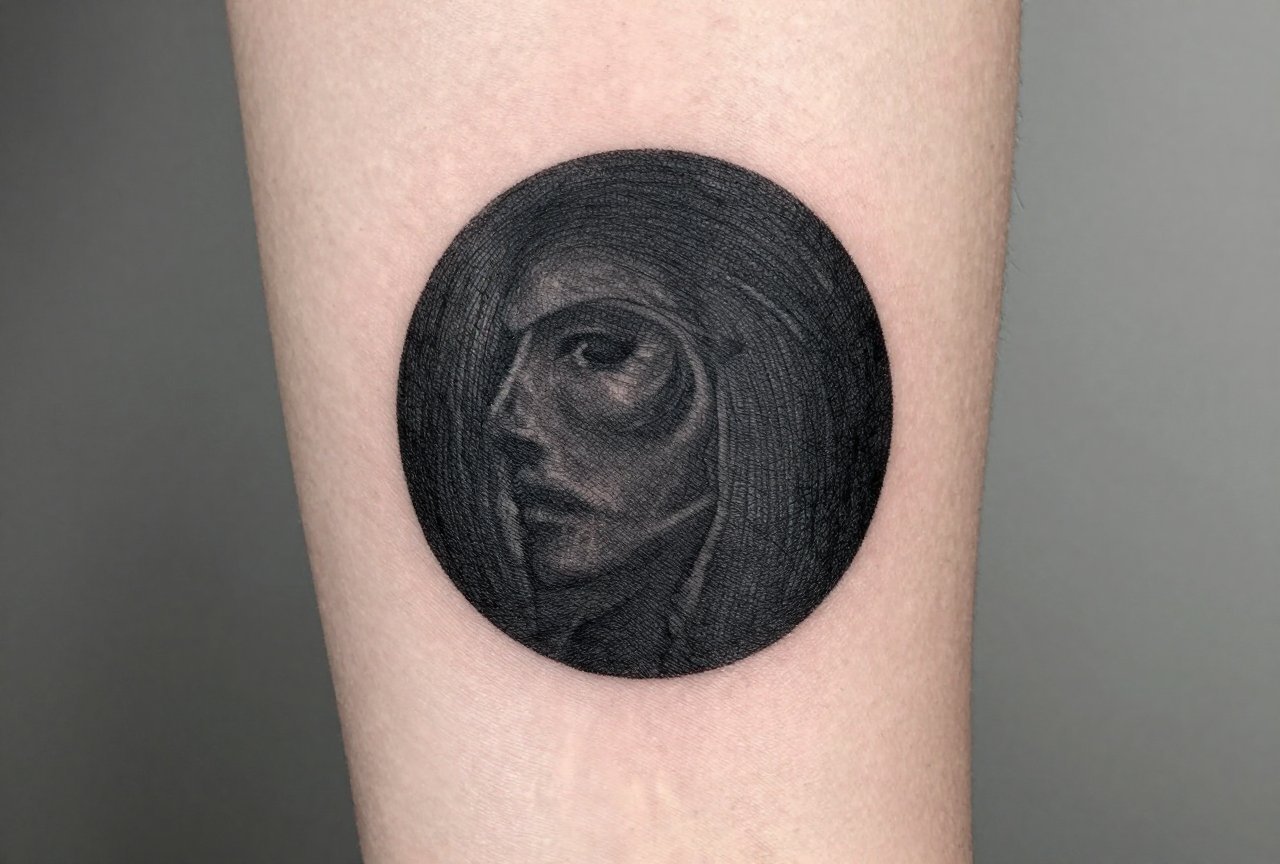
A blackout tattoo is exactly what it sounds like, large sections of skin saturated with solid black ink. But the meaning runs deeper than the visual shock. I’ve had clients cry in my chair explaining why they need every trace of an old tattoo gone, and I’ve tattooed blackout panels on people who simply wanted to feel like they owned their body again. The meaning shifts with each person, though certain threads keep showing up: covering the past, marking grief, or choosing radical transformation over slow, careful change.
Symbolism & History
Blackout work didn’t start as an aesthetic trend. In my experience, the earliest requests I saw were cover-ups gone nuclear, clients who’d been through multiple failed laser sessions or layered cover-ups that looked like muddy soup. The blackout was the final option, the scorched-earth approach. Somewhere around the early 2010s, artists like Chester Lee and Hanumantra Lamar started making the blackout itself look intentional, even beautiful. That shift changed how people approached it.
Rebirth and Letting Go
The most common meaning I hear is rebirth. One client told me, “I need to not see that name anymore,” and pointed to a forearm piece from a marriage that ended badly. We blacked out the whole lower arm. She didn’t want a new design competing with the ghost underneath. The solid black became a kind of erasure that she could feel, not just think about. There’s something almost ritualistic about watching the old image disappear under the machine, pass by pass. The pain is part of it for some people, a physical marker that matches the emotional weight.
Grief and Memorial
I’ve also done blackout work as memorial. A guy came in after his brother died by suicide. He’d already gotten a traditional memorial piece, dates, a portrait, flowers, but it felt wrong, too pretty. He came back six months later and asked me to black out half his chest. “He was dark,” he said. “This feels honest.” The solid black became a way to sit with grief without explaining it to anyone. No imagery to interpret, no dates to recite. Just absence made visible.
Common Variations & Styles
Not all blackout tattoos are flat black walls. The style has splintered into distinct approaches, and each carries slightly different connotations.
- Pure solid black: The classic. No texture, no variation. Reads as the most aggressive, most final. Heals the most unevenly too, I’ve seen patches where the black sits perfectly and others where it looks slightly dusty, needing touch-ups.
- Blackout with negative space: Leaving skin untouched to form patterns, lettering, or imagery. The contrast is stunning fresh, but the negative space can yellow or blur over years if the client tans heavily. I always warn people: that crisp white won’t stay crisp.
- Blast over: Tattooing new designs on top of healed blackwork. This is where things get interesting symbolically, it’s not erasure anymore, it’s building on top of a foundation. I’ve seen traditional Japanese motifs, geometric patterns, even portraits blasted over black. The meaning shifts to resilience, layers, complexity.
- Gradual blacking: Some clients do it in sections over years, letting the black creep across a limb. There’s a process-meaning there, a slow surrender rather than a single dramatic cut.
Line Work vs. Saturation
Here’s something shop talk clarifies: the meaning can even shift based on how the black goes in. Solid saturation with a mag shader feels different than packing black with a round liner. The mag gives that velvety, almost soft depth. The liner packs tighter, reads harder. I’ve had clients specifically request one or the other based on what they want to project, soft closure versus slammed door.
Best Placements
Placement affects meaning more than people expect. A blackout sleeve says something different than a blackout hand or a patch on the ribs.
- Full sleeves or leg sleeves: The most common. Visible, dramatic, but still concealable with a long-sleeve shirt. I’ve tattooed dozens of these. The meaning tends to be personal but not secret, people want to carry it, not hide it, but they want control over when it’s seen.
- Hands and fingers: This is commitment. Hard to cover, hard to laser, hard to explain away. The clients who choose this are usually past caring about conventional employment or they’ve already built a life where it doesn’t matter. The meaning here is often defiance, or absolute self-determination.
- Chest or back panels: Large canvas, intimate. I’ve done chest blackouts on people who wanted to feel armored. The back tends to be more about carrying something, burden, memory, a past self.
- Neck and face: Rare for pure blackout, but I’ve seen it. The meaning is almost always social boundary-setting: “I am choosing to be unreadable to you.”
Healing reality: large black saturation is brutal. The plasma weeps for days. Sleeping is hard if it’s on your side. I’ve had clients call three days in panicking because the scab looks like cracked mud. That’s normal. The black settles in over six weeks, and the final tone isn’t really visible for two months. Anyone promising you otherwise hasn’t done enough of this work.
Who Chooses This Tattoo / Personal Meanings
After years of doing this, I can spot the different types who walk in for blackout work. Not that I stereotype, people surprise me constantly, but patterns exist.
The Cover-Up Client
Usually older, 30s to 50s, carrying tattoos from their teens or twenties that embarrass them now. Sometimes it’s bad art, sometimes it’s a name, sometimes it’s something that just doesn’t fit who they became. These clients often apologize for “wasting my time with boring work.” I always stop them. The blackout isn’t boring to them. It’s a door closing. I had a guy in his sixties black out a forearm piece he’d gotten in the Navy. “That’s not me,” he said. “Haven’t been that kid in forty years.” The black was dignity.
The Aesthetic Convert
Younger, often already heavily tattooed, drawn to the graphic boldness. They might start with a blackout patch as part of a larger design, then expand. The meaning here is less about erasure and more about visual language, speaking in extremes, rejecting the busy, colorful norm. Some of these clients later get blast-over work, treating the black as background rather than statement.
The Trauma Processor
These are the ones I sit with longest in consultation. Sometimes they tell me everything, sometimes almost nothing. The blackout is a way to reclaim skin that doesn’t feel like theirs anymore, after assault, after self-harm, after medical trauma. I’ve tattooed over scarred arms, making the black uniform across damaged and undamaged skin alike. The meaning is integration. The black doesn’t hide the history; it makes the whole surface equal, owned, chosen.
Similar Symbols
Clients considering blackout sometimes want to know what else carries comparable weight. I’ve steered people toward alternatives when pure black felt too final, or confirmed their instinct when nothing else would do.
- Heavy blackwork designs: Tribal, Polynesian, or solid geometric patterns can cover old tattoos while maintaining imagery and cultural connection. The meaning is less about void and more about replacement.
- White ink on black: A middle ground. The black dominates but the white creates form. Symbolically, this reads as finding shape within darkness, rather than dwelling in it.
- Scarification or branding: Some people want physical transformation without ink. I don’t do this work, but I know artists who do. The meaning overlaps with blackout, permanent, visceral, non-verbal.
- Simple, heavy black bands: Arm bands, leg bands. Less total commitment, still carries weight. I’ve had clients do a solid black band as a “test run” for how the saturation feels and heals.
Final Thoughts
Blacked out tattoos mean what the person wearing them needs them to mean. I’ve stopped trying to guess. The same solid black sleeve has been grief, celebration, erasure, and pure visual preference in different people. What matters is that the choice is intentional and the client understands what they’re getting into, the healing marathon, the touch-ups, the way black softens and blue-shifts over decades.
If you’re considering this, sit with the idea. Don’t rush. The black will wait. And when you’re ready, find an artist who has actually done large saturation work, who can show you healed photos, not just fresh ones. This isn’t the place for a bargain or a walk-in impulse. Your skin, your story, your call, but make it a good one.
Frequently Asked Questions
Does a blackout tattoo hurt more than regular tattooing?
Large saturation work tends to feel more intense because the artist is going over the same area repeatedly to pack the ink solid. The healing is also more uncomfortable, more plasma, thicker scabs, longer tenderness. Everyone’s pain threshold differs, but most clients tell me the session itself is comparable, while the aftermath is rougher.
Can you get a blackout tattoo removed later?
Laser removal on solid black is possible but extremely difficult and expensive. Black ink absorbs laser wavelengths well, which actually helps, but the density means many more sessions than a lighter design. I’ve seen people start removal and abandon it partway through. Go in assuming this is permanent.
Why do some blackout tattoos look patchy or gray after healing?
Uneven saturation is the main culprit, either the artist didn’t pack the ink consistently or the client’s skin rejected some of it during healing. Scabbing and picking can pull ink out. That’s why touch-ups are common with this style. A good artist will offer a free or discounted touch-up at 8-12 weeks.
How do you care for a healing blackout tattoo?
Keep it clean, keep it moisturized but not soggy, and absolutely do not pick the scabs. Large black areas form thick, dark scabs that look alarming. Let them flake naturally. Sleep on clean sheets, wear loose clothing, and expect the black to look dusty or muted until the top layer fully sheds.
Related Tattoo Meanings
- Ms13 Tattoo Meaning
- Bleeding Heart Tattoo Meaning: Love, Loss Emotional Truth
- Buck Tattoo Meaning: Strength, Renewal Masculine Energy
- Explore more