
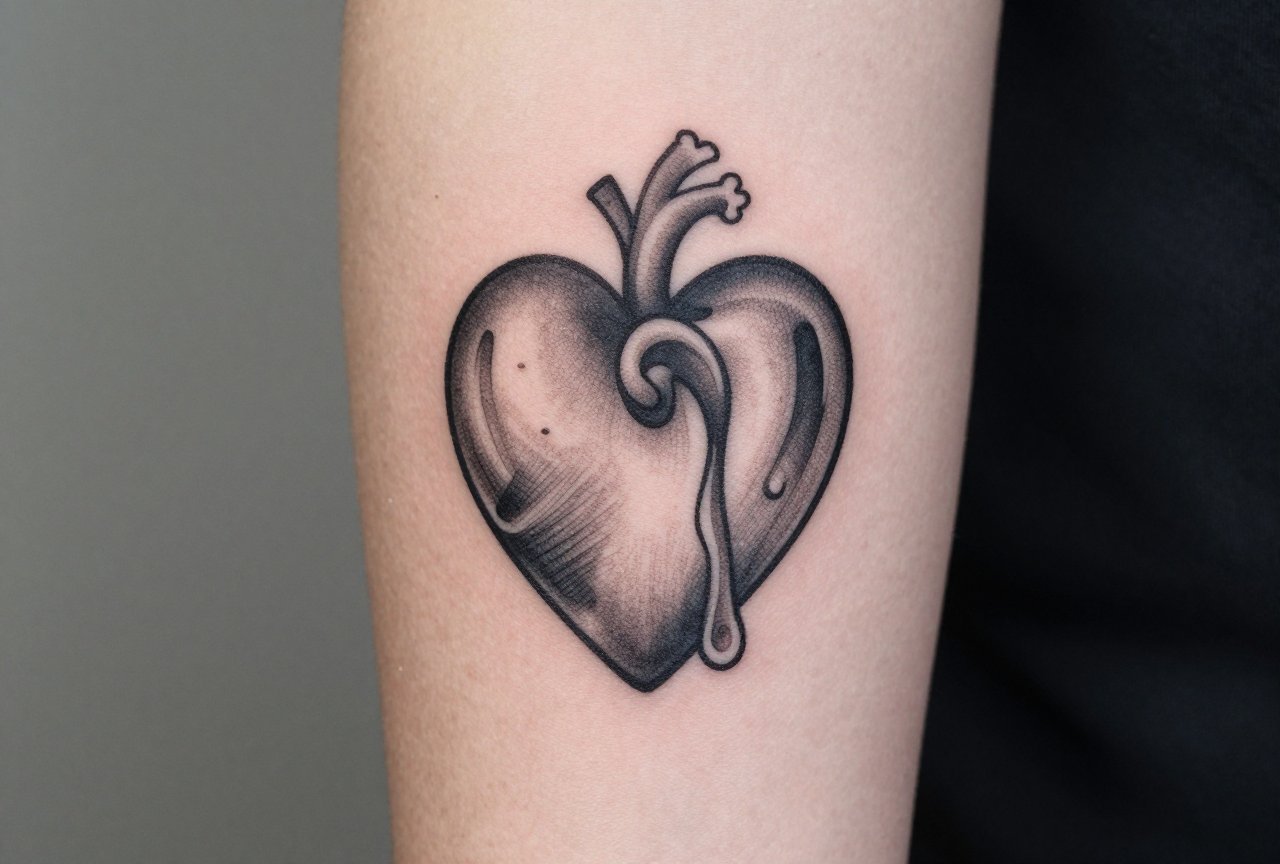
The bleeding heart tattoo carries weight. It’s not a throwaway design you pick from a flash sheet because it looks cool. This image represents emotional vulnerability laid bare, love that costs something, grief that doesn’t tidy itself up, and the strange courage it takes to keep your heart open when it’s already wounded. I’ve tattooed this piece on grieving parents, on people leaving bad marriages, on kids who lost friends too young. The meaning shifts with the person, but the thread stays the same: this hurts, and I’m not hiding it.
Symbolism & History
Where the Image Comes From
The bleeding heart flower, Dicentra spectabilis, grows in shady gardens and droops like something exhausted. Its petals form a heart with a single drop falling, almost too perfect to be natural. In Victorian floriography, it meant “unrequited love” or “compassion.” Tattooers started borrowing botanical imagery heavily in the 1970s and 80s, especially on the West Coast where Ed Hardy and his crew were mixing Japanese composition with American iconography. The bleeding heart fit the mood, romantic, slightly gothic, emotionally direct without being corny.
Religious imagery also fed into this. The Sacred Heart of Jesus, dripping blood and wrapped in thorns, has been Catholic iconography for centuries. I’ve had clients who wanted a secular version of that devotion, same intensity, no church. Others grew up with that imagery and rejected the religion but kept the visual language of suffering love. The tattoo becomes a translation, not a copy.
What It Means in the Chair
When someone sits down for a bleeding heart, I ask less about design and more about timing. Why now? Usually there’s a story pressing against the skin. The symbolism lives in three main currents:
- Love that bleeds: Not the easy kind. The kind that keeps going through betrayal, distance, or knowing it’ll end.
- Grief made visible: A death, a divorce, a version of yourself that didn’t survive. The tattoo marks the loss without pretending to fix it.
- Emotional honesty: Refusing to perform strength. Saying “I’m soft here, and that’s the point.”
Common Variations & Styles
Botanical Realism
The flower itself, rendered in soft pinks and greens, maybe with dewdrops or soil tones. This ages beautifully if the artist knows how to build saturation without overworking the skin. I’ve seen these fade to a ghostly elegance after ten years, the lines stay, the color quiets down. Watercolor backgrounds can work but need black anchoring points or they blur into mush by year three. I tell clients: if you want watercolor, commit to touch-ups.
Anatomical Heart + Blood
The actual human organ, dripping, sometimes held in hands or pierced by objects. This hits harder, less pretty. More medical illustration, less garden. We see this a lot with nurses, people who’ve survived cardiac events, or anyone who’s had their heart physically broken in a way that changed their daily life. The blood here isn’t decorative, it’s documentary. Line weight matters hugely. Thin lines on the veins collapse; bold contour with selective detail lasts.
Traditional/Americana
Bold black outlines, limited color palette, maybe a banner with a name or date. The classic “Mom” heart’s darker cousin. These hold up forever. The simplicity is the point. In my shop, traditional pieces outlast almost every trend piece from the same decade. The bleeding heart in this style reads immediately even from across a room.
Abstract & Minimalist
Single needle, fine line, maybe just the suggestion of a heart with one red drop. Very popular now, very tricky to execute. The skin can only hold so much subtlety. I warn people: what looks delicate on Instagram often heals to a soft grey blur. If you want minimal, go slightly bolder than you think you need.
Best Placements
The chest is obvious and earned. Over the actual heart, ribs spreading with breath while the needle works, clients often cry, not from pain but from proximity. The forearm makes it visible, a conversation or a warning depending on the day. I’ve placed bleeding hearts on throats (the courage there), on hips hidden from most eyes, on calves where the owner sees it when shaving or dressing. The inner bicep ages well, protected from sun, but stretches with muscle gain. Think about your body in ten years, not just your body next summer.
Small pieces behind the ear or on wrists trend hard right now. They can work if the design simplifies intelligently. A bleeding heart the size of a quarter needs to be mostly silhouette or it becomes a red blob. We talk about this in consultation. Good artists will tell you when your placement idea fights your design.
Who Chooses This Tattoo / Personal Meanings
The Grief-Stricken
Parents who’ve lost children. Siblings who’ve lost siblings. The tattoo happens around anniversaries, often with the person’s handwriting incorporated or their favorite flower alongside. One client brought her grandmother’s garden shears to the appointment. We didn’t use them, but she held them while I worked. The bleeding heart was the grandmother’s favorite flower. That’s the level of specificity real tattoos carry.
The Survivors
Of abuse, of addiction, of relationships that took pieces. The bleeding heart here says: I kept feeling even when feeling was dangerous. It’s not triumphal. There’s no “survivor” banner. Just the image, still dripping, still alive. I tattooed one on a woman who left a twenty-year marriage the week before. She didn’t cry until the blood drop was done. Then she couldn’t stop.
The Romantics
Not the hopeful kind. The kind who know love costs and pay anyway. These clients often pair the heart with text, poetry fragments, song lyrics, their own words. Placement tends more visible. They want to be seen in their vulnerability, not despite it.
Similar Symbols
Clients often browse between these before settling on the bleeding heart. Here’s how they differ in practice:
- Sacred Heart: More explicitly religious, often with flames, thorns, cross. The devotion is structured, institutional. The bleeding heart tattoo borrows the visual but keeps the meaning personal.
- Broken heart: More abrupt, more about the moment of breaking. The bleeding heart implies continuity, still beating, still losing.
- Dagger through heart: Classic betrayal imagery, more aggressive, more external. The bleeding heart’s wound is often internal, self-sustained, chosen.
- Anatomical heart alone: Scientific, literal, less emotional narrative. Adding the blood changes everything.
- Crying eye: Similar vulnerability but more observational. The heart is participatory, you’re in it, not watching it.
Final Thoughts
The bleeding heart tattoo isn’t trending on TikTok. It’s not a sleeve filler or a matching best-friend piece. It arrives with need, with someone carrying something they want to mark rather than resolve. After years in shops, I can usually spot the appointment before they explain. There’s a particular silence around this design, a seriousness in how they handle the reference image.
If you’re considering it, sit with the image. Not for a day, for months. The meaning should accumulate, not fade. Bring your artist the story, or don’t. The tattoo works either way. But know that every bleeding heart I’ve tattooed has been someone’s truest thing, the image they couldn’t shake, the one that waited until they were ready. That’s the real meaning. Not the flower, not the blood, not the heart itself. The readiness to say: this is what I carry, and I’m not pretending otherwise anymore.
Frequently Asked Questions
Does a bleeding heart tattoo always mean someone is sad or depressed?
Not at all. I’ve tattooed this on people celebrating emotional growth, on new parents overwhelmed by love, on couples marking hard-won commitment. The bleeding represents intensity and honesty, not only sorrow. It says you’re willing to feel fully, which includes joy that scares you.
How well does the color red hold up in a bleeding heart tattoo over time?
Red fades faster than black, especially on hands or areas with frequent sun exposure. In my experience, a well-saturated crimson on the chest or upper arm holds its depth for years with proper aftercare and sunscreen. Plan for a touch-up around year five to keep that drop looking wet.
Can I combine a bleeding heart with other elements like names or dates?
Absolutely, and clients do this constantly. I recommend keeping text minimal and letting the image dominate. A small banner or subtle script integration works better than crowding the composition. The heart itself should breathe, too much around it dilutes the impact.
Is this design more common for women, or do men get it too?
The split is closer than people assume. Men often choose anatomical versions or pair the botanical heart with bolder, darker imagery. I’ve tattooed bleeding hearts on construction workers, soldiers, and mechanics who wanted to honor losses they don’t discuss otherwise. The design has no gender, only individual stories.
Related Tattoo Meanings
- Enso Tattoo Meaning: Imperfection, Zen Ink
- Money Rose Tattoo Meaning: Wealth, Hustle Beauty
- Bluebird Tattoo Meaning: Hope, Happiness Home
- Explore more









