
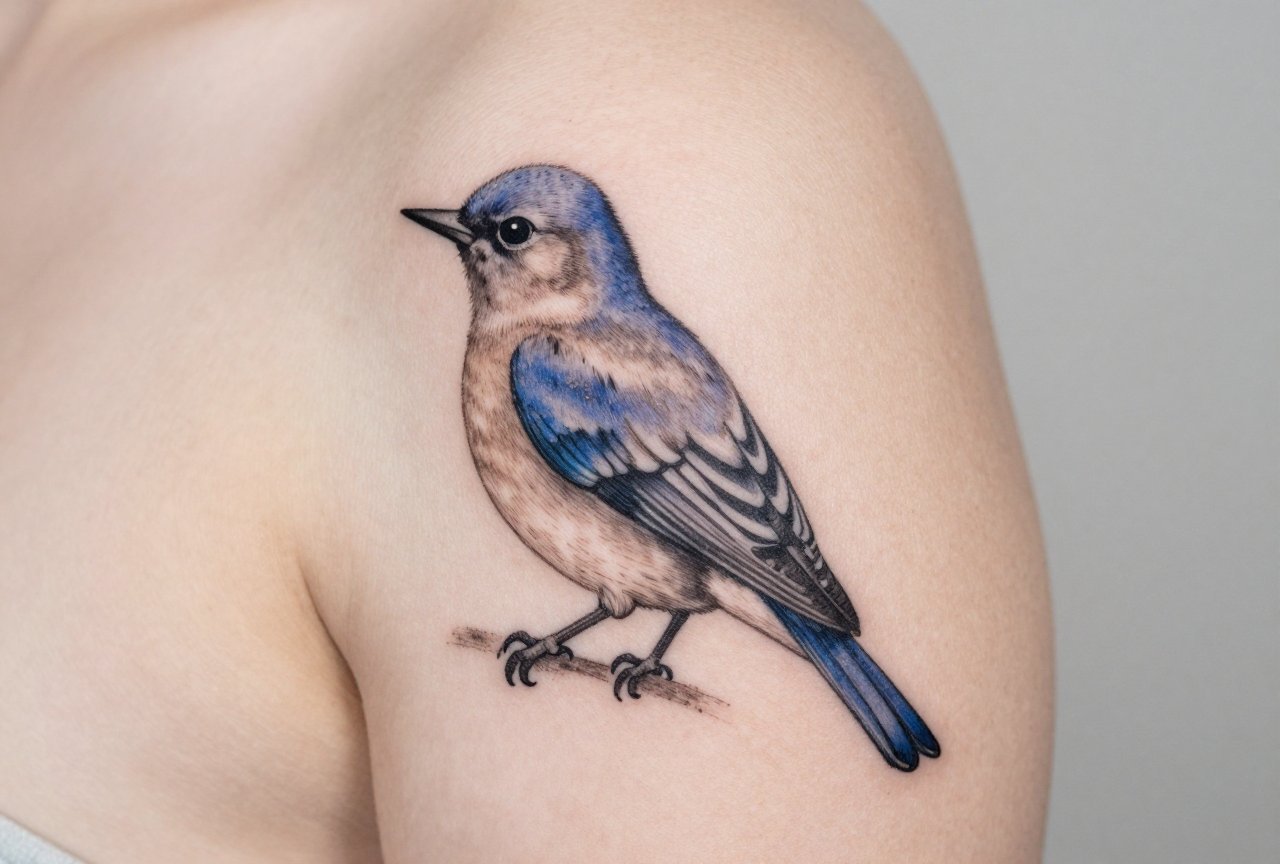
A bluebird tattoo means hope, happiness, and the promise of good things ahead. It also carries a quieter, older meaning: the safe return home after long absence. I’ve tattooed dozens of these over the years, and every client brings a slightly different reason, some want joy, others want memorial, others just love the color against skin.
Symbolism & History
The bluebird’s been a symbol of cheerfulness for centuries, but it’s not just a feel-good image. In European folklore, the bluebird represented the soul itself, something elusive you chase but can’t quite catch. In American tradition, it became the opposite: the bluebird of happiness, plain and simple. Sailors got swallows to mark miles traveled, but bluebirds specifically meant they’d return home safe. That distinction matters. I’ve had Navy guys ask for bluebirds specifically because their grandfather had one after Korea.
The Color Problem
Here’s what I tell clients in my chair: that bright sky-blue you want? It changes. Blue pigment is notorious for fading cool, sometimes toward grey, sometimes toward a greenish cast depending on your skin’s undertone. It’s not a dealbreaker, but it’s reality. The old-timers used to say “blue don’t stay true,” and there’s truth in that. Modern pigments are better, but sun and time still win eventually. Plan for touch-ups or choose a slightly deeper blue than your reference photo.
Prison and Counterculture Roots
Less commonly discussed: the bluebird has outsider history. Some prison systems used it to mark short sentences, a small bird flying free. I’ve had clients who want to reclaim that, turn something grim into something personal. Others don’t know the connection and I don’t bring it up unless they ask. Shop culture respects that, meaning’s personal, not prescriptive.
Common Variations & Styles
The bluebird adapts to almost any style, but some work better than others for longevity and clarity.
- Traditional American: Bold black outlines, limited color palette, the classic sailor look. Holds up best over decades. The heavy line weight prevents the blue from bleeding into mush.
- Neo-traditional: More detail, more color gradients, often with decorative elements like banners or flowers. I do these a lot on forearms. The extra color complexity means more sessions, more money, more healing time.
- Watercolor: Popular, tricky. The splashy blue background looks stunning fresh. I’ve seen them age beautifully and I’ve seen them become unrecognizable blotches. Placement matters, areas that see sun or friction (top of foot, outer forearm) fade fastest with this style.
- Minimalist/line work: Single needle, delicate. Elegant but risky. Thin blue lines can drop out entirely during healing. I warn clients: this style needs perfect aftercare and still might need reinforcement.
- Realistic: Full color rendering of an actual mountain bluebird or eastern bluebird. Stunning on upper arm or thigh. Requires an artist who understands bird anatomy, feather direction, eye placement, the way light hits iridescent plumage.
We see this a lot: clients bring Pinterest photos of fresh tattoos, not healed ones. Ask your artist for healed photos. Any good one has them.
Best Placements
Where you put a bluebird changes how it reads and how it lasts.
- Behind the ear: Small, visible, intimate. The skin there moves a lot and can blow out fine lines. I’ve done these with simple shapes, not heavy detail.
- Collarbone/shoulder: Classic for birds in flight. The natural curve of muscle gives movement to the wings. Painful, bone proximity, thin skin, but worth it for the visual flow.
- Forearm: Most common. Easy to show, easy to hide with sleeves. Inner forearm ages better than outer (less sun). The blue stays truer longer here.
- Ribcage: Personal, hidden. Space for a larger piece with flowers, branches, script. Healing’s rough, constant movement, hard to keep clean, can’t sleep on it.
- Thigh: Great for bigger, more detailed work. Skin’s stable, color holds well. Less daily sun exposure than arms.
- Foot/ankle: I try to talk people out of these. The blue fades fast, lines spread, and it hurts like hell. If you must, keep it simple and bold.
Size Reality
Bluebirds are small birds in nature. Clients want them small on skin too. Too small, under two inches, and the detail collapses. The eye becomes a dot. The wing feathers merge. I usually push for three inches minimum unless we’re doing a very graphic, simplified shape.
Who Chooses This Tattoo / Personal Meanings
After fifteen years, I can tell you there’s no single bluebird client. I’ve tattooed them on:
- Mothers who lost children, the bluebird as messenger, as sign the child’s at peace
- People in recovery, marking the day they felt genuine happiness return
- Travelers and military, the homecoming symbol
- Midwesterners who grew up with actual bluebirds at their grandparents’ farm
- Couples getting matching birds, sometimes holding banners with coordinates of where they met
One of my regulars has a bluebird for every year she’s been cancer-free. Four now, small ones trailing up her side. Another guy got his after a divorce, “finally happy again, finally home to myself.” The meaning you bring is the meaning that sticks. I don’t judge the reason, I just make sure the tattoo carries it well.
What Artists Actually Discuss
In the shop, we talk about whether the client wants the bird facing forward (confrontational, direct) or in profile (classic, flowing). Whether the beak should be open (singing, active) or closed (peaceful, still). Whether to include a branch, grounding the image, giving it context, or let it float free. These choices matter more than most people realize until we point them out.
Similar Symbols
Clients often come in considering bluebirds alongside related images. Here’s how they compare:
- Swallow: The classic sailor tattoo, more strictly about travel and return. Similar shape, different color story. Swallows are usually outlined in black with red accents. Less about joy, more about mileage.
- Robin: Spring, renewal, sometimes Christian symbolism. Red breast instead of blue. More regional, robins mean something specific to people from the northern US where they’re first sign of thaw.
- Phoenix: Rebirth through destruction, much heavier narrative. Bluebird’s happiness is quieter, less earned through trauma. Some clients graduate from wanting a phoenix to wanting a bluebird, they’re past the fire, into the peace.
- Cardinal: Memorial tattoo, almost exclusively. “When cardinals appear, loved ones are near.” Bluebird can be memorial too, but it’s broader, cardinal’s pretty locked into that meaning now.
- Blue jay: Aggressive, loud, territorial. Some people want that energy. The color’s similar but the bird’s attitude is completely different. I once had a client switch from bluebird to blue jay mid-consultation because she said “I’m not happy, I’m pissed off and pretty.” Fair enough.
Final Thoughts
A bluebird tattoo works because it’s optimistic without being naive. The color’s genuinely beautiful on human skin, there’s a reason we keep coming back to it despite the fading challenges. If you’re considering one, think about why this bird and not another. Bring that reason to your consultation. The best bluebirds I’ve done weren’t the most technically perfect; they were the ones where the person knew exactly what they meant and could say it out loud.
Find an artist who understands color theory and has healed photos of their blue work. Budget for a touch-up in five to ten years if you want it crisp. And pick placement with your actual life in mind, your job, your sun exposure, your willingness to show or hide it. The bird’s been a symbol for centuries. Your version just needs to last your lifetime.
Frequently Asked Questions
Does blue tattoo ink fade faster than other colors?
Blue holds reasonably well but can shift toward grey or green over time, especially with sun exposure. Deeper blues last longer than bright sky blues. Plan for potential touch-ups regardless of placement.
What’s the difference between a bluebird and swallow tattoo?
Swallows are strictly sailor tattoos marking nautical miles and safe return. Bluebirds share the homecoming meaning but add happiness and hope. Visually, swallows are usually black with red accents, while bluebirds emphasize that specific blue color.
Can a bluebird tattoo work as a memorial piece?
Absolutely. Many clients choose bluebirds to represent a loved one at peace or to mark their own survival through difficult times. The happiness symbolism translates well to remembering someone who brought joy, or to celebrating joy returned after grief.
How small can a bluebird tattoo be before details get lost?
I recommend at least three inches for anything with recognizable detail. Under two inches, the eye becomes a dot and wing feathers merge. If you want something very small, go with a simplified graphic shape rather than realistic detail.
Related Tattoo Meanings
- Buddhism Symbol Wheel Tattoo Meaning: Dharma Design
- Bumblebee Tattoo Meaning: Community, Resilience Joy
- Calla Lily Tattoo Meaning: Beauty, Rebirth Quiet Strength
- Explore more









