
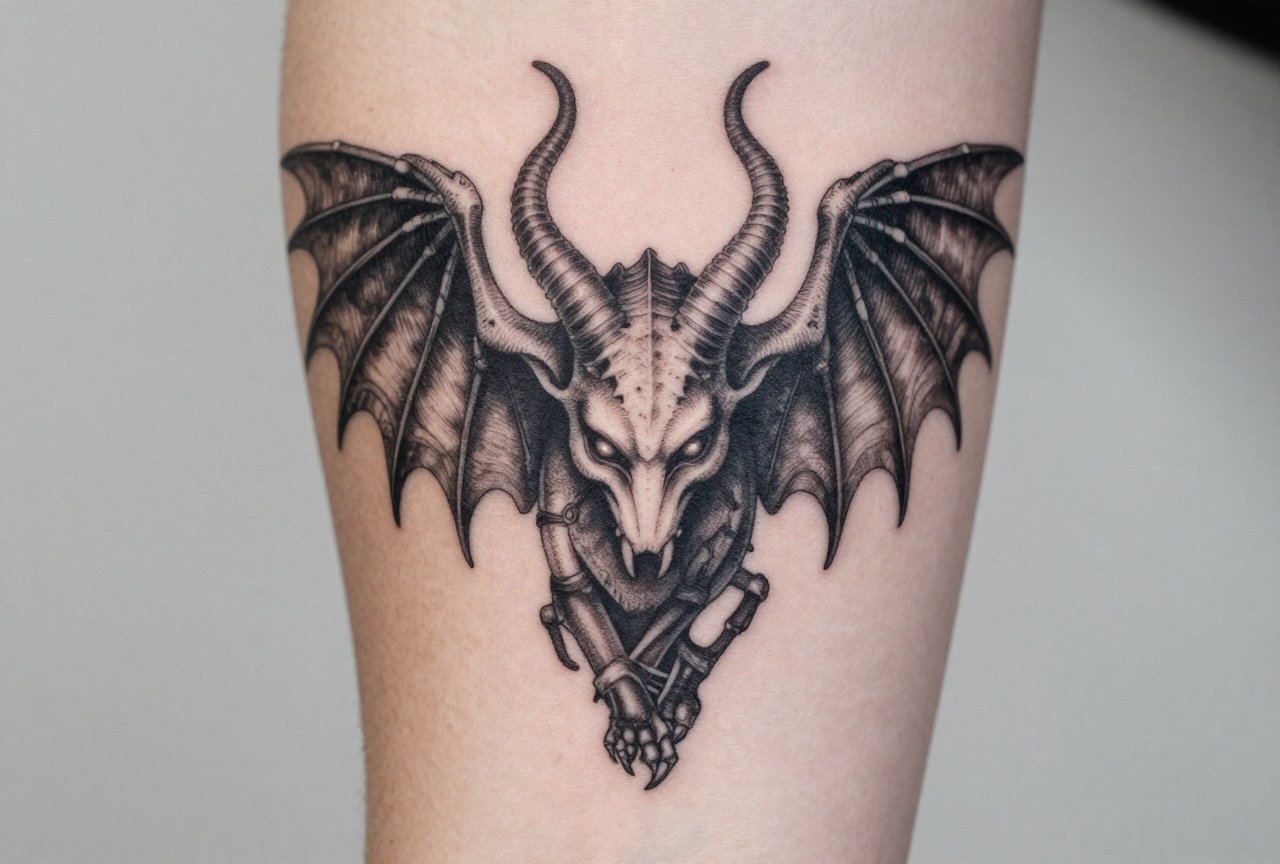
An incubus tattoo typically represents raw desire, the shadow self, or wrestling with temptation, not literal demon worship. I’ve had clients sit in my chair who want this imagery because it captures something personal: a past they survived, an appetite they own, or simply the aesthetic pull of darkness made beautiful. The meaning shifts dramatically based on who’s wearing it and what they bring to the design.
Symbolism & History
The incubus comes from medieval folklore, a male demon who visits sleeping women, the dark counterpart to the succubus. But tattoo culture doesn’t traffic in medieval morality. What I’ve seen over years in shops is people stripping away the religious baggage and keeping the visual language: wings, horns, clawed hands, often beautiful and terrible at once.
From Fear to Fascination
The old stories were warnings. The modern tattoo is usually reclamation. I’ve had a client tell me, “I was raised to be afraid of my own sexuality, this is me taking that back.” Another guy wanted an incubus piece after getting sober, saying the demon represented the addiction he now controlled rather than the other way around. The symbolism inverts depending on the person.
Visual Language of Darkness
Common symbolic elements I’ve tattooed:
- Horns, often stylized, not literal goat horns; can suggest rebellion or animal nature
- Wings, bat-like or feathered, implying movement between worlds, dreams and waking
- Chains or broken chains, either bondage or liberation from it
- Shadowed faces, the incubus as mirror, not monster
- Red eyes or accent colors, desire, warning, or simply dramatic contrast
Black and grey dominates this imagery, but I’ve done pieces where a single slash of crimson changes the entire reading. One client wanted the eyes done in her ex’s birthstone color, suddenly it’s not generic darkness, it’s her specific story.
Common Variations & Styles
There’s no single “incubus tattoo.” I’ve executed this concept in radically different ways depending on the client’s skin tone, pain tolerance, and what they actually want to live with.
Realistic & Portrait-Style
These demand serious technical skill. Smooth skin rendering against demonic features, maybe cracked flesh, maybe too-perfect beauty. The contrast is the point. Shading work here is heavy; I’ve spent four-hour sessions just building up the shadows around a jawline. These age well if the black is packed properly, but light greys can blur over time on high-movement areas.
Neo-Traditional & Illustrative
Bolder lines, more graphic. Think Mike Mignola’s Hellboy aesthetic, strong silhouettes, limited color, high readability. These hold up better long-term. I tell clients: that delicate realism you love on Instagram? In ten years it’s mud. The bold illustrative piece? Still reads from across the room. I’ve got a guy who’s had his neo-traditional incubus on his calf for eight years, still crisp.
Abstract & Symbolic
Some clients don’t want a figure at all. I’ve done shadow hands reaching from smoke, a pair of horns emerging from negative space, a single wing with chains dissolving into geometric patterns. These speak to the idea of the incubus without the literal imagery. Often chosen by people who want the meaning private, something they can explain or not, depending on who’s asking.
Best Placements
Where you put this matters. The incubus carries weight; placement changes who sees it, when, and what that feels like.
Thigh and hip pieces are common, intimate, easily concealed, connected to sexuality and personal space. I’ve done several there, always private sessions, always stories I don’t repeat. The ribs hurt like hell; the skin moves and breathes, so detail work is tricky. But the location itself, protecting organs, vulnerable, fits the theme for some people.
Upper arms and shoulders work well for larger compositions. The canvas is flat, the muscle provides good structure for faces and wings. I’ve got a regular who started with a shoulder piece and is now sleeve-working downward, each new element another chapter of his story. Forearms are bolder, more public. One woman wanted hers there specifically: “Let people ask. I’m done hiding.”
Back pieces allow for full wingspans, dramatic scale. These are commitments. I’ve seen two in my career that I’d call truly finished, both took years. The incubus as central figure, maybe a moon behind, maybe a sleeping form below, narrative composition, not just imagery.
Who Chooses This Tattoo / Personal Meanings
I don’t ask why anymore unless they offer. But they usually offer. The incubus attracts specific kinds of stories.
Survivors & Reclaimers
More than you’d think. People who’ve been through sexual trauma, religious trauma, addiction, sometimes all three. The demon becomes the survived thing, the owned thing. I’ve tattooed incubus imagery on a former priest, a recovered sex worker, a woman who left a cult. Each time the meaning was transformation, not celebration of harm. The image holds what they don’t want to forget but refuse to be defined by.
The Aesthetically Drawn
Not everyone has trauma. Some people just love dark fantasy art, metal album covers, gothic romance. That’s valid. I’ve got a client who’s a librarian, sweetest person you’ll meet, has a massive incubus piece because she loves 18th-century gothic literature. The tattoo doesn’t have to be therapy to be meaningful.
Queer & Trans Narratives
In my shop, I’ve noticed this imagery resonates with people whose desires have been labeled monstrous by family or culture. The incubus becomes camp, becomes pride, becomes a wink. One trans guy told me: “They called me a predator for existing. Fine. I’ll be the beautiful monster they imagined.” That’s power I can’t design but I’m honored to ink.
Similar Symbols
Clients often browse adjacent territory before settling. I point them toward options depending on what they’re actually after.
The succubus is the obvious pair, same mythology, gendered counterpart. Some couples get matched sets, though I find that cuts both ways: powerful partnership or weird heteronormative lockstep. The Baphomet sits nearby visually but carries more explicit occult and political baggage. I’ve had people pivot to Baphomet when they want the horns and androgyny without the sexual narrative.
Angels with fallen features, broken wings, darkened halos, offer redemption arcs the incubus doesn’t. If you want struggle, not embrace of darkness, that’s your symbol. On the pure fantasy side, vampires share the beautiful predator archetype but feel more played out, more Anne Rice, less raw.
Personal demons rendered abstract, no figure, just shapes and feeling, work for people who want the concept without the cultural weight. I’ve designed pieces that are essentially incubus-inspired without naming them, and those often carry the most specific, unrepeatable meanings.
Final Thoughts
I’ve been tattooing long enough to distrust easy meanings. The incubus tattoo isn’t one thing. It’s a mirror that happens to have horns. What reflects back depends on who’s looking, who’s wearing it, what light they’re standing in.
If you’re considering this imagery, sit with the discomfort. That’s usually the point. Bring reference, but more importantly bring your own language for what you’re doing. The best incubus tattoos I’ve done started with clients who knew exactly why they wanted something society calls monstrous, and didn’t need me to validate it. My job is to make it beautiful, make it last, make it true to the skin it lives in. The meaning? That’s yours. I’m just the one with the machine.
Frequently Asked Questions
Is an incubus tattoo considered satanic or offensive?
Not inherently. Most people who choose this imagery aren’t making religious statements. I’ve tattooed Christians, atheists, pagans, and people who don’t think about spirituality at all with this design. Context matters more than content, what you intend and how you carry it.
How painful is an incubus tattoo typically?
Depends entirely on placement and detail. Ribs and hips hurt most; outer arms and calves are manageable. Large wings with heavy black fill take longer than line work, so factor in session endurance, not just momentary pain.
Will a detailed incubus face still look good as I age?
Fine detail softens over time. I design these with bolder shadows and stronger contrast than I’d use for, say, a photorealistic portrait. Simplify the features you need to read; let the atmosphere carry the rest. Good aftercare matters too, sunscreen is non-negotiable.
Can I combine incubus imagery with other symbols?
Absolutely, and it usually improves the piece. I’ve incorporated roses, clocks, snakes, personal handwriting. The incubus becomes a character in your story rather than a stock image. Bring your ideas; a good artist will help you compose something that flows.
Related Tattoo Meanings
- Japan Dragon Tattoo Meaning: Power, Wisdom Protection
- Katana Tattoo Meaning: Honor, Discipline the Warrior Spirit
- Knights Templar Tattoo Meaning: Symbolism Style Guide
- Explore more









