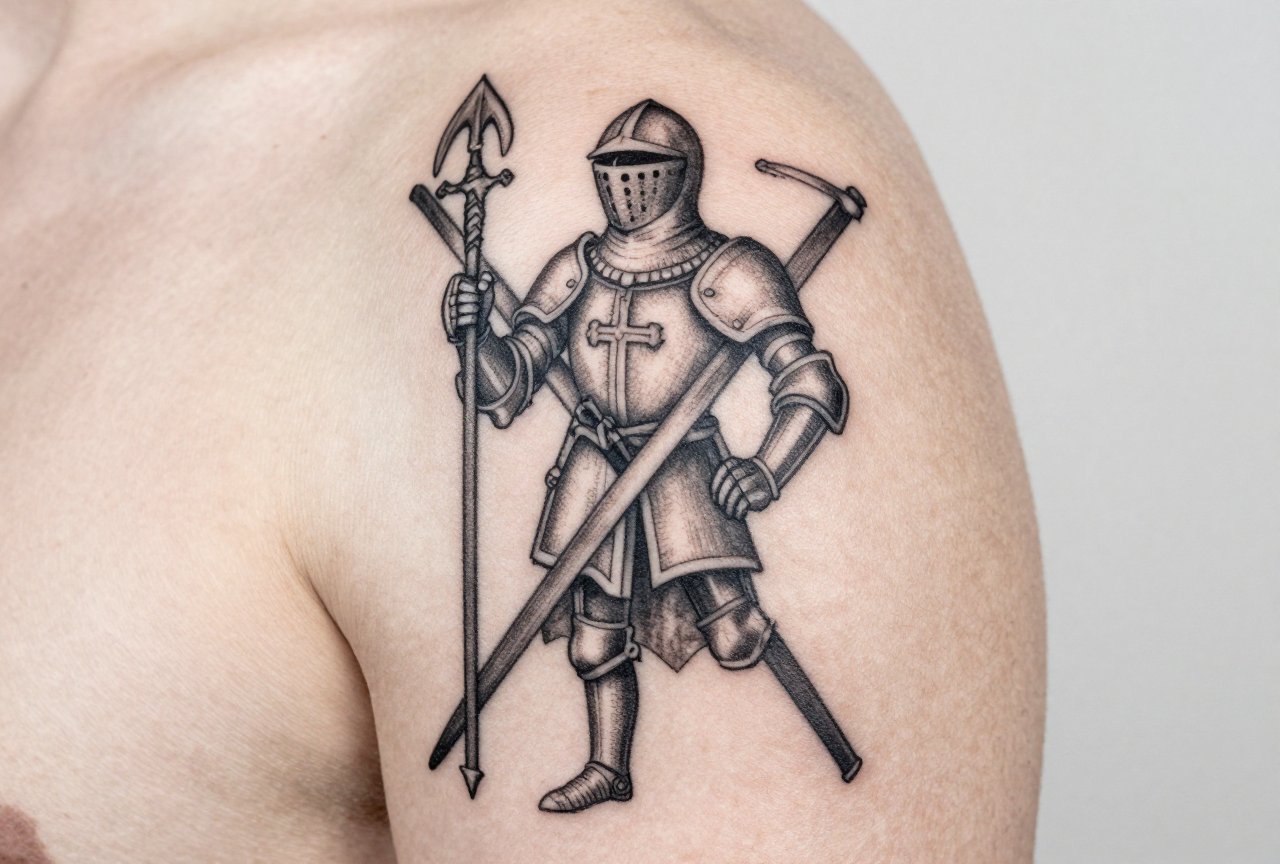
A Knights Templar tattoo generally represents honor, sacrifice, unwavering faith, and brotherhood. For most people I tattoo this on, it’s about standing for something bigger than yourself, protecting what matters, living with discipline. The imagery draws from the medieval Christian military order, but meanings have expanded far beyond religious boundaries in modern tattoo culture.
Symbolism & History
The original Poor Fellow-Soldiers of Christ and of the Temple of Solomon were warrior monks. They took vows of poverty, chastity, and obedience, then rode into battle anyway. That tension, gentleman and killer, monk and soldier, fuels the tattoo’s lasting appeal. I’ve had clients who’ve never set foot in a church get this work because they connect with that duality.
Core Symbols Explained
- The red cross pattee, The most recognized mark. On skin, it reads instantly. I’ve done this simple cross on forearms, chest pieces, behind ears. It ages clean if you keep the lines bold. Fine-line versions blur after five years; I tell clients this every time.
- Two knights on one horse, The seal of the order, showing their poverty vow. Makes for great back pieces or thigh work. The horse’s musculature gives an artist room to show off shading technique.
- The Beauseant banner, Black and white, representing the Templars’ willingness to live or die in service. Striking as a standalone flag design, especially with some weathered texture.
- Swords and armor, Crossed longswords, great helms, chainmail. These elements let you build a sleeve with depth. The metal reflections are where good artists separate from mediocre ones.
What the History Actually Means Today
Most clients don’t want a history lesson. They want the feeling. The Templars lasted about two centuries before suppression, trial, and execution. That tragic end adds a layer, standing by your principles even when it costs you everything. I’ve had veterans specifically request Templar imagery because of that: served, sacrificed, abandoned by institutions they trusted. That’s heavy, and I treat it heavy in the chair.
Common Variations & Styles
This imagery adapts across tattoo genres better than most historical subjects. I’ve executed Templar work in five or six distinct styles, and each reads differently.
Black and Gray Realism
The most requested style in my shop. Stone textures, aged metal, dramatic lighting. We build depth with smooth gray wash, sometimes adding white highlights for that “museum artifact” feel. These pieces work best at palm-size or larger. Small realistic helmets turn to gray blobs as they age, skin doesn’t hold micro-detail forever.
Traditional/Americana
Bold black outlines, limited color palette, stylized crosses. The red really pops against black. These tattoos stay readable for decades. I did a traditional Templar cross on a fisherman’s forearm three years ago; still looks like it was done last month. That’s the advantage of the style.
Neo-Traditional and Illustrative
More ornamental, decorative elements, sometimes Art Nouveau flourishes. Good for clients who want the symbolism without the military heaviness. I’ve incorporated roses, scrollwork, even stained-glass patterns around the cross. The color saturation in neo-trad holds up better than watercolor-adjacent styles.
Lettering and Script Integration
“Non nobis, Domine, non nobis, sed Nomini tuo da gloriam”, the Templar motto. “Not unto us, O Lord, not unto us, but to Thy name give glory.” Latin script around or through imagery. I always warn: lettering tattoos require maintenance. Small text blurs. Keep it bold, keep it sized right, or prepare for touch-ups.
Best Placements
Where you put this matters for meaning and for longevity. Templar imagery tends toward statement pieces, not hidden tokens.
- Upper arm/shoulder, Classic placement for the cross. Muscle movement adds life to the design. I’ve done hundreds here. The skin holds ink well, aging is predictable.
- Chest, Over the heart, literally. Full chest pieces with the two knights on horseback create genuine impact. Be prepared for multiple sessions. The sternum area hurts; I don’t sugarcoat that.
- Forearm, Visible, declarative. Good for the cross alone or a smaller helm. Inner forearm ages faster from sun exposure; I tell clients to plan for that.
- Back, Canvas for the full narrative. Battle scenes, the seal enlarged, architectural elements. I’ve spent 20+ hours on a single back piece. The skin’s forgiving, the detail possible.
- Thigh, Underrated for this subject. Enough real estate for complexity, easy to conceal, generally less painful than ribs or chest. More clients are choosing this lately.
Hand and neck placements? I discourage them for this specific imagery unless you’re already heavily tattooed. The Templar symbolism carries weight; putting it where you can’t cover it changes how people read you before you speak.
Who Chooses This Tattoo / Personal Meanings
After fifteen years in shops, I can tell you there’s no single Templar client. The meaning shifts dramatically person to person.
Military and First Responders
Probably my largest client group for this. The warrior-monk concept resonates, service, discipline, moral code in chaotic environments. I’ve tattooed active-duty Marines who specifically wanted the Beauseant because of that black-and-white clarity. No gray areas in their work, they say. The tattoo becomes a private reminder of who they were when they served.
People Rebuilding Their Lives
Surprising frequency here. Men and women coming out of addiction, incarceration, destructive relationships. The Templar vow of poverty and renewal speaks to them. Starting over with nothing, committing to a stricter path. I don’t pry in the chair, but I’ve heard enough to recognize the pattern. The tattoo marks a covenant with themselves.
History Enthusiasts and Medievalists
SCA participants, reenactors, people who can name every Templar preceptory. They want accuracy. We research together. Specific helmet types, proper cross proportions, historically accurate heraldry. I enjoy these sessions; the precision matters to both of us.
Spiritual Seekers
Not necessarily Christian. The Templars guarded pilgrimage routes, protected travelers. Some clients connect with that guardian aspect, being shield for others. I’ve had atheists get this work because the symbolism transcends its origin for them. I don’t judge the meaning; I judge whether the tattoo will hold.
Similar Symbols
Clients often browse adjacent imagery before settling. Understanding the differences helps.
- Crusader crosses generally, Broader category, less specific. The Templar cross is distinctively pattee (flared arms). Generic crusader imagery sometimes carries baggage the Templar specificity avoids.
- Maltese cross, Hospitaller symbol, eight points. Often confused. Different order, different history, similar vibe. I can spot the difference instantly; most people can’t. If accuracy matters to you, know which you’re getting.
- Teutonic Knight imagery, Black cross on white. Germanic order, more severe aesthetic. Less common in American tattoo culture. I’ve done maybe three in my career versus hundreds of Templar pieces.
- Modern military unit insignia, Some SOF units deliberately reference Templar symbolism. Clients sometimes want to honor service without reproducing official insignia. The Templar route gives personal meaning without direct representation.
- Samurai or warrior monk imagery from other cultures, Sohei, Shaolin, similar archetype. Some clients cross-pollinate. I’ve done a sleeve combining Templar and samurai elements for a client who practiced both Western and Eastern martial arts. Worked because the concept unified, not because the history connects.
Final Thoughts
The Knights Templar tattoo endures because it’s not really about the Knights Templar. It’s about what you need them to mean. Protection, sacrifice, brotherhood, discipline, faith tested by fire. I’ve watched this imagery evolve in my hands from purely religious marker to something more personal and complex.
Get the history right if it matters to you. Get the art right regardless, bold lines where they belong, proper scale for the detail you want, placement that fits your life. The meaning lives in the wearing, not just the design. I’ve seen poorly executed Templar tattoos that still carry enormous weight for their owners, and beautiful ones on people who picked the flash off a wall. The tattoo doesn’t judge you. But you should judge the tattoo honestly before you commit.
Come in with reference. Come in with your story, or don’t, either way works. Just don’t come in expecting me to make it meaningful. I make it permanent. The meaning’s your job.
Frequently Asked Questions
Does a Knights Templar tattoo mean I’m a white supremacist?
No, the symbol itself doesn’t indicate that. The Templar cross has been co-opted by some extremist groups, but in mainstream tattoo culture it’s overwhelmingly chosen for honor, military service, or personal discipline. Context and accompanying imagery matter more than the cross alone.
How much does a detailed Templar sleeve typically cost?
A full sleeve with historical armor, figures, and background elements usually runs 15-25 hours at most shops. Budget accordingly and plan for multiple sessions. Rushing complex realism never works out well.
Will the red cross fade faster than black ink?
Red does fade faster than black, especially with sun exposure. I use solid, saturated red application and advise clients to use SPF on the tattoo long-term. Touch-ups every few years keep it crisp.
Can I get this tattoo if I’m not Christian?
Absolutely. I tattoo people of all faiths and none with this imagery. Most modern wearers connect with the warrior-monk archetype or personal values rather than specific religious doctrine. Your meaning is your own.
Related Tattoo Meanings
- Hegseth Tattoo Meaning
- Cross Tattoo Meaning
- Catrina Tattoo Meaning: Life, Death Mexican Heritage
- Explore more