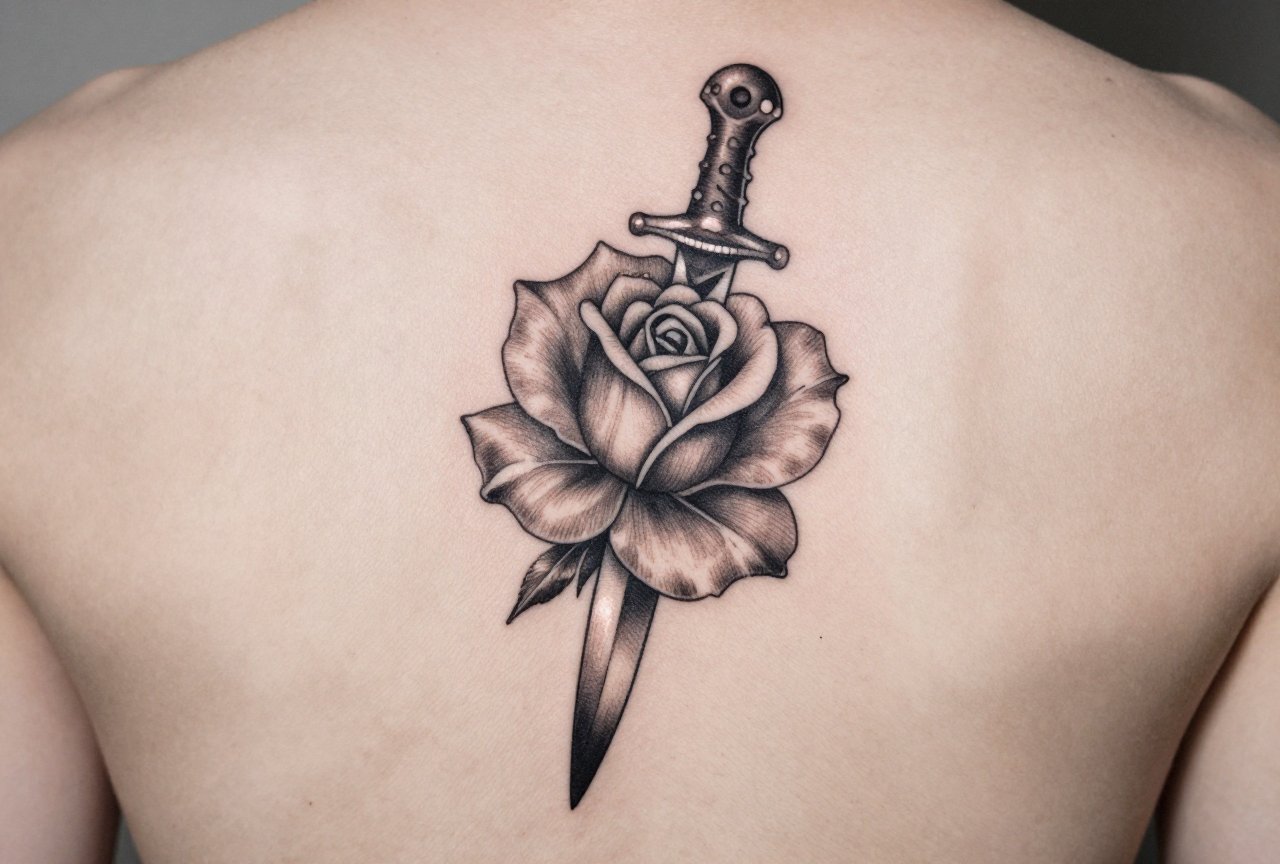
The dagger through rose tattoo is one of those designs that hits you immediately, delicate petals wrapped around cold steel, or steel piercing straight through the bloom. this image speaks to the tension between beauty and pain, love and loss, vulnerability and defense. I’ve tattooed this motif on forearms, ribs, and thighs, and every client brings a different story to the chair.
Symbolism & History
This pairing didn’t start in tattoo shops. Sailors carried it first. I’ve heard old-timers explain it at conventions: the rose for a lover left at port, the dagger for the brutal reality of life at sea. Death and devotion in one image. That duality is what keeps it alive today.
Love and Loss
The rose traditionally represents beauty, passion, something worth protecting. The dagger cuts through that, literally. In my chair, I’ve had clients describe this as “the person I’d kill for, and the person who could destroy me.” Heavy stuff, but that’s what skin art is for. The design doesn’t romanticize love; it admits love hurts.
Protection and Defense
Some wearers flip the meaning. The dagger becomes the self, the rose what they’re guarding. I’ve done this on people coming out of bad relationships, starting new chapters. The steel faces outward. The bloom stays intact. That’s not accidental, placement and direction matter. An artist worth your money will ask which story you’re telling before they stencil anything.
Common Variations & Styles
Not all daggers through roses look alike. The style changes the meaning subtly, and it definitely changes how the piece ages.
- Traditional American: Bold lines, limited color palette, heavy black outlines. This ages like a tank. The dagger reads instantly, the rose stays readable even when color softens. I do this on arms and legs where it’ll see sun and wear.
- Black and grey realism: Soft shading, photographic detail. Stunning fresh, but the fine lines in petals and metal highlights can blur over time. I always warn clients: that hyper-realistic dewdrop? Gone in five years. The emotional weight remains.
- Neo-traditional: Bolder color, stylized forms, decorative elements like banners or jewels. Good compromise between longevity and visual punch. The dagger might have a jeweled hilt; the rose might be impossibly vivid purple or blue.
- Minimalist/linework: Single needle, lots of negative space. Trendy, but I’ve seen these fade to ghosts on people who swim or tan heavily. Fine for a reminder to yourself, not great if you want strangers to read the symbol.
Adding Elements
Clients often build on the base image. A banner with a name or date. Drops of blood, controversial among artists, some refuse it as cliché, others lean in. Skulls near the hilt, snakes wrapping the blade. Each addition shifts the narrative. I had a client add a clock face to the dagger’s guard; time cutting through beauty. Another added a sprig of rosemary for remembrance. The framework is flexible.
Best Placements
Where you put this changes how it reads to others and how it feels to you.
- Forearm: Classic. Visible, conversational, the dagger points toward the hand or heart depending on orientation. I usually ask: are you showing this to the world, or reminding yourself?
- Chest/heart side: The rose over the heart, dagger piercing toward it. Intensely personal. I’ve done this for people processing grief. The pain of the needle matches the subject; they often sit still as stone.
- Thigh: Canvas space for detail. Good for larger compositions, maybe the dagger emerging from a bed of roses rather than piercing one. Less visible for professional settings.
- Ribcage: Brutal to sit through. The skin moves, breathes, flexes. But the result, when healed, follows the body’s architecture beautifully. The dagger follows the rib line. Worth it for committed collectors.
- Hand or neck: I try to talk people down unless they’re heavily covered already. These spots age fast, blur faster, and carry social weight you can’t take off.
Skin type matters too. Oilier skin holds line work differently. Darker skin needs bolder contrast, I’ve seen too many shops try to do subtle grey wash on melanin-rich skin and lose the whole image to ashiness. Find an artist who shows healed work on skin like yours.
Who Chooses This Tattoo / Personal Meanings
After fifteen years, I can tell you there’s no single “type.” I’ve tattooed this on a twenty-two-year-old recovering addict, the dagger as the addiction that pierced her family, the rose as her sister who stuck around. On a sixty-year-old biker who got his first at sixteen, adding this to a sleeve in progress, his wife’s favorite flower, his own service weapon stylized. On a non-binary kid who just liked the gender balance of it, neither element coded masculine or feminine to them.
Grief and Memorial
Common thread: loss. The rose for who was lost, the dagger for how it felt. Sometimes a date on the blade. Sometimes the person’s name worked into the hilt scrollwork. I always ask if they want to talk while we work. Some do, narrating the whole session. Some go silent, eyes closed, the buzz of the machine filling the room. Both are valid. The shop I apprenticed in had a saying: “We’re not therapists, but we’re sometimes the only people who ask and actually listen.”
Reclamation and Strength
Survivors choose this too. The dagger as what they survived, the rose as what they refused to let die. I’ve had clients who started with just the rose, came back years later adding the steel. The story evolved. The skin records it. That’s the power of this medium, you’re not stuck with one frozen meaning. The tattoo grows with you.
Similar Symbols
If this design resonates but doesn’t quite fit, consider cousins in the visual language.
- Skull and rose: Mortality and beauty, more final than the dagger’s potential for action. Less about ongoing struggle, more about acceptance.
- Snake and dagger: Betrayal, poison, healing (the Rod of Asclepius echoes). More aggressive, less romantic.
- Heart with dagger: Simpler, more literal. The traditional “broken heart” image. Less nuanced, more immediately readable.
- Rose alone: Pure beauty, no threat. Sometimes that’s enough. I’ve had clients simplify to this when the original concept felt too heavy.
The dagger through rose endures because it refuses to choose one side of the story. It holds both. That’s honest. Most lives contain both.
Final Thoughts
I’ve watched this design trend and fade and return. Right now it’s having a moment in neo-traditional circles, but it never really left. The meaning is too universal, too human. We love things that can hurt us. We survive things that try to destroy what we love. The image says that in a glance.
If you’re considering this, spend time with the specific story you’re telling. Bring reference, but also bring words. The best artists will translate your words into visual language that actually fits your body and your life. Cheap tattoos aren’t good, good tattoos aren’t cheap, and the meaning you carry matters more than any flash on the wall. I’ve seen people cry getting this done. I’ve seen people laugh. Both responses make sense. The dagger through rose doesn’t promise comfort. It promises truth.
Frequently Asked Questions
Does the direction the dagger points matter?
Yes, it can. Pointing toward the heart often suggests internal struggle or self-directed pain, while pointing outward reads as defense or aggression toward others. Some clients choose based on aesthetics alone, but thoughtful orientation adds narrative depth that you’ll appreciate years later.
How well does this design age on skin?
Traditional bold-line versions age best, staying readable for decades. Fine-line realism blurs faster, especially in high-movement areas like wrists or ribs. I always show clients healed photos from five-plus years back before they choose a style. Sunscreen is non-negotiable for preserving detail.
Can this tattoo work as a cover-up?
The dagger’s solid black blade and the rose’s dense petals give good coverage potential for smaller old tattoos. However, the design needs to be large enough to incorporate the cover, usually bigger than what you’re hiding. Consult an artist who specializes in cover-ups; not everyone does.
Is this design considered masculine or feminine?
It’s historically been marketed as masculine, but that’s shop culture nonsense. I’ve tattooed this on every gender expression. The rose and dagger both contain multitudes. What matters is your connection to the image, not outdated gender coding from mid-century flash sheets.
Related Tattoo Meanings
- Death Before Dishonor Tattoo Meaning: Origins Symbolism
- Fig Tattoo Meaning: Symbolism, History Shop Talk
- G59 Tattoo Meaning: Suicideboys, Underground Culture Ink
- Explore more