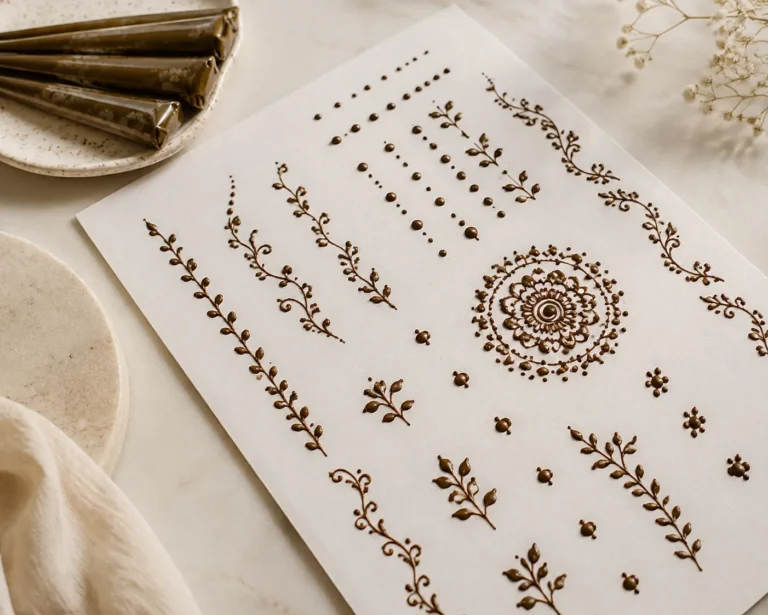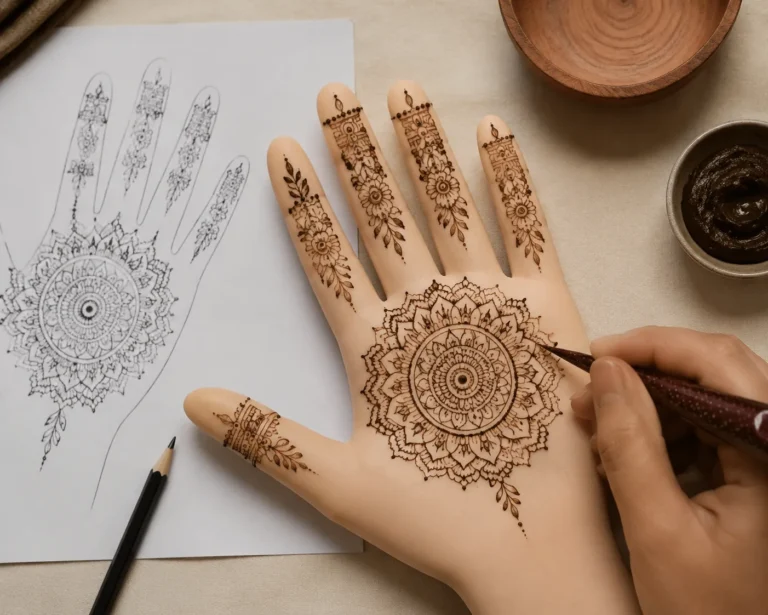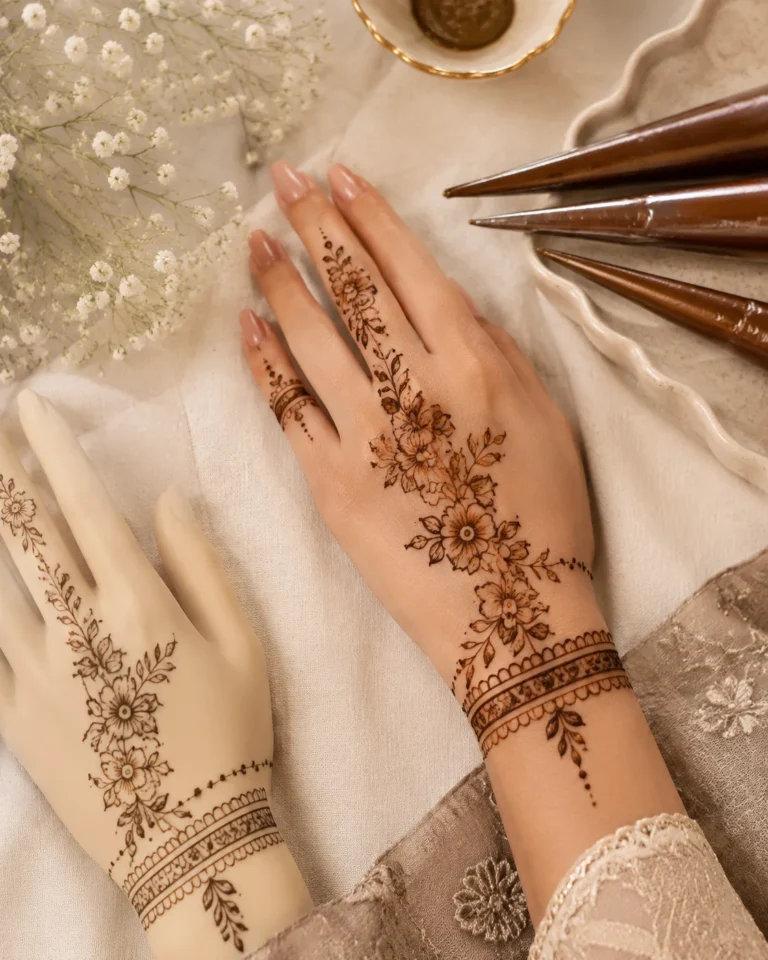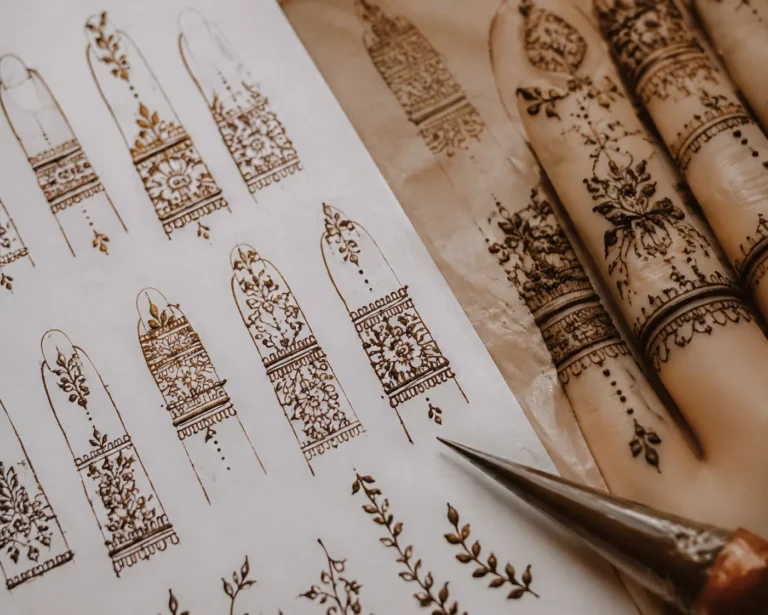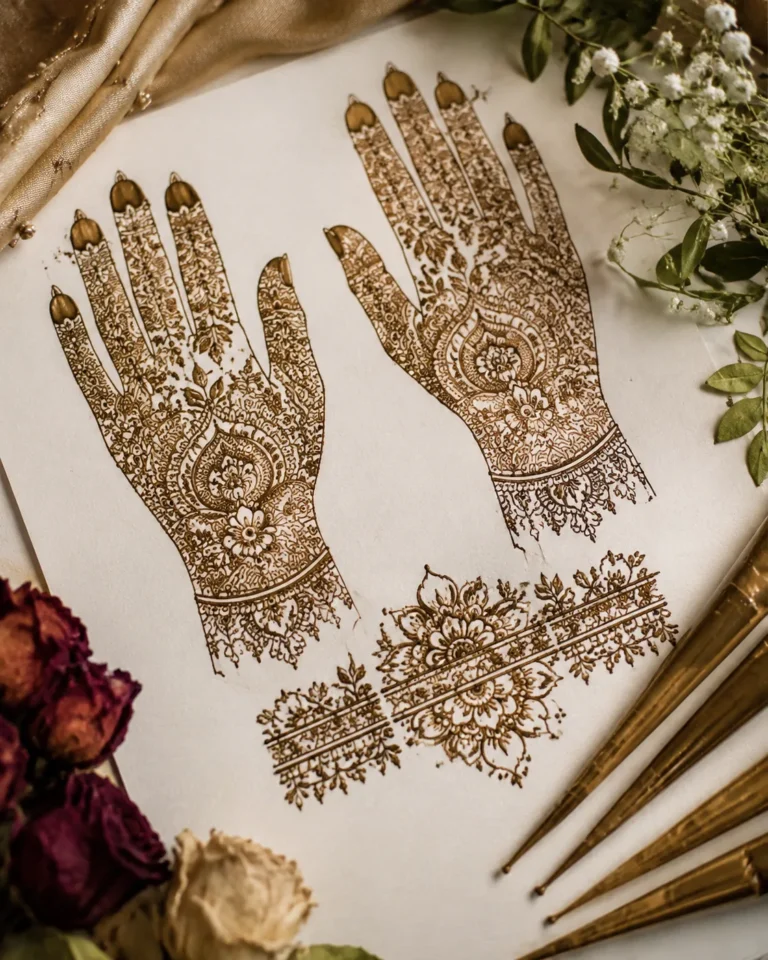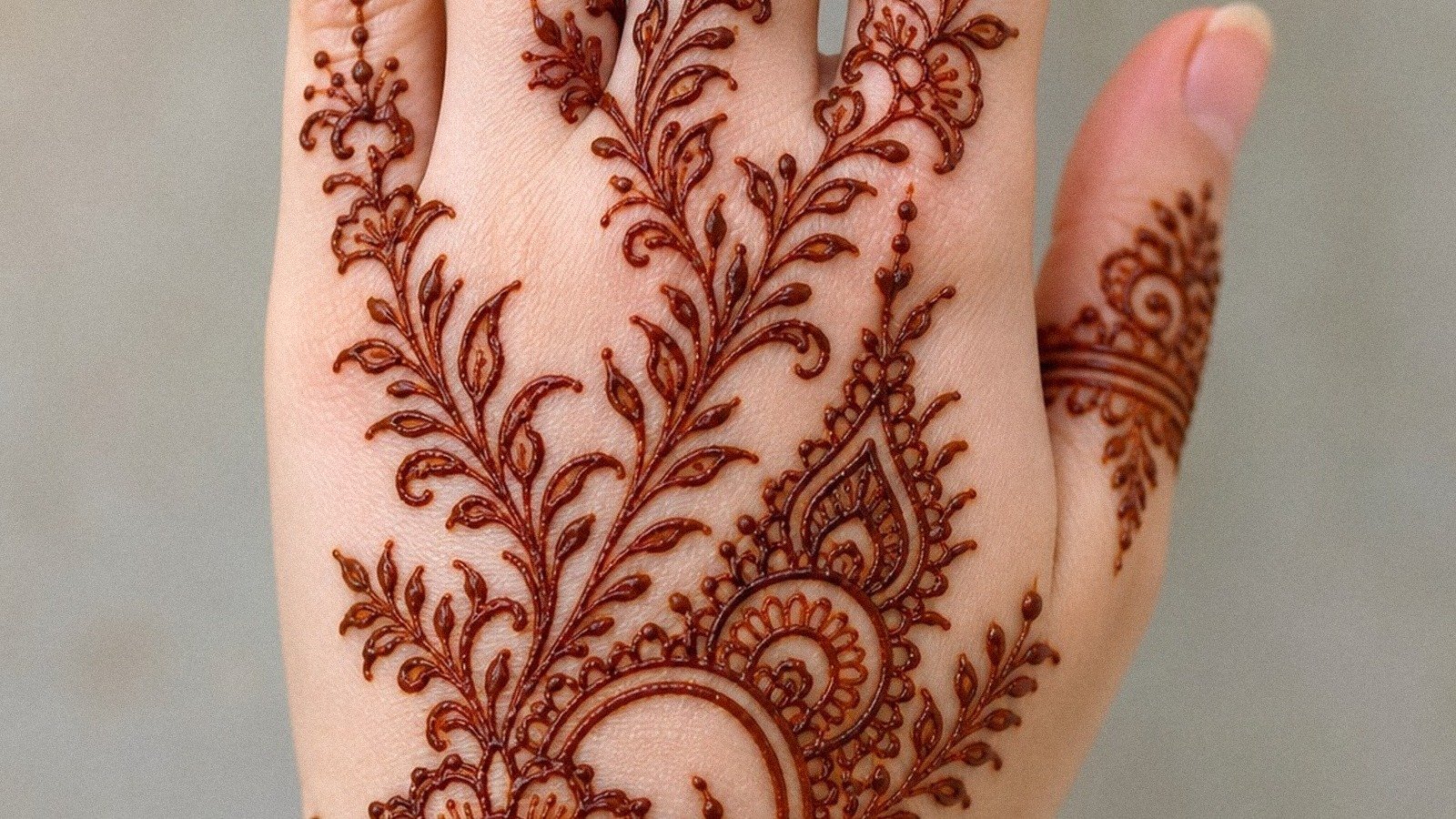
Fancy mehndi designs were the reference set I kept saving, and I almost copied them line for line for my first ornamental mehndi design. Then I slowed down, watched how the paste dried, and changed the plan.
- ✓ Choose a Front-Hand Layout, Then Open It Up
- ✓ Pakistani Paisleys Work Better as Hero Shapes
- ✓ Why Do Center Mandalas Still Work So Well?
I wanted something striking, intricate, and personal. That is why the final stain reads crisp instead of turning muddy.
[IMAGE: Mehndi-inspired ornamental henna design on a woman’s outer forearm, centered mandala, open paisley spacing, clean reddish-brown lines, natural skin texture, studio lighting]
Here’s what it looked like before
Before I committed, I had the usual Pinterest problem. Too many screenshots, too many tiny flourishes, and not enough thought about how henna behaves after the first day.
I was staring at dense henna reference boards full of delicate, lacey fills that looked gorgeous fresh, especially on hands and feet.
They were ornate and feminine, but I knew those high-wear zones can fade fast when you force too much detail into a small area.
I had a blank strip of skin on my outer forearm I’d been saving for something symbolic after overthinking modern mehndi designs.
I kept comparing that low-wear placement to the hand-heavy references I loved. That was where the shift happened for me.
Instead of asking what looked fancy in a photo, I started asking what would still read clearly after the stain softened. If you are choosing between image-perfect and skin-smart planning, pick the clearer design first.
[IMAGE: Pinterest-style collage of henna mehndi references on hands and forearms, dense lace details beside simpler open patterns, cone-applied paste visible, natural brown skin tones]
- Choose a Front-Hand Layout, Then Open It Up
- Pakistani Paisleys Work Better as Hero Shapes
- Why Do Center Mandalas Still Work So Well?
- Let Finger Vines Breathe Instead of Crowd
- More Air Around the Knuckles Makes It Look Richer
- Bold Fingertip Caps Give the Design a Clean Finish
- Bridal Wrist Florals Need Room at the Bend
- Can Bracelet Lines and Finger Trails Actually Match?
- Use Dots Like Punctuation, Not Wallpaper
- The Three-Foot Smudge Test Catches the Busy Stuff
- Thicken the Lines Before They Heal Flat
- Which Version Photographs Cleanest After the Edit?
1Choose a Front-Hand Layout, Then Open It Up
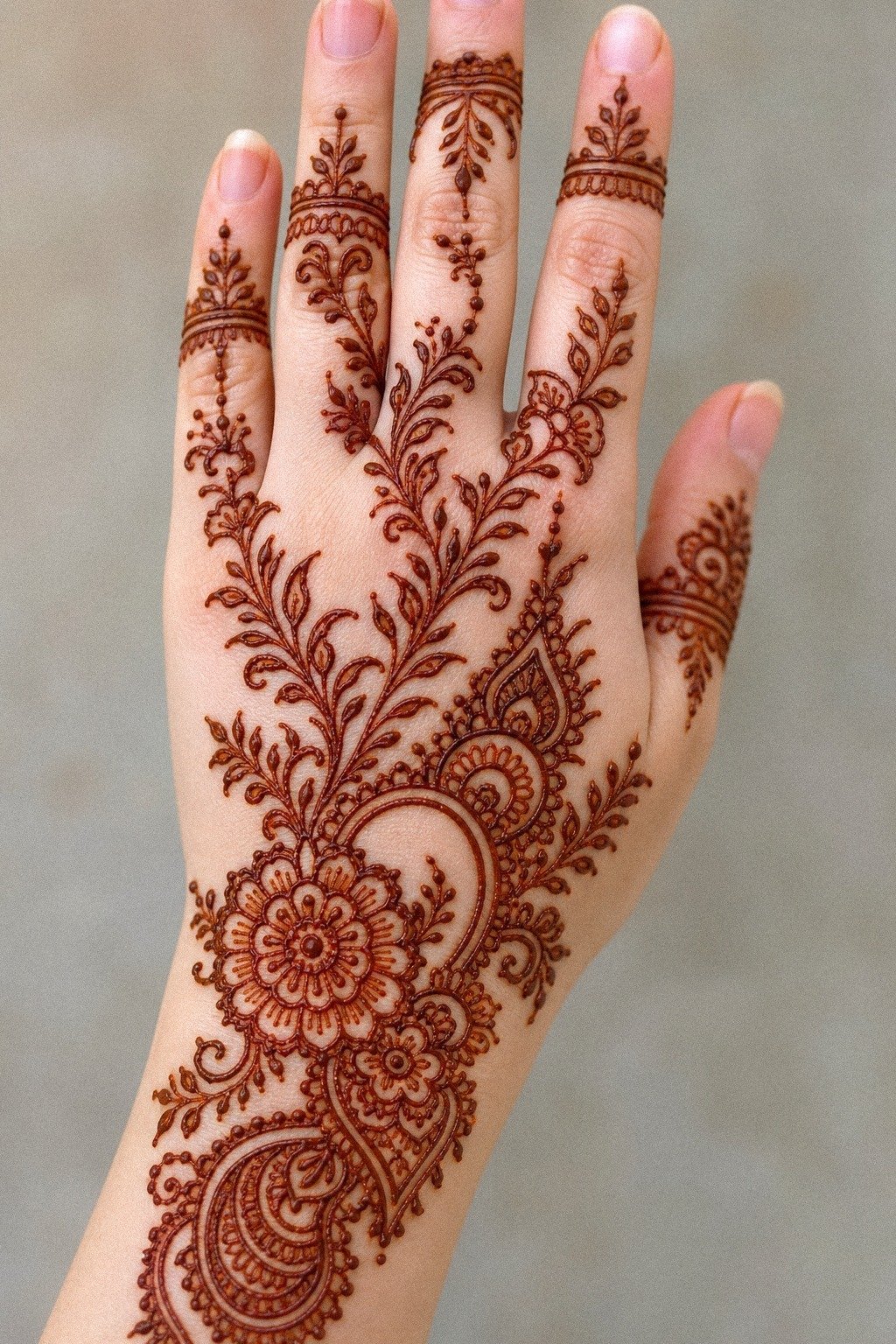
The first reference that grabbed me was a front-hand style with sleek trails moving from the knuckles toward the wrist, the kind of layout you see in strong front hand mehndi designs.
I loved the symmetry. The flowing movement felt graceful, powerful, and instantly recognizable.
But I also knew that if you apply that exact density too small, the paste can merge while it dries and the stain can lose definition later.
So I stole the flow, not the exact map. I kept the front-hand composition because it flatters the eye and gives you movement, then I opened the spacing so each curve had room to dry cleanly.
If you are taking a mehndi-inspired design to an artist, ask them to bump the scale up by half an inch or move it off the hand onto the outer forearm.
You keep the fancy energy, lose a lot of the maintenance, and your mehndi artist gets one clean cone pass instead of ten cramped ones.
[IMAGE: Front-hand henna design with slim trails moving from knuckles toward wrist, elegant reddish-brown curves, simplified ornamental motifs, photographed on real skin]
2Pakistani Paisleys Work Better as Hero Shapes
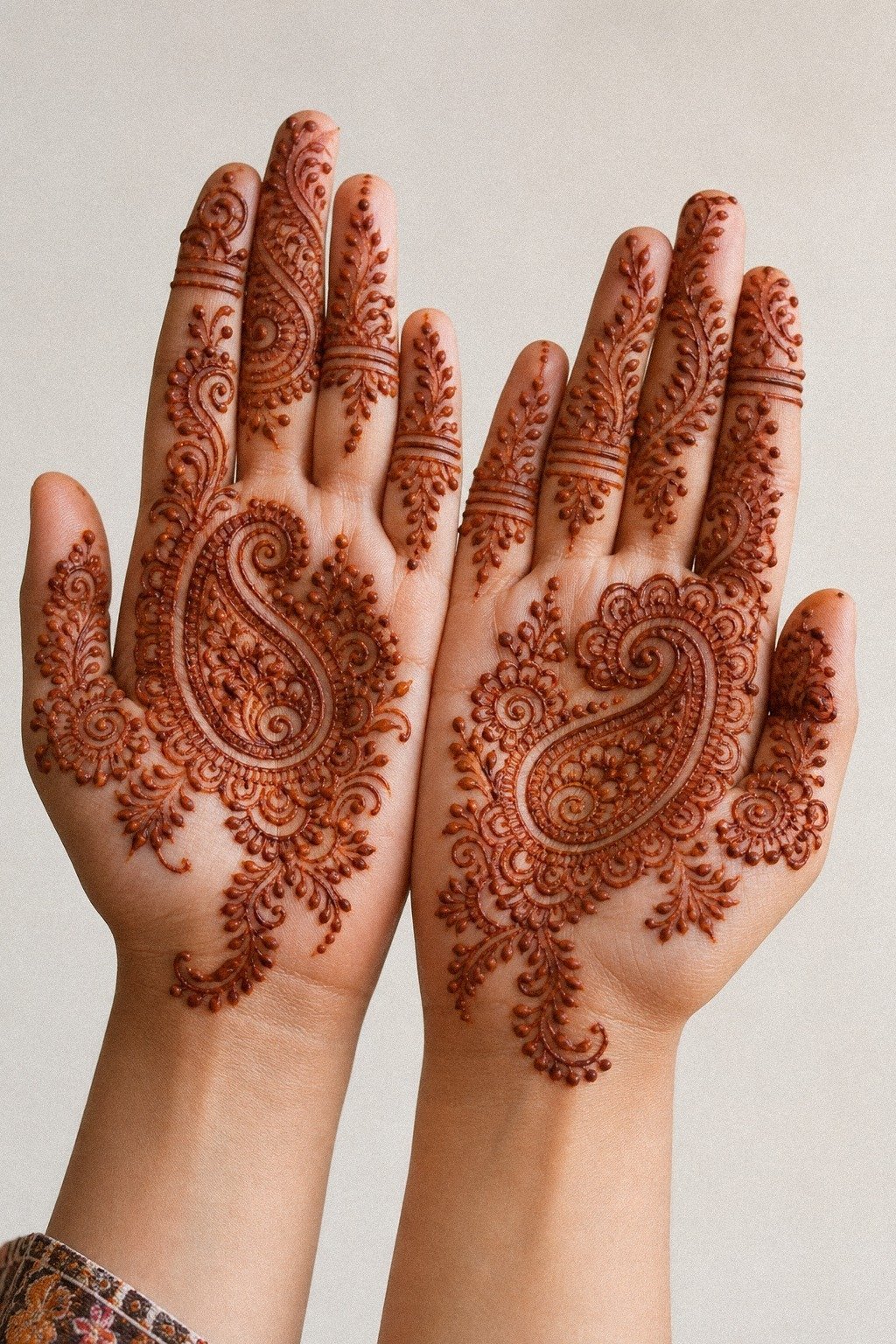
Pakistani paisleys are gorgeous because they carry motion without looking chaotic, and that’s why I kept coming back to them while sorting through 15 fancy mehndi designs to show your artist first.
A single paisley can feel edgy, meaningful, and expressive when the interior is edited instead of overloaded.
I like one confident paisley surrounded by smaller leaves more than a crowded field of identical shapes. It feels daring without losing the delicate tradition.
3Why Do Center Mandalas Still Work So Well?
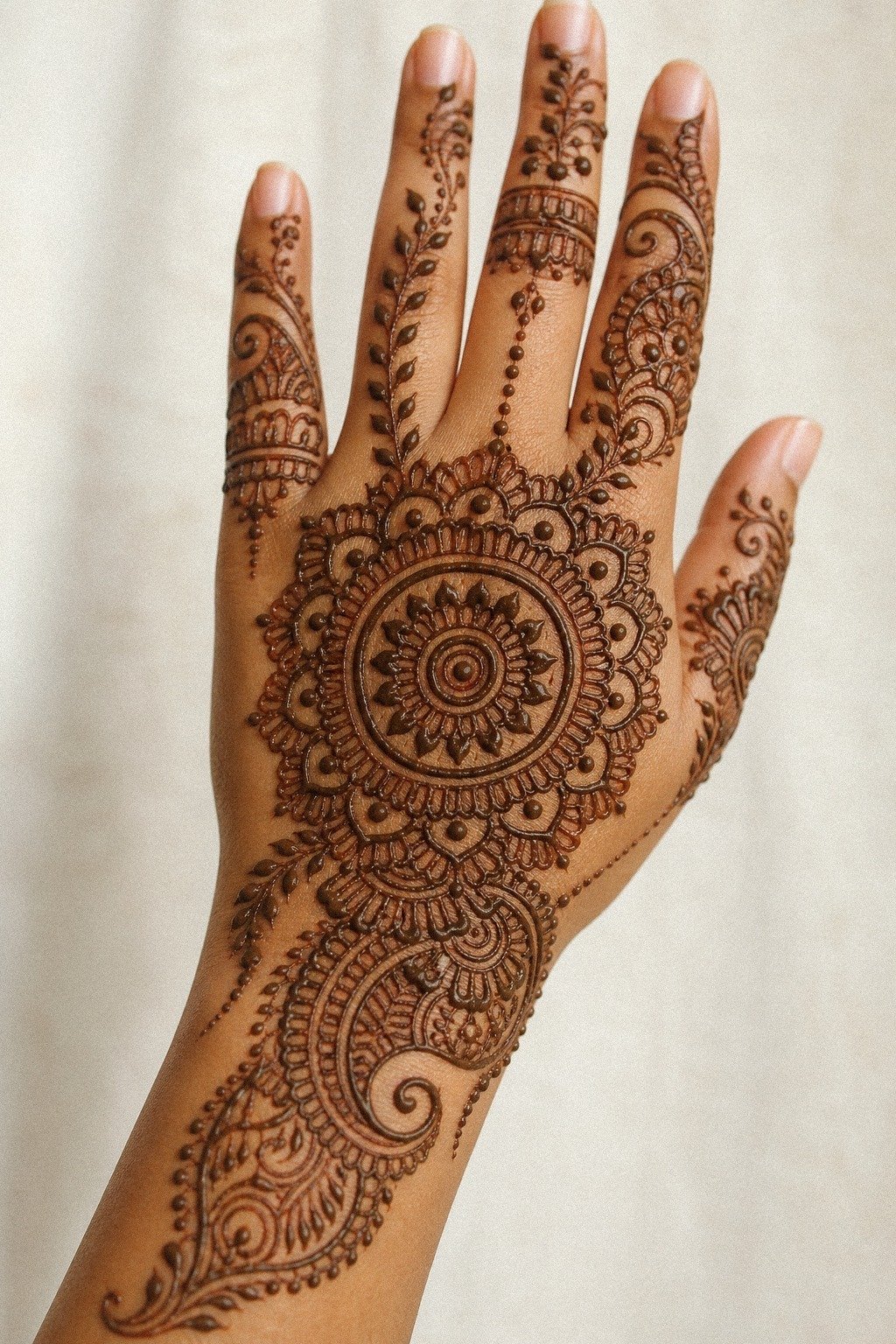
The center mandala was my anchor. Without it, the layout felt pretty but loose.
With it, everything snapped into place, which is why I kept studying strong mandala mehndi designs.
A centered ornamental piece gives your eye somewhere to land before the smaller trails start moving outward. The effect is classic, polished, and quietly iconic.
I did not make the mandala tiny. That would’ve been a mistake.
I gave the center mandala about 2.5 inches of width so the petals could stay open, the dots could stay intentional, and the ring work wouldn’t mush together as the paste dried.
If you are planning this as a temporary mehndi design, tell your artist you want bold contrast first, decoration second.
Bold shapes hold their read. A crisp central rosette with fewer petals usually stays more elegant than a hyper-detailed flower that looks fancy only on day one.
[IMAGE: Centered mandala henna design on top of forearm, large petals, open dot rings, balanced symmetry, reddish-brown paste and darkened stain on warm brown skin]
4Let Finger Vines Breathe Instead of Crowd
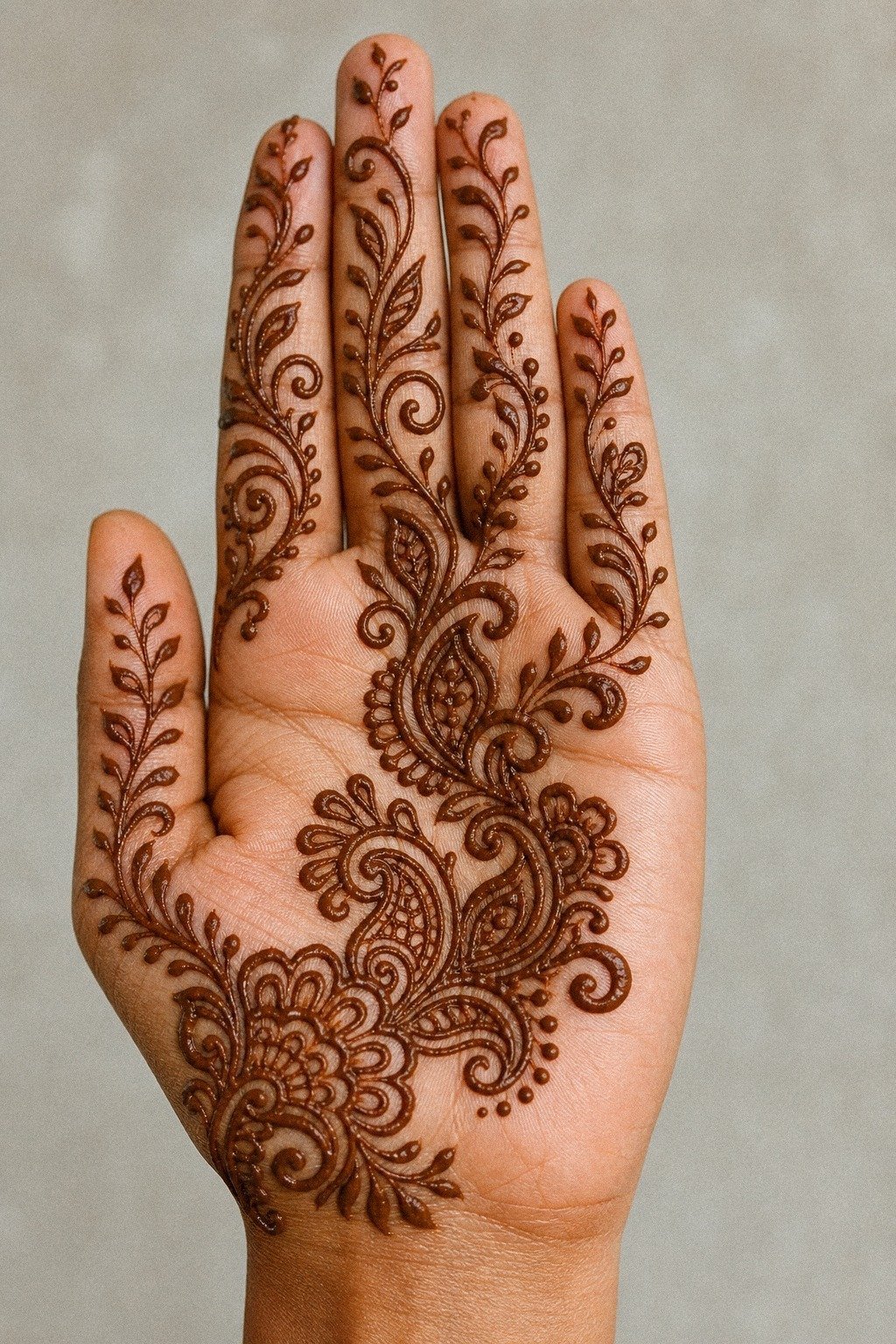
Finger vines look dainty in photos, especially in the newer wave of modern mehndi designs, but finger skin is not gentle on detailed henna.
The pattern gets more friction, more washing, and more movement there. A minimal vine with sharp gaps can look far more stylish than a crowded one.
5More Air Around the Knuckles Makes It Look Richer
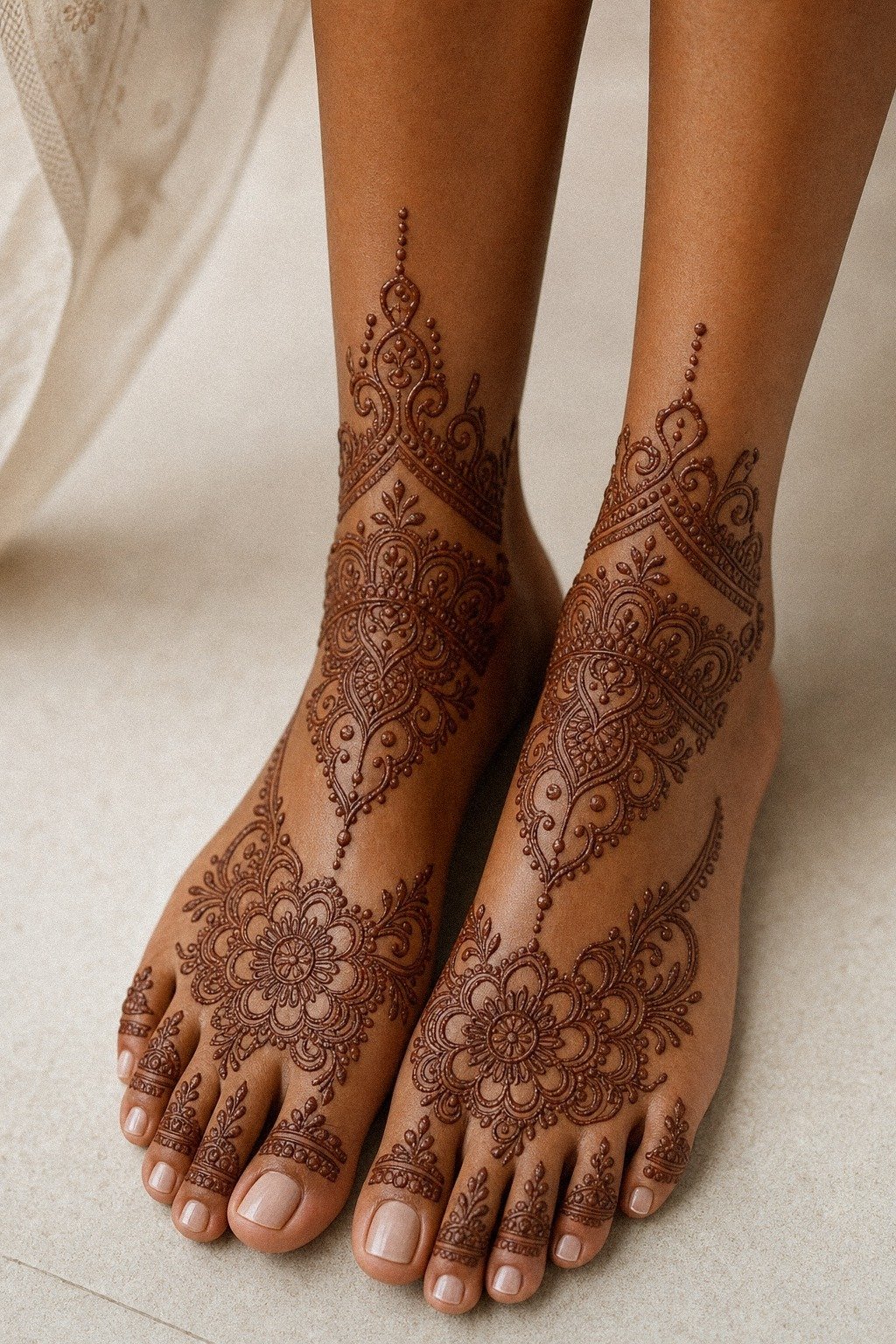
Negative space is what saved the whole design for me. Once I looked at a few cleaner latest simple mehndi designs, I realized the rich ones that hold aren’t solid soup.
They’re edited. They let skin do part of the work.
That matters even more near knuckles, toes, and ankle bones where movement can make a busy pattern look cramped fast around ankle bones.
So I built a wide halo of negative space around every major turn. Not empty for no reason, empty with a job.
It separated the motifs, pushed readable contrast, and gave the eye a rest between dark sections.
If you love a fancy reference on feet or ankles, steal this move first! Those spots are bony and sensitive, and the more open the layout is, the better chance you have of keeping the pattern readable after the paste dries and the color develops.
[IMAGE: Ornamental henna design over knuckles with wide open gaps, bold reddish-brown motifs, graceful composition, natural skin texture, no jewelry]
6Bold Fingertip Caps Give the Design a Clean Finish
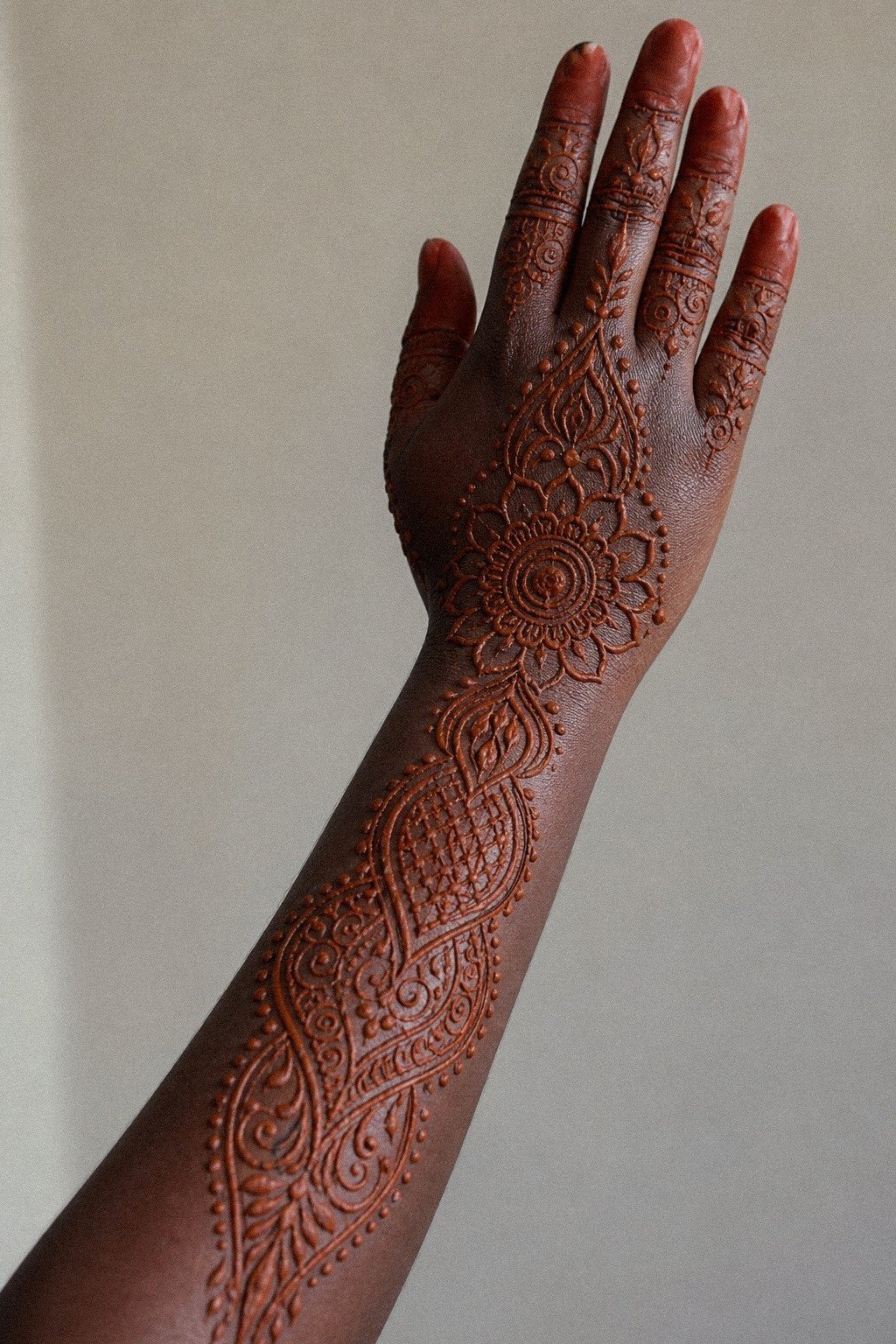
This was the biggest surprise. I thought fingertip caps would look too heavy, but in the stronger finger mehndi designs they act like punctuation.
They stop the layout from feeling wispy. They also give you a contrast block, which photographs better than tiny fussy endings.
For henna, I treated the fingertip caps like dark accents rather than delicate lace. That is important.
Solid fill creates a fierce, graphic finish. Scratchy half-fill can look unfinished once the paste flakes away.
If your artist is filling those caps, they should cover the area evenly in one controlled cone pass, not scrape across it repeatedly.
And if you are putting that look on the forearm instead of the fingers, those caps can become bold accents or end blocks that still read clearly without living on a high-wear zone.
[IMAGE: Bold reddish-brown fingertip cap henna design inspired by mehndi, clean endings on each finger, saturated paste, crisp edges, photographed on warm medium skin]
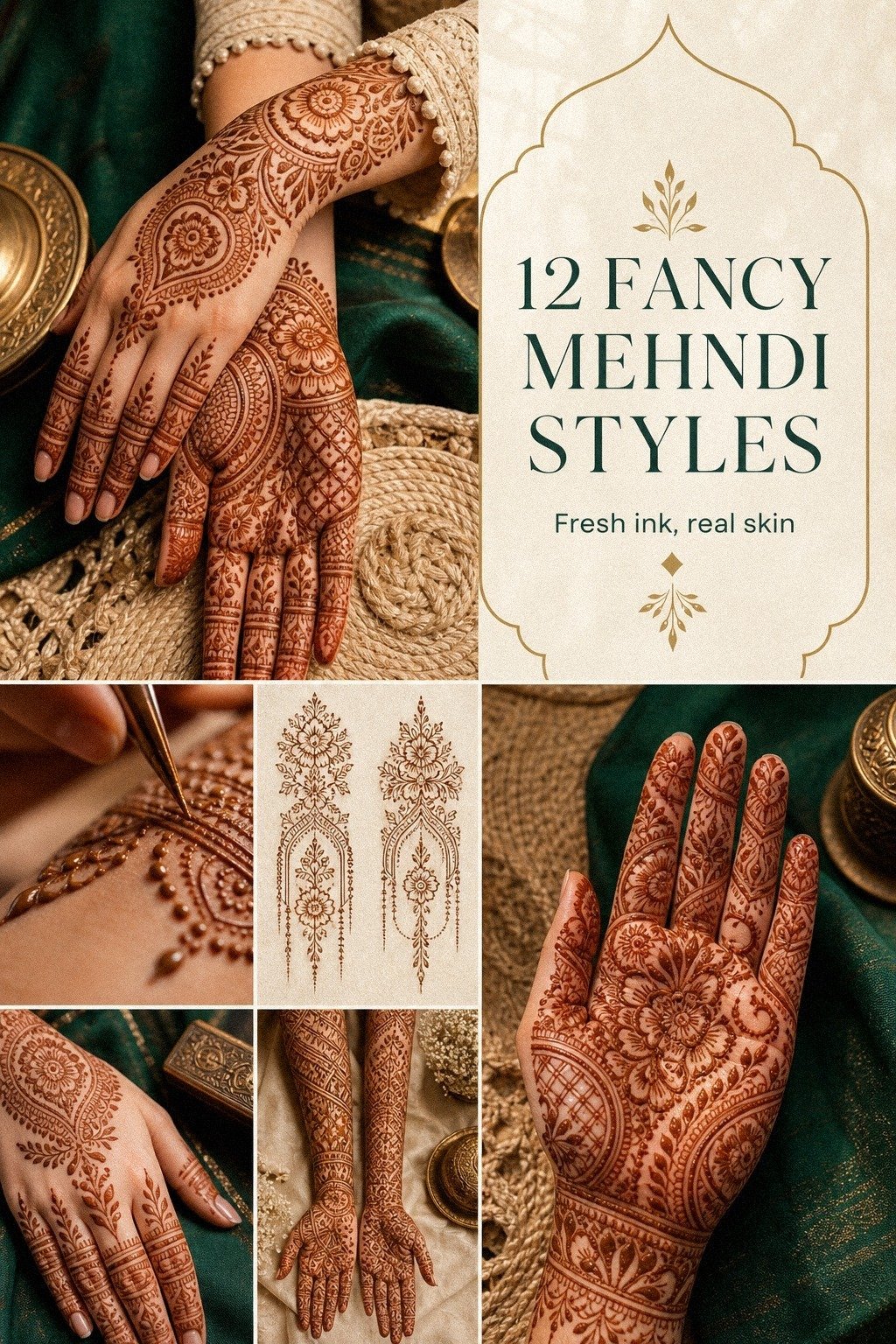
7Bridal Wrist Florals Need Room at the Bend
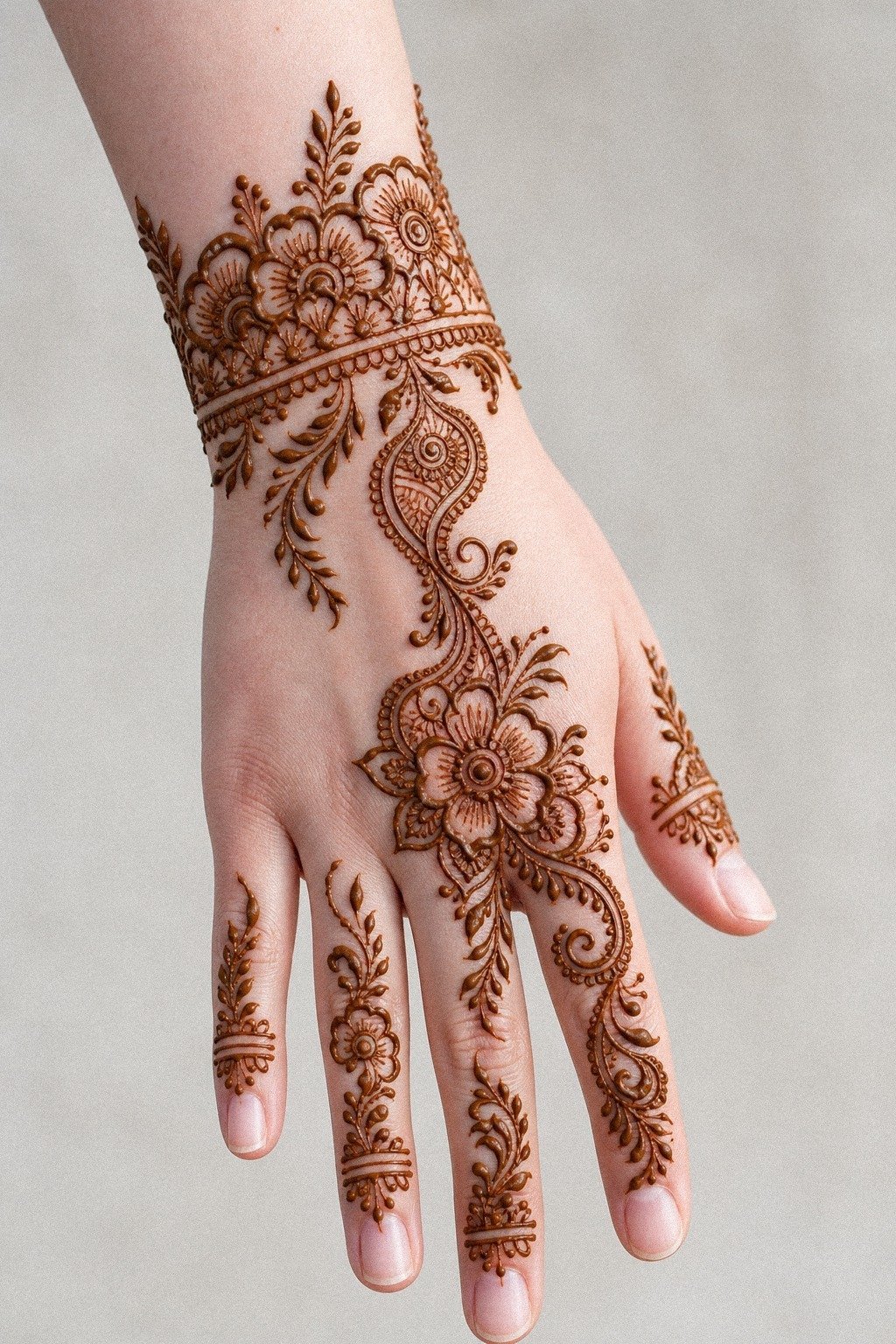
The floral wrist section is where the design stopped feeling like copied reference and started feeling like mine. I kept looking at henna mehndi designs with soft flowers around the bracelet line, then I trimmed them until the petals had stronger edges and fewer internal cuts.
You don’t need twenty petals to make a flower read soft. Three expressive blooms can feel more romantic than a crowded bouquet.
I built the wrist with three ornamental florals instead of a full bouquet. One larger bloom. Two supporting shapes.
A few leaves pushed outward so the whole thing flowed into the arm. That arrangement felt vibrant, feminine, and easy to recognize.
If you’re doing a wrist-heavy mehndi design, I would rather see that than a dense cuff that wraps 360 degrees with no rest.
Your wrist bend needs breathing room, and your future self will thank you when the lines still look clear after the first 2 to 3 weeks of fading.
[IMAGE: Floral mehndi wrist design with three open blooms, bracelet flow, graceful petal spacing, reddish-brown paste and darkened stain on real skin]
8Can Bracelet Lines and Finger Trails Actually Match?
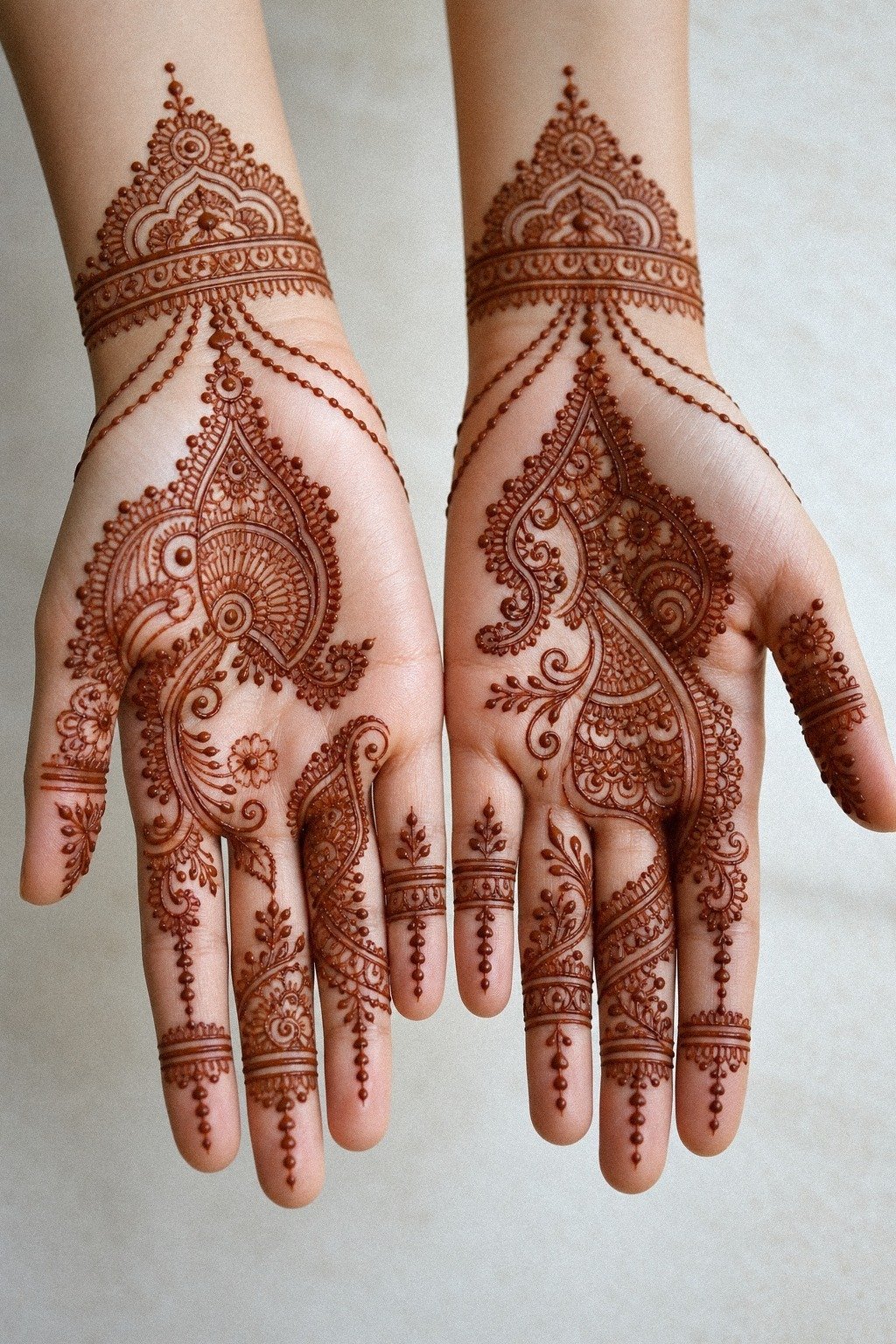
This connection point matters more than people think. When the bracelet line and the finger trails do not talk to each other, the design feels pasted together.
The cleanest stylish front hand references all solve that with rhythm. One line thickens. Another line fades.
A dot path bridges the gap. Nothing feels stranded, and the overall effect becomes sleek rather than fussy.
I used what I call the Bridge-Line Rule. Every trail had to earn its next move before it crossed into the wrist area.
That kept me from adding random filler just because there was a gap. The result felt understated but still ornate.
If you’re reviewing your design, look at the stencil flow first. But don’t chase perfect symmetry so hard that you choke the layout.
A little asymmetry can feel more alive on skin, especially when the piece wraps around the outer wrist or turns along the outside of the forearm.
[IMAGE: Henna design connecting bracelet band to finger trails, rhythmic line thickness, small dot bridge, elegant asymmetry on top of hand]
9Use Dots Like Punctuation, Not Wallpaper
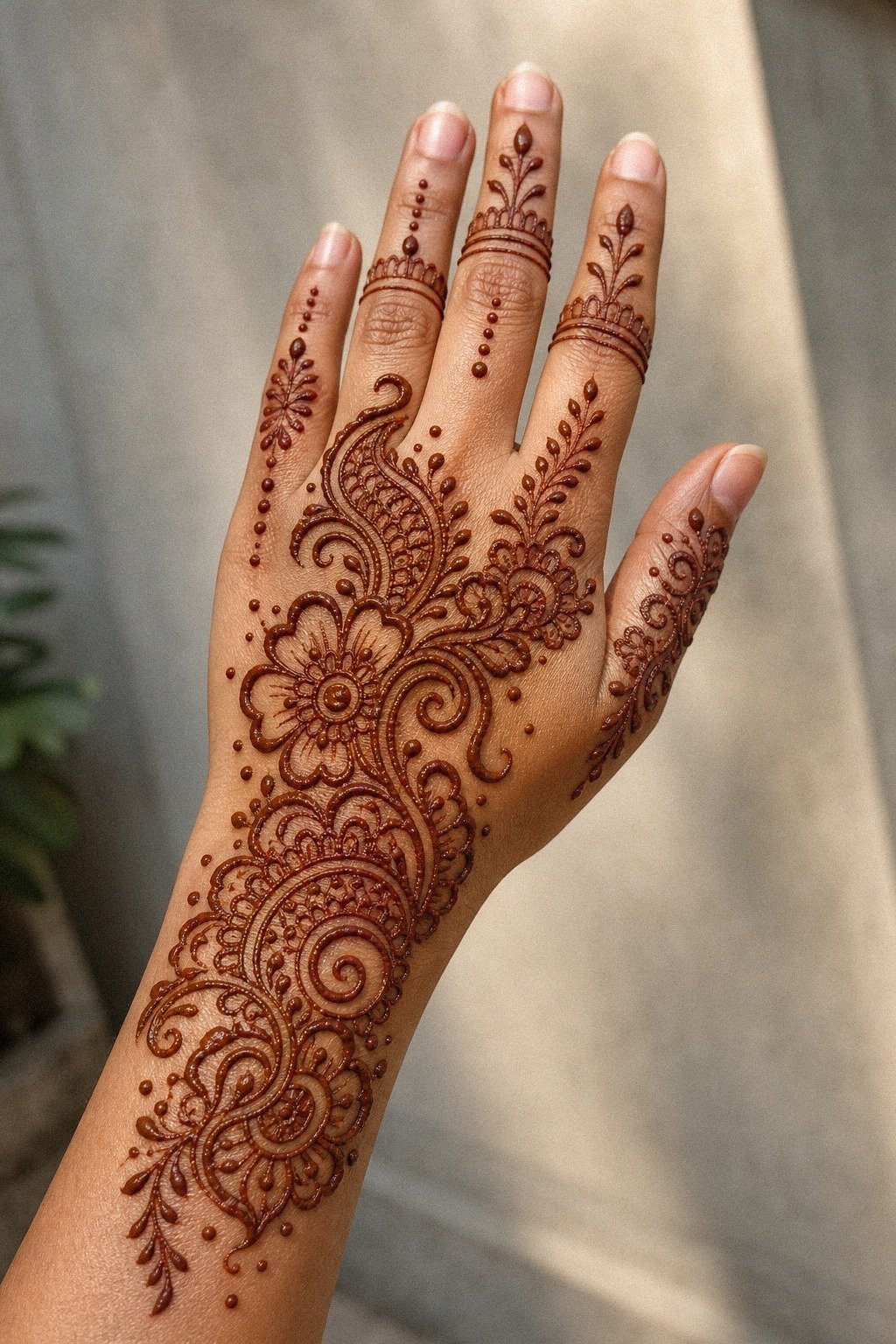
And dots are small, but they can save you. They soften transitions, fill awkward pockets, and keep larger motifs from looking isolated, which is why they show up in a lot of aesthetic mehendi directions inside modern mehndi designs.
The mistake is using too many. Then the whole thing gets dusty instead of striking.
I only added dot connectors where the eye needed a pause or a lead-in. Three-dot clusters. Tiny arcs.
One short scatter near the wrist. That’s it.
If you let dots become controlled scatter and no more, they keep the design elegant. If you let them become wallpaper, they start reading like blur.
Tell your artist you’d rather keep a few controlled dot trails than flood every open pocket. Those tiny edits are what make a mehndi design photograph clean on day one and still read clearly as the stain fades.
[IMAGE: Close henna detail of dotted mehndi connectors between paisleys and florals, tiny arcs, open spacing, crisp reddish-brown dots on forearm skin]
10The Three-Foot Smudge Test Catches the Busy Stuff
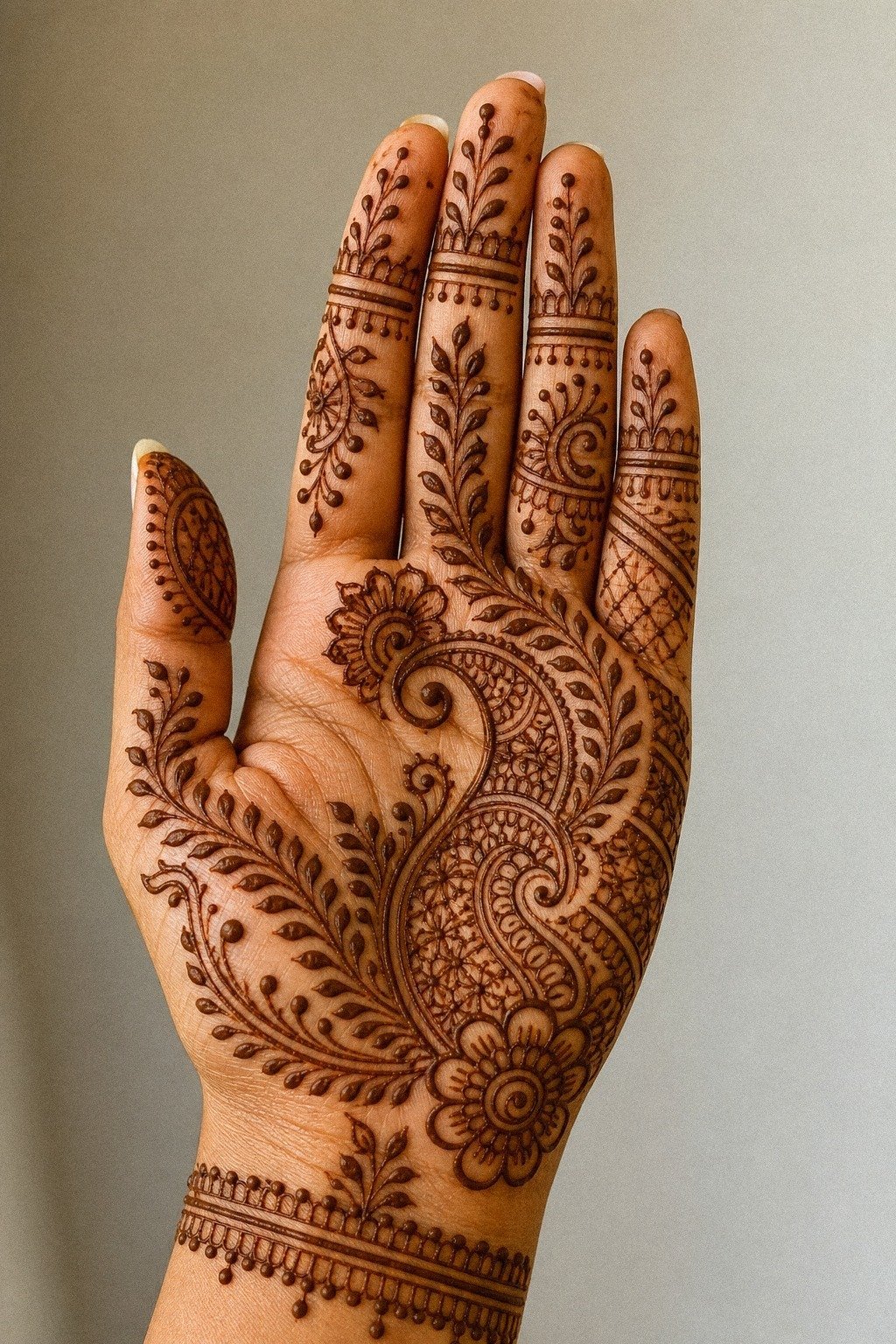
Fresh paste can smear. It can also look darker or more uneven before it flakes away.
Different stages, same lesson. Before I locked the design, I stepped back and checked which sections would still make sense if the lines softened a hair.
That saved me from picking a pattern that only looked good under perfect lighting and zero movement.
I treated that review like a real studio check, the same way you’d compare peacock mehndi designs against simpler layouts before you sit down.
The smudge check is simple: can you still read the big shapes from three to four feet away? If not, it’s too busy.
And if the answer only works in a close-up photo, it’s too busy again. You want a design that looks solid when your arm is relaxed, when your hand is moving, and when the color is still developing.
[IMAGE: Mehndi artist holding arm at distance to check henna design readability, bold motifs visible from afar, natural studio scene, dried paste on skin]
11Thicken the Lines Before They Heal Flat
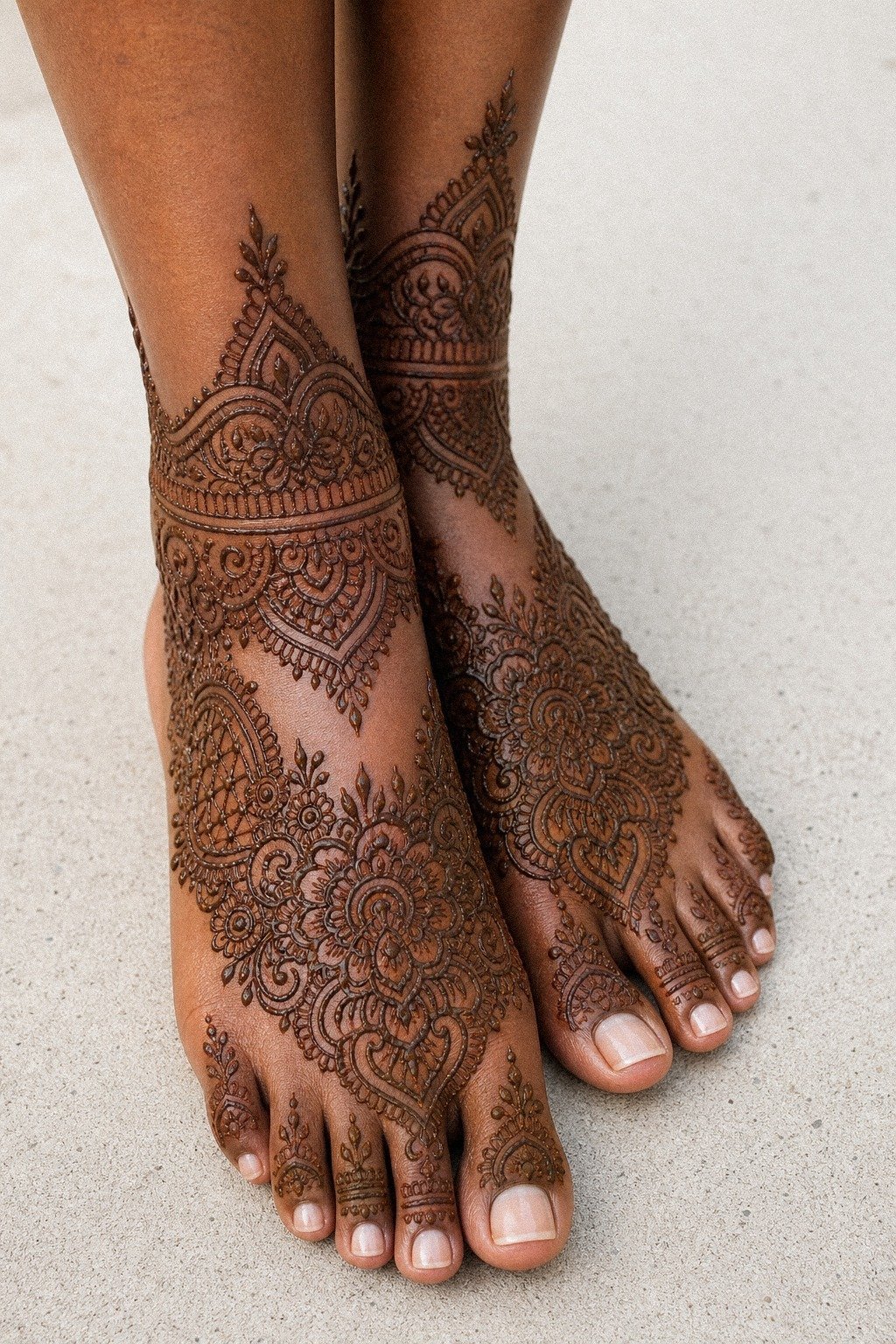
Thin lines are beautiful when they’re intentional. Thin lines are a problem when they’re timid.
That’s what I learned after staring at a few trending mehandi references and comparing them to drying color from artists who know cone control.
The difference is obvious once you see it. One line looks crisp. The other looks like it apologized its whole way down the skin.
So before I approved anything, I deepened the primary outlines and left the inner details lighter.
That’s how you keep line weight hierarchy. Outer structure first. Finer texture second.
If you’re planning a mehndi-style design, especially on feet or ankles, ask for confident line weight changes instead of uniformly thin lines everywhere.
Ankle placement is pretty, but it doesn’t forgive weak contrast. Better to come out a touch bolder than too faint and watch the pattern disappear as it fades.
[IMAGE: Developing mehndi stain showing thick outer lines and finer inner details, clear line hierarchy, ankle and forearm comparison on real skin]
12Which Version Photographs Cleanest After the Edit?
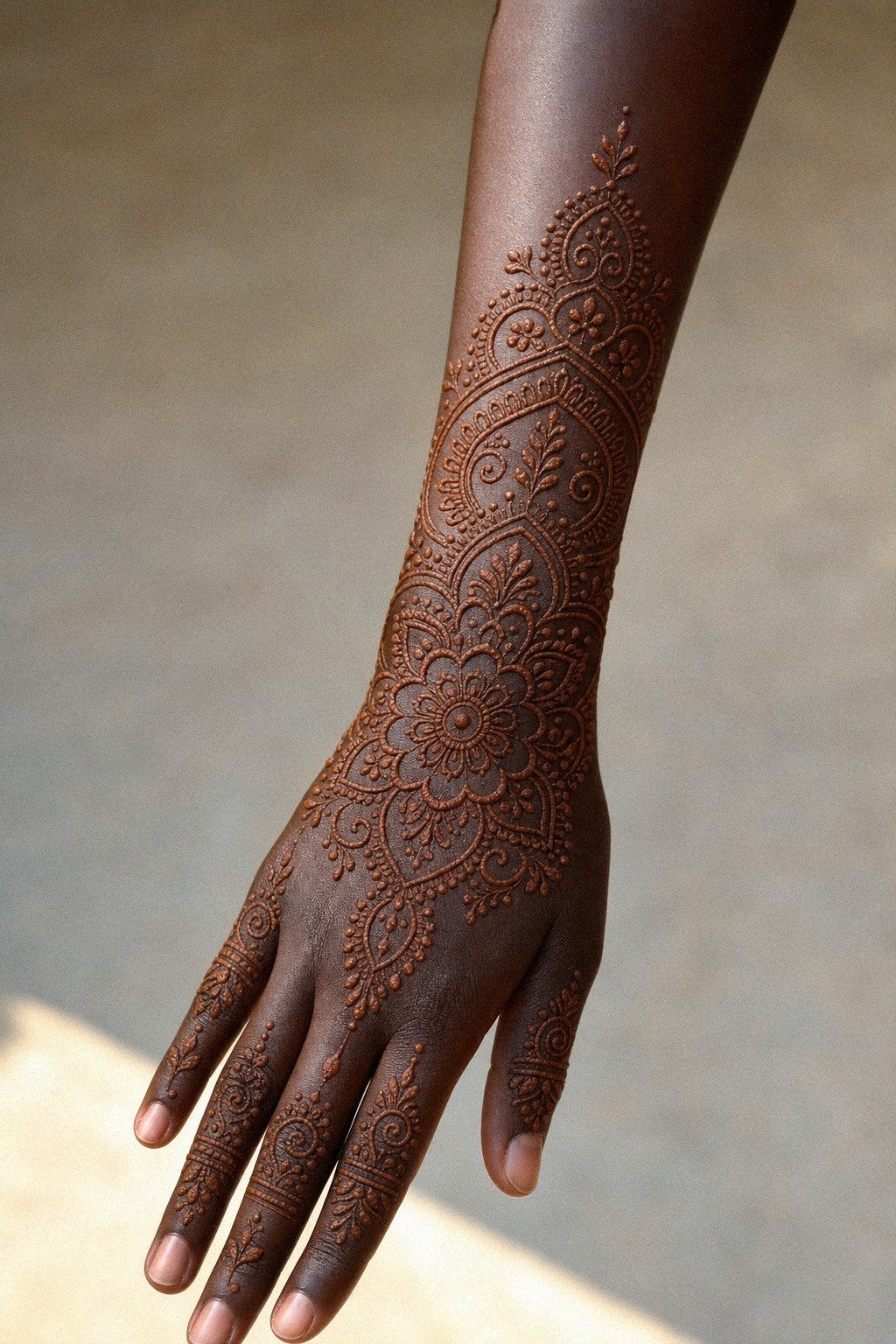
In the end, I did not choose the busiest design.
The cleanest version had a sharp center, graceful trails, and just enough detail to feel intricate.
That was the version that looked elegant both close up and from across the room. Start there!
Why The Hold-First Rule Beats Pinterest Exactness
Here’s the honest part. I didn’t change my mind because the fancy references stopped looking good.
I changed it because I finally separated what photographs well fresh from what develops beautifully on skin. Those aren’t always the same thing, and if you’re choosing a mehndi design, that’s the whole game.
A lot of the prettiest references are built for a moment. Fresh paste.
Fresh stain. A close crop. Zero wear.
The cone paste dries for about 1 to 2 hours, and the color usually deepens on the second day. A lemon-sugar seal can help protect the dried surface while the stain develops.
Your skin moves. It dries. It meets water, soap, sunlight, and friction.
Let the paste dry fully, avoid soaking the area, and keep the stain away from harsh scrubbing while it darkens.
What holds is simpler than people want it to be. Strong outer shapes.
Clean spacing. Deep reddish-brown contrast doing the heavy lifting.
Placement that is not fighting motion every hour of the day matters too. Hands, feet, ribs, sternum, inner bicep, elbows, and knees can be spicy or high-wear.
Outer forearm, upper arm, thigh, calf, and upper back are low-wear zones that usually give a design more time to show clearly.
Does that mean you cannot choose the hand? No. It means you should do it with your eyes open and a realistic plan for fading.
I have also learned that fancy does not have to mean fragile. A mehndi layout can still feel intricate if the artist knows where to let the skin show through.
That’s the magic! Not more detail. Better editing.
When you push contrast, keep your biggest motifs readable, and let the tiny stuff play a supporting role, the piece stays elegant without getting muddy.
And honestly, that’s the version I would choose every time. Not the one that wins the close-up. The one that still looks polished when you’re reaching for coffee six months later.
[IMAGE: Darkened ornamental mehndi stain on outer forearm, crisp reddish-brown pattern after settling, visible skin gaps, natural daylight photo]
How much it cost
And what I paid to plan and apply this kind of design was not a flat magic number, because mehndi pricing changes by artist, region, occasion, and whether you’re choosing a detailed hand or foot placement.
But if you’re budgeting for fancy mehndi designs, these are the US ranges that matter most.
[IMAGE: Mehndi consultation scene with forearm design, pricing notes, cone, artist gloves, ornamental reference sheet, realistic studio desk setup]
For you, the smarter budget question is whether the placement makes the money worth it.
A 3-inch outer forearm design can be a better value than a smaller hand design that fades faster and needs more frequent refreshes.
That’s real talk. Price is one thing. Duration is the other.
A detailed bridal application can cost more because it takes longer, covers more skin, and may include an experienced henna artist.
A Few Things Worth Answering
The short version is that your price, drying time, and fade rate depend on the design, occasion, artist, and placement. Here is the realistic answer for each one.
How much does a Fancy Mehndi Designs usually cost?
Usually about $50 to $300 for a smaller, simpler application, with a small appointment often starting around $50 to $100 and many custom artists charging $50 to $150 hourly.
For you, placement changes value fast. Hands and feet can cost similar money but require more paste, more time, and more careful aftercare.
Are Fancy Mehndi Designs a good idea for a first mehndi application?
Yes, if you keep the layout readable and choose a front hand or outer forearm design, especially if you keep comparing them to front hand mehndi designs.
For you, that means a cleaner application, less smudging drama, and a pattern that develops more evenly than an overcrowded hand design.
How do I choose a mehndi artist for Fancy Mehndi Designs?
Look for fresh application photos, darkened stain examples, and a mehndi artist who understands ornamental patterns rather than just copying henna pictures.
Study how they simplify references like mandala mehndi designs. The green flags are clean cone control, solid hygiene, and enough confidence to simplify a reference instead of tracing it blindly.
How much time do Fancy Mehndi Designs take to apply?
They take time according to placement and detail. Hands, feet, ribs, and sternum can be spicier zones for long applications because you need to stay still.
For you, a small design may take 30 minutes to 1 hour, while a highly detailed bridal hand or foot design can take 2 to 5 hours. The paste usually needs another drying time of about 1 to 2 hours.
How long does a Fancy Mehndi Designs stain take to fade?
The stain usually darkens on day two, stays strongest for several days, and fades over about 1 to 3 weeks, depending on skin, washing, friction, and placement.
For you, aftercare is simple. Let the paste dry.
Use the lemon-sugar seal if your artist recommends it. Avoid soaking, harsh scrubbing, and heavy friction while the color develops.
What’s the best placement for Fancy Mehndi Designs?
The best placements are usually the outer forearm and calf, even if you love the look of finger mehndi designs, because the pattern holds and the shape has room to breathe.
If you want the hand look, you can still do it, but you should expect more fading from washing and movement.
Where I’d Start First
If I had to pick one, I’d start with the outer forearm version. That placement gives fancy mehndi designs enough room to breathe, enough contrast to read later, and fewer smudging problems than the hand.
Pin that idea first, then let your artist simplify the rest. The result can feel timeless, stylish, and completely personal.