
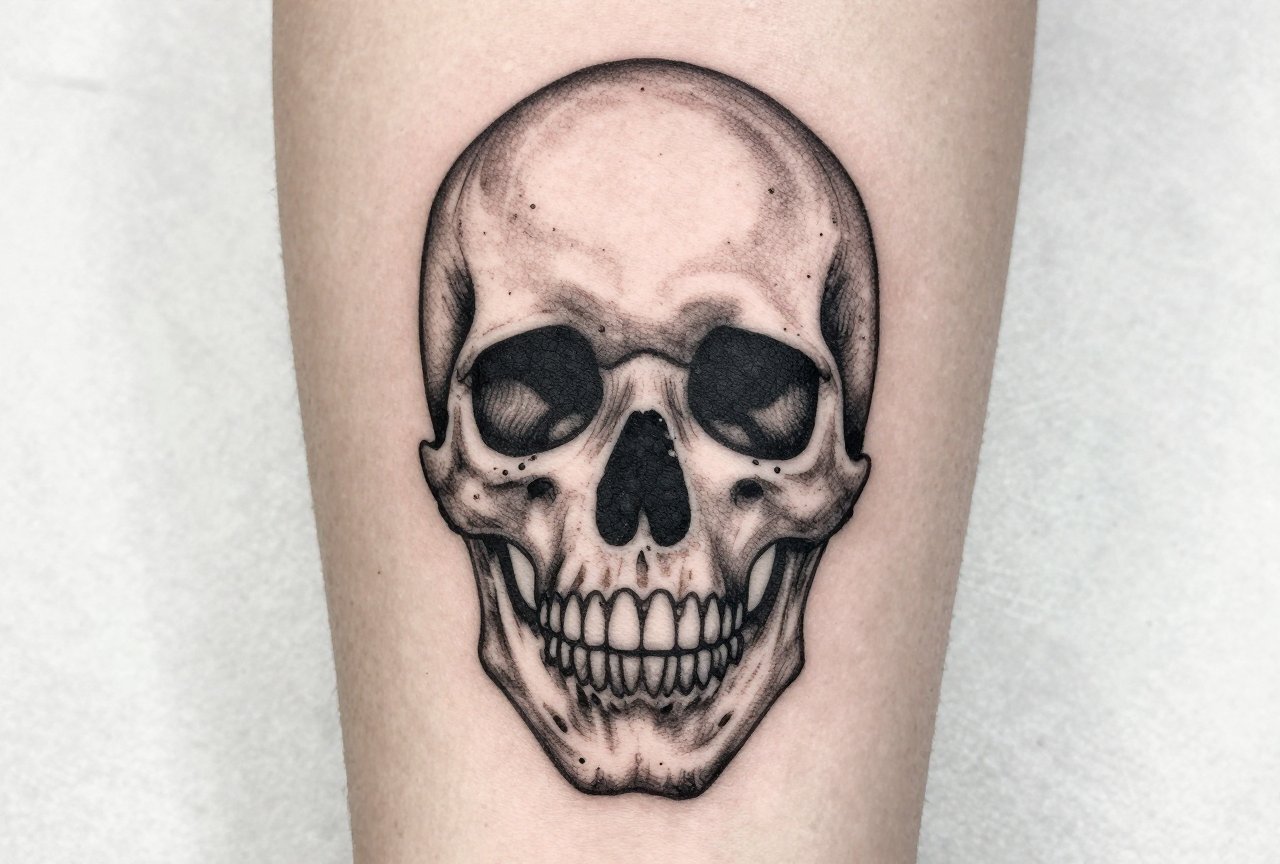
A symbolisms of death tattoo represents the inevitable end of life, but in my chair, I’ve learned it almost never means someone wants to die. It’s a memento mori, a reminder to live. People get these marks to process grief, confront fear, honor transformation, or simply accept that nothing lasts forever.
Symbolism & History
Death imagery has been inked on skin for thousands of years. Sailors crossed the Atlantic with skulls on their forearms, not because they wanted to die at sea, but because they’d stared at that possibility every storm. The skull said: I know what’s coming, and I still showed up.
In my shop, I see three layers of meaning come up again and again:
- Memento mori: Remember you will die. Not depressing, clarifying. Carpe diem’s darker twin.
- Transformation: Death as necessary ending. The old self dies; something new emerges. I’ve tattooed phoenix-skull hybrids for people leaving marriages, careers, addictions.
- Protection or defiance: Wearing death to ward it off. Mexican sugar skull culture does this beautifully, laughing at the reaper instead of cowering.
Cross-Cultural Roots
The Day of the Dead skulls, Celtic Green Man decaying into new growth, Tibetan kapala bowls, Egyptian scarabs pushing the sun through the underworld, every culture has found a way to make death visible. I tell clients: pick imagery that connects to your own lineage or your own story, not just what looks cool on Pinterest. A Japanese client of mine got a beautifully shaded shinigami (death spirit) because it matched her grandmother’s stories, not because she’d seen it on a Netflix show.
The Skull Specifically
Let’s be honest, the skull dominates this category. But line weight changes everything. A single-needle skull with delicate jawline hatching reads artistic and contemplative. Heavy black fill with hollow eyes? That’s punk, metal, biker culture, sometimes prison ink depending on context. I’ve watched a skull go from “edgy decoration” to “memorial piece” just by adding a client’s daughter’s birth flower tucked behind the temporal bone. The symbol stays; the story shifts.
Common Variations & Styles
Death tattoos aren’t one thing. Here’s what actually walks through the door:
- Skull and rose: The classic duality. Beauty and decay. I’ve done this on biceps, ribs, thighs. The rose color matters, deep red for passion, black for grief, white for purity or new beginnings.
- Hourglass: Time running out. Often paired with wings (time flies) or broken (time stopped, usually memorial). Fine line hourglasses age poorly if the glass sections are too narrow; I warn clients the sand lines blur together by year five.
- Coffin or tombstone: Straightforward, sometimes humorous. I’ve tattooed tiny coffins with “RIP my sanity” for burnt-out nurses. The shape is simple, which means it needs excellent line work to not look like a third-grade drawing.
- Reaper/Grim figure: The hooded scythe-carrier. Traditional American style reapers hold up great, bold lines, limited color. Photorealistic reapers? I’ve seen them fade into gray smudges within three years because of all the soft shading.
- Animal skulls: Ram skulls for Aries clients. Deer for hunters or nature people. Bird skulls for the delicate, gothic crowd. These carry species-specific symbolism too, ram for stubbornness, deer for gentleness meeting mortality.
Style choice affects longevity. Bold traditional holds. Watercolor fades fast on death imagery because the soft edges become unreadable. Blackwork lasts but can look like a blob if the design lacks negative space. I always pull out my healed portfolio photos, clients need to see what five-year-old skulls actually look like, not fresh Instagram shots.
Best Placements
Where you put it changes how the world reads it.
- Forearm: Visible. A statement. I’ve tattooed skulls here for chefs, musicians, people who want the conversation. The inner forearm is more intimate; outer reads tougher.
- Chest: Over the heart, obviously symbolic. Memorial pieces land here. The skin stretches differently, aging men see their skulls distort as pecs soften. I design with that future in mind.
- Ribs: Hidden. Personal. The pain is real here, thin skin over bone, every vibration felt. Clients who choose ribs usually have a private story they’re not explaining to strangers.
- Thigh: Large canvas. Can be shown or covered. Popular with women who want substantial art without workplace visibility issues. The muscle movement makes dynamic designs, reapers in motion, work beautifully.
- Hand/fingers: Job stoppers, we call them. Skull on the hand is old-school committed. I’ve refused this placement to younger clients who couldn’t articulate why they wanted it. The symbolisms of death tattoo on a hand says something specific about your relationship with mortality; make sure you mean it.
Healing reality: ribs peel and itch like hell. Hands scab thick and can blow out if you work with your hands during healing. I give specific aftercare for each placement, not generic instructions.
Who Chooses This Tattoo / Personal Meanings
After fifteen years, I can tell you there’s no “type.” I’ve tattooed death symbols on:
- A twenty-three-year-old cancer survivor who wanted to carry her awareness of fragility
- A sixty-year-old philosophy professor with his first tattoo, a Marcus Aurelius quote circling a skull
- A grieving father with his son’s birth and death dates inside a coffin outline
- A hospice nurse who sees death daily and wanted to normalize her comfort with it
- Plenty of twenty-year-olds who thought it looked cool and grew into deeper meaning later
The meaning doesn’t have to be fixed. I have a reaper on my own leg from my twenties that I got for rebellion; now it reminds me of friends I’ve buried. The tattoo stayed. I changed around it.
What Artists Actually Discuss
In the shop, we talk about whether the client is ready for the questions. A visible skull gets comments. Are you prepared for the “you okay?” from strangers? For some, that’s the point, starting conversations about mortality our culture avoids. For others, it’s an unwelcome burden. I always ask: “Do you want to explain this, or is it just for you?”
Similar Symbols
Clients often browse neighboring territories. Here’s how they relate:
- Phoenix: Death as rebirth, more optimistic. Good for people who want the transformation without the grimness.
- Ouroboros: Cyclical death and renewal. Less final, more cosmic. Appeals to spiritually-minded clients.
- Butterfly: Metamorphosis, soul in some traditions. Softer, more socially acceptable. I’ve had clients start with death imagery and pivot here when they realize they want change, not ending.
- Crow or raven: Death’s messenger, not death itself. More ambiguous, more literary. Edgar Allan Poe fans, mythology readers.
- Tree of life with dead branches: The balance of growth and decay. Complex, usually larger pieces.
Sometimes the right symbol isn’t death at all, it’s what surrounds it. I once spent two hours talking a client from a skull to a barren winter tree because she wanted dormancy, not death. She came back a year later for spring blossoms on the same tree. That’s the fuller story.
Final Thoughts
A symbolisms of death tattoo is ultimately a mirror. What you see in it says more about your relationship with ending, change, and time than the image itself. I’ve watched these tattoos serve as armor, as confession, as joke, as prayer. The best ones come from clients who sit in my chair knowing something true about themselves, whether they can articulate it or not.
If you’re considering this path, don’t rush for the flash sheet. Sit with the image. Imagine explaining it to someone you love, or to a stranger, or to no one at all. The right death symbol doesn’t celebrate ending. It makes you feel more alive while you have the chance. That’s the whole point of memento mori, and it’s why, after all these years, I still respect every single person brave enough to wear it.
Frequently Asked Questions
Will a death symbol tattoo make people think I’m depressed or dangerous?
Some people will misread it, especially visible skulls or reapers. I tell clients to expect questions and decide in advance whether they’ll explain or deflect. Most find the conversation opens up unexpectedly genuine connections.
Do skull tattoos age badly compared to other designs?
Bold, simple skulls with clear eye sockets and defined jawlines age excellently. Intricate fine-line skulls with lots of tiny detail blur together over five to ten years. I always show healed examples before we start.
Is it disrespectful to get a sugar skull if I’m not Mexican?
This comes up constantly. Day of the Dead imagery carries deep cultural and religious significance. If you’re drawn to it, learn the tradition first. Some Mexican artists welcome respectful participation; others find outside use appropriative. Ask, listen, and consider whether a different symbol serves your actual meaning.
Can I combine a death symbol with something positive like flowers or butterflies?
Absolutely, and it’s incredibly common. The contrast creates meaning, beauty and decay, life and ending. Just make sure both elements are designed to work together stylistically, not just pasted side by side. A good artist will flow them into one cohesive piece.
Related Tattoo Meanings
- Three Dot Hand Tattoo Meaning: Symbolism, Styles Placement
- Thunderbolt Tattoo Meaning: Power, Speed Sudden Change
- Tinkerbell Tattoo Meaning: Magic, Rebellion, and Never Growing Up
- Explore more









