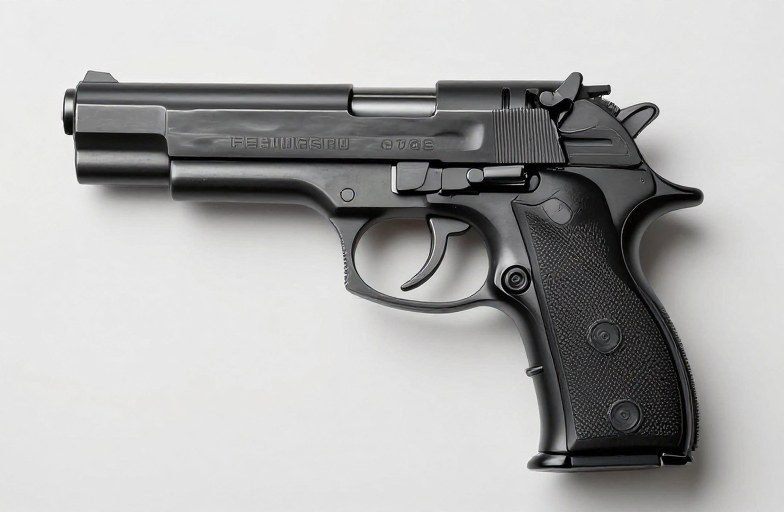
A pistol tattoo most commonly signals personal power, self-protection, or a defiant stance against being controlled. For some, it represents a willingness to defend boundaries; for others, it channels rebellion, danger, or a brush with mortality. The meaning shifts dramatically based on placement, style, and accompanying imagery, an old revolver with roses reads differently than a Glock with a clock.
Similar & Related Symbols
Guns don’t exist in isolation in tattoo iconography. Understanding adjacent symbols helps clarify what a pistol specifically communicates.
Other Firearms and Weapons
Rifles and shotguns tend toward hunting, rural identity, or military service. Knives and daggers lean into betrayal, secrecy, or close-quarters violence. Swords carry chivalric or martial arts connotations. The pistol’s compact size and concealability give it a different symbolic weight: intimate, immediate, urban. It’s the weapon of surprise and personal space, not open combat.
Non-Weapon Pairings
- Skulls: Mortality, memento mori, or living dangerously
- Roses or flowers: Beauty and violence intertwined, often memorial
- Clocks or hourglasses: Time running out, living on borrowed time
- Playing cards: Gambling with fate, living by chance
- Snakes: Deception, danger, or transformation
These combinations rarely appear by accident. A pistol with a single rose and a name typically memorializes someone lost to violence. The same pistol with dice and money suggests risk-taking or criminal enterprise.
Symbolism & Core Meaning
Beyond the obvious, pistol imagery operates on several symbolic registers depending on context.
Power and Autonomy
The pistol as equalizer has deep roots in American visual culture. A small firearm in tattoo form can represent the refusal to be victimized, the “don’t tread on me” ethos rendered in skin. This resonates particularly in placements visible to others: forearms, hands, neck. The wearer wants the symbol seen, wants its deterrent effect understood. Hidden placements (ribs, thigh, underarm) suggest the power is held in reserve, revealed only selectively.
Mortality and the Edge
There’s a reason pistols feature heavily in gangster and outlaw iconography. The weapon implies living outside legal protection, where death is a constant possibility. Tattoos here function as memento mori with teeth, not peaceful acceptance of death, but confrontation with its violent potential. Smoking guns, bullet wounds, or blood drops amplify this reading. The aesthetic often draws from noir film, pulp novel covers, and tattoo flash sheets dating back to the 1940s.
Rebellion and Counterculture
For those without direct violence in their lives, the pistol can signal generalized anti-authoritarianism. Punks, metalheads, and certain political subcultures have adopted gun imagery as shorthand for resistance. The specific style matters enormously here: a crude black outline pistol reads as punk defiance, while a photorealistic 1911 suggests different allegiances entirely.
Color vs Black and Grey
Technical choices reshape meaning as much as imagery does.
Black and grey pistol tattoos dominate for several practical reasons. The limited palette ages better on skin, especially for fine details like engraving on a revolver cylinder or the checkering on a grip. Greywash can achieve convincing metallic sheen without the maintenance demands of color. Stylistically, black and grey anchors the imagery in historical tattoo tradition, think Sailor Jerry flash, prison tat aesthetics, or Chicano black and grey realism.
Color introduces different registers. Traditional American styling with bold red, yellow, and green reads as vintage, almost cartoonish, defanging the weapon slightly. Photorealistic color demands larger scale and fresher ink; the vibrancy that makes a blued steel barrel convincing fades within 5-10 years without touch-ups. Gold accents on triggers or grips suggest luxury, success through violence, or the “gilded gun” trope from hip-hop visual culture.
One practical consideration: red ink in pistol tattoos, especially blood spatter or muzzle flash, is notorious for fading to pink or disappearing entirely. Experienced artists often limit red to small, concentrated areas or advise clients to expect future reinforcement.
Religious & Spiritual Angles
Firearms and spirituality make uneasy bedfellows, but the combination persists.
Saintly and Protective Frameworks
Some Catholic-adjacent tattooing pairs pistols with milagros, sacred hearts, or saint imagery, particularly St. Jude (desperate causes) or Santa Muerte (protection, safe passage). The gun here isn’t glorified; it’s contextualized within a system where divine and earthly protection coexist. These pieces often include prayer banners, rosary beads, or votive candles.
Secular Morality Plays
Less explicitly religious, the “good vs evil” pistol tattoo places the weapon in moral narrative: angel wings emerging from the barrel, a demon pierced by the bullet, or scales of justice incorporated into the composition. The imagery borrows religious visual grammar without theological commitment. These tend toward larger pieces, half sleeves, back pieces, where the narrative has room to develop.
Directly sacred gun imagery remains relatively rare outside specific regional traditions. Most spiritualized pistol tattoos operate metaphorically rather than devotionally.
History & Cultural Roots
Pistol imagery in tattooing follows the technology itself.
Single-action revolvers dominate historical American tattoo flash because that’s what existed when the tradition formed. The Colt Peacemaker, with its distinctive profile, became iconic in Western films and thus in tattoo culture. Sailors and soldiers carried these designs globally. The 1911 pistol, adopted by the U.S. military in the early 20th century, entered tattoo iconography through World War II and Korean War-era military tattooing.
Semi-automatic pistols, Glocks, SIGs, Berettas, reflect more contemporary influences: hip-hop culture, action cinema, video games, and military service from Vietnam forward. The specific model chosen often signals generational and subcultural identity. A 1911 suggests traditionalism or military connection; a Glock suggests modernity, law enforcement, or street culture; a Hi-Point carries entirely different connotations.
European tattoo traditions incorporated dueling pistols and aristocratic firearms, though these remain less common in American practice. Russian prison tattooing developed its own pistol iconography, often coded with specific criminal meanings unrelated to general Western usage.
Who Chooses This Tattoo
Demographics and motivation vary more than stereotype suggests.
Military and Law Enforcement
Service members and police sometimes choose pistol tattoos as professional identifiers, though this has become less common as departments and commands restrict visible tattoo content. When chosen, these tend toward specific issued sidearms, unit insignia integration, or memorial pieces for fallen colleagues. The imagery here is institutional rather than rebellious.
Street and Criminal Subcultures
Documented extensively in criminology and visual culture studies, pistol tattoos in certain communities mark violent encounters, territorial claims, or criminal specialization. These carry real-world consequences, court admissibility, profiling, employment barriers, that artists in affected communities understand implicitly. The ethical landscape here is complex and varies enormously by shop and region.
Mainstream Adoption
Outside these specific contexts, pistol tattoos have broadened considerably. Fashion tattooing, influenced by celebrity culture and streetwear, has normalized gun imagery for aesthetics alone. The same person might wear a pistol necklace and get a pistol tattoo without deeper symbolic investment. This drives some traditionalists toward more elaborate, personally specific compositions to distinguish meaningful pieces from trend-following.
The Takeaway
A pistol tattoo means what its specific composition, placement, and context establish. The bare image carries no fixed significance, power, mortality, rebellion, protection, or mere aesthetic preference all remain possible. What matters is coherence: does the technical execution match the intended message? Does the placement suit the symbolism? Will the detail level hold up as the tattoo ages?
For anyone considering this imagery, the most durable pieces integrate personal narrative with strong technical fundamentals. The pistol itself is a vessel; what you load it with determines what it communicates.
Frequently Asked Questions
Do pistol tattoos age worse than other designs because of the fine details?
They can, especially photorealistic pieces with thin barrel lines or subtle shading. Bold traditional outlines and strategic negative space age significantly better. Plan for touch-ups if you want intricate realism.
Will a pistol tattoo affect job prospects?
Visible gun imagery can limit employment in education, healthcare, corporate settings, and some service industries. Hand, neck, and forearm placements carry the highest risk. Consider your professional trajectory before committing to visible placement.
What’s the difference between a revolver and semi-automatic tattoo symbolically?
Revolvers read as historical, Western, traditional, or nostalgic. Semi-automatics suggest modernity, military/law enforcement connection, or contemporary street culture. The specific model chosen often signals more than the generic form.
Can a pistol tattoo be covered up or modified later?
Cover-ups are challenging due to the dense black ink common in gun imagery, but possible with skilled design. Adding surrounding elements, floral work, abstract backgrounds, or figurative scenes, offers more flexibility than direct laser removal and reworking.
Related Tattoo Meanings
- Razorblade Tattoo Meaning: Edge, Risk and Self-Determination
- Gun Look Like Tattoo Meaning: Power, Rebellion Raw Identity
- 1776 Tattoo Meaning: Liberty, Inked
- Explore more