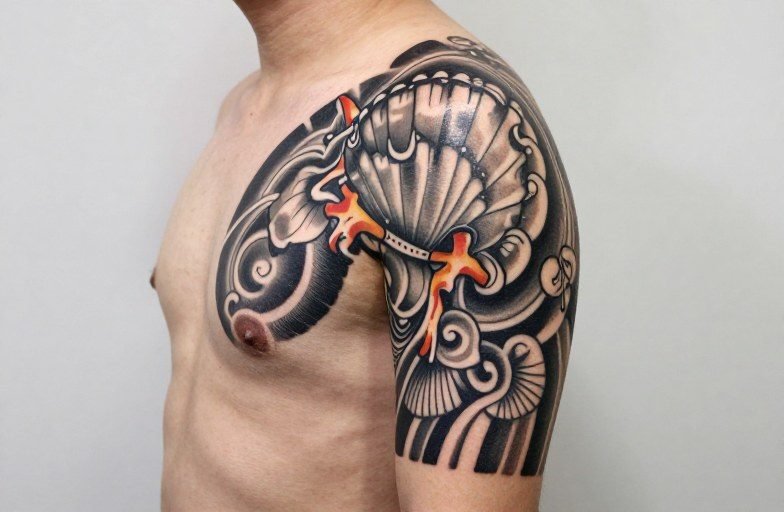
A traditional shellback tattoo marks the crossing of the Equator, Shellback, the naval initiation that turns a pollywog into a trusty shellback. The tattoo style follows classic American traditional rules: bold black outlines, limited color palette, symmetrical composition, and specific imagery that signals genuine maritime experience rather than tourist kitsch. Expect crossed shells, King Neptune’s trident, mermaids, turtles, and rope borders, all rendered with the heavy line weight and flat color that holds up over decades at sea.
Origins & History
Shellback tattoos emerged from naval tradition, not tattoo shop trend cycles. The Equator crossing ceremony, often called Shellback, dates back centuries in maritime culture, and sailors began marking the occasion with ink as early as the 1930s, when tattooing became accessible in major port cities.
Naval Roots vs. Civilian Adoption
Original shellback tattoos were earned, not purchased. Sailors received them after completing the initiation, which historically involved hazing rituals, costume humiliation, and sometimes genuine danger. The tattoo functioned as proof of service time and sea miles. Today, civilians and naval personnel alike get shellback tattoos, but the visual language remains rooted in that military heritage. A authentic piece should never look decorative or whimsical, it carries the weight of tradition even if the wearer never served.
Imagery That Signals Authenticity
Classic shellback iconography includes:
- King Neptune or his trident, often centered in the composition
- Crossed conch or nautilus shells framing the design
- Mermaids, typically in traditional pin-up style
- Turtles, the animal most associated with the Equator itself
- Rope or chain borders that contain the image
- Latitude coordinates: 00°00’00” or similar notation
- Ship names or dates of crossing (when accurate and verifiable)
Some trace the turtle motif to Pacific Islander tattoo traditions encountered by sailors, though this connection remains speculative. What matters is that the imagery reads immediately as nautical to anyone familiar with maritime culture.
Choosing the Right Artist
Not every traditional tattooer understands shellback conventions. The style requires more than bold lines and a limited palette, it demands respect for naval iconography and knowledge of compositional rules that have held for nearly a century.
What to Look For in a Portfolio
Check for actual nautical work, not just generic traditional flash. A capable artist shows rope borders that curve correctly, shells drawn from reference rather than imagination, and mermaids that follow the Sailor Jerry proportional canon. Ask specifically about their experience with naval commemorative tattoos. Artists who work near military bases or port cities often have deeper exposure to authentic shellback requests.
Questions Worth Asking
- Do they draw shells from reference, or copy flash sheets?
- Can they explain the difference between a shellback and a golden shellback (crossing at the International Date Line)?
- How do they handle the rope border, hand-pulled or machine?
- What’s their preferred approach to the heavy black fill that anchors these designs?
Be wary of artists who treat shellback as just another nautical theme. The specificity matters.
Color vs Black and Grey
Traditional shellback tattoos work in either palette, but the choice affects longevity, cost, and visual impact differently than in other styles.
Classic Color: Sailor Jerry Palette
The standard American traditional colors, red, yellow, green, navy blue, and black, appear in most historic shellback pieces. These pigments were selected for stability: the iron oxide reds, cadmium yellows, and cobalt blues available to early naval tattooers held up under sun exposure and salt water better than organic alternatives. Modern equivalents maintain this durability. Color shellbacks read immediately as traditional and carry the visual punch that makes them identifiable across a crowded bar or beach.
Black and Grey Adaptations
Black and grey shellback tattoos emerged later, often linked to West Coast prison and street tattooing that lacked color ink access. Today, some choose this palette for faster healing, lower cost, or personal aesthetic preference. The trade-off: without color blocking, the design relies entirely on line weight and black fill for structure. Shell details can blur together without the separating power of red or green. If going black and grey, insist on heavier outlines and more negative space than a color version would require.
Common Mistakes to Avoid
Shellback tattoos fail most often through ignorance of tradition rather than technical error. These are the errors that mark a piece as civilian fantasy rather than earned commemoration.
Incorrect Coordinates
00°00’00” is the only accurate Equator notation. Some shops offer 000° or other variations that reveal the wearer never crossed, or never bothered to learn. If including a date, ensure it matches an actual crossing. Nothing undermines the piece faster than coordinates that don’t exist.
Softened or Modernized Imagery
Shellback tattoos should not look delicate. Watercolor backgrounds, fine-line shells, or realistic mermaid portraits betray the style’s purpose. The heavy black, the flat color, the slightly crude power of traditional rendering, these aren’t limitations to overcome but requirements to honor. A shellback with dotwork shading or geometric framing reads as confused, not updated.
Placement Disrespect
Traditional placement matters. Upper arms, chest panels, and thighs carry the weight this design requires. Ankles, wrists, or behind-the-ear placements trivialize the commitment. The tattoo should be large enough to read from conversational distance, small shellbacks lose the iconographic impact that makes them function as social signals.
How It Ages
Well-executed traditional shellback tattoos age better than most styles because they were designed for aging. The heavy black outlines, limited detail, and flat color fields resist the blurring and fading that destroy finer work.
Line Weight and Blur Tolerance
Outline weight in shellback tattoos typically runs 7-14RL, substantially heavier than modern fine-line preferences. This mass of black pigment doesn’t disappear, it spreads slightly, creating the soft, weathered look that actually improves the traditional aesthetic over decades. Rope borders that looked crisp at two years settle into a lived-in character by ten. The key is initial saturation: lines must be packed solid black, not gray-washed, to maintain this graceful aging.
Color Fading Patterns
Reds and yellows fade first, often to a warm peach or salmon tone. Greens and blues hold longer, sometimes darkening toward navy or teal. Black remains, though it may develop a blue cast in some skin types. The traditional shellback design anticipates this: color serves as accent within a black-dominant structure, so fading never destroys the image’s readability. Touch-ups after ten to fifteen years refresh vibrancy without requiring reconstruction.
Sun and Salt Exposure
Sailors and beachgoers face accelerated fading. The same UV exposure and salt abrasion that weathered original naval tattoos affects modern ones. No sunscreen fully prevents this, but consistent SPF 50 application and covering the tattoo during peak hours extends color life substantially. After swimming, fresh water rinse removes salt residue that otherwise draws out pigment during healing.
Aftercare Notes
Shellback tattoos heal like any bold traditional piece, with specific attention to the heavy black fill that defines the style.
First Two Weeks
Heavy black areas weep plasma and ink longer than line-only tattoos. Expect three to five days of significant oozing, especially in large chest or thigh pieces. Wash gently with fragrance-free soap, pat dry without rubbing, and apply a thin layer of recommended aftercare ointment. Thick scabbing in black fill areas is normal; picking it removes ink permanently. Let it flake naturally over ten to fourteen days.
Long-Term Maintenance
- Moisturize regularly once healed, dry skin makes black work look ashy
- Annual sunscreen application prevents the blue-shift that black sometimes develops
- Weight fluctuation affects thigh and arm pieces more than chest panels
- Swimming pools with high chlorine accelerate color fading; rinse after exposure
Shellback tattoos reward patience. The heavy saturation that makes them striking initially also makes them slow to settle. Final color and line clarity emerge at six to eight weeks, not two.
Final Word
A traditional shellback tattoo connects you to a lineage of maritime marking that predates modern tattoo culture. The style’s constraints, bold line, flat color, specific imagery, substantial scale, aren’t obstacles but the architecture that makes the piece function across decades. Whether earned at sea or chosen for its visual power, a shellback done right carries weight without needing explanation. Find an artist who understands naval tradition, commit to the heavy black and the rope border, and let the tattoo do what it was designed for: mark a threshold crossed, permanently and without apology.
Frequently Asked Questions
What’s the difference between a Shellback and Golden Shellback tattoo?
A standard Shellback marks crossing the Equator, while a Golden Shellback marks crossing where the Equator meets the International Date Line at 180° longitude. Golden Shellback tattoos often add golden coloring or specific coordinates to distinguish the rarer achievement.
Can civilians get a shellback tattoo without doing the naval ceremony?
Technically yes, though traditionally the tattoo signified completion of the Shellback initiation. Many civilian tattooers today will do the design for anyone drawn to the aesthetic, but accuracy in coordinates and imagery matters more when the piece isn’t earned through service.
How large should a traditional shellback tattoo be?
Minimum palm-sized for basic designs, with full chest panels or upper thigh pieces being traditional. The heavy black and detailed rope borders need space to breathe; shrinking the design below four inches loses the iconographic impact and causes blurring over time.
Why do shellback tattoos always seem to have rope borders?
The rope border contains the design visually and symbolically, representing nautical life and the binding commitment of service. In traditional composition, it also creates a frame that separates the tattoo from surrounding skin, making the image read clearly even as it ages.
Related Style Guides
- Traditional Tattoo Backgrounds: Style Guide
- Traditional Tattoo Wallpaper: Style Guide
- Ultra Realistic Tattoos: Complete Style Guide
- Explore more