Black and dark blue hold saturation longer than any other tattoo colors. Medium greens and deep purples sit in a middle tier, while bright yellows, light pinks, and pastels fade fastest no matter how well you care for them. How long any color lasts comes down to ink formulation, where the tattoo sits on your body, sun exposure, and how carefully you heal the piece.
Why Some Colors Last
Black and the Blues
Carbon black is the most stable pigment used in tattooing. The particles are larger and more uniform than colored pigments, which means your immune system has a harder time breaking them down and carrying them away. Dense black lines stay readable for decades. Pack black solidly into an area and it will gray slightly over time, but it will not disappear the way color does.
Dark blues, navy, royal, and midnight shades rely on similarly stable base pigments. They are the safest color choice if you want a piece that stays recognizable without frequent touch-ups. Traditional American and Japanese designs have long operated on this principle: bold black outlines, limited blue accents, minimal skin breaks.
The Middle Ground
Forest green, burgundy, and deep teal occupy a middle tier. They outlast bright orange or lime green by several years, but you will notice softening around year five to ten depending on placement. These pigments are worth using if the design demands them, but expect more maintenance than a black-and-blue piece.
Red, orange, and brighter greens fade faster still. Yellow, white, and pastels are the most vulnerable. They often need strategic placement near black lines to remain readable over time.
How Pigments Actually Differ
Modern tattoo inks use either carbon-based blacks, iron oxides, or organic pigments. Carbon blacks are inert and photostable. Iron oxides, common in browns and some reds, can shift tone as they oxidize. Organic pigments, especially the brighter synthetics used in neons and pastels, tend to break down faster under UV exposure. Carrier solutions, the liquid that suspends pigment, have improved in the last decade. Better carriers help pigment settle evenly and reduce migration, but they cannot change the fundamental stability of the pigment itself.
What Speeds Up Fading
Placement and Daily Wear
Inner bicep, upper chest under clothing, and upper back beneath the shirt line see less UV and less friction. A yellow tattoo on a ribcage under a tank top will outlast the same yellow on a forearm that gets daily sun. Hands, feet, elbows, and knees are hard on color regardless of ink quality. The skin there regenerates faster and the mechanical wear is constant.
If you want a light color, sandwich it between black lines. Traditional tattooers understood this long ago: yellow flowers with bold black stems, white highlights in an eye surrounded by dark orbit. The black gives the eye somewhere to rest even as the lighter pigment diffuses.
Healing and Aftercare
Those first two weeks determine much of your tattoo’s lifespan. Scabbing too thick, picking, or soaking in hot tubs pulls pigment out unevenly. Color lost during healing does not return. Keep it clean, lightly moisturized, and out of the sun until the surface is fully closed. After that, SPF 30 or higher, every day, forever. Not just at the beach. Walking to the car, eating outside at lunch, cumulative UV exposure is what degrades color over time.
Skin Tone as Canvas
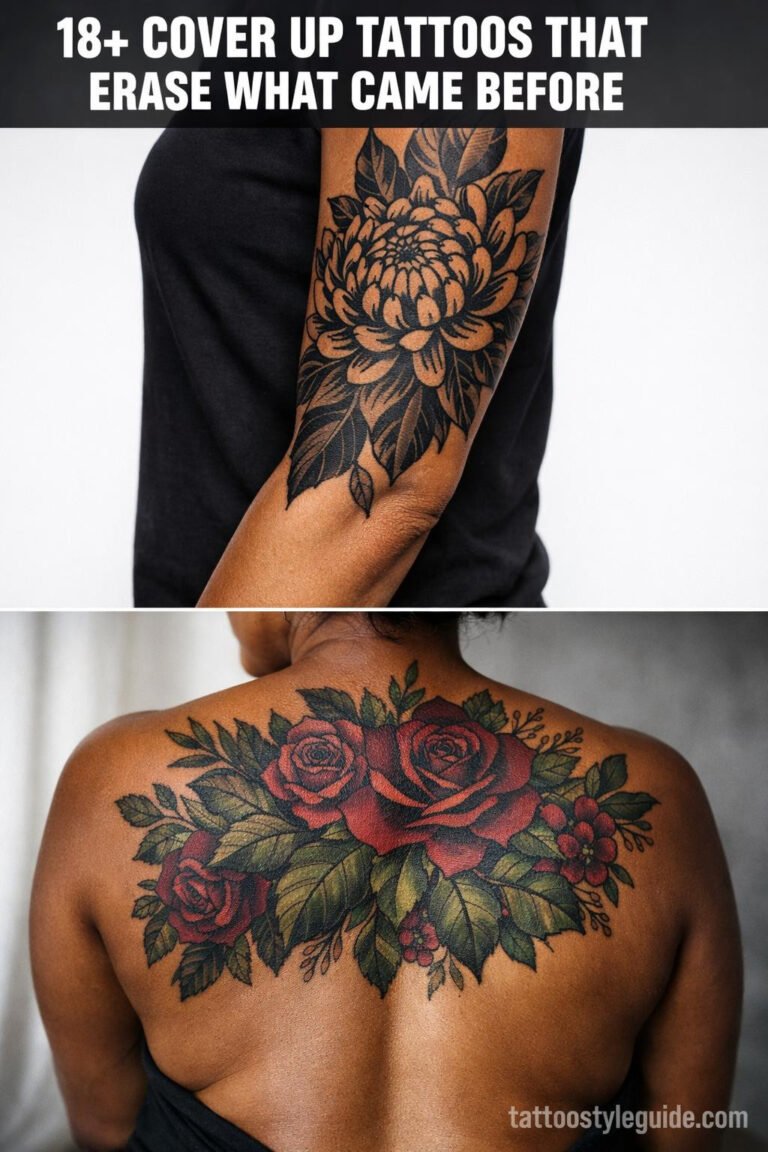
Color behaves differently on different skin. Deep, saturated pigments show more true to bottle on lighter skin. On darker skin, black and dark blue still read clearly, but lighter colors can disappear or look ashy. Experienced artists adjust, using more saturated primaries, relying more on black line work, placing lighter colors strategically. If an artist shows you a portfolio with no work on skin similar to yours, that is a conversation to have before booking, not after.
Planning for the Long Term
Touch-Ups and Timing
Fading is not always even. Sometimes a section heals patchy because of how you slept on it, or because one area of skin took ink differently. If you notice significant lightening or blotchiness after the six-week mark, that is the window to consult your artist. Most shops include one touch-up within a few months of the original session, though policies vary.
Do not wait five years and then expect the same artist to match faded work from memory. Color shifts as it ages. Matching old pigment to new is harder than refreshing it while the original is still relatively fresh. If a color seems to be reacting, raising, itching persistently, or changing texture, that is worth discussing with both your artist and a dermatologist to rule out pigment sensitivity.
Cost Over Time
Single-session black and gray work is generally less expensive than full color because it requires fewer needle changes, less ink variety, and less time packing saturation. A solid black sleeve might run less than a color piece of the same size because the artist is not switching between seven pigments and wiping between each.
The long-term cost picture often flips. A bright watercolor piece with no black lines may need touch-ups every three to five years. Over fifteen years, maintenance can exceed the original price significantly. Black and blue traditional work might need one refresh in that same timeframe, sometimes none at all.
Artist Skill and Ink Quality
Artists charging premium rates usually use higher-grade pigments from established manufacturers. These formulations have improved in recent years, with better particle consistency and carrier solutions that help pigment settle properly. Cheaper inks or heavily diluted pigments fade faster and can shift color unpredictably. The difference between a budget piece and a professional one often shows up most clearly at year ten, not week two.
Setting Realistic Expectations
Every tattoo fades. Skin is alive, shedding and regenerating. The question is the timeline and the aesthetic trajectory. A well-done black and gray piece ages into a softer version of itself, still readable, often more elegant. A poorly planned color piece can become a muddy suggestion of its former self.
White ink is the most vulnerable. On lighter skin, it fades to a subtle scar-like texture within a few years. On darker skin, it often yellows or disappears entirely. Some artists avoid white-only designs because the results are so unpredictable. If you want white, use it as an accent within a darker framework, not as the main event.
Expect your tattoo to look its best around the three-month mark, after healing completes and the skin settles. From there, it is a slow decline that you can dramatically slow with sun protection and occasional moisturizing. Nothing stays perfect forever, but careful choices extend the life substantially.
What to Remember
Black and dark blue are your most durable choices, with placement and aftercare mattering almost as much as the pigment itself. Budget for the long game: a slightly more expensive piece with stable colors and solid black lines costs less over a decade than a cheap, bright piece that needs constant refreshing. Talk to your artist honestly about your lifestyle, your skin, and your willingness to maintain the work. Good tattooers have watched how their pieces age five, ten, fifteen years out. That knowledge is worth more than any reference image you bring in.
Frequently Asked Questions
Does the brand of ink really make a difference in fading?
Yes. Established manufacturers use more stable pigment particles and better carrier solutions. Cheap or counterfeit inks can fade unevenly or shift color over time. Most reputable artists are transparent about what they use if you ask.
Can I get a touch-up to restore faded colors?
Touch-ups work well, especially within the first few years. After a decade, matching old faded pigment becomes harder. Black lines refresh most successfully. Very light colors sometimes need to be darkened or surrounded with new black to read properly again.
Why does my tattoo look brighter in some lights and duller in others?
Skin thickness, blood flow, and how much the tattoo has settled beneath the epidermis all affect how light reflects off the pigment. A fresh tattoo sits higher in the skin and often looks more vivid. As it settles and the skin regenerates, the same pigment can appear more muted, especially under fluorescent or dim lighting.
Is black and gray less artistic than color?
No. Some of the most technically demanding work is black and gray realism or Japanese sumi-e influenced design. Color should serve the concept, not the other way around. If your reference is a black and white photograph, a skilled artist can render it with nuance that rivals any color piece.