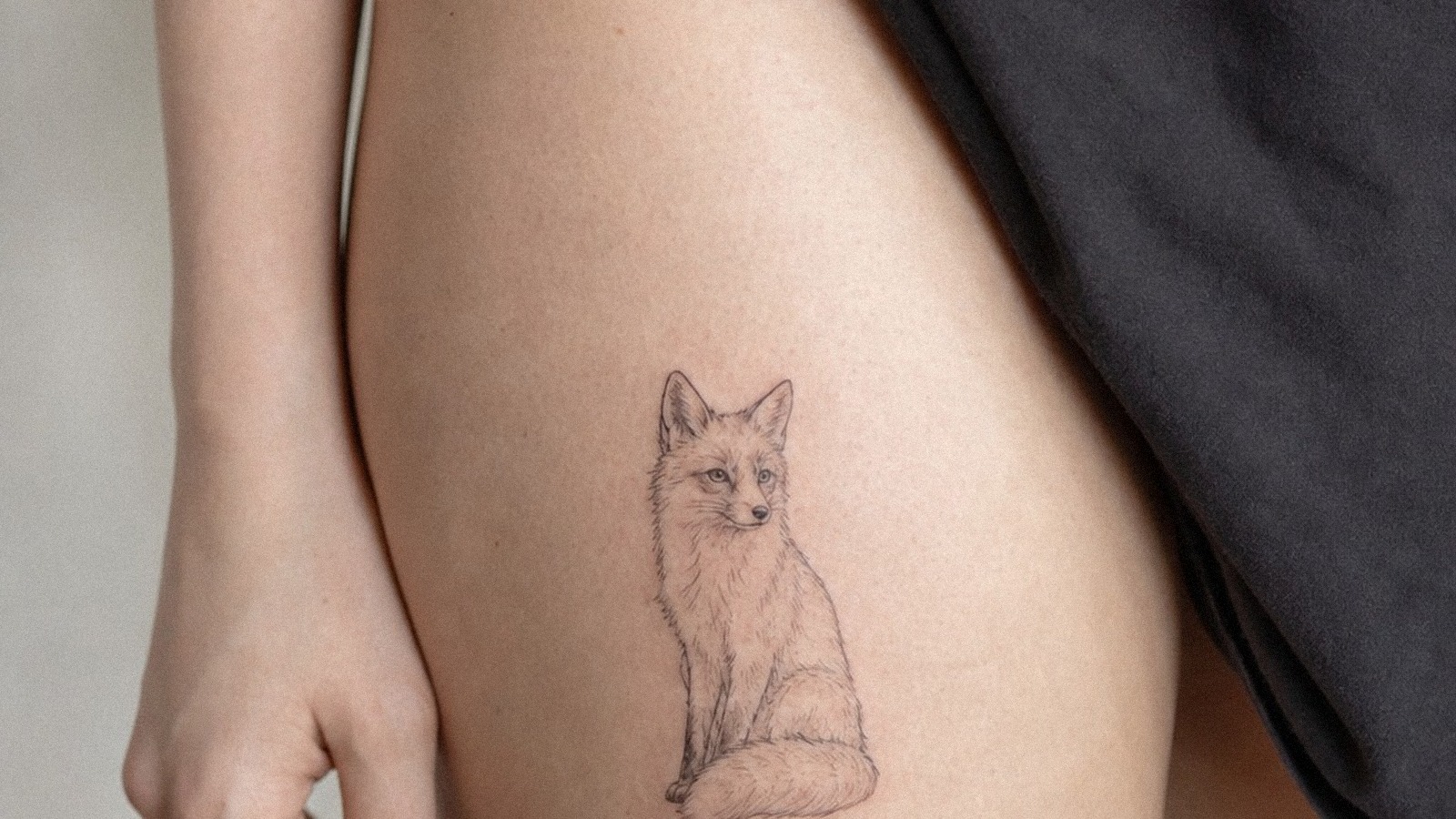
Fox tattoos carry a particular risk. The animal’s appeal is obvious: sharp features, natural elegance, cultural weight across Japanese, Nordic, and Native American traditions. But that same complexity makes it easy to overwork. A fox with too much fur texture, too many colors, or too literal a pose tends to muddy within a few years. The cleverness you wanted becomes a blur you explain rather than show.
The piece that finally worked for me was not the one I expected. It was small, monochrome, and deliberately incomplete. What follows is how I got there, and what to watch for if you are considering your own.
Why Most Fox Designs Fail on Skin
The Fur Trap
Foxes have luxurious coats. Tattoo artists often respond by layering fine lines to simulate hair. On paper, this looks rich. On skin, those lines spread, merge, or drop out entirely depending on placement and how you heal. Within three to five years, a textured fox can resemble a smudged cat. See also: Magpie Tattoo Meaning: Duality, Curiosity, and Thievery.
I abandoned two early designs for exactly this reason. One was a running fox with directional fur strokes across the back and tail. The artist warned me, and I am glad they did. The reference was a digital illustration, not a tattoo. The translation to skin would have been poor.
The Color Compromise
Orange is the obvious choice. It is also the most demanding. Bright orange pigments fade faster than black or dark brown, and they require more saturation to hold, which means heavier packing and more trauma to the skin. If you want a small piece, orange can look patchy where black would stay consistent. See also: Monkey Tattoo Meaning: Playfulness, Intelligence & Mischief.
I considered orange for about two weeks. Then I looked at healed photos from five years prior, not fresh work. The orange had shifted toward a dull rust or disappeared into surrounding skin tones. I chose black with one warm brown accent instead. That brown has softened slightly, but the structure remains intact.
What Actually Reads as Clever
The Silhouette Test
A fox is recognizable by three elements: pointed ears, a narrow muzzle, and a full tail. Lose any of these in clutter, and you lose the animal. I tested every design by shrinking it to one inch square on my phone screen. If the shape still registered instantly as fox, it passed. If it needed color or context to make sense, it failed. See also: Botanical Tattoo Designs: Style & Placement Guide.
This test eliminated most of my Pinterest saves. Beautiful art, poor tattoos. The piece I settled on was a curled sleeping fox, tail wrapped around the body, ears sharp against the curve of the back. At small scale, the negative space between tail and flank created the impression of depth without any interior shading.
Placement as Part of the Design
I initially wanted the inner forearm, visible and easy to show. But forearm skin moves constantly, flexes with work, and catches sun. For a fine-line piece, that means faster aging and more touch-ups. I moved the design to the outer upper arm, where the surface is more stable and less exposed.
The shift changed the composition. The curled fox fit the rounded muscle better than the straight forearm would have allowed. The tail followed the deltoid curve naturally. Sometimes the body corrects your plan in a useful way.
Working With the Right Artist
The Stencil Conversation
Before any needle touched skin, I asked for a stencil test. The artist printed the design at actual size, applied it, and let me live with it for twenty minutes. I walked around, bent my arm, checked it in different light. The stencil looked slightly different on my skin than on paper: the ears read sharper, the tail heavier. We adjusted the tail width by maybe two millimeters. That small change mattered.
Not every artist will do this patiently. If yours rushes past the stencil phase, that is information. The best work comes from artists who treat the stencil as a dialogue, not a formality.
Line Weight and Healing
The final tattoo used three needle configurations. The ears and facial outline were done with a tight three-round liner for precision. The body contour used a slightly looser five-round for consistency. The tail received no fill, just the same outline, letting my skin tone serve as the interior color.
Healing took about twelve days to full peel, then another month for the lines to settle completely. I kept it dry, not moist. Over-moisturizing causes plasma buildup and can leach ink. Light, infrequent application of unscented lotion after day three. No direct sun for six weeks.
The Details That Survive
What I Added, What I Removed
I briefly wanted small leaves around the fox, a seasonal nod. The artist suggested waiting. We could add them later if the main piece held. I am still glad I waited. The fox alone has enough visual weight. Leaves would have competed with the ears for attention and complicated the aftercare around a busy edge.
What I did keep was a single thin line suggesting the fox’s closed eye. No lash detail, no socket shading. Just a short curve. It reads as peaceful without requiring precision that would be hard to maintain at scale.
Size and Time
The finished piece is roughly two and a half inches at its longest point. Session time was under ninety minutes. That brevity matters: less trauma, more consistent healing, lower cost. A fox does not need to be large to carry presence. The animal’s mythology is built on quickness and observation, not bulk.
Meaning, If You Care
Fox symbolism varies sharply by culture. Japanese kitsune lore associates the animal with transformation and trickery, sometimes divine messengers. Nordic traditions link the fox to cunning survival in harsh landscapes. Several Native American stories cast the fox as teacher or thief, depending on the telling. Celtic material often connects foxes to the between-places: dusk, forest edges, liminal states.
I did not choose the fox for any single tradition. I liked the visual problem it posed: how to suggest intelligence without busyness, wildness without chaos. If you do want symbolic weight, research the specific cultural source rather than borrowing a generic ‘spirit animal’ framing. That respect shows in the final piece, even if viewers never know the origin.
Before You Decide
A clever fox tattoo is not about finding the best reference image. It is about stripping the reference until only the essential signal remains. Test at small scale. Question every color choice. Let your body’s geometry shape the composition, not fight it. Work with an artist who treats the stencil as collaboration, not routine.
The piece I have now will age. All tattoos do. But it will age into a simpler version of itself, not a confused one. The ears will stay sharp. The tail will keep its curve. The fox will still read as fox, and the fox will still read as clever. That was the goal from the start. It took longer to find than I expected, but the search was the point.
Frequently Asked Questions
How small can a fox tattoo be before it becomes unrecognizable?
Below two inches, you risk losing the ears and tail as distinct shapes. I found two and a half to three inches to be the practical minimum for a curled pose, slightly larger for a running or extended fox where limbs need definition.
Does a black and grey fox tattoo look masculine or feminine?
Neither inherently. The style matters more than the subject. Heavy blackwork reads differently than fine line, but the fox itself adapts to either approach. Choose based on your existing work and preference, not assumed gender coding.
How do I know if my artist can handle fine line work?
Ask to see healed photos from one to three years prior, not just fresh work. Clean lines that hold over time indicate proper depth and needle control. Also observe whether they adjust designs for skin placement or simply transfer references exactly.