Botanical tattoos carry a visual language that predates modern tattooing by centuries. Flowers, leaves, and plant forms translate naturally to skin: their organic lines suit the body’s curves, and their established symbolic associations give weight without requiring explanation. But the difference between a botanical tattoo that looks striking for decades and one that blurs into a muddy shape often comes down to specific choices in style, placement, and color, not the concept itself.
Popular Styles
Linework and Fine Line
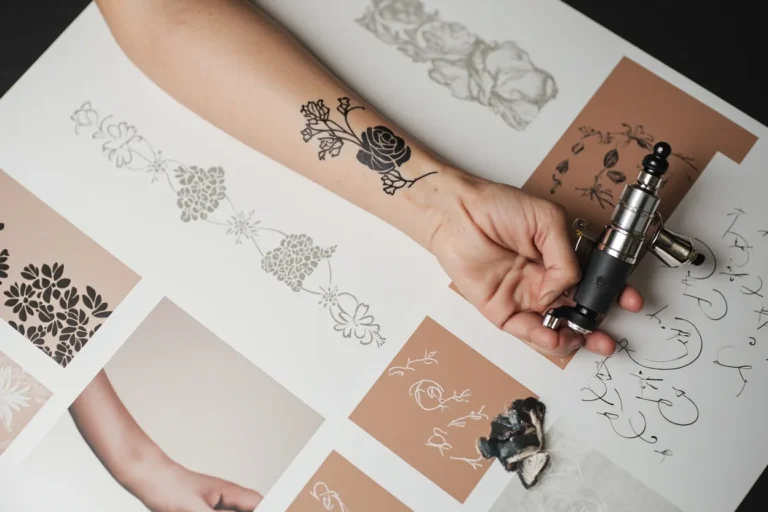
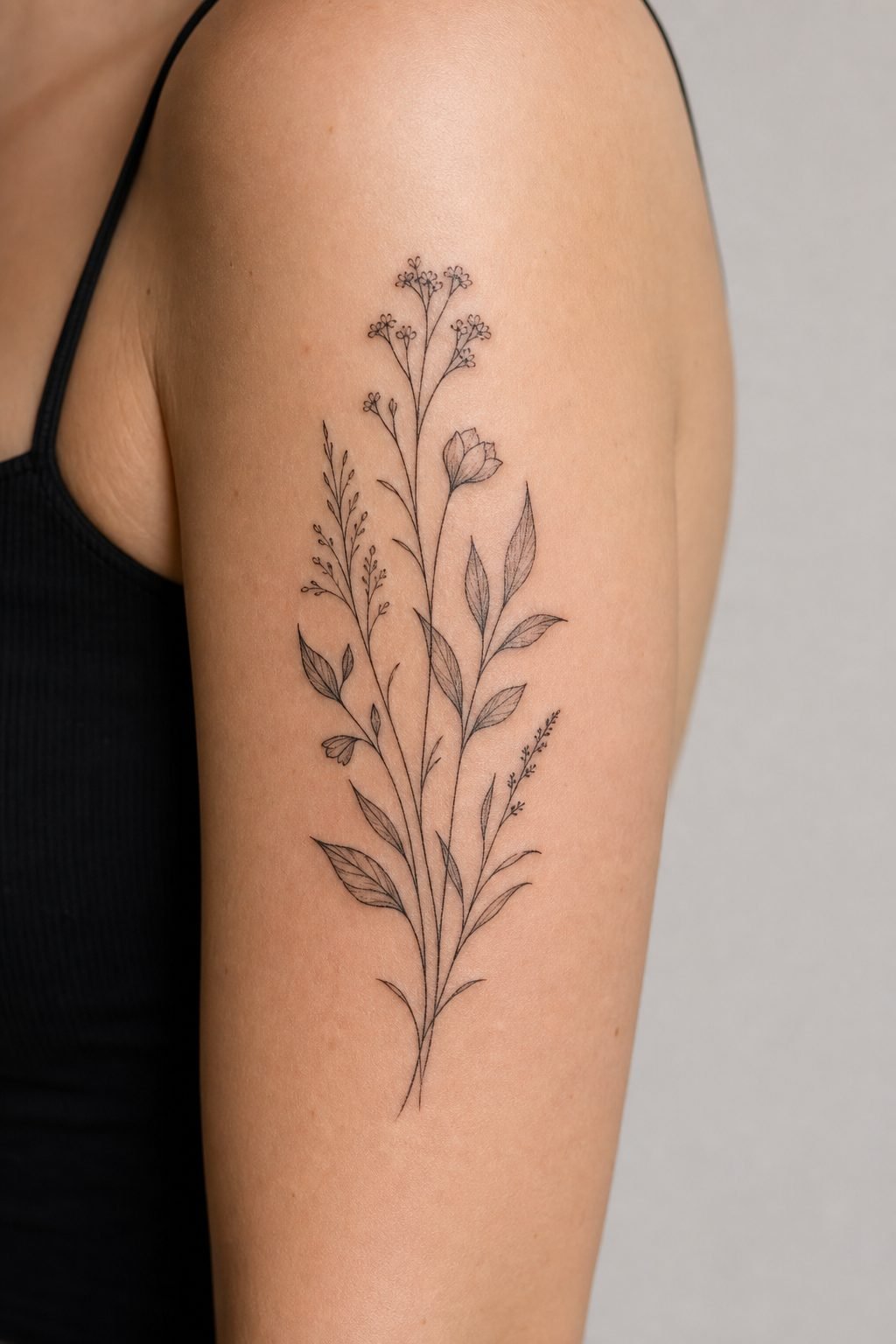
Single-needle and fine-line botanical work has dominated Instagram feeds for good reason. The technique captures the delicate architecture of petals, stems, and leaf veins with hair-thin precision. Peony outlines, pressed-fern reproductions, and wildflower sprigs all thrive in this approach. The trade-off: fine lines spread over time. On high-movement areas like wrists or ankles, expect detail softening within five to eight years. For longevity, keep the design compact and avoid shading that relies on extremely tight dotwork.
Black and Gray Realism
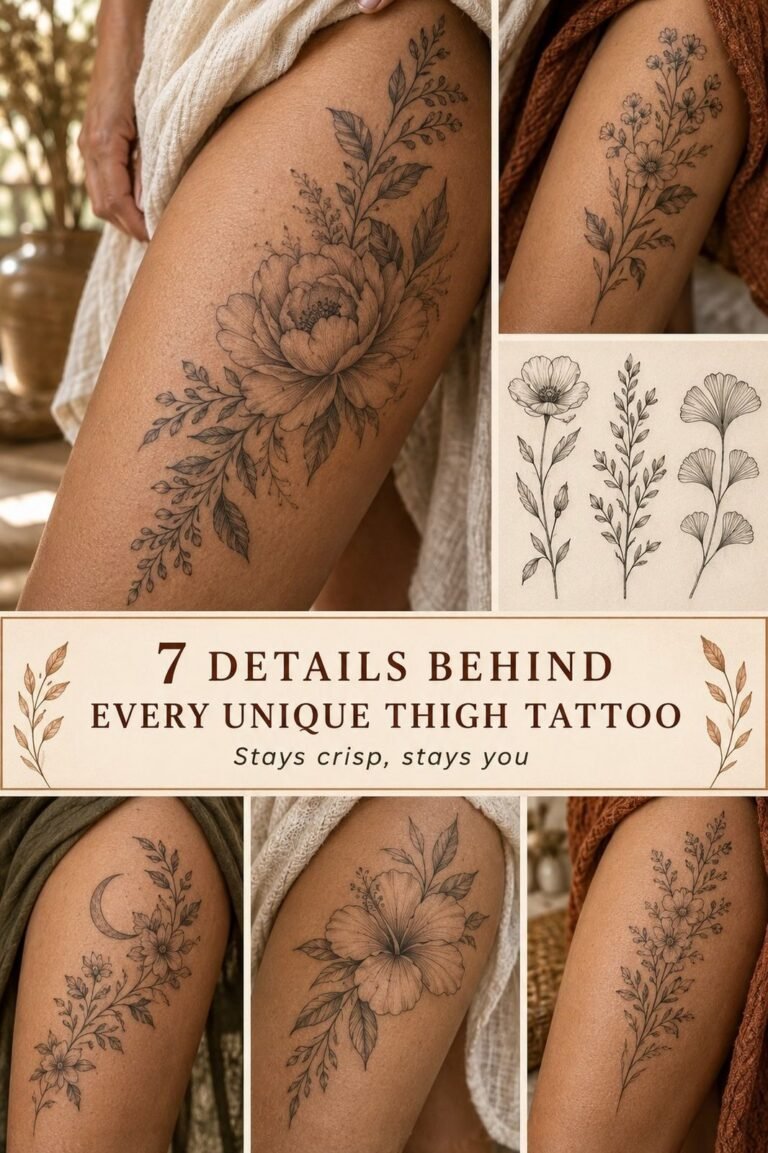
Photographic botanicals in grayscale demand substantial skin real estate. A rose rendered in smooth black-and-gray gradients needs enough surface area for the tones to breathe, think outer thigh, upper arm, or ribs. The style excels at capturing texture: velvet petal surfaces, thorn ridges, the waxy sheen of succulents. Healing matters enormously here. Heavy saturation means longer recovery, and scabbing can pull out subtle mid-tones if the aftercare slips.
Traditional and Neo-Traditional
Bold outlines, limited color palettes, and stylized forms characterize these approaches. Traditional botanicals, roses, chrysanthemums, lotuses, read instantly from across a room. The simplified shapes hold up decades longer than photorealistic alternatives. Neo-traditional work introduces more naturalistic color gradation while keeping the strong graphic structure. Both styles suit smaller scales and trickier placements better than realism does.
Watercolor
Color splashed behind or integrated into botanical outlines mimics the fluidity of actual watercolor painting. On skin, this translates to diffuse, unoutlined pigment that fades unpredictably. Blues and purples tend to hold; yellows and pale pinks often disappear within a few years. The style works best as a secondary element, color backing a structurally sound linework design, rather than as the primary definition of the form itself.
Design Ideas
Specific botanical subjects carry built-in visual advantages:
- Peonies and roses: Layered petals create natural depth even in simple line drawings. The spiral structure guides the eye inward.
- Ferns and eucalyptus: Fractal leaf patterns suit wrapping compositions around arms or legs. Negative space between fronds prevents solid black overload.
- Botanical mandalas: Radial symmetry of flowers like dahlias or sunflowers translates to geometric compositions that center well on chests, backs, or thighs.
- Pressed-flower arrangements: Flat, scattered compositions reference herbarium specimens. Multiple small elements allow for future additions.
- Poison and medicinal plants: Hemlock, foxglove, or lavender carry specific associations without requiring text. The visual contrast between beautiful form and toxic function adds narrative tension.
Compositionally, botanicals work as standalone pieces, symmetrical pairs, or flowing extensions. A single stem trailing from wrist toward elbow reads differently than a dense bouquet locked in one zone. Consider growth direction: roots down, blooms up, or stems following the limb’s natural line.
Best Placements
High-Visibility Areas
Forearms, collarbones, and shoulders offer constant display but also constant sun exposure. Botanicals here need simpler structures to age gracefully, think bold outlines over delicate stippling. The forearm’s flat planes suit vertical stem compositions; the curve of the shoulder cap favors rounded flower forms.
Concealed or Partially Hidden
Ribs, hips, and upper thighs provide larger canvases with less daily wear. These areas accommodate detailed realism and extended compositions: vine wraps, full bouquets, or botanical scenes with background elements. Pain level runs higher on bone-adjacent skin, and healing requires clothing that will not rub.
Hands, Feet, and Neck
These placements present specific challenges. Hand skin regenerates rapidly; fine-line botanicals here often need touch-ups within two years. Feet face similar turnover plus friction from footwear. Small, bold traditional botanicals fare better than detailed work. Neck placement remains socially visible and professionally consequential, choose only if you have accepted the permanent visibility.
Color Choices
Botanical color palettes range from strictly monochrome to full botanical accuracy. Each approach has distinct aging behavior:
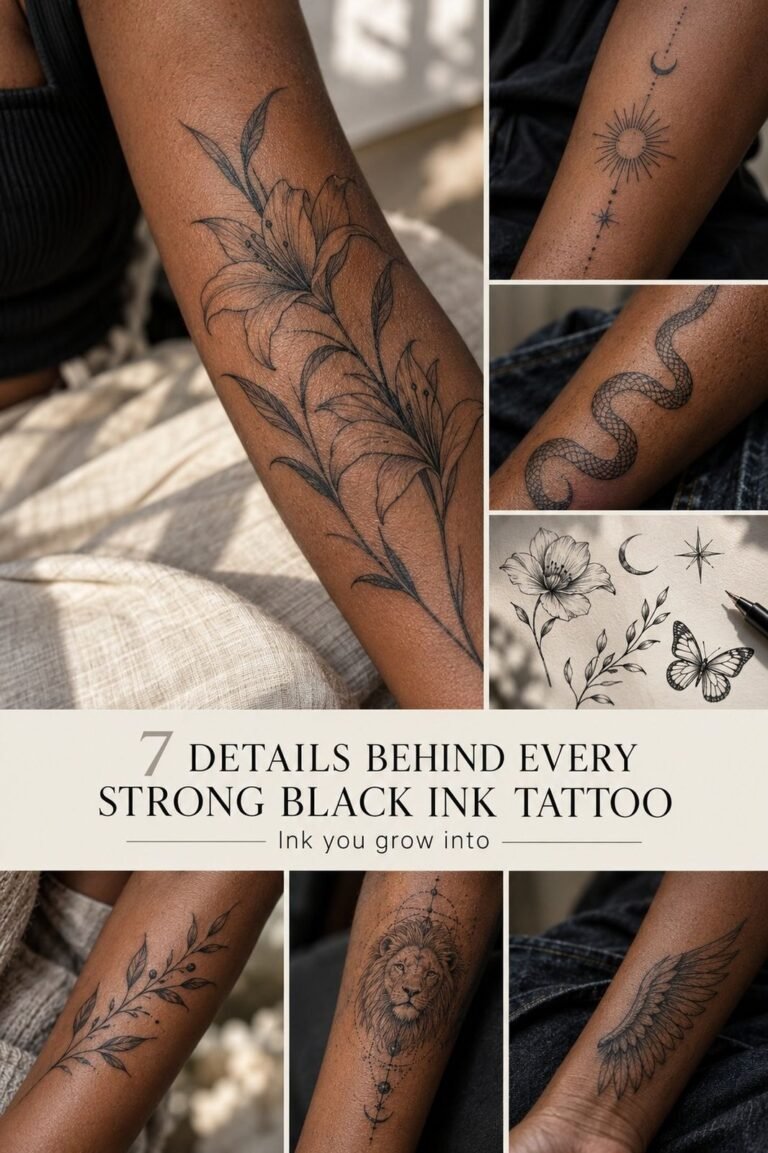
- Black only: Highest contrast, slowest fading. A black peony on fair skin retains definition longer than any colored equivalent. The limitation forces attention to structure and negative space.
- Black with selective color: One accent hue, red rose petals, green stems against grayscale blooms, creates focal points without full color commitment. The accent color will fade faster than black, creating a planned evolution.
- Full color: Saturated greens, deep reds, and golden yellows replicate living plants most directly. Greens notoriously shift toward blue as they age; yellows often disappear entirely. Request your artist show healed examples of their specific green mixes.
- White ink: Marketed for highlighting botanicals, white typically yellows or disappears on most skin tones. It rarely achieves the luminous effect seen in fresh photos.
Skin undertone fundamentally alters color appearance. Cool undertones make reds pop and can turn warm greens muddy; warm undertones enhance golds and yellows but may dull blue-based purples. Test color choices against your actual skin, not against digital mockups.
Tips for Choosing
Reference material matters more than most clients initially realize. Bring photographs of living plants, not other tattoos. Second-generation tattoo references already contain artistic decisions that may not suit your goals. Original botanical photography preserves the specific proportions, color variations, and growth stages you actually respond to.
Seasonal specificity adds depth. A cherry blossom in full bloom reads differently than one with petals falling. A sunflower facing upward versus bowing under its own weight. These choices do not require explanation to viewers but reward your own attention.
Scale realistically. A design that looks balanced on paper at six inches may overwhelm a narrow wrist or underwhelm a broad back. Your artist can adapt proportions, but starting with appropriate dimensions prevents disappointment.
Consider the long-term relationship. Botanicals accommodate cover-ups and additions more readily than portraits or lettering. A vine can extend; a bouquet can gain elements. Choosing a composition with natural extension points preserves future options.
Research your artist’s healed work specifically. Fresh botanical tattoos look sharp; healed ones reveal whether the artist understands how much saturation actually stays in skin. Ask to see pieces from one, three, and five years prior if possible.
Final Thoughts
Botanical tattoos succeed when the plant’s inherent structure meets the body’s specific terrain. The best designs do not fight anatomy, they follow it. A stem tracing the forearm’s length, a bloom settling into the curve of a hip, leaves framing a collarbone’s edge. The subject matter is ancient, but the execution remains personal: your chosen plant, your specific placement, your tolerance for detail versus boldness, color versus black. Choose based on how you will live with the piece, not how it photographs fresh.
Frequently Asked Questions
How well do fine-line botanical tattoos hold up over time?
Fine-line work softens and spreads as skin ages. On low-friction areas like the upper arm or ribs, delicate botanicals can retain character for years. On hands, wrists, or feet, expect significant blurring within five years. Compensate with slightly bolder lines than the reference image suggests, or accept future touch-ups as part of the piece’s life.
What’s the best way to combine multiple plants in one tattoo?
Choose species with complementary growth habits, trailing vines with upright blooms, or varied leaf shapes that create visual rhythm. Limit the palette to prevent muddiness: two or three plant types with shared color families read more cohesive than a botanical encyclopedia. Your artist can adjust scale so each element remains identifiable.
Do botanical tattoos work well for covering older tattoos?
Dense botanical compositions with layered petals or clustered leaves excel at cover-ups. Dark foliage and strategically placed black backgrounds obscure previous work more naturally than geometric designs, which require precise alignment. Roses, peonies, and deep forest arrangements offer built-in shadow areas that disguise older ink.
Should I get a botanical tattoo in color or black and gray?
Black and gray offers longevity and timelessness, particularly for detailed work. Color suits specific species identification, lavender needs purple, bloodroot needs red, and carries more immediate visual impact. If choosing color, commit to sun protection; UV exposure fades botanical pigments faster than black ink, turning saturated greens to murky blue-gray over time.
More Tattoo Ideas
- Colombia Tattoo Ideas
- Colombian Tattoo Ideas: Culture, Nature Symbolism
- Colored Small Tattoo Ideas
- Explore more