
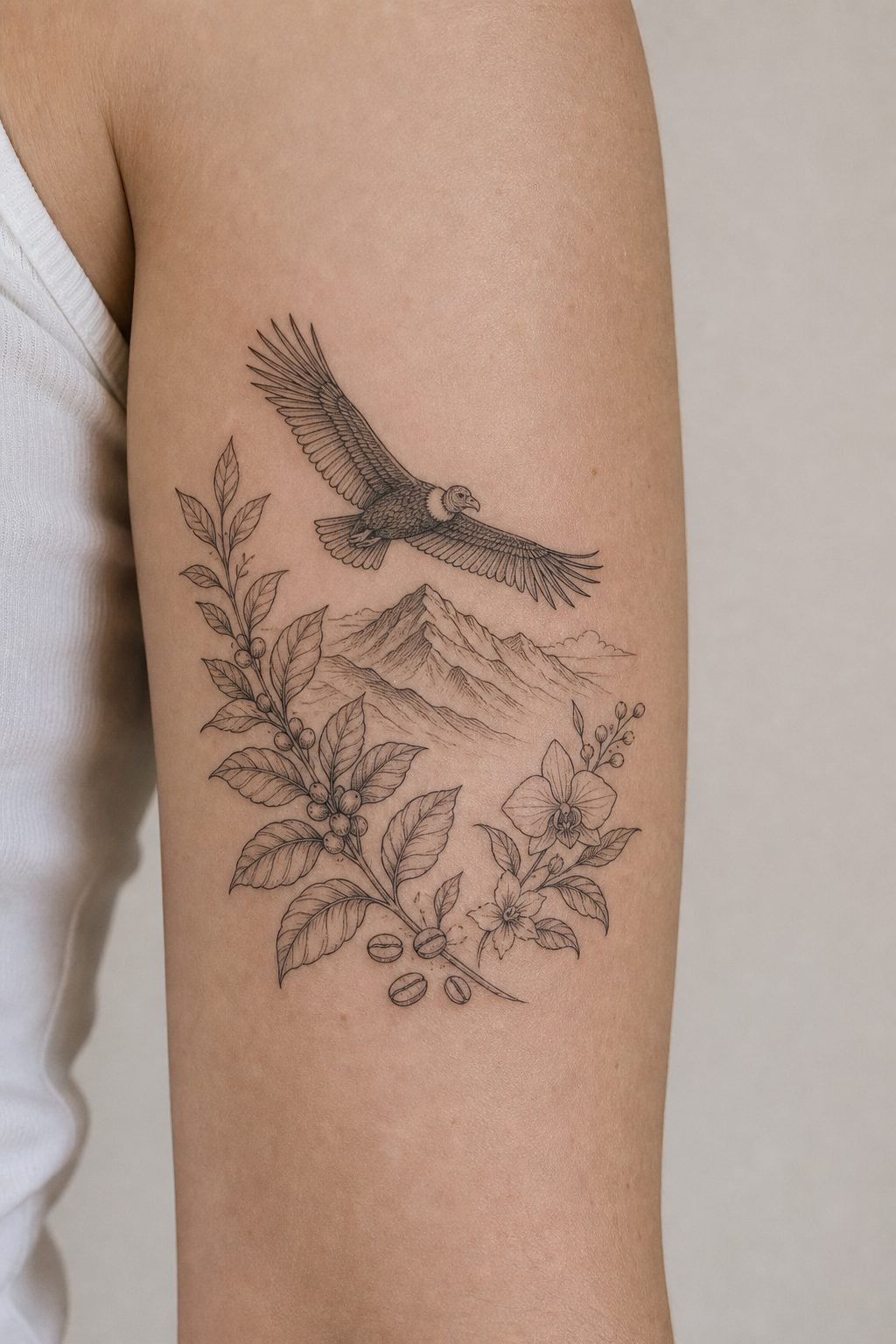
Colombian tattoo culture pulls from some of the most visually striking source material on the planet, emerald mountains, pre-Columbian goldwork, coffee slopes, and coastlines that shift from Caribbean blue to Pacific gray. The best Colombian-inspired tattoos don’t just slap a flag or map on skin; they translate that national and regional identity into something that works as body art. Here’s how to think through the design, placement, and execution so your piece holds up for decades.
Popular Styles That Suit Colombian Themes
Not every style handles Colombian subject matter equally well. The country’s visual identity is dense with detail, so picking the right approach matters.
Neotraditional and Traditional
These styles handle Colombian flora and fauna brilliantly. The thick black outlines hold contrast as skin ages, and the saturated color palette, emerald greens, sunflower yellows, deep reds, mirrors the natural brightness of the country’s landscapes. Orchids, wax palms, and heliconia flowers translate cleanly into bold, readable designs that don’t blur into mush over time.
Black and Gray Realism
For architectural subjects or portraits, black and gray realism works well. Think colonial balconies in Cartagena, the stone terraces of Ciudad Perdida, or detailed renderings of pre-Columbian gold artifacts. The limitation here is that fine detail in realism can soften after five to ten years, especially on high-movement areas. Plan for touch-ups or scale the piece large enough that details have room to breathe.
Geometric and Dotwork
Indigenous patterns from the Kogi, Arhuaco, and other peoples of the Sierra Nevada de Santa Marta adapt naturally to geometric and dotwork styles. These designs carry cultural weight, so research matters, don’t copy sacred patterns without understanding their context. Many tattoo artists with Colombian roots collaborate with indigenous communities or stick to abstracted, respectful interpretations rather than direct replication.
Design Ideas with Real Visual Weight
Specificity separates memorable Colombian tattoos from generic ones. Here are directions that offer genuine substance:
- The wax palm (palma de cera): Colombia’s national tree, tallest palm species on Earth. Works as a vertical composition, forearm, ribcage, or outer calf. Silhouette versions read well; detailed versions with the Valle de Cocora mist behind them need space and a skilled artist.
- Pre-Columbian goldwork: Muisca raft of the El Dorado legend, tunjos (figurines), or masks. Gold ink exists but rarely looks convincing; better to render these in yellows and ochres against black, or go full black and gray for a sculptural effect.
- Coffee plant motifs: Leaves, berries, and branches. Less common than you might expect, which makes them distinctive. Best in color realism or neotraditional.
- Regional birds: The Andean condor, scarlet macaw, or various hummingbirds. The sword-billed hummingbird, with its disproportionate beak, makes an arresting image in profile.
- Cartagena’s architectural details: Wrought-iron balconies, bougainvillea, colonial doorways. These need an artist who understands perspective and how to flatten complex scenes into tattooable compositions.
- Coastal and river imagery: The Caño Cristales river with its endemic red Macarenia clavigera plants, or simple fishing boat silhouettes. The river’s colors are genuinely unique, no other place produces that exact visual.
Best Placements for Colombian Themes
Vertical subjects like palms and condors fit naturally on the forearm, outer calf, or side ribcage. These areas give the design height without forcing awkward wrapping.
High-Visibility vs. Personal Placement
Forearms and calves show easily, fine if your design is something you want to explain often. Upper arms, thighs, and upper back offer more privacy and larger canvas area for complex scenes like a full Caño Cristales landscape or a detailed gold artifact study.
Aging Considerations
Hand, foot, and finger tattoos fade fastest due to skin turnover and sun exposure. Colombian flag colors, especially yellows and lighter greens, disappear quickest in these spots. If you’re set on a small national symbol, the inner bicep or behind the ear holds ink better, though the latter limits detail severely.
Stomach and side pieces shift with weight change; linear designs like palm trunks can distort. Chest and back offer the most stable long-term surface for large compositions.
Color Choices: What Lasts vs. What Fades
Colombian imagery tempts you toward bright color, but not all pigments age equally.
- Yellows and light oranges: Fade to a pale, sometimes sickly tone within five years. Use them as accents, not dominant fields.
- Deep greens and forest tones: Hold remarkably well, especially in neotraditional work with strong black backing. Emerald and teal are safer than lime or chartreuse.
- Blues for water and sky: Navy and royal blue last; light sky blues often wash out to gray. In Caribbean coast scenes, consider deepening the water color rather than matching the exact tourist-photo turquoise.
- Reds and magentas: Moderate longevity. The Macarenia clavigera plants in Caño Cristales imagery need touch-ups every few years to stay vivid, or you can render them darker for longevity.
Black and gray with selective color accents often outlasts full-color pieces. A black palm silhouette with a single red orchid, or a grayscale colonial scene with one yellow window, can be more striking than full saturation, and requires far less maintenance.
Tips for Choosing Your Design
Start with what actually connects you to Colombia, not what looks coolest on Pinterest. Heritage, travel memories, family history, or even a specific food or smell, those anchors produce better tattoos than generic symbols.
Research Beyond Surface Imagery
Muisca and other indigenous imagery carries spiritual and cultural significance. If you’re not from that heritage, consult with Colombian artists or community members about respectful use. Some symbols are considered sacred and inappropriate for commercial tattoo application regardless of your intent.
Find an Artist Who Handles the Subject
Not every great tattooer works well with Colombian themes. Look for portfolios showing botanical accuracy, architectural detail, or the specific style you want. Colombian diaspora artists in Miami, New York, and Madrid often specialize in this work; some travel regularly to Colombia and understand the visual culture from lived experience.
Plan for the Long Term
That intricate gold mask with twenty tiny dots and fine lines? In ten years, those dots merge and lines blur. Simplify the concept, increase the scale, or accept that you’ll need periodic refresh sessions. Better to have a bold, readable design at year fifteen than a perfect rendering that turns to mush by year eight.
Final Thoughts
Colombian tattoo ideas offer extraordinary range, rainforest density, Andean verticality, coastal openness, urban colonial texture. The danger is choosing too many elements and creating visual noise. Pick one anchor: a single species, one place, one artifact type. Let your artist develop that into something that works on skin rather than paper. The best Colombian tattoos feel specific, like someone actually stood in that valley or held that piece of gold, rather than assembled clip art from a generic “Latin American” aesthetic. Take your time, research the cultural weight of what you’re borrowing, and commit to the maintenance that color and detail demand.
Frequently Asked Questions
Do Colombian flag tattoos hold up well over time?
Flag designs with fine stripes and small details tend to blur and fade unevenly. If you want flag elements, simplify to bold color blocks or integrate the colors into a larger design rather than replicating the flag exactly.
Is it okay to get indigenous Colombian patterns tattooed?
Some patterns are considered sacred by living communities. Research the specific pattern’s origin, and when possible, consult Colombian artists or community sources to ensure respectful use rather than appropriation.
What makes a wax palm tattoo visually successful?
The palm’s extreme height-to-width ratio needs vertical space, forearms, ribs, or calves work best. Silhouettes read immediately; detailed versions need an artist skilled in fine line work and enough skin real estate to prevent blurring.
How do I find a tattoo artist who specializes in Colombian themes?
Search portfolios for botanical accuracy, architectural detail, or specific Colombian imagery. Many skilled artists are based in Colombia’s major cities, Miami, or Madrid; some travel regularly between these locations.
More Tattoo Ideas
- Colored Small Tattoo Ideas
- Compass Tattoo Drawing Designs
- Cosmic Tattoo Ideas: Stars, Nebulas Beyond
- Explore more









