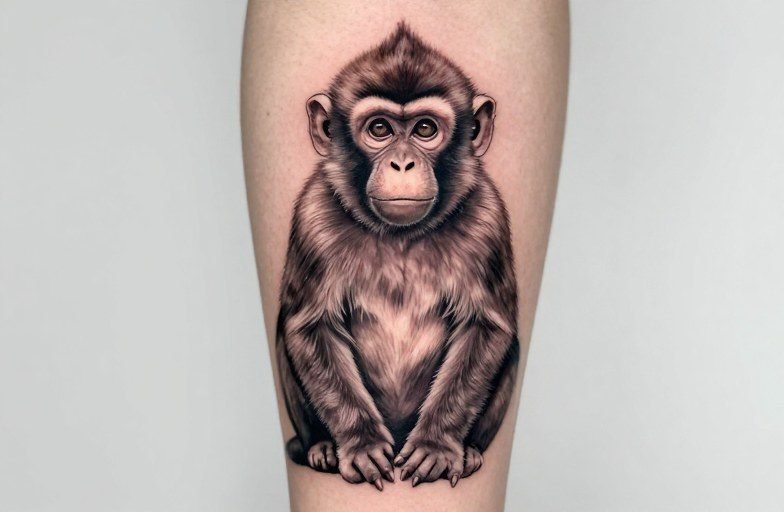
A monkey tattoo most commonly signals intelligence, adaptability, and a playful refusal to take life too seriously. Beyond the obvious mischief, the design carries weight across cultures as a symbol of problem-solving, social bonds, and the blurred line between human and animal nature. The specific meaning depends heavily on style, posture, and cultural reference, grinning cartoon versus solemn Japanese sarumawashi performer, spider monkey in jungle canopy versus three wise monkeys in deliberate silence.
Color vs Black and Grey
Color brings out the natural spectacle of monkey species, vervet greens, mandrill blues and scarlets, golden snub-nose monkey amber. Bright color works best for New World species, cartoon or neo-traditional styles, and designs where the monkey’s flamboyance is the point. Solid saturation holds up on larger pieces with enough space for color to breathe; cramped color monkey tattoos often muddy within a few years as adjacent hues bleed together.
Black and Grey Realism
Black and grey excels for Japanese macaques in hot springs, chimpanzee portraits, or any design emphasizing texture and gravity. Fine fur detail renders more cleanly without color competing for attention. On medium to dark skin tones, black and grey typically ages more predictably than color, which can shift or dull in ways that distort the monkey’s expressive face.
Line Work and Limited Palette
- Single-needle fine line: trending for small monkey designs, but requires precise aftercare; fine fur lines blur faster than bold geometry
- Traditional bold line: American or Japanese traditional monkey tattoos hold their legibility for decades
- Dotwork/stipple: effective for creating tonal fur texture without shading wash
Mythology & Folklore
The monkey occupies complex territory in global stories, trickster, hero, fool, and sacred servant.
East Asian Traditions
Sun Wukong, the Monkey King of Journey to the West, remains one of the most tattooed monkey figures. His imagery carries specific attributes: the golden fillet, staff, and cloud-riding stance each signal different aspects of rebellion, loyalty, and transformation. Japanese folklore features the monkey as a guardian against demons, often paired with the dog and pheasant in the Momotaro legend. A monkey tattoo referencing these traditions carries narrative weight; a generic monkey does not.
African and Diasporic Figures
Anansi, though technically a spider, shares narrative space with monkey tricksters across West African and Caribbean storytelling. Monkey figures in these traditions emphasize verbal dexterity, survival through wit, and the subversion of power structures. Tattoos drawing on this lineage often incorporate specific regional patterns or storytelling motifs rather than naturalistic monkey portraits.
Who Chooses This Tattoo
The monkey appeals to distinct personalities and life stages. Parents sometimes choose it after a child’s birth in the Chinese zodiac Year of the Monkey, seeking a design that will age alongside their kid’s baby photos. Others select it during career transitions, monkey as clever adapter, not brute force climber. The design also attracts people in creative fields who identify with the monkey’s reputation for improvisation and social intelligence.
Placement patterns reveal intent. Small monkeys behind the ear or on the wrist suggest personal talisman, private humor. Chest and back pieces tend toward narrative or cultural homage. Forearm monkeys often face outward, engaging the viewer; thigh or rib placements typically face inward, for the wearer’s own reference.
Personal & Modern Meanings
Contemporary monkey tattoos frequently detach from traditional symbolism and operate as personal shorthand.
The “Don’t Overthink It” Monkey
Some choose the monkey as deliberate counterweight to their own tendency toward analysis paralysis, the monkey as permission to act, to play, to make the socially risky choice. This meaning works best when the design itself conveys motion: swinging, leaping, mid-grimace. Static, contemplative monkey portraits undermine the intended message.
Group and Pair Tattoos
Monkey designs suit sibling sets, friend groups, or couples with established banter dynamics. The three wise monkeys (see no evil, hear no evil, speak no evil) split across three people remain popular, though the visual pun requires all participants to maintain their tattoos. Single monkeys in matching poses across multiple bodies create subtler connection without the narrative burden.
History & Cultural Roots
Monkey imagery in body art predates modern tattooing by millennia. In Japan, the monkey’s role in pest control and performance gave it practical cultural presence before it entered decorative art. The sarumawashi monkey trainers of the Edo period created visual iconography that persists in Japanese tattooing: trained monkey in coat and cap, sometimes with collecting bowl.
European colonial encounters with primates generated a different visual tradition, monkey as exotic spectacle, often depicted in human clothing to emphasize perceived resemblance. This imagery carries complicated baggage now; modern tattoos referencing it require conscious engagement with that history rather than naive reproduction.
In South and Southeast Asian temple art, monkey warriors and attendants appear in stone and pigment traditions that inform contemporary tattoo references. Hanuman imagery in Hindu contexts specifically demands respectful handling, tattoo placement and treatment carry religious implications for observant practitioners.
Similar & Related Symbols
Monkey tattoos frequently combine with or substitute for related imagery.
- Apes vs monkeys: Chimpanzee and gorilla designs emphasize raw strength, social complexity, and conservation awareness; the tailless form changes the silhouette and symbolic register
- Human-animal hybrids: Monkey figures in human clothing or posture draw on satirical traditions, sometimes commenting on social pretension
- Jungle compositions: Monkey paired with specific flora, banana leaf, fig, jungle canopy, anchors the design ecologically and visually
- Skull and monkey: Memento mori variant, often linked to the monkey’s traditional role as death’s companion in certain European imagery
The raven, fox, and coyote share the monkey’s trickster territory; some wearers choose between them based on aesthetic preference or specific cultural resonance. The monkey distinguishes itself through physical expressiveness, grinning, gesturing, visibly reacting, in ways that more reserved trickster animals do not.
Before You Decide
Monkey faces age poorly if rendered too small or too detailed. The expressive features that make the design compelling, wrinkled brow, mobile lips, bright eyes, blur together when compressed below approximately three inches. For smaller tattoos, consider the monkey’s silhouette or a stylized partial face rather than full realism.
Research your specific reference. A Japanese macaque in hot springs carries different weight than a capuchin in organ-grinder costume. The monkey’s posture, submissive, dominant, playful, threatening, communicates faster than any added symbolic element. A monkey covering its eyes, ears, or mouth references the three wise monkeys tradition whether you intend it or not; be prepared for that reading.
Finally, consider the monkey’s social reputation in your specific context. In some professional environments, the monkey carries connotations of mockery or unseriousness that may not align with how you want to be perceived. The tattoo’s placement controls this: visible versus concealed, large versus small, realistic versus cartoon all shift how the design reads to others and to yourself over time.
Frequently Asked Questions
Does a monkey tattoo have negative meanings in any cultures?
In some European traditions, the monkey symbolized foolish imitation and was used in racist caricature, which modern wearers should understand before choosing historical references. In Hindu contexts, Hanuman imagery specifically requires respectful placement and treatment.
What’s the best placement for a monkey tattoo to keep the details sharp?
The upper arm, outer thigh, and upper back provide enough flat surface area for facial details to age cleanly. Avoid fingers, feet, and areas where skin stretches or rubs frequently, as monkey features blur faster than simpler geometric designs.
How do I choose between a realistic monkey and a traditional Japanese style?
Realistic portraits suit personal or memorial meanings and require skilled color or black and grey work. Japanese traditional monkey designs carry established cultural narrative weight and age more predictably through bold lines and limited color fields.
Can a monkey tattoo work as part of a larger sleeve or back piece?
Yes, monkeys integrate well into jungle sleeves, Japanese bodysuits, and zodiac-themed collections. The key is ensuring the monkey’s scale and style match surrounding elements, mixing photorealistic primates with traditional tigers typically creates visual dissonance.
Related Tattoo Meanings
- Khmer Tattoo Meaning: Sacred Symbols Modern Ink
- Peach Tattoo Meaning: Symbolism, Styles Placement
- Thai Yantra Tattoo Meaning: Sacred Geometry Spiritual Protection
- Explore more