
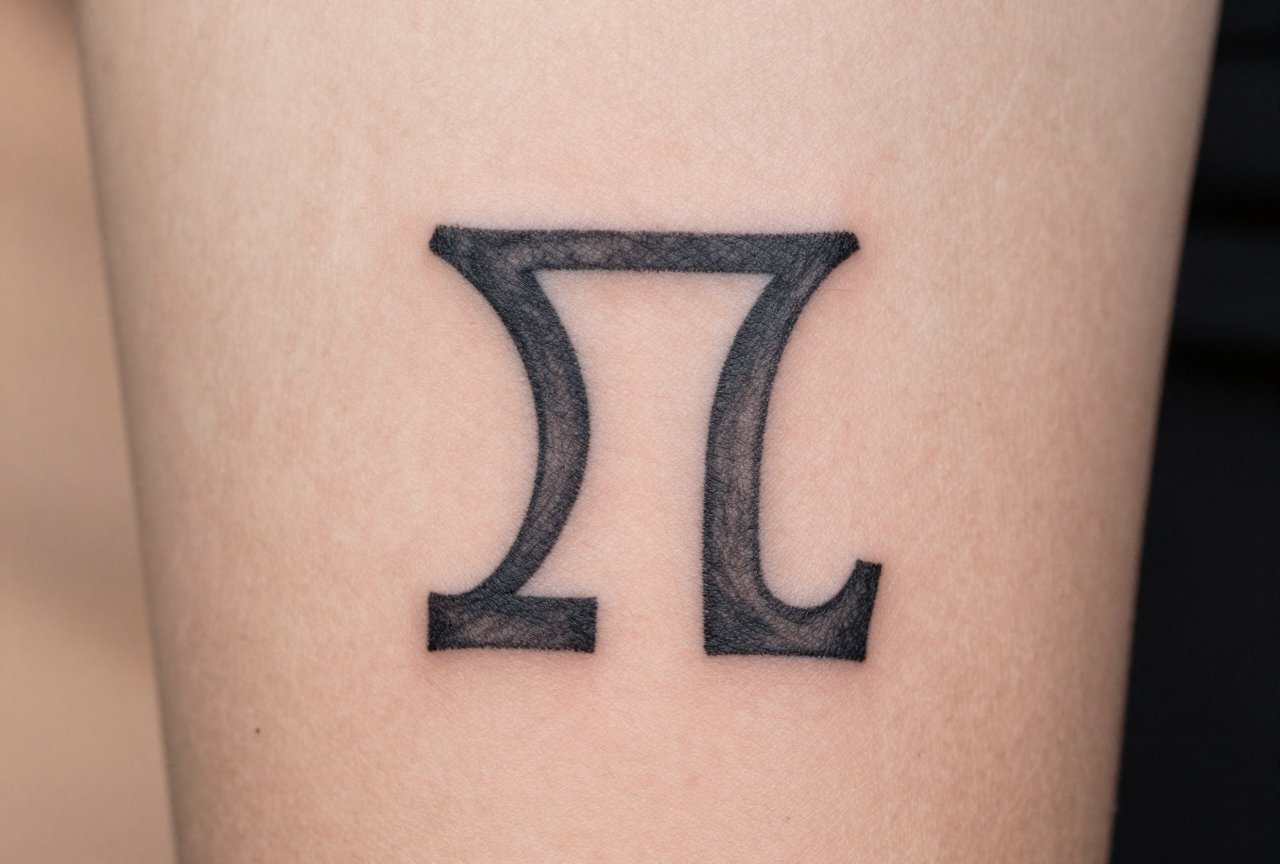
The alpha omega tattoo represents the beginning and the end, drawn from the first and last letters of the Greek alphabet. In Christian tradition, it symbolizes God’s eternal nature, existing before creation and beyond the end of time. But I’ve also tattooed this on atheists, philosophers, and people marking personal rebirths, because the concept of “everything from start to finish” resonates far beyond any single faith.
Symbolism & History
Religious Roots
The phrase comes from the Book of Revelation, where God declares himself the Alpha and the Omega. In my chair, I’ve heard clients explain this dozens of ways, some see it as divine sovereignty, others as comfort that something eternal exists beyond their daily struggles. The letters themselves carry weight: alpha (Α α) with its triangular stability, omega (Ω ω) with its open, circular closure. Together they form a visual bracket around existence itself.
Historically, these symbols appeared in early Christian catacombs, carved into stone alongside fish and anchors. They weren’t decorative flourishes, they were identity markers, whispered claims of belonging in dangerous times. That underground resilience still echoes when someone chooses this tattoo today.
Secular & Philosophical Meanings
Not everyone who sits for this design believes in God. I’ve tattooed alpha omega on a philosophy professor who studied Heraclitus and permanence, on a musician finishing her final album, on a man who simply said, “I’ve been through some shit and I’m still here.” The start-to-finish arc applies to projects, relationships, personal transformations. One client paired the letters with his daughter’s birthdate and his father’s death date, literal bookends of his life so far.
- Completion of a major life chapter
- Acceptance of mortality
- Commitment to seeing projects through
- Recognition of cyclical patterns, new beginnings after endings
Common Variations & Styles
Letterform Approaches
The simplest version places capital Alpha and Omega side by side, sometimes with a cross or chi-rho between them. I did one last year where the letters formed the arms of an ankh, clean black lines, no shading, will hold crisp for decades. Lowercase versions feel softer, more intimate, better suited for smaller placements. Greek uncial script, that rounded ancient style, adds historical gravitas but requires an artist who actually understands letter spacing; I’ve fixed too many cramped, illegible pieces from shops that treated Greek like English cursive.
Combined Imagery
Clients often weave in additional symbols. The most common pairing is with the lion and lamb, another Revelation reference about peace and power coexisting. I’ve also seen:
- Alpha and omega flanking a phoenix (death and rebirth)
- The letters dissolving into tree roots and branches (life cycles)
- Omega alone as a memorial piece, alpha added later when the client remarried
- Both letters rendered in negative space within a larger geometric design
Color choices matter practically. All-black ages best; red ink fades faster and can look muddy in five years. Gold or yellow highlights on black? Stunning fresh, but plan for touch-ups. We see this a lot in the shop, clients want that metallic pop without understanding how it settles.
Best Placements
Forearms dominate for visibility, you want to see your reminder, or you want others to ask. The inner forearm gives enough flat real estate for clean lettering without the distortion that comes across joints. I’ve placed alpha omega on wrists, but warn clients: the skin there moves constantly, heals tricky, and small text blurs faster than you’d expect.
For larger pieces, the chest plate or upper back allows the letters to anchor compositionally while other elements radiate outward. One of my favorite pieces from last year: alpha on the left shoulder, omega on the right, connected by a spine of script running down the back. Took three sessions. Healed beautifully because he followed aftercare religiously.
Smaller placements, behind the ear, along the collarbone, on the ankle, work for minimalist designs but sacrifice legibility. I tell clients straight: if you want this readable at twenty years, give it space. Two inches minimum for capital Greek letters, more if you’re adding ornamentation.
Who Chooses This Tattoo / Personal Meanings
Faith Journeys
Devout Christians often arrive with specific scripture in mind, sometimes bringing printed verses, sometimes just conviction in their voice. The tattoo becomes external testimony, a permanent amen. I’ve noticed a subset, former believers returning to faith, who choose this as reclamation, marking a prodigal return. Their sessions run longer because we talk more, the needle work punctuating stories of loss and rediscovery.
Life Transitions
Cancer survivors. Divorcees starting over. Recovering addicts celebrating anniversaries. The alpha omega frame contains their specific narrative: there was a before, there is an after, and they endured the middle. One woman in my chair had survived two strokes; her omega was deliberately imperfect, hand-drawn wobble, because “the end isn’t supposed to look machine-perfect.” We see this a lot, people wanting the concept more than the polished execution, and the best artists know when roughness serves meaning.
Artistic & Intellectual Appeal
Some simply love Greek aesthetics, the angular alpha against the curved omega, the balance of opposites. Graphic designers. Architects. People who think in visual systems. They often request precise geometric construction, golden ratio spacing, and I oblige with rulers and calipers because the satisfaction of mathematical tattooing is its own reward.
Similar Symbols
Clients sometimes arrive uncertain, weighing alternatives. The ouroboros, snake eating its tail, covers similar cyclical ground but without the Abrahamic baggage. The infinity symbol feels lighter, more romantic, less existential. The phrase “carpe diem” pushes toward action rather than acceptance. I had a client choose alpha omega over memento mori because he wanted the full arc, not just the reminder of death; another rejected it for exactly that reason, wanting something less “churchy.”
The chi-rho (XP) overlaps heavily in Christian symbolism but reads more specifically Catholic to many viewers. Ichthys, the fish, has been co-opted by bumper stickers and political movements. Alpha omega remains relatively unclaimed by contemporary culture wars, still readable across denominations, still mysterious enough to prompt genuine conversation rather than assumption.
Final Thoughts
After fifteen years in shops, I think what draws people to alpha omega is the same thing that makes it endure: it’s a container. You pour your specific meaning into established form. The beginning and the end, of what? That’s yours to answer. The tattoo doesn’t preach; it invites.
If you’re considering this design, spend time with the letters themselves. Draw them. Feel how alpha’s sharp angles contrast omega’s flowing curves. That tension is the point. Find an artist who respects the typography, who won’t just slap on a font but will construct the forms with intention. And know that whatever you’re bracketing, faith, love, survival, simple human persistence, this symbol has held similar weight for two thousand years. It can hold yours too.
Frequently Asked Questions
Does an alpha omega tattoo have to be religious?
Not at all. While the symbol originates in Christian scripture, I’ve tattooed it on people who simply connect with the concept of life’s full cycle, beginnings, endings, and everything between. Your personal meaning matters more than doctrinal alignment.
How big should the letters be for them to stay readable?
For capital Greek letters, I recommend at least two inches in height. Smaller than that, and the fine details of alpha’s peak and omega’s loops blur together within a few years, especially on mobile areas like wrists or fingers.
Can I combine alpha omega with other symbols without making it too cluttered?
Absolutely, but prioritize hierarchy. One client used the letters as anchors with a single flowing element between them, a vine, a script phrase, a small cross. The mistake is treating every element as equally important; let the letters breathe and dominate.
Do Greek letters age differently than English script tattoos?
They age similarly, but some Greek forms have finer details, alpha’s internal triangle, omega’s central loops, that blur faster than blockier English letters. Bold, clean lines with adequate spacing solve this. I always show clients healed photos of Greek work I’ve done so they understand the long-term look.
Related Tattoo Meanings
- Huda Love Island Tattoo Meaning: Symbolism Style Guide
- Chi Rho Tattoo Meaning: Faith, History, and Personal Devotion
- Vegvisir Tattoo Meaning: The Norse Compass Explained
- Explore more









