
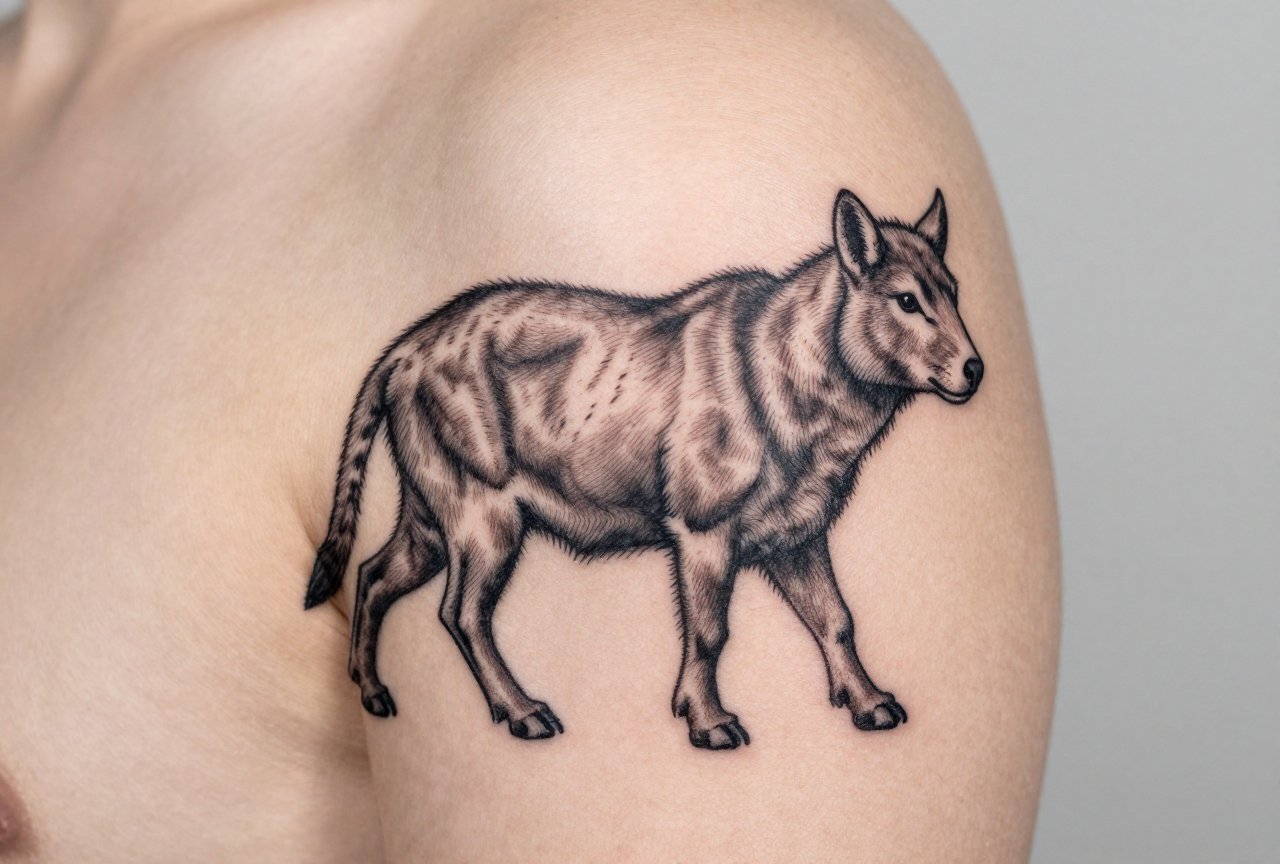
Animal tattoos are among the oldest forms of body marking humans have practiced. Cave paintings from over 40,000 years ago show animals as central subjects, and the leap from painting them on stone to marking them on skin is not a large one culturally. People have been using animal imagery to express identity, invoke protection, and claim qualities they admire for most of recorded human history. What changes is which animals matter in a given time and place, and what they mean when they appear on skin.
What Animal Tattoos Usually Mean
The meaning depends heavily on the specific animal, the style, and the person wearing it. Some broad patterns hold across most contexts:
- Wolf: Loyalty to a specific group or set of values, pack instinct, and the ability to operate alone when necessary. The lone wolf and the pack wolf carry genuinely different meanings. I ask clients which one they connect with before we sketch anything.
- Lion: Courage, leadership, and solar energy. In many African and Middle Eastern traditions, the lion is explicitly royal. In Western tattoo culture, it often appears as a more general strength symbol.
- Owl: Wisdom and the ability to see in the dark, literally and metaphorically. Across Greek, Japanese, and various indigenous traditions, owls are associated with knowledge and with death, sometimes both at once.
- Bear: Strength, protection, and introspection. The bear that hibernates and emerges connects to cycles of retreat and renewal. In some Native American traditions, the bear is specifically a healing animal.
- Snake: Renewal and primal energy. The snake sheds its skin and continues. In ancient medical traditions, the snake appears in healing imagery for this reason. It also carries warnings in several religious traditions, which some wearers consciously choose to reference.
- Butterfly: Change and the brevity of beauty. The metamorphosis from caterpillar to butterfly is genuinely strange, and the tattoo usually marks a period of personal change rather than the finished result.
- Elephant: Memory, family loyalty, and patience. The elephant’s long life and documented memory make it a natural symbol for honoring ancestors or marking long-term commitments.
- Raven: Intelligence, mystery, and the shadow self. In Norse mythology, ravens are Odin’s messengers and eyes. In many Pacific Northwest traditions, the raven is a trickster creator figure. The symbol carries more ambiguity than most.
Styles and What They Do
The style determines how the animal reads as much as the animal itself does. The same wolf in blackwork realism and in simple linework are making different statements.
Realistic black and gray
This is the dominant style for wolves, big cats, and birds of prey. Good realism captures fur texture, the quality of a gaze, the specific musculature of a particular animal. It demands skin real estate and an artist with strong foundational drawing skills. Ask for healed examples before committing, because fresh black and gray can look very different after the skin settles.
Traditional American and Japanese
Bold black outlines, limited saturated color, iconic poses. Traditional American animal tattoos read instantly from across a room and age well because the line weights were designed for durability. Japanese irezumi incorporates animals into larger compositions with waves, wind, and floral elements, usually pulling from Japanese folklore rather than generic symbolism. A tiger in Japanese tattooing references specific stories that a tiger in traditional American flash does not.
Geometric and dotwork
Animals rendered as patterns of lines, triangles, and stippled shading. The geometry imposes structure on the organic, which appeals to people drawn to the idea of the animal as a system rather than a living thing. These age reasonably well if the lines are clean and the dot density is consistent.
Minimalist line art
Single continuous lines or simple silhouettes. The animal is reduced to its most essential outline. These work at smaller scales and carry a modern quality. The simplicity means there is nowhere to hide a poor line, so find an artist whose line quality holds up at small sizes.
Watercolor
Flowing color behind or around the animal outline. Looks striking fresh. Blues and deep purples hold better over time than yellows and pale pinks, which often fade significantly within a few years. The style usually benefits from a solid underlying structure.
Placement
The placement should match the scale and energy of the animal you chose. Large predators in detailed realism need the back, chest, thigh, or upper arm. Compressing a realistic wolf face onto a wrist usually produces something that looks crowded rather than intense.
Animals that have a natural elongated shape, snakes and eels most obviously, wrap well around limbs. Birds in flight need horizontal space: shoulder blades, chest, or upper back where the wingspan can open fully. Portrait-style animals, a bear face, an owl stare, work on vertical canvases like the outer thigh or side of the torso.
Smaller designs work on wrists, ankles, and collarbones if the animal is simplified enough that the essential character holds at that scale. A realistic wolf face does not simplify well to two inches. A geometric bear does.
Who Gets Animal Tattoos and Why
The most common reason I hear is identification. People see qualities in the animal that they either already have or are working toward. Someone in recovery might choose a snake for its renewal symbolism. A person who has supported their family through a hard period might choose an elephant for its associations with memory and protection.
Spiritual practice drives another significant group. People who work with spirit animal traditions, either from their own cultural background or adopted practice, sometimes want a permanent marker of that relationship. The meaning here is usually more specific than generic symbolism, tied to a particular experience or sustained practice.
Pet memorials are more common than most people expect. Realistic portraits of dogs, cats, horses, sometimes birds or reptiles. These carry a different kind of weight, not symbolic meaning but specific love for a specific animal. I approach these consultations differently because the goal is fidelity to the actual animal rather than symbolic resonance.
Environmental connection and advocacy show up too. Endangered species chosen specifically to honor what is at risk. This is tattoo as statement rather than personal marker, and it tends to look best when the design is strong enough to carry the weight of that intention on its own.
Related Designs
- Mythological animals: Dragons, phoenixes, griffins. Animal symbolism extended into the supernatural. Different visual register, more explicitly archetypal.
- Nature and landscape tattoos: The animal within its environment. Changes the emotional tone from emblematic to narrative.
- Paw prints and feathers: Abstracted animal references. Quieter, often used in memorial contexts where the literal animal image feels too direct.
- Zodiac animals: Chinese and other astrological systems tie birth dates to specific animals. These carry their own symbolic traditions and often appear as either the full animal or its corresponding constellation.
Final Thoughts
An animal tattoo works best when you know why that specific animal. Not just that you like wolves or that owls are cool, but what in the wolf’s actual behavior or mythology speaks to something in your life. The people who have thought that through sit better, ask better questions, and end up with work that holds its meaning over the long term.
Bring your artist a reason, not just a reference image. What you connect with in the animal shapes the design choices more than any Pinterest board does.
Frequently Asked Questions
Can any animal work as a tattoo or are some better suited than others?
Any animal can work. The question is whether the design translates well to skin, whether the lines and shapes hold at the size you want, and whether your artist has done similar work before. Unusual animals, axolotls, eels, tardigrades, can make for striking tattoos if the artist can figure out how to render the essential character of the animal at tattoo scale.
Should I get an animal that connects to my heritage?
It often produces the most meaningful work. Celtic animal imagery for someone with Celtic roots, Japanese animal motifs for someone with that background, carries a different weight than choosing by aesthetics alone. That said, it is not required, and connection to the animal’s symbolism can come from many different directions.
How do I make sure a realistic animal portrait ages well?
Choose an artist who specializes in black and gray realism and ask to see work that is at least five years old. Look for whether the contrast held, whether the midtones stayed differentiated, whether the fine detail remained readable. Avoid going too small. Realistic animal portraits need enough space for the tonal range to work properly.
Is it better to get an animal I identify with now or one I aspire to embody?
Either works. Some people choose an animal that mirrors who they already are as a form of recognition. Others choose one that represents who they want to become, wearing the quality as an intention. Both are legitimate reasons to sit in the chair.









