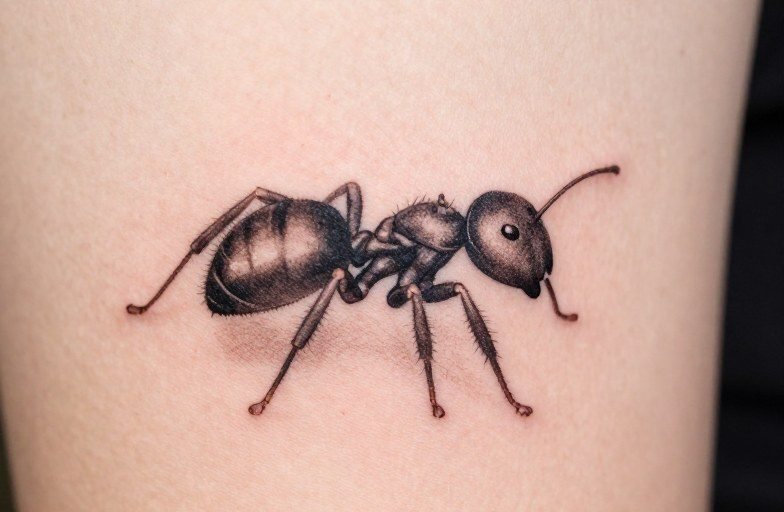
An ant tattoo typically carries meanings of hard work, persistence, teamwork, and quiet resilience. The symbolism draws from observable ant behavior, carrying loads many times their body weight, building complex colonies through cooperation, and surviving in harsh conditions, rather than from any single cultural mythology. For most people choosing this design, it represents personal grit, loyalty to a group, or the value of small efforts compounded over time.
Symbolism & History
The ant’s symbolic weight comes from its biology and social structure, not from ancient legend. Unlike lions or eagles, ants carry meaning you can watch unfold in a backyard. This grounded, observable quality makes the tattoo appeal to people who distrust grandiose symbolism.
Core Meanings
- Persistence: Ants don’t abandon tasks. The image suits people who’ve pushed through long struggles, recovery, career building, caregiving, where progress came slow and steady.
- Collective effort: Colony success depends on individual sacrifice. The tattoo resonates with military veterans, team athletes, or anyone shaped by group endeavor.
- Humility: Small size, outsized impact. A quiet counter to tattoos that broadcast dominance or status.
- Preparation: The fable of the ant and grasshopper lingers in Western culture, linking ants to foresight and discipline.
Cultural Connections
Some trace ant symbolism to Native American traditions, often linked to patience and planning in certain Southwestern stories. In parts of African folklore, ants commonly associated with community organization and agricultural cycles. However, ant tattoos in modern Western shops rarely reference specific cultural frameworks, most wearers connect to the insect’s universal behavioral traits rather than inherited symbolism.
Common Variations & Styles
The ant’s simple anatomy, three body segments, six legs, antennae, lends itself to stark minimalism or surprising detail. Style choice dramatically changes how the tattoo reads and how it ages.
Single Ant vs. Colony Scenes
A lone ant, usually rendered small and precise, emphasizes individual endurance. Common placements: wrist inner edge, behind the ear, collarbone. These work best at 1-2 inches maximum; below that, leg detail blurs within 2-3 years.
Multiple ants or trail formations shift meaning toward teamwork and connection. These compositions need more space, forearm, calf, rib side, to read as movement rather than scattered dots. A trail wrapping a finger or circling an ankle risks looking like a smudged line as ink spreads.
Style Breakdown
- Fine line: Popular for single ants, but requires thickening the abdomen segment slightly or the tattoo disappears into skin texture within five years. Ask your artist to use 3RL or 5RL needles with deliberate, slightly heavier lines on the body core.
- Blackwork / solid black: High contrast, reads immediately from distance. Good for larger pieces, but ant legs in pure black can merge into a blob if overpacked. Negative-space leg definition helps.
- Dotwork / stipple: Mimics the ant’s segmented texture naturally. Time-intensive; stipple density must stay consistent or the gradient looks accidental.
- Realistic / macro: Close-up ant portraits showing mandible detail, eye facets, thorax hairs. These demand experienced artists and age poorly if over-detailed, microscopic textures blur while bold shapes hold.
- Geometric / abstract: Hexagon body segments, circuit-board patterns replacing legs. Appeals to tech workers and engineers; the ant becomes a symbol of systematic thinking.
Color Considerations
Most ant tattoos stay black and gray. Actual ant colors, fire ant reddish-browns, carpenter ant blacks, leafcutter greens, rarely appear unless the wearer has a specific species connection. Red ink in ant tattoos carries separate baggage: it fades fastest, often heals pinkish, and in some designs unintentionally suggests irritation or violence. If you want color, deep amber or sepia tones age more predictably than bright reds.
Best Placements
Ant tattoos succeed or fail based on scale and placement more than most designs. The subject’s small natural size tempts people to go too tiny, then regret it when details collapse.
- Forearm, outer: Ideal for single ants at 2-3 inches. Flat skin, easy to show or cover, enough space for leg definition to hold.
- Wrist, inner or side: Popular but risky. Constant movement and sun exposure fade ink faster. Keep it simple here, no antennae curls or fine leg hairs.
- Ankle / foot: Ant trail designs work wrapped around the ankle bone, but foot skin sheds and regenerates rapidly. Expect touch-ups every 2-3 years.
- Rib cage, side: Good for colony scenes with negative space. Painful placement; the ant’s small size doesn’t reduce session length proportionally if detail is high.
- Behind the ear: Trendy for tiny minimalist ants. Problematic long-term, hair products, sun, and the area’s natural oiliness degrade fine lines fast. Many artists refuse to place detail this small here.
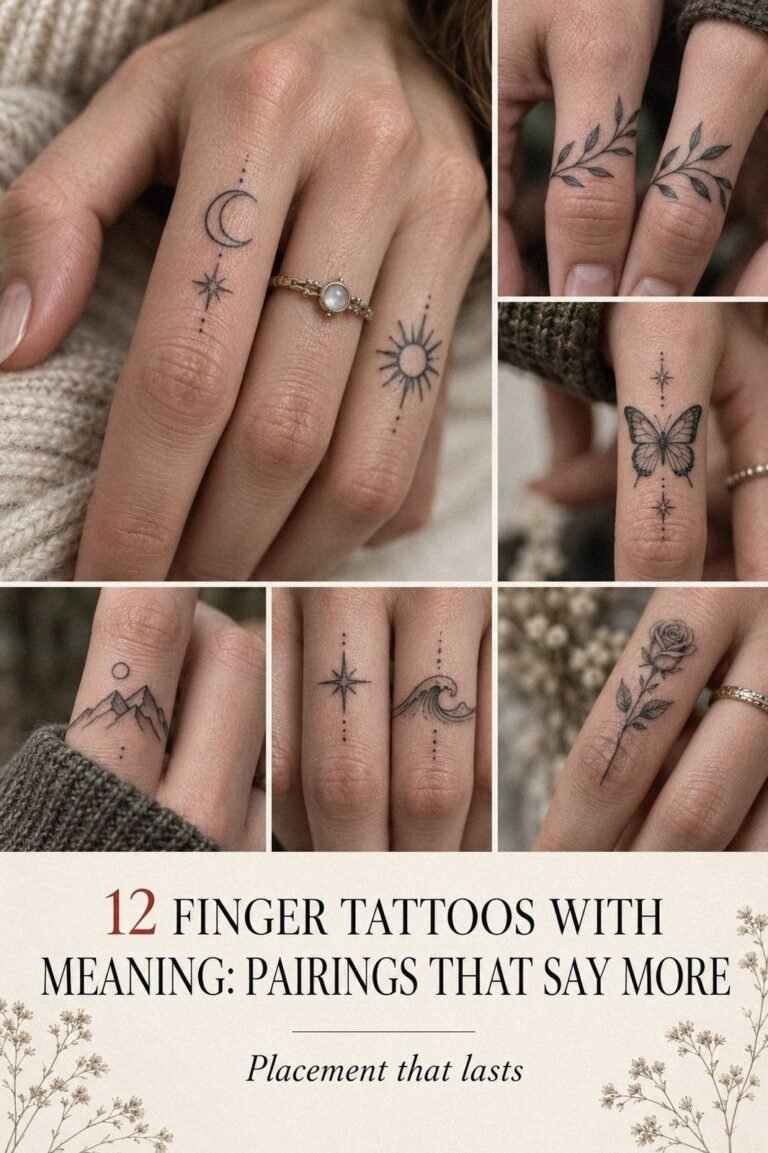
- Hand / fingers: Ants on fingers read as “crawling” which some find unsettling. Finger skin also sheds fastest of any tattoo location. Bold black silhouettes only; forget leg detail.
Aging reality: ant tattoos with legs thinner than 2mm will blur into stick-figure ambiguity within 5-7 years. Plan for this by building in slightly thicker central body mass and accepting that extreme realism has a shorter visual lifespan.
Who Chooses This Tattoo / Personal Meanings
There’s no single demographic for ant tattoos, but patterns emerge in shop conversations. The design attracts people who value function over display, who’ve learned that consistent small efforts outperform dramatic gestures.
- Recovery and mental health: The ant’s relentless, unglamorous progress mirrors daily management of depression, addiction, or chronic illness. Not a triumph narrative, more a commitment to keeping going.
- Work ethic and craft: Chefs, tradespeople, athletes in endurance sports. People whose identity ties to showing up reliably rather than occasional brilliance.
- Parenting: The colony-as-family metaphor, though biologically imprecise, resonates with parents of multiple children or those co-parenting in blended families.
- Minimalist aesthetic seekers: Some choose ants primarily for visual simplicity, then adopt the symbolic meaning afterward. The design works both ways.
The tattoo rarely functions as a warning or threat, unlike spiders or scorpions, ants don’t carry menace. This limits its appeal for people wanting edge, but expands it for those who find aggression in tattoo culture off-putting.
Similar Symbols
People considering ants often compare them to other small-creature tattoos with labor or community associations. Understanding the distinctions helps clarify whether an ant actually fits.
- Bees: Similar collective meaning, but bees carry more explicit environmental and feminine-coded associations (hive mother, queen dynamics). Bees also allow more color variation, yellows, ambers, florals. Ants stay more gender-neutral and visually stark.
- Beetles / scarabs: Egyptian revival and rebirth symbolism, often linked to ancient mythology. More ornate, less about daily grind. Beetle shells invite jewel-like color; ants rarely do.
- Spiders: Patience and trap-setting, but with darker, more solitary connotations. Web backgrounds demand more space and commitment than ant trails.
- Worker figures (hammer, anvil, tools): Human labor symbols, often more explicit about class or trade identity. Less adaptable to minimalist styles; ants compress the same meaning smaller.
Ants occupy a specific niche: collective effort without hierarchy emphasis, biological rather than mechanical, small scale rather than monumental. If that combination matches your intent, the ant works better than substitutes.
Final Thoughts
An ant tattoo succeeds when it embraces restraint. The subject’s power lies in proportion, tiny creature, massive implication. Overdetailing, oversizing, or overcomplicating with secondary symbols dilutes this. The best ant tattoos look like they could crawl; the worst look like diagrams.
Before committing, consider whether you want the ant as private reminder or visible statement. Single ants at wrist scale serve the first function; colony trails on forearms serve the second. Both work, but mixing the scale and visibility sends confused signals.
Healing follows standard protocol, but ant tattoos have one specific risk: leg lines scabbing thin and patchy. The extremities of any small tattoo lose ink easiest. Don’t panic if legs look slightly uneven at one month; assess at three months whether touch-up is needed. Most ant tattoos benefit from one light session at 6-8 weeks to reinforce lines that didn’t hold.
The meaning, ultimately, is built from behavior you can observe yourself. No mythology required. That accessibility, watching actual ants, connecting their movement to your own effort, gives the tattoo staying power that trendier designs lose when styles shift.
Frequently Asked Questions
Will a tiny ant tattoo on my wrist blur into a blob over time?
Yes, if it’s too small. Ant legs thinner than 2mm typically blur within 5-7 years. For wrist placement, keep the body core bold and simple, skip fine leg hairs, and expect a touch-up eventually. Inner wrist fades faster than outer due to movement and washing.
Do ant tattoos always have to be black?
No, but black and gray age most predictably. Red ant tattoos reference fire ants but fade to pinkish tones quickly. Deep amber or sepia works better if you want warmth without the maintenance headache of bright colors.
What’s the difference between an ant trail and a single ant in meaning?
A single ant emphasizes personal persistence and individual effort. Multiple ants or a trail shift meaning toward teamwork, community, and collective progress. The visual difference is small but the symbolic emphasis changes significantly.
Are ant tattoos painful compared to other small designs?
Pain depends on placement, not the design itself. Ants on bone-heavy areas like wrist, ankle, or ribs hurt more than fleshy forearms. The tattoo’s small size doesn’t necessarily mean a short session if you choose detailed dotwork or realism.
Related Tattoo Meanings
- Antler Tattoo Meaning: Nature, Strength Renewal
- Apollo Tattoo Meaning: Sun, Music, and Archery Symbolism
- Apple Tattoo Meaning: Symbolism, Styles Placement
- Explore more