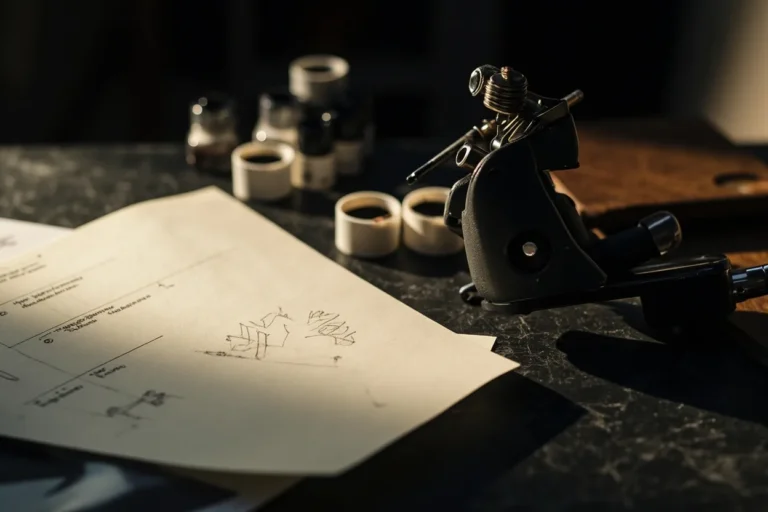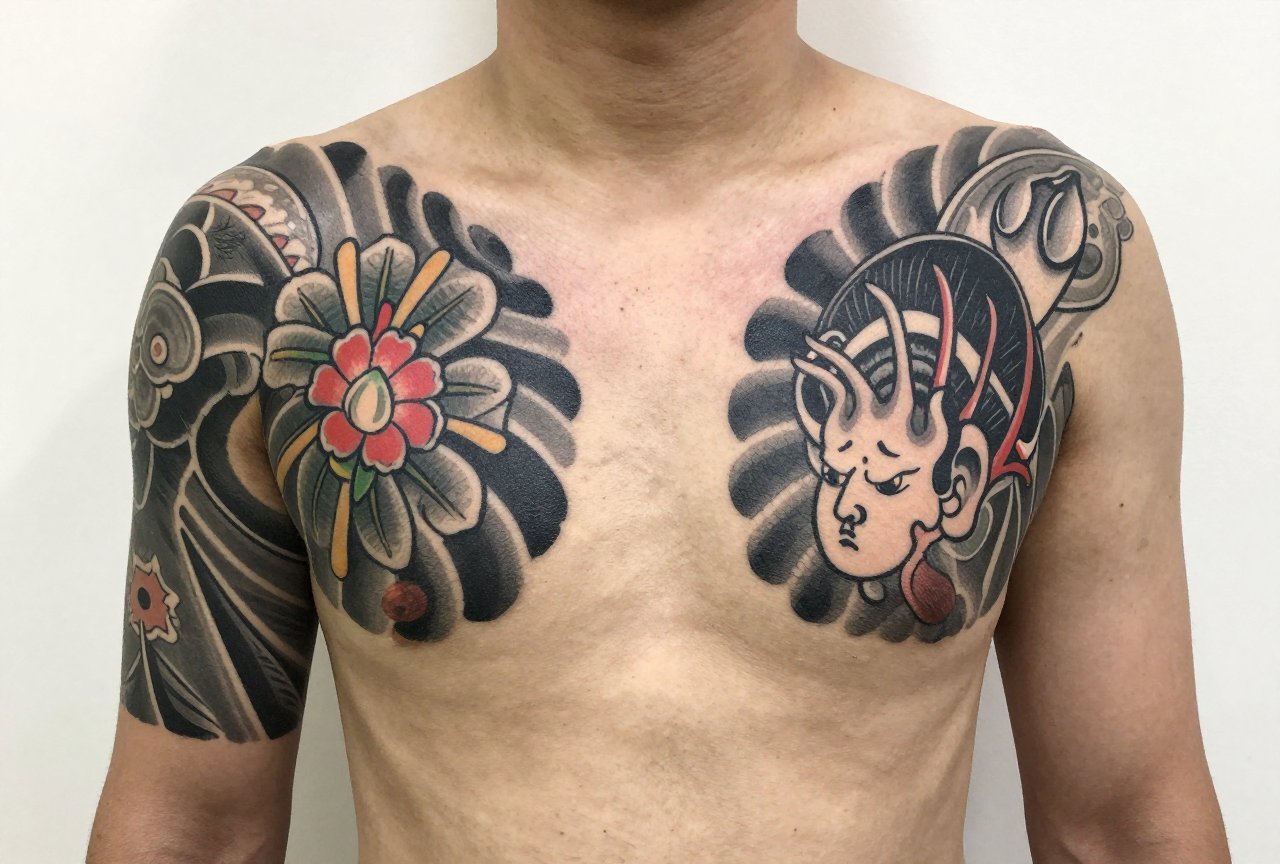
When someone sits in my chair and says “I want Japanese,” I always pause. That word covers a lot of ground. There’s the bold, graphic irezumi born in Edo-period woodblock prints, the quieter tebori hand-poked tradition, and the modern fusion stuff that borrows the imagery without understanding the rules. Authentic Japanese tattooing isn’t just a visual style. It’s a system of composition, symbolism, and technical discipline that developed over centuries. I’ve watched clients bring in reference photos of full backs they’ve seen online, wanting that dense, flowing coverage, without realizing those pieces took two years and fifty sessions to build. This guide is what I tell those clients. No romanticizing, no bullshit. Just how it actually works on skin.
Origins & History
Japanese tattooing’s roots are older than most national tattoo traditions. We see evidence of tattooed figures in clay figurines from 10,000 BCE, but the recognizable style crystallized during the Edo period (1603-1868). That’s when woodblock printing exploded, and the same artists who carved ukiyo-e prints began applying their designs to skin. The term irezumi literally means “inserting ink,” and it originally carried heavy social stigma. It marked criminals, then later laborers, firemen, and eventually the yakuza. That criminal association led to tattooing being banned in 1872, which drove the practice underground and preserved its secretive, apprenticeship-based culture.
The Tebori Tradition
Tebori is hand-poking with a bundle of needles attached to a wooden or metal handle. I’ve watched a few masters work at conventions, and the rhythm is meditative. The artist dips, taps, dips, taps. No machine buzz. The skin takes the ink differently. Tebori tends to heal softer, with less of that hard machine edge, and the saturation can be incredibly deep because the artist is physically pushing each deposit. Most tebori practitioners in Japan still work by referral only. Outside Japan, a handful of artists have trained properly. I’ve never done tebori myself. I use machines. But I respect the hell out of anyone who has put in the years to learn it correctly.
From Underground to Global
The style traveled slowly. Sailors saw irezumi in port cities. Post-WWII, American servicemen in Japan came home with dragon sleeves. By the 1980s, Japanese tattooers like Horiyoshi III were gaining international recognition. Today, you’ll find Japanese-influenced work in nearly every major city, but authentic execution remains rare. The difference is usually in the composition. A real Japanese piece flows with the body. The fake stuff looks like stickers applied to skin.
Key Characteristics & Motifs
Japanese tattooing has a visual grammar. Break it and the piece looks wrong to anyone who knows the language. These aren’t arbitrary rules. They developed from centuries of artists solving the same problems: how to cover a body part completely, how to make the design move with muscle and bone, how to tell a story through image.
- Wind bars and clouds: These aren’t decoration. They create movement, fill background space, and guide the eye through the composition. Without them, the piece feels static.
- Water: Rendered as spirals, waves, or foam. Water backgrounds are classic for sleeves and back pieces. They provide negative space that lets the main subject breathe.
- Dragons, koi, phoenixes, tigers, snakes: Each creature carries specific meaning, but more importantly, each has a proper way to be drawn. Dragon scales have a pattern. Koi must swim upstream. Tiger stripes flow in a direction.
- Chrysanthemums, peonies, maple leaves, cherry blossoms: Seasonal flora that grounds the creature in a specific time and mood. Peonies with a lion. Maple leaves with a frog.
- Background saturation: Authentic Japanese work fills space. There are no random gaps. The skin gets covered completely, which is why large-scale pieces are the norm.
I tell clients: if you want a small Japanese piece, be careful. The style was designed for coverage. A tiny koi on your wrist ignores everything that makes this tradition work. It can be done, but it usually looks like a tourist souvenir.
Color vs Black and Grey
This is where personal preference meets practical reality. Traditional Japanese work is famously colorful. Vermilion red, cobalt blue, emerald green, solid yellow. Those pigments were originally mineral-based and applied through tebori. Modern machine work uses safer, more predictable inks, but the palette remains bold.
Black and grey Japanese exists, and I’ve done plenty of it. Some clients can’t commit to the maintenance that color requires. Others work jobs where bright ink causes problems. The challenge is that Japanese design relies on contrast. Color provides that naturally. In black and grey, you need to build contrast through shading density, which takes longer and demands more technical control. A black and grey dragon can look muddy if the artist doesn’t understand how to separate elements with tone rather than hue.
Color Japanese ages better than you’d think, provided the saturation was solid to begin with. I’ve seen twenty-year-old tebori backs that still read clearly from across a room. The key is that original density. Light, airy color washes away. Packed, intentional color stays. This is why I push clients toward bolder choices than they initially want. Soft and subtle isn’t this style’s strength.
Best Placements
Japanese tattooing is fundamentally architectural. The body is the structure. The design must accommodate joints, stretch points, and how the piece will look in motion. Not every placement suits the style equally.
Large-Scale Classics
- Full back: The canvas. Most iconic Japanese pieces live here. A single large subject, often a dragon or phoenix, surrounded by background elements. I’ve worked on backs that took forty hours minimum.
- Sleeves: Either full arm or half sleeve with chest panel. The Japanese sleeve connects to the body, unlike Western sleeves that stop at the shoulder. We call the chest connection a munewari or donburi depending on coverage.
- Leg sleeves: Same principle. Full leg coverage, often with a buttock panel connecting upward.
- Full body suit: The ultimate commitment. I’ve met two people with genuine traditional body suits. Both were in their sixties. Both started in their twenties.
Smaller Adaptations
Thigh pieces work well. Side ribs can accommodate vertical compositions. I’ve done Japanese-inspired chest pieces that stop at the collarbones rather than connecting to sleeves. These are compromises. They borrow the imagery without following the full system. There’s nothing wrong with that, but I make sure clients understand what they’re getting. A Japanese tiger on a calf is a Japanese tiger on a calf. It’s not a Japanese tattoo in the traditional sense.
Who It Suits
Not everyone. That’s the honest truth. This style demands patience, money, and pain tolerance. A full sleeve in authentic Japanese style might take fifteen to twenty sessions. At proper hourly rates, that’s a significant investment. The pain is concentrated. Japanese work uses heavy saturation, which means more passes over the same area, more trauma, longer healing.
Skin type matters too. Very dark skin can lose some of the subtle color gradations that make Japanese work pop. It’s absolutely doable, but the artist needs to adjust. I use bolder contrasts, more black foundation, less reliance on delicate color transitions. I’ve seen gorgeous Japanese work on every skin tone, but it requires adaptation, not just copying what works on pale skin.
Body shape influences composition. A flowing dragon on a muscular back looks different on a thinner frame. Good artists adjust the anatomy of the creature to match the client’s build. I spend serious time drawing for this reason. Stencils from the internet don’t account for your specific shoulder width.
Modern Variations
The style has inevitably hybridized. Japanese-American fusion blends the imagery with Chicano black and grey techniques. Neo-Japanese pushes into more illustrative, less traditional territory. Some artists incorporate geometric elements or dotwork backgrounds. I’ve done pieces that are recognizably Japanese in subject but rendered with single-needle finesse rather than bold linework.
These aren’t lesser. They’re different. The problem is when an artist claims traditional knowledge they don’t have. I’ve seen snakes with scales flowing the wrong direction. Dragons with four toes instead of three (Japanese dragons have three; Chinese have four or five). Koi swimming downstream, which symbolizes defeat rather than perseverance. These details matter to people who understand the language. They mark the difference between homage and costume.
Choosing an Artist
This is the most important section. A bad Japanese tattoo is worse than most bad tattoos because the style is so distinctive. Mistakes are obvious.
- Look at their Japanese work specifically. An artist might be brilliant at realism and terrible at this. Ask to see healed photos, not just fresh work. Fresh Japanese always looks good. Healed reveals whether they understand saturation.
- Ask about their training. Did they apprentice under someone with Japanese knowledge? Have they traveled to Japan? There’s no certification, but there should be a story of serious study.
- Evaluate their drawing. Japanese tattooing is drawing-first. If their sketches look tentative, the tattoo will too. Confidence in line quality shows in the preliminary art.
- Talk composition. A knowledgeable artist will ask about your long-term plans. They want to know if this sleeve will eventually become a full body suit. They think in those terms.
- Be wary of speed. Fast Japanese work is usually shallow work. Proper saturation takes time. Anyone promising a full back in twenty hours is cutting corners.
I turn down Japanese requests sometimes. If someone wants a small, delicate piece with Japanese flavor, I’ll suggest a different artist whose style matches better. If they want full traditional but can’t commit to the scale, I explain what they’d actually be getting. Honesty builds better tattoos than flattery.
Final Thoughts
Authentic Japanese tattooing is one of the most developed, sophisticated traditions in the history of this craft. It rewards the people who approach it with respect and patience. I’ve watched clients transform over years of sessions, not just in their appearance but in their relationship to the work. There’s something about slow, intentional building that changes how you carry a piece. This isn’t flash art. It’s not impulse. It’s architecture on skin, developed across centuries, refined by artists who treated the body as a complete canvas rather than a collection of spots to fill. If you’re drawn to it, do the research, save the money, find the right artist, and commit to the process. The result will outlast every trend that comes and goes while you’re sitting in the chair.
Frequently Asked Questions
How long does a traditional Japanese sleeve take to complete?
A full Japanese sleeve typically takes fifteen to twenty sessions, sometimes more depending on complexity and how quickly your skin heals between appointments. Most clients spread this over one to two years. Rushing it damages the work and your skin.
Is tebori more painful than machine tattooing?
Pain is subjective, but tebori feels different rather than necessarily worse. The rhythm is slower and more repetitive, less of the machine’s sharp vibration. Some clients find it more tolerable; others prefer the faster pace of machine work. Both require serious commitment for large pieces.
Can I get a Japanese tattoo if I’m not Japanese?
Cultural appropriation concerns come up frequently. Most serious Japanese tattoo artists welcome sincere clients regardless of background, provided you approach the tradition with respect and understanding. The bigger issue is quality. Avoid shallow, touristy pieces that treat the imagery as mere decoration without grasping the craft.
How do I know if an artist’s Japanese work will age well?
Ask to see healed photos from one, five, and ten years prior if possible. Look for solid black foundations, bold color saturation, and clear line work that doesn’t rely on delicate details that blur together. Fresh Japanese tattoos almost always look impressive. Healed work reveals the truth.
Related Style Guides
- Biblical Tattoo Ideas That Actually Work on Skin
- Traditional Americana Flash Tattoos: Style Guide
- Chicano Tattoos: Style Guide
- Explore more