
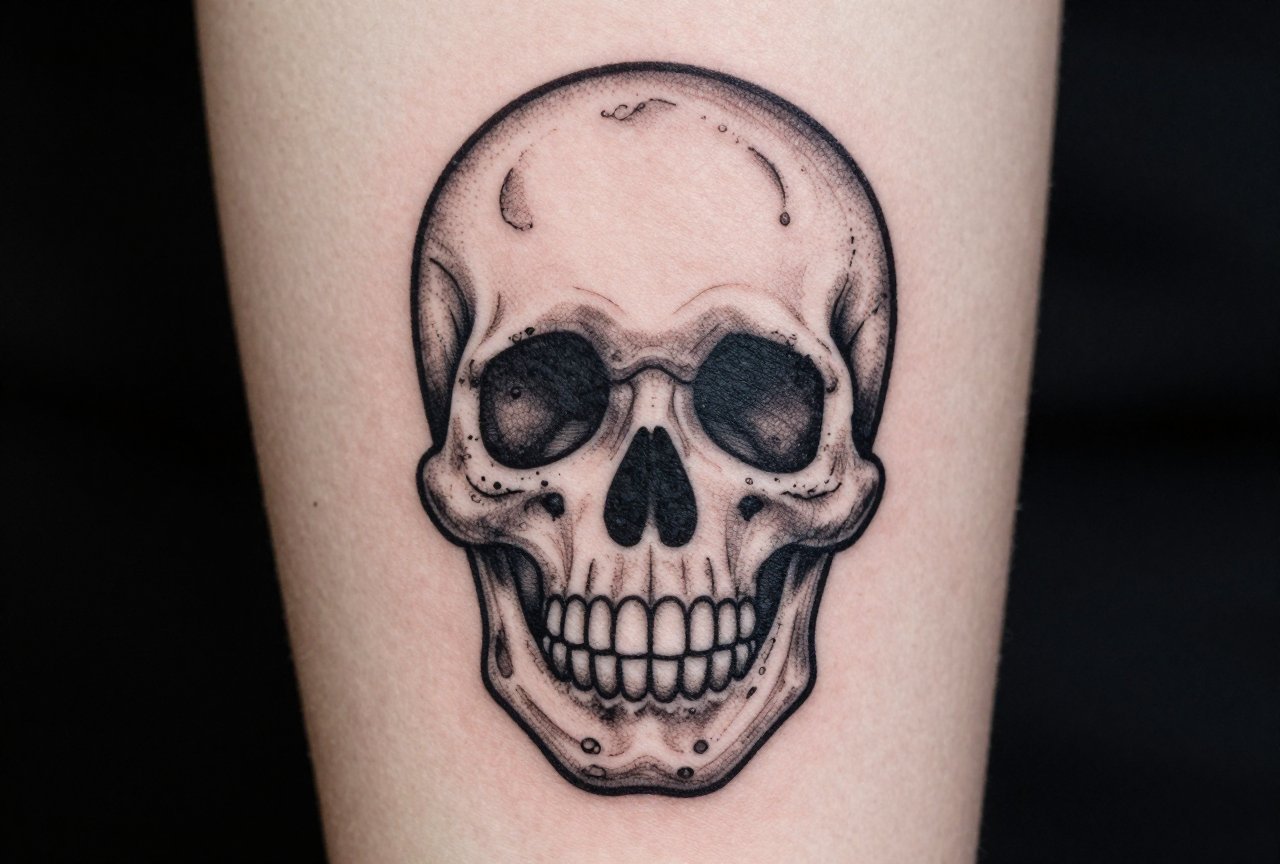
A candy skull tattoo means celebrating life by honoring death. It comes from Mexican Día de los Muertos traditions, where sugar skulls decorate altars for departed loved ones. The tattoo carries that same spirit: joy instead of mourning, memory instead of forgetting.
Symbolism & History
I’ve tattooed dozens of these over the years, and the story behind them always hits harder than people expect. The candy skull, calavera de azúcar, started in 18th century Mexico. Folk artists pressed sugar into skull molds, decorated them with bright icing, and placed them on ofrendas for the dead. The idea was simple: death is part of life, so face it with color and sweetness.
In my chair, I hear clients talk about grandparents who kept sugar skulls on altars every November. That personal connection matters. The tattoo isn’t about being edgy or gothic. It’s about refusing to let death steal the memory of someone you loved.
Key Symbols You’ll See
- Flowers, usually marigolds: The cempasúchil guides spirits home. In tattoo form, they frame the skull or fill the eye sockets.
- Spiderweb patterns: Often on the forehead, representing the passage of time or the web of life connecting us.
- Hearts and flames: Life force, passion, the burning memory that won’t go out.
- The name across the forehead: Traditionally the deceased’s name on the sugar skull itself. In tattoos, people put their own name, a lost loved one’s, or leave it blank for universal meaning.
Religious Roots vs. Modern Use
Some clients worry about cultural appropriation. I tell them: understand the source. Día de los Muertos blends Catholic All Saints’ Day with indigenous Aztec beliefs about death as a journey. The skull itself was sacred to Mictlantecuhtli, lord of the underworld. If you’re not Mexican or Mexican-American, the respectful approach is to learn the history, avoid stereotypes, and work with an artist who knows the imagery. I’ve turned away requests for designs that felt like costume pieces. The real thing has weight.
Common Variations & Styles
Shop culture has evolved this design far beyond the traditional sugar skull. Here’s what we actually execute on skin.
Traditional Mexican Style
Bold black outlines, flat saturated color, symmetrical patterns. Think classic poster art. These age well, the thick lines hold, the color stays readable. I did one on a forearm last year, all hand-poked patterns around the eyes, and the client came back six months later looking crisp. Traditional style works because it was built for visibility, for altars, for distance.
Realistic Skull with Decorative Elements
Some clients want anatomical accuracy with candy skull ornamentation. This is trickier. Realistic skulls need strong contrast, deep shadows in the eye sockets, careful highlight placement. Add too much decorative color and you lose the form. I usually suggest keeping the skull itself in black and grey, dropping the color into the flowers and patterns surrounding it. That separation keeps both elements readable as the tattoo settles.
Neo-Traditional and Watercolor Fusion
Younger clients often ask for softer edges, flowing color outside the lines, watercolor splashes behind the skull. It looks stunning fresh. I warn them: watercolor backgrounds fade fast, blur together, and don’t hold the same structural integrity as lined work. If you want longevity, anchor that color with black. I’ve seen beautiful watercolor candy skulls turn into purple-brown smudges after five years. The skull itself needs its bones.
- Minimalist line work: Single needle, delicate patterns. High risk of fading, but elegant for small placements.
- 3D or jewel-encrusted effects: Diamonds and gems replacing eyes or teeth. Popular, but requires an artist who understands reflective light.
- Animal sugar skulls: Cat or dog versions for pet memorials. Increasingly common in my shop.
Best Placements
Where you put this matters for how it reads and how it lasts.
Forearm and calf: Flat surfaces, good for medium-sized pieces. The skull reads clearly, you can build detail around it. These spots take healing well, less friction than ribs, less sun exposure than shoulders in summer.
Thigh and back: Room to go big. I’ve done full thigh pieces with skulls surrounded by marigold fields, names woven into petals. The scale lets you include narrative elements, portraits, dates, personal symbols.
Hand and finger: Trendy, but I try to talk people down. Hand skin is thick, moves constantly, sheds fast. Fine details in candy skull patterns blur within months. If you must, go bold and simple. I’ve watched delicate finger skulls become blobs.
Ribs and sternum: Painful, but the canvas shape fits a skull naturally. The sternum’s flat center, ribs curving around. Healing’s rough here, movement, breathing, bra lines. I tell clients to plan time off, loose clothes, no gym for two weeks minimum.
Who Chooses This Tattoo / Personal Meanings
After fifteen years in shops, I see patterns in who walks through the door for this design.
First: memorial clients. Lost a parent, sibling, child. The candy skull becomes a permanent ofrenda. They often bring photos, tell me stories while I work. Sometimes they cry. We take breaks. The tattoo becomes part of their grief process, something they control when everything else felt chaotic.
Second: cultural reconnectors. Mexican-Americans who grew up away from traditions, now reclaiming them. I’ve had clients who barely spoke Spanish get their grandmother’s name in a skull, asking me to make sure the marigolds look right. The tattoo is research, is ritual, is return.
Third: people who’ve faced death themselves. Cancer survivors, overdose survivors, soldiers. The skull isn’t theoretical for them. One client, Army veteran, got a candy skull with dog tags in the eye sockets. He said it was the first time death felt like something he could look at straight.
Fourth: artists, musicians, people drawn to the aesthetic who genuinely connect with the philosophy. I don’t judge this group, but I do ask questions. If they can’t explain why beyond “it looks cool,” I suggest they sit with the design. Good tattoos deserve better than impulse.
Similar Symbols
Clients sometimes confuse or combine these. Here’s how they differ in tattoo form.
- Plain skull: Memento mori, general mortality reminder. No cultural specificity, no celebration. Often darker in tone.
- Grim Reaper: Personified death, usually feared or respected as power. Very different emotional register from candy skulls.
- La Calavera Catrina: The elegant skeleton lady in a hat. Class satire from José Guadalupe Posada’s prints. Sometimes combined with candy skull elements, but carries additional meaning about social equality in death.
- Hindu or Buddhist skulls: Kapala imagery, tantric practices. Entirely separate tradition, though visually similar enough that some artists blend them carelessly.
- Gothic or horror skulls: Blood, decay, darkness. Opposite intention from candy skull celebration. I’ve covered up poorly chosen gothic skulls with candy skulls when clients matured into wanting meaning over shock.
Final Thoughts
A candy skull tattoo carries real weight. I’ve seen it transform from trendy design to meaningful memorial in my clients’ lives, and I’ve watched people grow into understanding what they wear. The best ones come from genuine connection, whether that’s ancestry, loss, survival, or philosophical alignment with celebrating life through its end.
Choose an artist who knows the imagery, not just the aesthetic. Ask about their line weight strategy for aging. Consider placement for longevity. And know what you’re carrying: not just a pretty skull, but centuries of people who refused to let death have the last word.
Frequently Asked Questions
Is a candy skull tattoo disrespectful if I’m not Mexican?
It depends on your approach. Learn the history, avoid stereotypes, and work with an artist who respects the tradition. Many artists appreciate genuine interest when it comes with education and humility rather than casual borrowing.
Do candy skull tattoos hurt more than other designs?
Pain depends on placement, not design. The detailed linework can mean longer sessions, which adds to overall discomfort. Ribs and sternum hurt more than forearm regardless of what you’re getting.
How do I keep the bright colors from fading?
Keep it out of sun, moisturize during healing, and expect touch-ups. Yellows and oranges fade fastest. Black outlines preserve the structure even as color softens.
Can I add a portrait inside the skull design?
Yes, but it’s technically demanding. The skull shape distorts facial features. I usually suggest portrait realism adjacent to the skull rather than inside it, or stylized integration that doesn’t fight the bone structure.
Related Tattoo Meanings
- Carpe Diem Tattoo Meaning: Seize the Day Ink
- Chin Tattoo Meaning: Symbolism, Styles What It Says About You
- Circular Tattoo Meaning: Symbolism, Styles Why People Get Them
- Explore more









