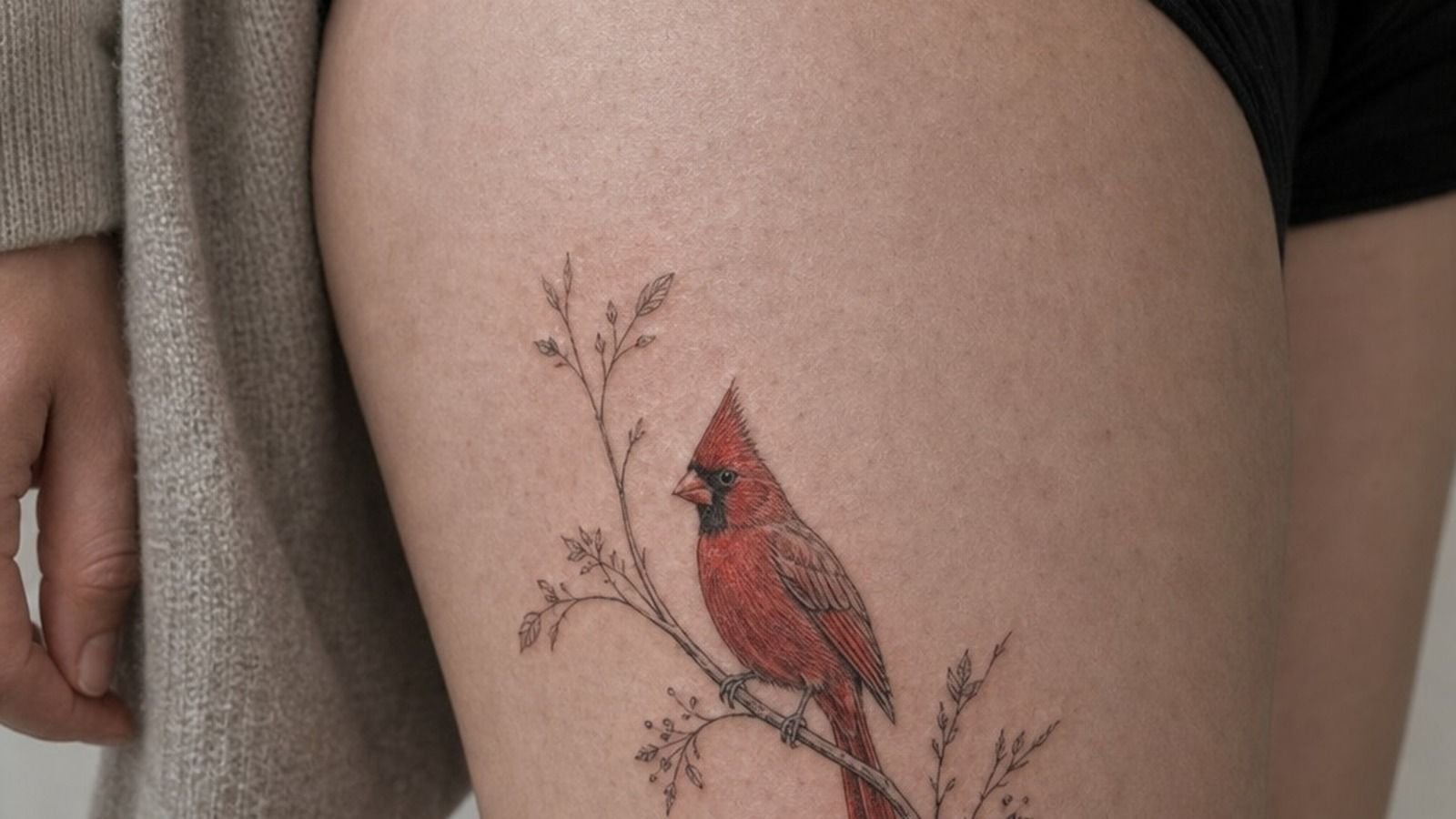
Cardinal tattoo ideas hit different when grief is the reason you keep circling back. I got serious about mine after thirty, after the kind of loss that makes every bright red bird feel pointed right at you. Small piece. Big click. Bright red bird was the note I kept coming back to.
Here’s what it looked like before:
Before I booked anything, this was just a note in my phone and a patch of skin I kept protecting from filler work. I knew I didn’t want a giant memorial piece. I wanted a cardinal tattoo that felt personal, not syrupy, and clean enough that you’d still understand it in ten years from a few feet away.
That ruled out a lot fast, and the memorial piece had to stay simple.
What I was working with was simple. A saved folder full of bird references, a few bad screenshots with muddy red feathers, and one hard limit: no scratchy linework, no soup, no overworked skin.
I also knew I wanted something that could heal in the normal 2 to 3 week surface window, not a giant full-color project that would babysit me all summer. That choice mattered for planning too, because smaller clean work usually ages better than a bigger tattoo you can’t comfortably sit through.
- I Chose A Red Cardinal Tattoo Meaning
- I Picked A Fine Line Cardinal Sketch
- I Tested Dainty Cardinal Tattoo Sizes
- I Compared Flying Cardinal Tattoo Angles
- I Kept The Beak And Crest Sharp
- I Chose Soft Red Ink Shading
- I Anchored The Cardinal With Black Linework
- I Paired The Cardinal With Small Florals
- I Checked How The Cardinal Tattoo Reads Small
- I Asked For Clean Eye Detail
- I Protected The Red Ink While Healing
- I Watched The Cardinal Tattoo Settle
- I Saved The Final Cardinal Tattoo Placement
1I Chose A Red Cardinal Tattoo Meaning
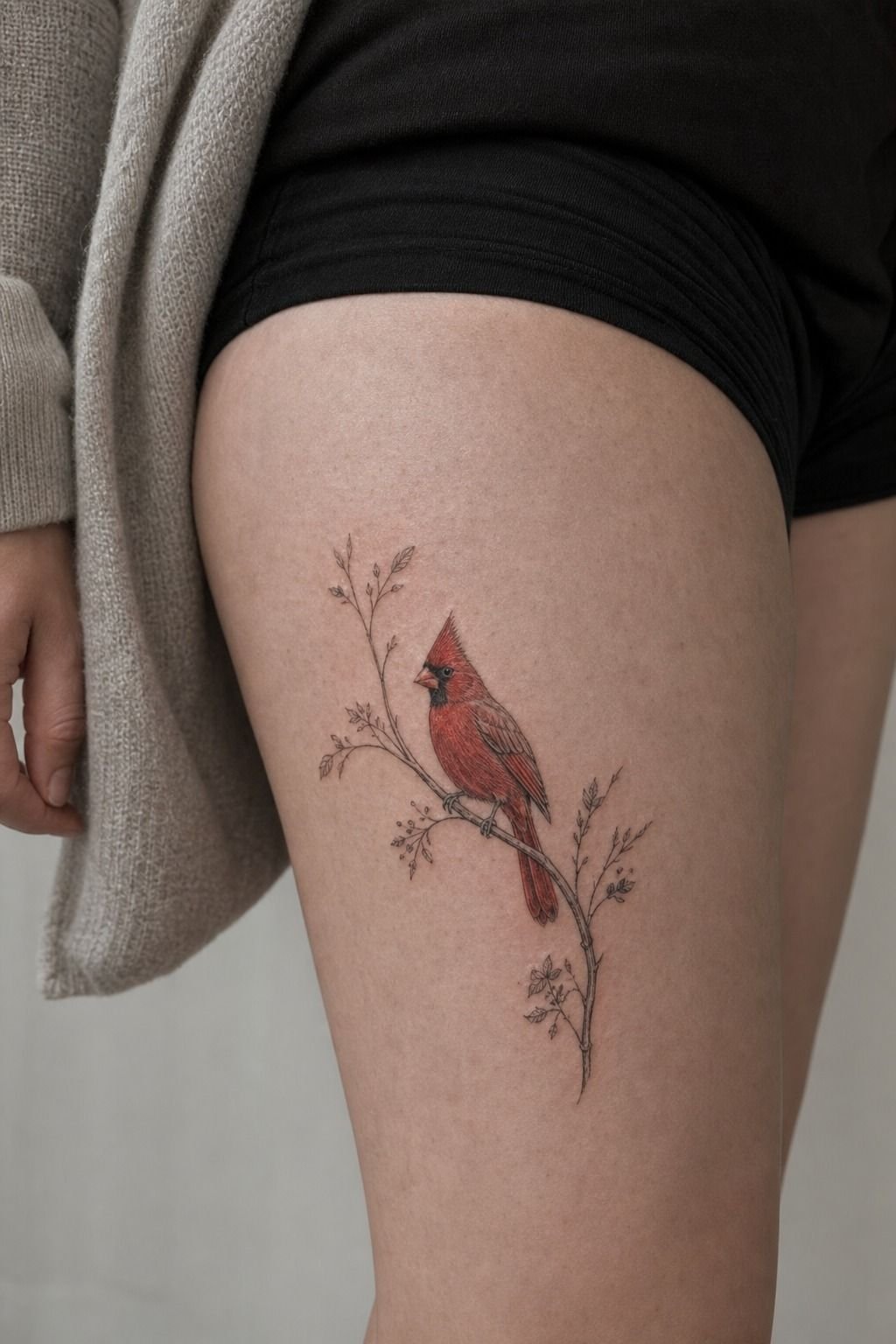
I started with meaning before placement, because a memorial tattoo falls apart fast if the symbol feels borrowed. For me, the red cardinal tattoo meaning sat right in that line between grief and visit.
Not magic. Not preachy.
Just a sign I kept noticing when I needed one. If you are sorting through symbols, read a few grounded takes first, especially cardinal tattoo meaning and cardinal bird tattoo meaning, so you know what fits your life and how the red cardinal lands for you.
The first version landed on my thigh because that placement gave the bird enough width for a clean body and a crisp crest without forcing it huge. On fair cool-pink skin, that little hit of red looked alive right away. But the key was restraint.
I skipped names, dates, and script around it. You want the symbol to lead, not get buried.
A cardinal can carry a lot on its own if the lines are solid and the thigh placement gives it enough clearance to age nice.
2I Picked A Fine Line Cardinal Sketch
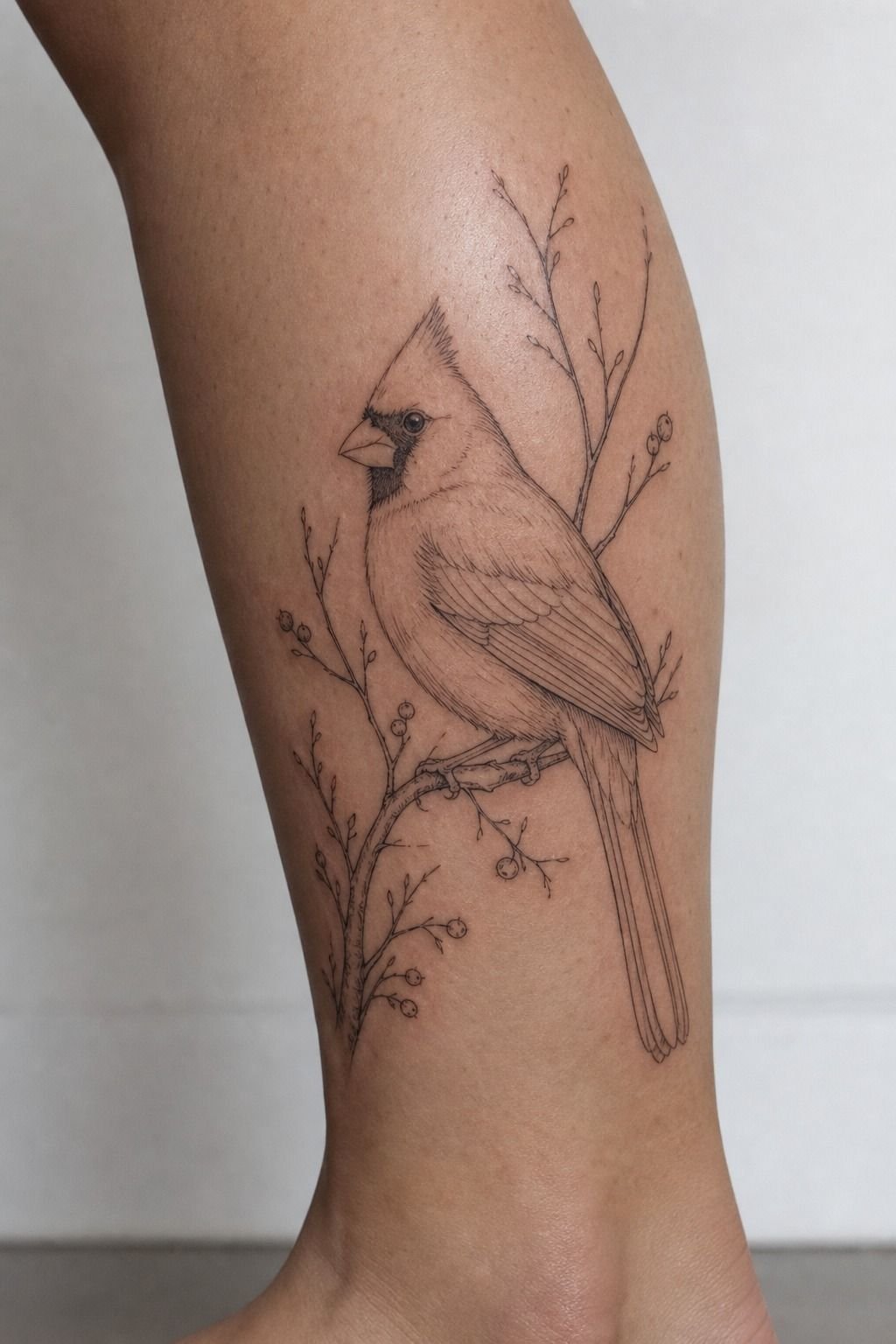
Once the meaning felt locked, I asked for a fine line cardinal tattoo sketch instead of a polished red render. That sounds backwards, but clean structure matters more than color in the beginning.
On a calf, especially in a macro close-up, you see everything: whether the beak is one clean pull, whether the belly curve is confident, whether the tail tapers or just dies off. That’s the stuff that tells you if the artist draws birds well, and the fine line sketch has to carry that load first.
I told Hazel-level honest truth here: give me a sketch that heals nice, not a sketch that only looks cute on paper. If your reference only works because it’s shaded to death, walk away. Fine line bird tattoos need clear architecture.
The chest, crest, and wing break should all read before the red goes in. But if the black skeleton looks fuzzy at stencil stage, red will not save it.
It will just spotlight the weak spots, and that is not a smart call for your stencil stage decision.
3I Tested Dainty Cardinal Tattoo Sizes
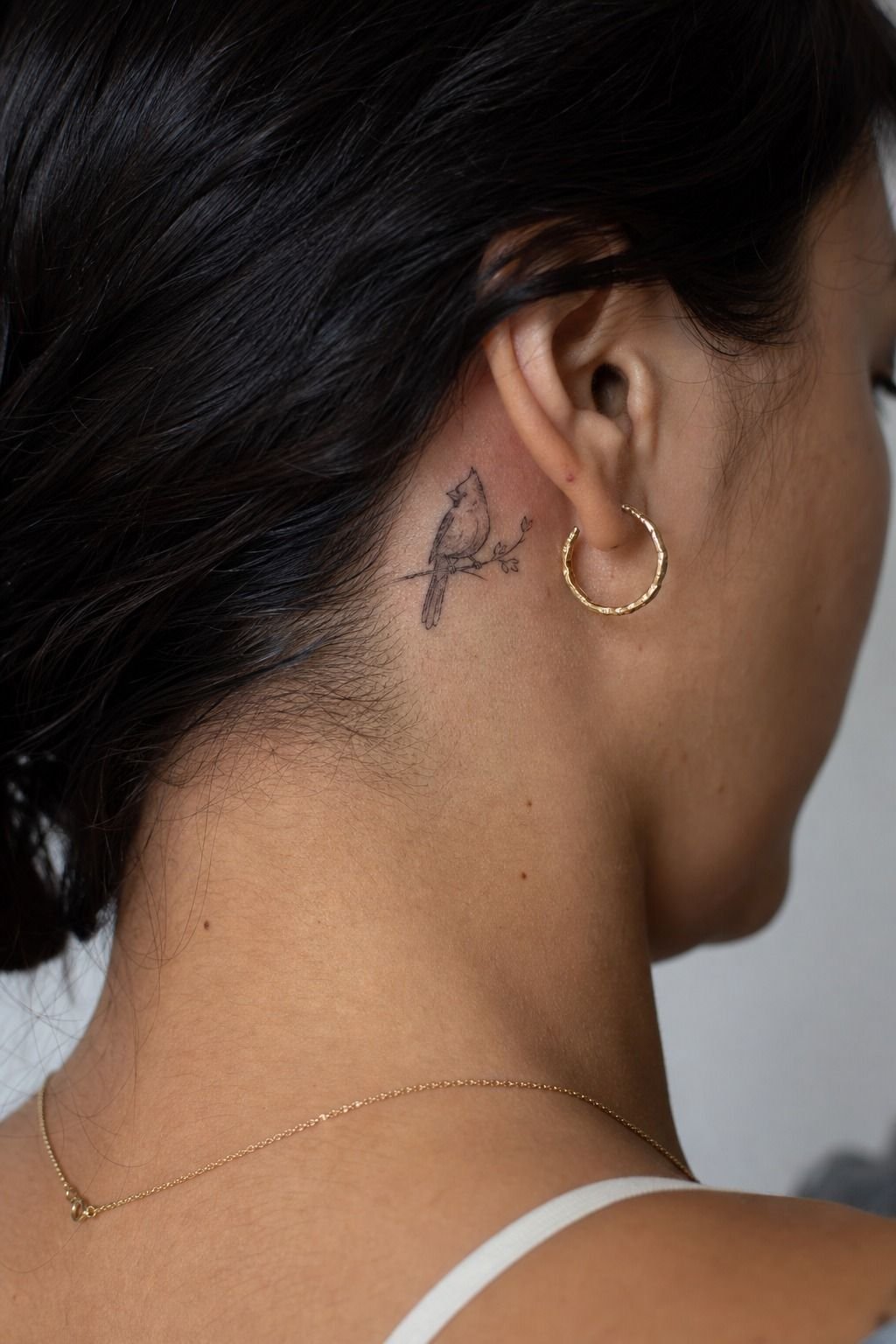
Tiny was tempting. Memorial tattoos can make you want to whisper when you should speak clearly.
So I tested dainty cardinal tattoo sizes against real body wear, not just a digital mockup. Behind the ear looked sweet, especially healed on medium olive skin in daylight, but it taught me something fast: below about 1.5 to 2 inches, the bird lost too much identity.
You need enough clearance for the crest, beak, and tail to stay separate after a few years of skin settling. That is the whole game.
If the artist has to cheat the anatomy to make it fit, you are already in trouble. I liked the behind-the-ear placement for a collector who accepts touch-ups, but I would not call it the safest first choice.
High-wear edges, sun exposure, and hair products can all make a tiny red bird age harder than it needs to. If you want to compare symbolism before you commit, cardinal bird tattoo meaning helps you stay clear on why the bird matters and whether the behind-the-ear size still makes sense.
4I Compared Flying Cardinal Tattoo Angles
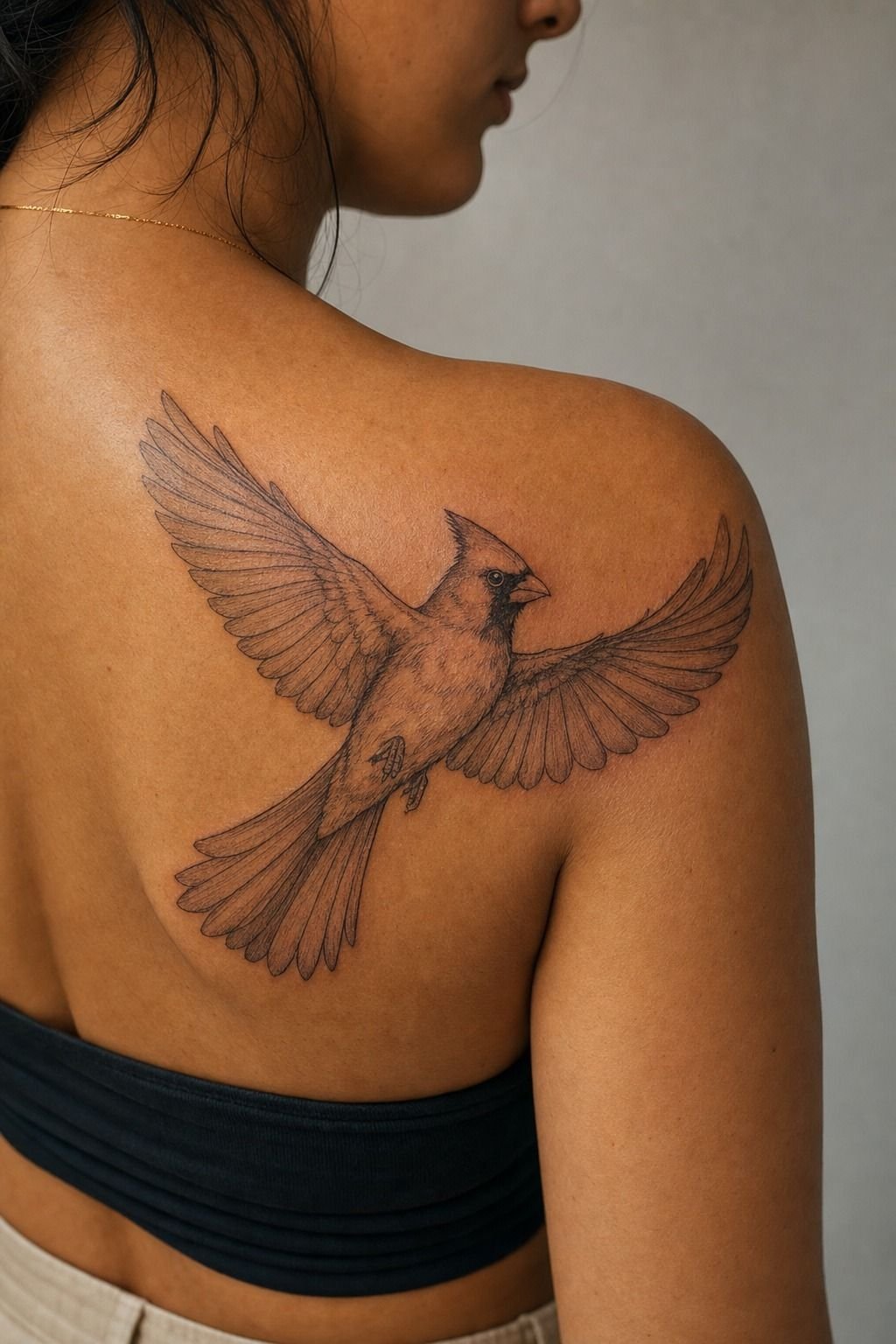
Bird tattoos live or die on movement. A flying cardinal tattoo can look elegant on a shoulder, or it can look like a red sticker slapped on a curve that did not want it.
I compared angles with the arm relaxed, then lifted, then turned three-quarters, because a shoulder wrap changes with every posture you make. Why guess when your body already tells you what flows?
The flying cardinal only works if the motion reads clean.
The best angle wasn’t the most dramatic one. It was the one where the wing followed the shoulder cap and the tail aimed toward the outer arm instead of cutting across the body line. That let the design look intentional on golden tan skin without getting chewed up by motion.
And yes, I vetoed the Pinterest favorite where both wings were fully spread flat. Pretty on paper.
Awkward on a human shoulder. The better flow came from following the shoulder cap instead of forcing symmetry.
Why did the forearm win?
Before I let anyone stencil my forearm, I wanted to see a full flash-sheet pass. That sounds picky, but forearm tattoos are public tattoos.
You catch them in grocery store glass, in car windows, in every dumb selfie you didn’t mean to take. I wanted to know the bird still looked clean from all of those angles, not just from the artist’s chair.
A flash-sheet pass tells the truth fast.
The forearm kept winning on plain practicality. It is low enough pain for most people, the skin stays fairly stable, and the artist gets a long clean runway for the tail.
That means less redraw time, a steadier session, and usually a more predictable price. If you are asking me where a cardinal tattoo makes the most sense for a first pass, outer forearm is still the answer. Clean.
Visible. Not overly fussy.
6I Kept The Beak And Crest Sharp
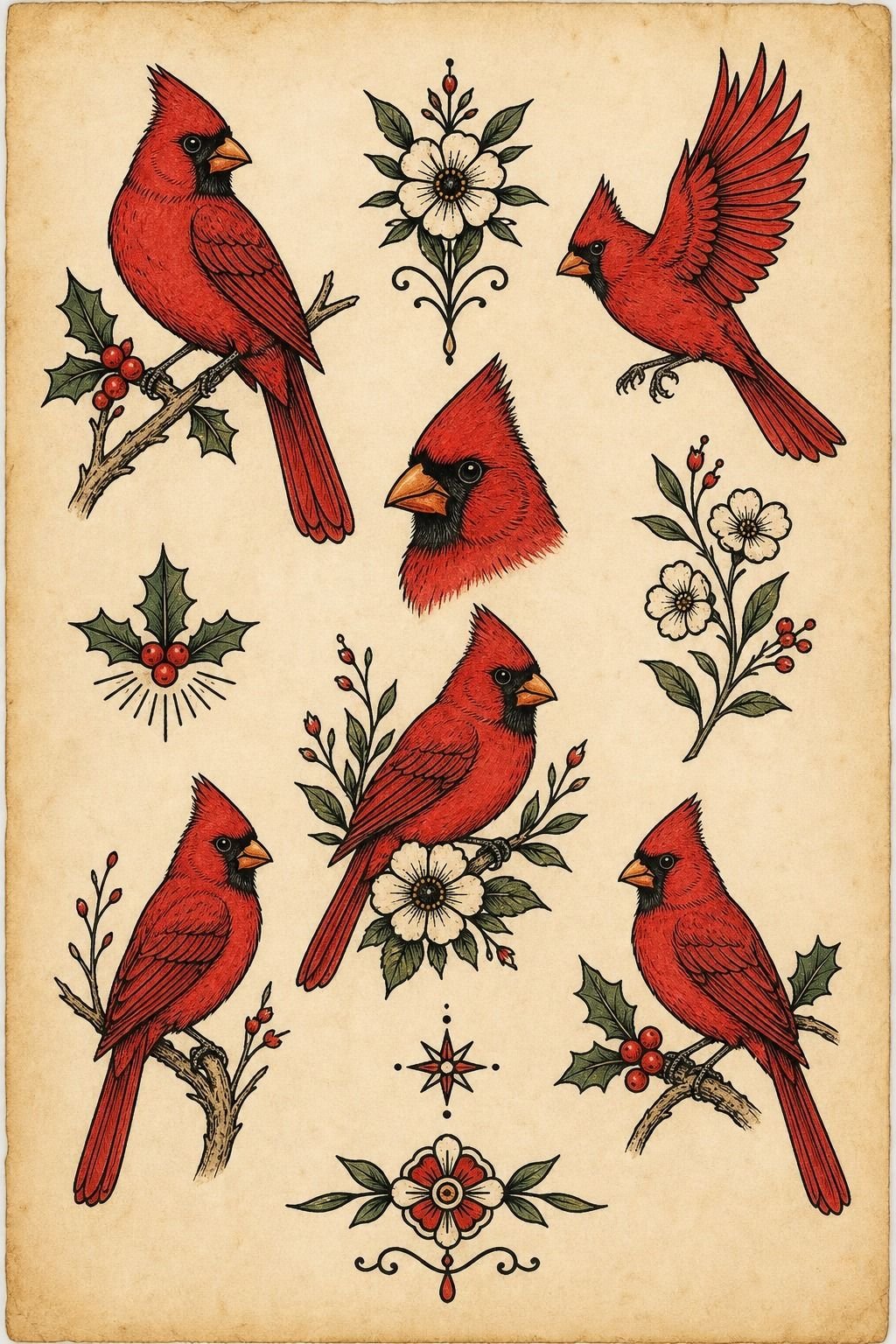
The beak and crest are where a cardinal either becomes a cardinal or turns into generic bird content.
What feather detail still heals nice?
Feather detail sounds like the fun part, but it’s where fine line artists get greedy. Everyone wants the wing to feel rich.
Nobody wants the healed bird to turn into grey fuzz. So I kept the feather plan stripped down: a clean top wing edge, two or three inner breaks, and soft direction changes instead of a hundred tiny strokes.
That kind of feather plan heals much cleaner.
That choice saved both skin and money. More feather chatter means more passes, more redness, and more chance the whole middle goes patchy.
If you want a delicate cardinal tattoo that still reads in a few years, simple feather structure is the better call every time. The part that matters is the wing break, not twenty baby lines trying to prove a point.
8I Chose Soft Red Ink Shading
Red ink was the emotional hinge of the whole piece. I did not want cartoon red, and I did not want that weak pink wash that disappears once the skin settles.
So I chose soft red ink shading with a lived-in finish, especially for the behind-the-ear test version on medium warm ivory skin. It looked gentle, but it still had enough body to feel like a bird, not a rash.
The soft red ink had to stay believable.
The part nobody respects is ink choice. A soft red works when it is supported by shape and used in controlled zones, not smeared everywhere. If you go too light, it can heal thin.
If you saturate too hard in a tiny tattoo, you risk overworking the skin. But when the red sits in the belly and wing pockets with care, it gives the cardinal that immediate emotional hit without losing refinement.
That balance makes the extra red-ink time make sense, especially if your red shading is anchored by black.
But I still wanted proof from healed references, which is why I kept cross-checking cardinal bird tattoo meaning against real healed work and not just fresh studio shots. That extra pass kept the emotion honest and the design cleaner. Healed references matter!
9I Anchored The Cardinal With Black Linework
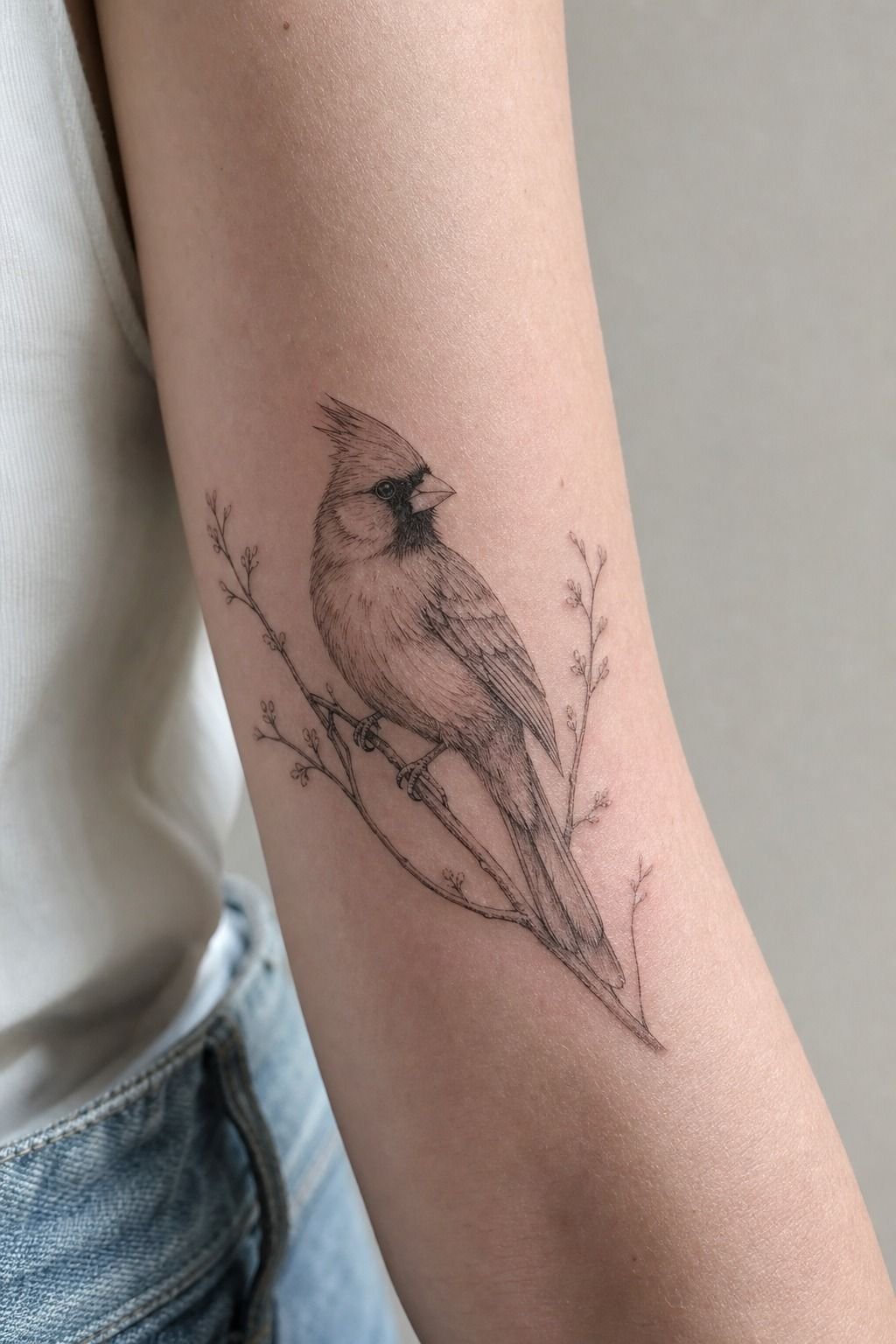
This was my non-negotiable. I anchored the cardinal with black linework first, then treated red as spice.
That’s how you keep a fine line cardinal tattoo from healing flat. On a medium olive shoulder wrap, the black outline carried the read from the start: head shape, tail break, wing line, and that little beak point that makes the whole thing click. The black outline did the heavy lifting.
People love red-heavy bird tattoos online, but black is still your best friend for longevity. It holds the map. It gives you contrast after the red softens.
And if you care about symbolism, it doesn’t fight it. I kept going back to cardinal tattoo meaning while deciding this, because the symbol was the point, not the pigment flex.
A memorial tattoo should stay legible even on its quieter days, and a strong black linework base gives you that payoff.
10I Paired The Cardinal With Small Florals
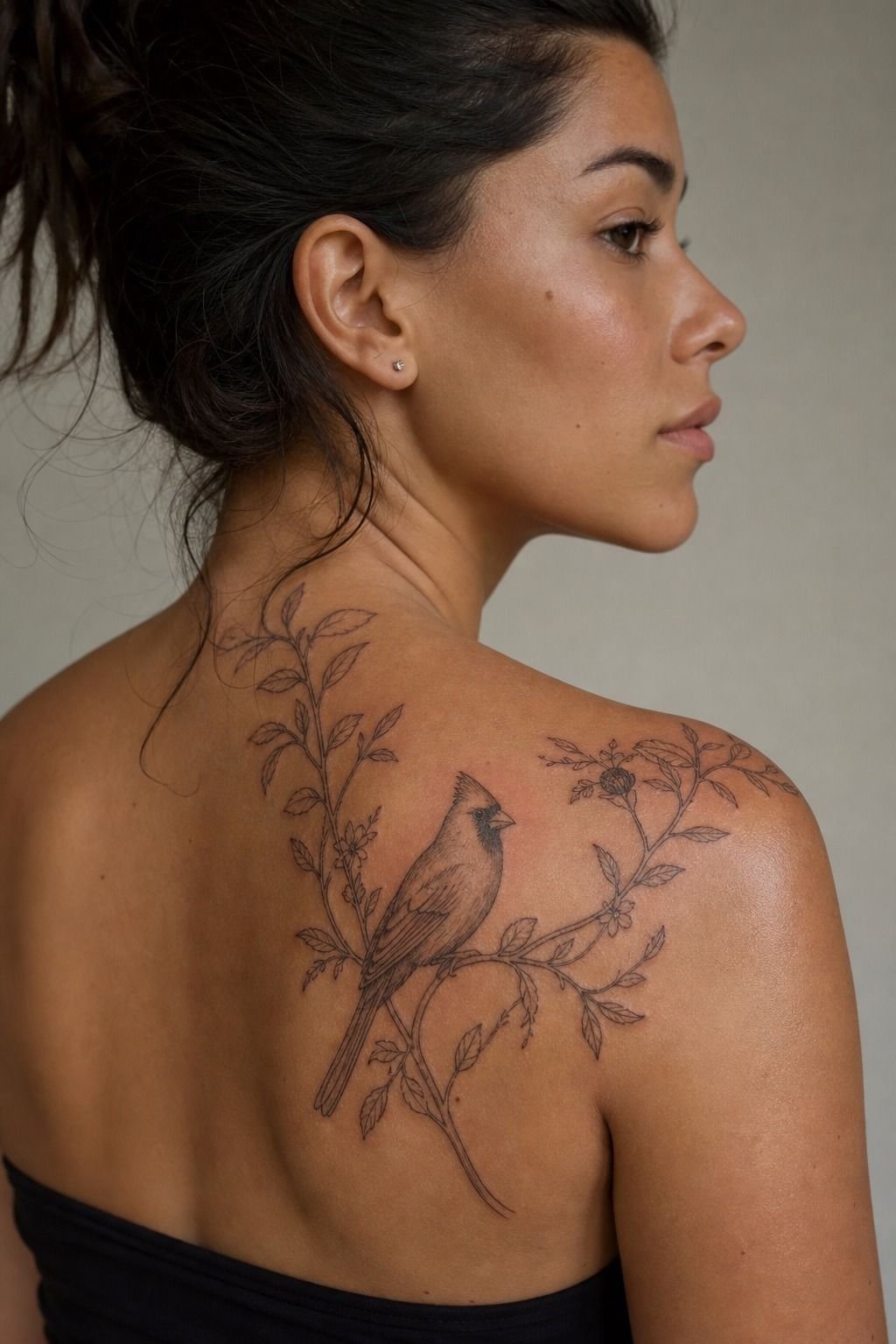
I almost kept the bird solo. Then I tested a cardinal and flower tattoo layout with a stencil on one side and a healed version on a real spine placement on the other, and the answer got obvious.
Small florals gave the bird context without stealing the scene. The move was scale.
A tiny stem, one or two petals, maybe a leaf. Not a bouquet trying to cosplay as background. A small floral should stay in support mode.
Florals also softened the emotion in a good way. If your cardinal meaning leans memorial, a little botanical detail can keep the tattoo from feeling heavy every time you see it.
But keep the flowers subordinate. I like a light black linework floral anchored near the tail or below the feet, especially if you’ve looked at other symbolism-first pieces like yellow rose tattoo meaning.
The bird should still lead at first glance.
11I Checked How The Cardinal Tattoo Reads Small
I made myself do the boring test. Step back. Look again.
Check how the cardinal tattoo reads small from a few feet away, not just nose-close in a mirror. On a calf with deep brown skin and warm undertone, the little silhouette told the truth immediately.
If I could recognize the crest and tail in two seconds, the design worked. If I had to squint, it did not.
The small read test never lies.
This matters more than people think. Healed skin softens edges.
Very fine lines widen a touch. That’s normal, and it’s why tiny super-detailed tattoos can turn to soup later.
I don’t mind small. I mind unclear.
But once the body, beak, and tail were pushed just enough, the design read clean without losing that delicate mood. That’s the sweet spot you want for a first tattoo or a memorial piece, and it gives you better long-term silhouette contrast.
12I Asked For Clean Eye Detail
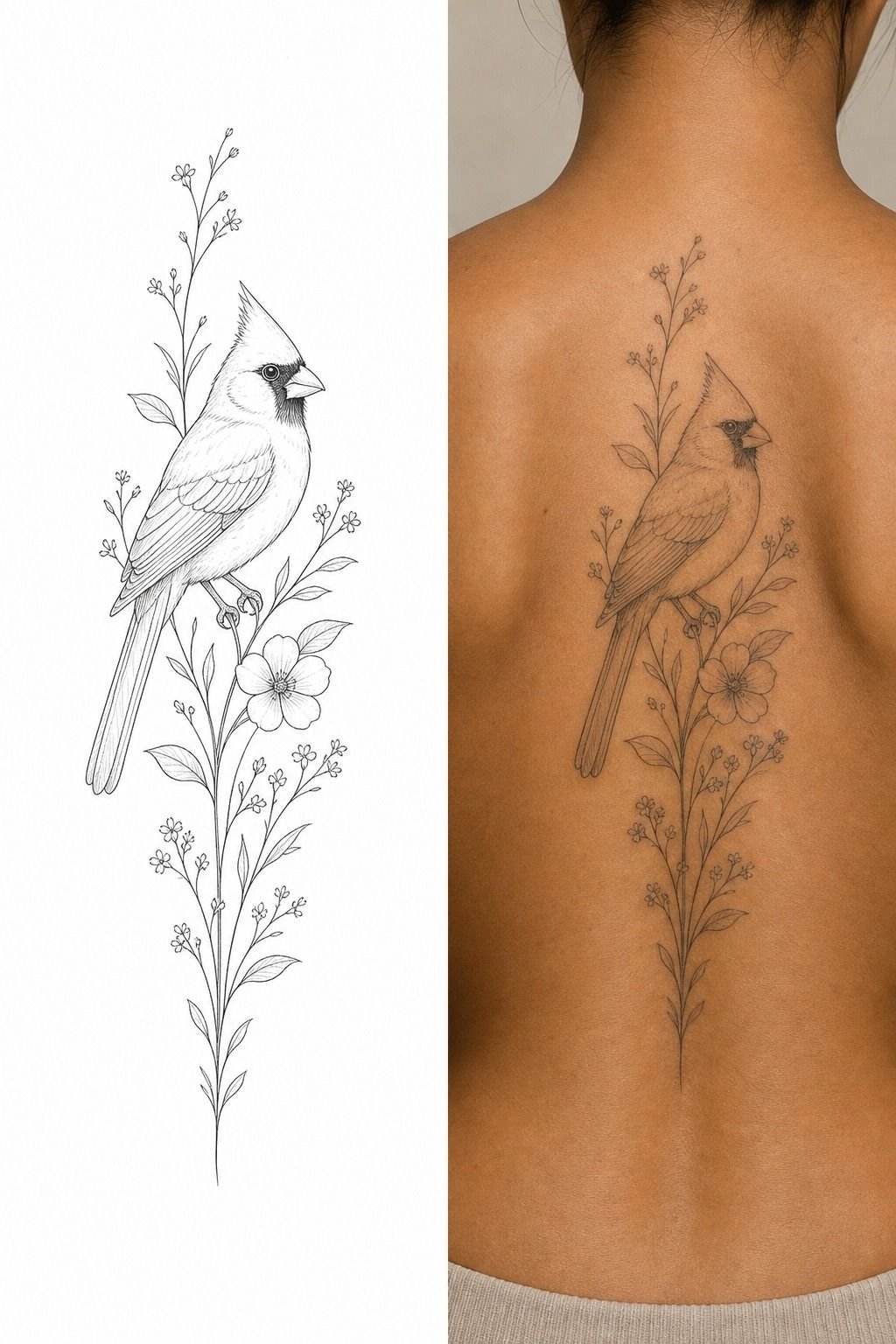
A bird eye can ruin the whole tattoo if it gets too cute. I asked for clean eye detail on the ankle study, especially because the macro view made every dot and notch louder.
The fix was simple: one crisp eye mark, a small negative break around it, and no cartoon circle. If the eye starts shouting, the bird stops feeling real.
A clean eye mark keeps the face calm.
Ankles are also unforgiving for line confidence. The skin is tighter, the bone is closer, and the pain can get spicy fast.
So I told my artist to keep the eye bold enough to stay visible but not so dark it became a blob. That little decision did a lot of work.
It kept the face calm, readable, and mature, which is exactly what I wanted from a fine line cardinal tattoo design. The tiny negative break around the eye is what kept it classy.
Cadmium red or muddy crimson?
Healed forearm photos are where muddy red reveals itself. Fresh work can fool you because swelling and ointment make everything look richer than it really is.
Once the surface calms down, muddy red shows its hand fast. The belly loses separation.
The wing pocket looks bruised. The whole bird starts reading heavy instead of bright. That is why healed forearm photos matter so much.
That is why I would rather see a smaller amount of cleaner red than a fully packed bird that heals flat. A cardinal tattoo does not need wall-to-wall pigment to feel emotional.
It needs controlled saturation, open skin, and a black map that still carries the shape. If your artist can’t show healed red pigment on more than one skin tone, I would slow down before booking.
Does a cardinal tattoo hurt more in red?
Pain was not the reason I hesitated, but I respected it. The shoulder wrap version taught me what I already tell first-timers: lines feel sharper, shading is a dull burn, and color packing is the spiciest part. On a medium warm ivory shoulder, this was tolerable.
Annoying, yes. Dramatic, no.
The curve gave the bird movement and kept the pain level in the manageable lane. The shoulder wrap felt spicy, not brutal.
If you’re choosing between placements, outer shoulder, outer forearm, and thigh are usually kinder than sternum, ribs, feet, or hands. That’s just honest tattoo math.
I brought water, ate first, and took a short break before red went in. Tap out for five rather than pass out on me!
You don’t get bonus points for suffering. You get a better tattoo when your body stays steady, and that makes the session smoother for your color packing time.
15I Protected The Red Ink While Healing
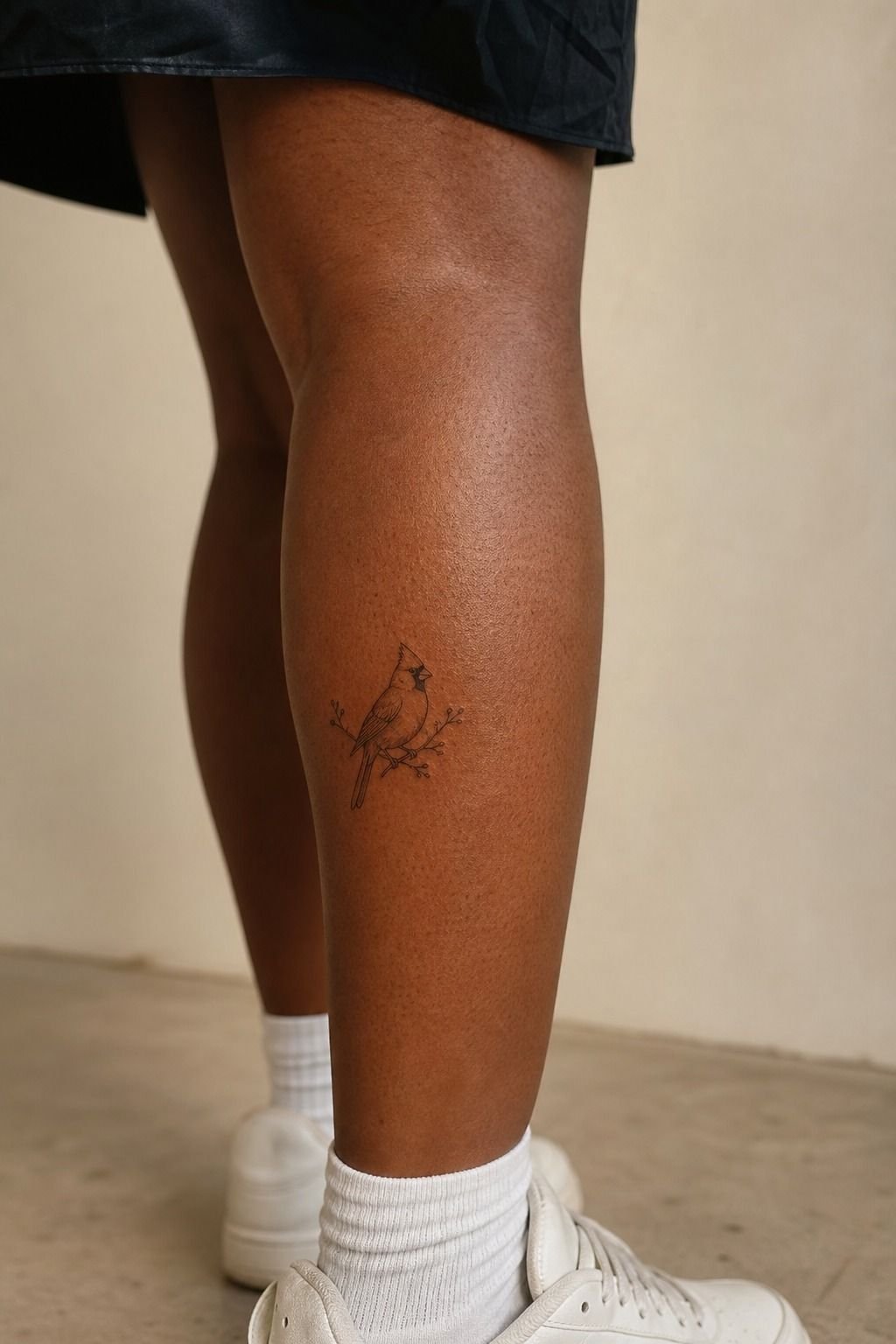
My healing plan started on paper before it started on skin. I had my artist sketch a few red-ink cardinal variations on a flash sheet, then we circled the one with the least packed red and the clearest black support, because that version had the best shot at healing bright without getting chewed up. Planning aftercare before the needle hits is smart, not paranoid, and the flash sheet helped a lot.
The routine stayed basic. Gentle unscented soap.
Thin layer of ointment for the first few days. Then light moisturizer once the top heat dropped. No pool, no lake, no hard gym friction, no frying it in UV.
First few days, it is an open wound, treat it like that. And when it peels like a sunburn, do not pick the flakes. You will pull color out. That gentle soap routine is boring for a reason.
But if you need a symbolism reset while it heals, cardinal tattoo meaning is the page I would save instead of doom-scrolling random bird flash. That kind of prep is cheap, and the payoff in aftercare discipline is huge.
16I Watched The Cardinal Tattoo Settle
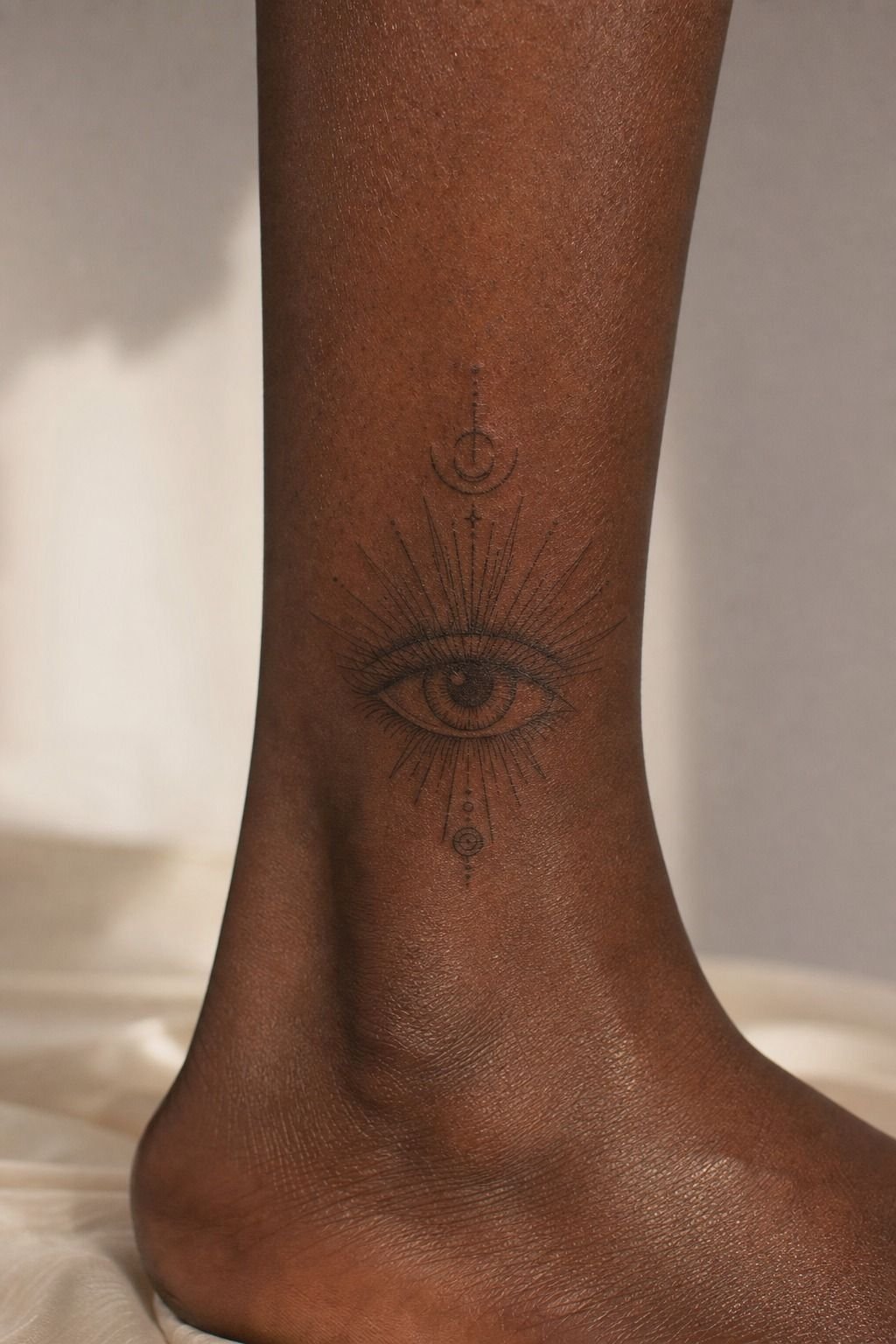
The sternum version was the one that surprised me most once healed. Fresh, it looked louder than I wanted.
Settled, it looked balanced. On golden tan skin, the center chest gave the bird symmetry and made the vertical body line feel almost ceremonial, which fit the meaning more than I expected.
But sternum is a grown-up placement. You need to want it.
The center chest changes the whole mood.
I watched it through the shiny silver-skin phase, then through the softer 2 to 3 month full-settle timeline, and the black support did exactly what it was supposed to do. The red relaxed.
The outline stayed crisp. But I wouldn’t pitch sternum as a casual first-tattoo move. Beautiful?
Yes. Easy? Not really. The pain and healing friction from bras, shirts, and sleep position are real, so the emotional payoff has to justify the upkeep on sternum skin.
Are touch ups worth it for red pigment?
Red pigment can need more maintenance than plain black, so I planned for that upfront. Not every red cardinal tattoo needs a touch-up.
Some heal beautifully on the first round. But if you choose a tiny placement, chase a super-light red, or put it on a high-wear zone, it is smart to plan for the possibility instead of acting shocked later. A touch-up visit should never surprise you.
That is where honest pricing matters. A touch-up can be quick, but it still takes booking time, travel, and skin bandwidth. I would rather talk about that before the tattoo than sell you a fantasy.
If your artist gives you clear aftercare, healed examples, and sensible sizing, the whole tattoo becomes more worth it and the touch-up plan feels manageable instead of annoying.
18I Saved The Final Cardinal Tattoo Placement
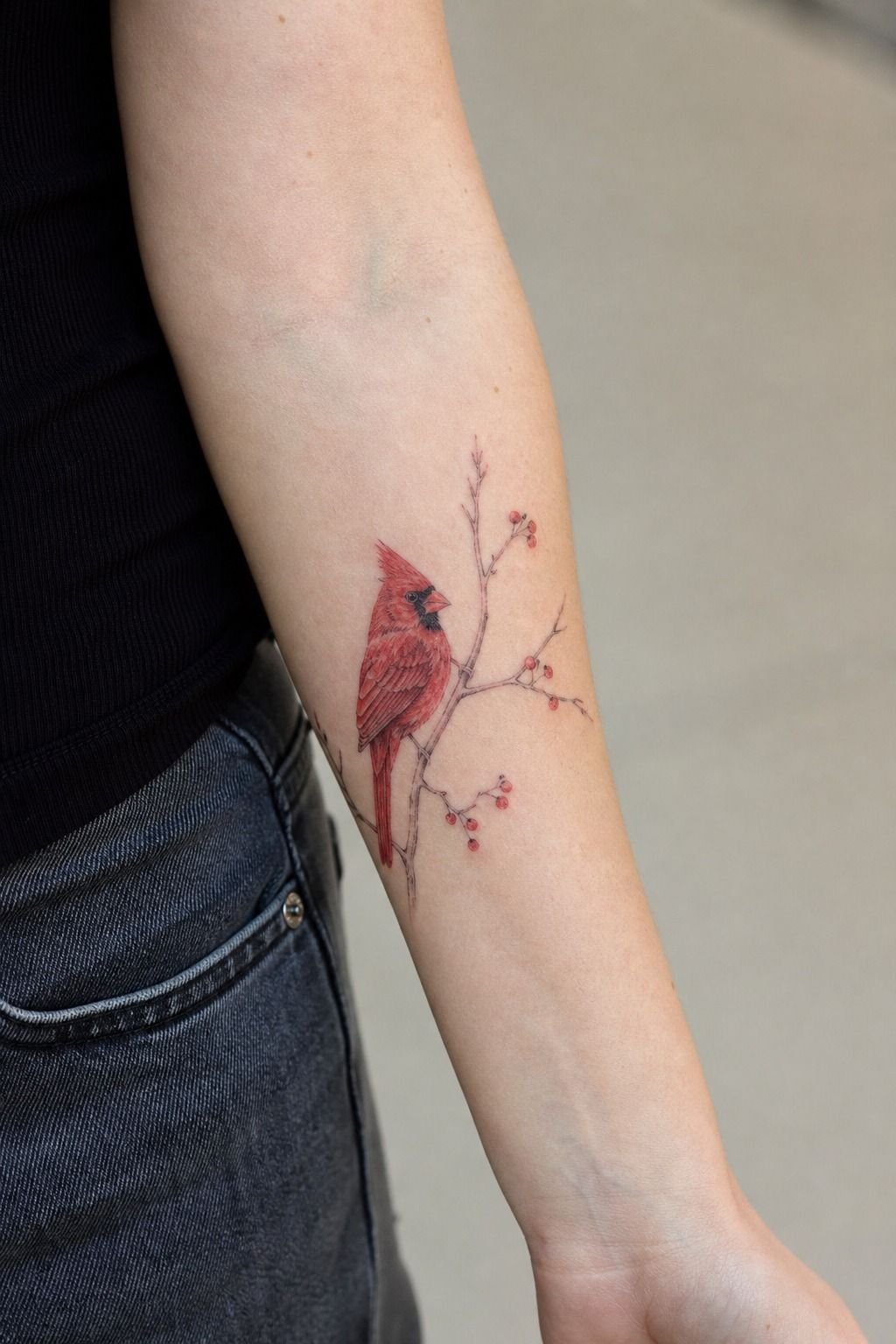
The final save in my folder was a healed spine placement on deep ebony skin, neck to mid-back, and I kept coming back to it because the flow felt honest.
My Two-Distance Read Rule
This is the rule that changed the whole tattoo for me. I call it the Two-Distance Read Rule: if the cardinal looks good close up but loses the bird shape from a few feet away, it is not finished yet.
Memorial tattoos can pull you toward tiny details because emotion makes you want to tuck everything in. I have done that before with other ideas, and it almost always backfires.
The Two-Distance Read Rule saved me.
When I test a tattoo design now, I check it from mirror distance and from normal human distance. Close up tells you if the linework is crispy.
A few feet away tells you if the symbol still lands. You need both.
That’s especially true with fine line bird tattoos, red pigment, and small placements. If the crest disappears, if the beak melts into the face, or if the tail reads like a comma, you need to simplify.
That mirror distance check should happen every time.
And this is not about making everything bigger. It is about making the right parts clearer.
A cardinal tattoo can stay small and still hold if the artist gives the head enough contrast, keeps the body silhouette clean, and leaves enough open skin between details. That is why I keep sending people back to cardinal bird tattoo meaning before they book.
Meaning matters, sure. But if the tattoo does not read, the meaning gets buried under weak design, and that is a bad trade for your open skin choices.
But there is an emotional side to this rule too. When you are grieving, you can mistake more detail for more love. I do not think that is true.
I think love shows up in the edit. In the clean beak.
In the tail that still reads after the peel. In the choice to leave some skin open so the bird can breathe on you instead of fighting for attention. That is why I would rather see one strong cardinal than five tiny sentimental extras crammed around it. Clean wins.
Every time.
The Red Holds If Black Leads Rule
If you take one technical note from me, take this one. Red holds better when black leads.
I don’t mean thick trad outlines around everything. I mean a confident black map under the red so the bird still makes sense after the pigment softens.
That’s what separates soft from muddy. The black map is doing the real work.
I learned this the annoying way on a different red piece years ago. Too much color, not enough structure, and it healed flatter than I wanted.
With the cardinal, I kept the black linework doing the heavy lifting and let the red sit where it had emotional impact. Belly. Wing pocket.
A little head emphasis. Not full saturation everywhere.
But once I committed to that, the design started feeling grown, not gimmicky, and the black map kept it solid.
The One-Inch Mercy Rule
I also have a One-Inch Mercy Rule for dainty tattoos. If the design is fighting for clearance, give it another inch.
That is it. No drama.
One more inch on a forearm, thigh, or calf can be the difference between a tattoo that ages cute on you and one that turns into soup. The One-Inch Mercy Rule fixes a lot.
People hear that and think I’m pushing them bigger for no reason. I’m not.
I’m protecting the beak, the crest, and the tail split. Those are the parts your eye uses first.
If adding a little size means the artist can stop overworking the line or stop cramming red into tiny pockets, that’s a win. And yes, if your heart is set on micro scale anyway, own the maintenance and go in with clear eyes.
That extra inch can save rework, save touch-ups, and protect the tail split for years.
What makes a cardinal tattoo feel worth it?
For me, a cardinal tattoo is worth it when three things line up: the meaning is yours, the silhouette stays readable, and the placement fits your daily life. Miss one of those and the tattoo can still look cute fresh, but it won’t feel solid a year later.
Get all three right and the piece keeps paying you back emotionally. That daily life fit matters more than people think.
I don’t mean payoff in a fake self-help way. I mean the real kind, where you look down after a rough week and the tattoo still lands clean, calm, and true. That is why I keep steering people toward placements like outer forearm or thigh first.
They price out sensibly, heal nice, and let the bird breathe.
How much it cost
I won’t invent a fake exact bill just to make the story sound cleaner. What I can give you is the honest US range I’d use when planning a cardinal tattoo with a client. If you’re trying to set a real budget, these are the numbers I’d start with before a consult, and the US range is a solid place to begin.
If you are budgeting, the forearm, calf, and thigh versions usually stay more predictable because the artist can work clean and steady. Behind-the-ear, ankle, and sternum pieces may be small, but they can still get fussy because the canvas is harder.
And if you are torn between symbolic directions, compare the feel of cardinal tattoo meaning with something more abstract like yantra tattoo meaning. The cleaner fit usually saves you money, saves revision time, and gives you better budget control.
What People Always Want to Know
How much does a Cardinal Tattoo usually cost?
Usually about $100 to $300 for a small cardinal tattoo, with many shops holding a $50 to $100 minimum. Cost shifts with placement, red ink, and artist demand.
– Fine line small scale – Forearm or calf, easier working angle – Red pigment may add session time
Are Cardinal Tattoo a good idea for a first tattoo?
Yes, a cardinal tattoo can be a strong first tattoo if you keep the design clean and place it on forearm, thigh, or outer shoulder. Those spots are more tolerable, and the bird shape can stay readable without forcing too much size.
How do I choose a tattoo artist for Cardinal Tattoo?
Pick an artist with healed fine line work in their portfolio, not just fresh photos. You want crispy lines, clean bird anatomy, and honest studio hygiene. I also like sending people to cardinal tattoo meaning first, because a clearer symbol brief makes the consult better.
– Healed red ink examples – Consistent anatomy in beaks, eyes, and crests – Clean station and clear aftercare
How much do Cardinal Tattoo hurt?
Pain depends on placement, but forearm, thigh, and outer shoulder are more manageable than sternum, ribs, feet, or hands. Lines feel sharper, shading burns duller, and red packing is usually the spiciest part.
How long does a Cardinal Tattoo take to heal?
Surface healing is usually 2 to 3 weeks, while the tattoo keeps settling for 2 to 3 months. Wash with gentle unscented soap, moisturize lightly, and avoid pools, harsh sun, and picking while it peels.
What’s the best placement for Cardinal Tattoo?
Forearm and thigh are my favorite first-choice placements because they give the bird enough length to stay clear and usually heal with less drama. If you want more emotional punch, shoulder and spine can look beautiful, but they ask more from you. For meaning-led placement ideas, compare cardinal bird tattoo meaning with cardinal tattoo meaning.
Where I’d Start First
If I had to pick one, I’d start with the forearm placement. It gives the crest, beak, and tail enough length to stay clean without forcing the tattoo big.
Pin that option first, because clear structure beats sentimental clutter every time! Forearm placement is still my pick.