
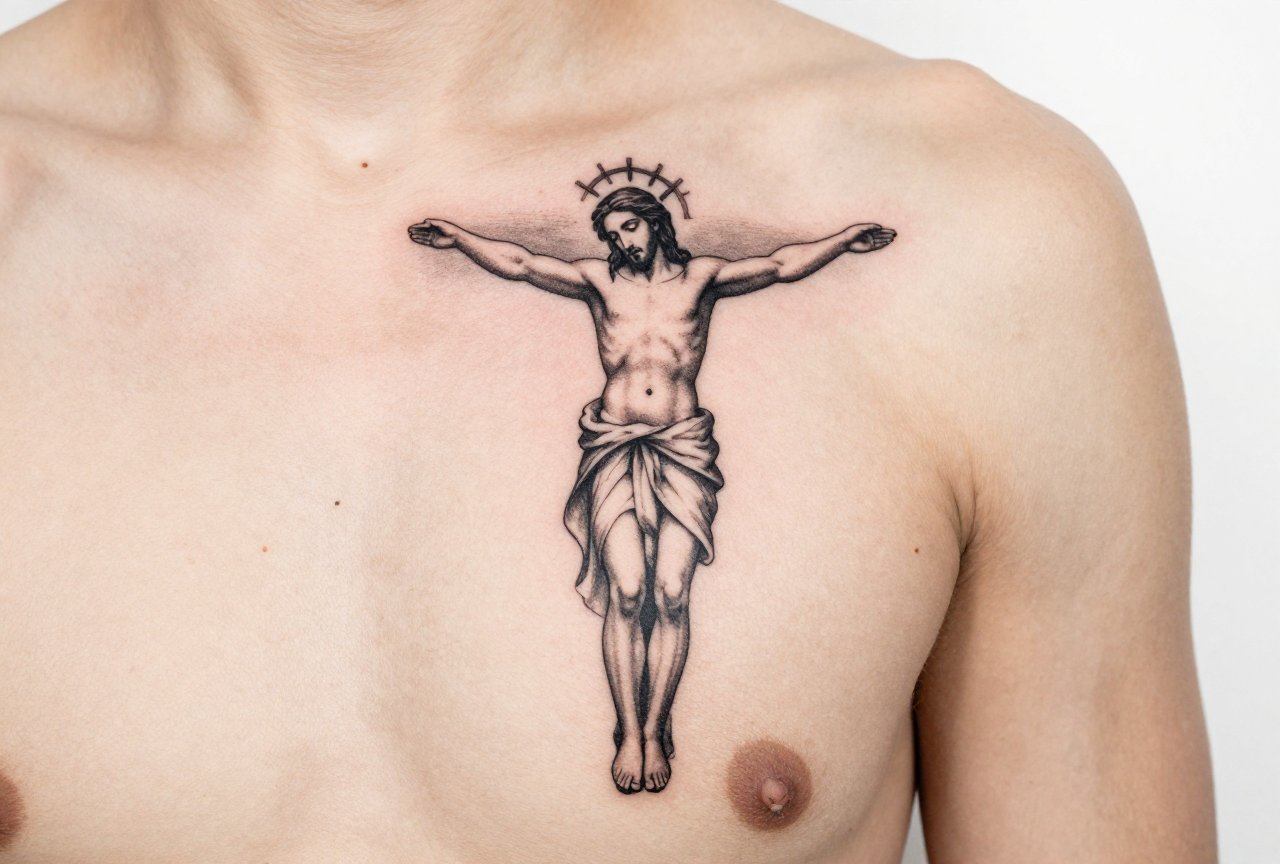
Christian tattoos carry weight that goes well beyond decorative ink. For the people who choose them, these designs mark real moments: a baptism, a recovery, a loss, a renewed sense of purpose. They are personal theology pressed into skin, and choosing one deserves the same care you would bring to any major decision of faith.
The Debate You Should Know About
Before you sit in the chair, it is worth understanding the theological conversation around tattoos in Christianity. Leviticus 19:28 is the verse most often cited: “Do not cut your bodies for the dead or put tattoo marks on yourselves.” Many contemporary scholars read this as a prohibition tied specifically to Canaanite mourning rituals of the ancient Near East, not a blanket ban on body art. Denominations vary widely. Some conservative traditions discourage tattoos on the grounds of bodily stewardship; many mainline and evangelical communities leave the decision to individual conscience. The New Testament offers no direct prohibition. Most Christians who choose tattoos frame the question not as “is this allowed?” but as “what am I saying with this, and does it honor my faith?”
That framing is worth keeping in mind throughout.
Core Symbols and What They Mean
Certain images recur across Christian tattooing because the faith itself keeps returning to them. Here are the ones you will encounter most often, along with what each actually signifies:
- The cross – The central symbol of Christianity exists in dozens of forms. The Latin cross is most common in Western tradition. The Celtic cross adds a circle at the intersection, a form that appears to have absorbed older pre-Christian solar imagery before becoming thoroughly identified with Irish and Scottish Christianity. The Orthodox cross adds a second crossbar above and a slanted footrest below, marking Eastern theological emphasis. Each variant signals something slightly different about heritage and tradition.
- The ichthys (fish) – The Greek word for fish forms an acronym: Iesous Christos Theou Yios Soter, meaning “Jesus Christ, Son of God, Savior.” Early Christians appear to have used this image as a discreet identifier during periods of Roman persecution. As a tattoo it reads as both a historical reference and a quiet profession of belief.
- Praying hands – Often rendered in the style of Albrecht Durer’s 1508 drawing study, these carry centuries of devotional art behind them. They suggest humility, petition, and surrender.
- The Sacred Heart – A flame-crowned heart, often pierced or encircled with thorns, drawn from Catholic and some Anglican devotional traditions. It emphasizes the love of Christ and the cost of that love.
- Crown of thorns – A focus on sacrifice and suffering. Worn alone or encircling a cross, it tends to attract people who want their tattoo to sit with the difficulty of faith rather than skip past it.
- The dove – Represents the Holy Spirit, drawn from the Gospel accounts of Jesus’s baptism. It also carries older associations with peace and new beginnings.
- Rosary – Primarily Catholic in origin, though the imagery appears across traditions. Often wraps around a wrist or forearm, each bead rendered carefully.
- Bible verses – Scripture in script lettering is one of the most requested categories. The practical caution here matters: double-check your chosen verse in a translation you trust, verify the reference number, and discuss font legibility with your artist at the actual planned size. Cursive scripts that look elegant at design stage can blur badly over ten or twenty years.
Style Options Worth Considering
The same symbol can read very differently depending on the style your artist works in. Here is an honest breakdown of the main approaches:
- Fine-line – Small crosses, single-needle ichthys marks, a simple verse in clean lettering. Sits quietly and works well on wrists, inner arms, and behind the ear. Tends toward the personal rather than the declarative.
- Blackwork – Bold, high-contrast work that ages better than fine-line on most skin tones. Celtic crosses and geometric cross designs translate especially well into this approach.
- Realism – Portraits of Jesus, Mary, or saints demand a specialist. Look at healed examples, not just fresh photos, before choosing your artist. Realism fades and shifts; you want someone whose pieces hold up at two years, not just two weeks after the session.
- Watercolor – Soft, painterly effects work with doves, light-and-sky compositions, or angel imagery. Be realistic about longevity; watercolor work benefits from being anchored by solid linework underneath.
- Traditional American – Bold outlines, limited palette, timeless legibility. A cross with a banner and clean script ages exceptionally well. There is a reason this approach has lasted a century.
I have seen realism portraits of the Madonna that stopped me mid-step, and I have seen fine-line crosses so delicate they looked like breath on skin. Neither is objectively better. What matters is that the style fits both the symbol and the person wearing it.
Placement and What It Signals
Where you put a Christian tattoo is as considered a choice as the design itself. Different placements carry different weight:
- Chest and sternum – Central, close to the heart. Often chosen for significant pieces: a full Sacred Heart, a large cross, a portrait. Deeply personal and usually private unless you choose otherwise.
- Forearm and wrist – Visible to you constantly, visible to others in short sleeves. Many people choose this placement because it prompts questions and conversations they actually want to have. It also means navigating professional environments where visible tattoos still carry stigma in some fields.
- Back and shoulder blade – Common for larger pieces. The upper back between the shoulder blades carries the symbolic weight of bearing a cross daily. The scale allows for detail work that smaller placements cannot accommodate.
- Ribs – A nod to the wound in Christ’s side, chosen for pieces with that specific theological resonance. Not a casual placement; the area is sensitive and suited to committed, considered work.
- Behind the ear or nape of neck – Intimate, nearly private. Often chosen for small symbols: a tiny cross, a single word, a simple dove. The subtlety is intentional.
Think through the professional and social context you live in. A visible wrist tattoo reads differently in a hospital setting than in a creative studio. Neither context makes the tattoo wrong, but the placement choice should be deliberate.
Finding the Right Artist
Not every skilled tattoo artist is equipped to handle religious imagery with the care it deserves. Some have no particular relationship with Christian symbolism and may produce technically good work that misses the meaning entirely. Others have strong personal connections to the imagery and bring genuine respect to it.
When you consult with a potential artist, ask to see healed examples of similar work. Ask how they approach religious subjects. Notice whether they seem genuinely curious about your intent or mainly focused on booking the appointment. An artist who asks what this piece means to you is worth your time. For complex work, especially realism portraits or detailed scripture, it is reasonable to travel to find a specialist rather than settling for the nearest available slot.
Before You Commit
A few practical points that often get overlooked in the planning stage:
- Script fonts that look beautiful at large sizes can become illegible at small sizes. Print your chosen verse at the actual tattoo dimensions before finalizing the design.
- Hebrew, Greek, and Latin scripture can be striking, but introduces error risks that English does not. Have a native speaker or scholar check the text, not just a translation app.
- Cross designs with very thin inner lines age poorly on most skin. Ask your artist about minimum line weights they are confident holding over time.
- If your faith community holds strong views about tattoos, sit with that reality before the appointment rather than after.
- Consider whether the verse or symbol will still resonate with you in twenty years. Faith evolves; choose something rooted enough to grow with you.
Closing Thoughts
Christian tattooing is a long and genuinely varied tradition. Coptic Christians in Egypt have marked religious identity on their wrists for centuries. Medieval pilgrims received tattoos at holy sites as records of completed journeys. Contemporary believers get a verse from Philippians on a forearm or a delicate cross behind the ear. The impulse is the same across all of them: making the invisible visible, the private public, the internal external.
If you are approaching this thoughtfully, you are already on the right path. Choose a symbol that means something real to you. Find an artist who respects it. Think about where it will live on your body and what that placement says. Then wear it with the same honesty you brought to choosing it.









