
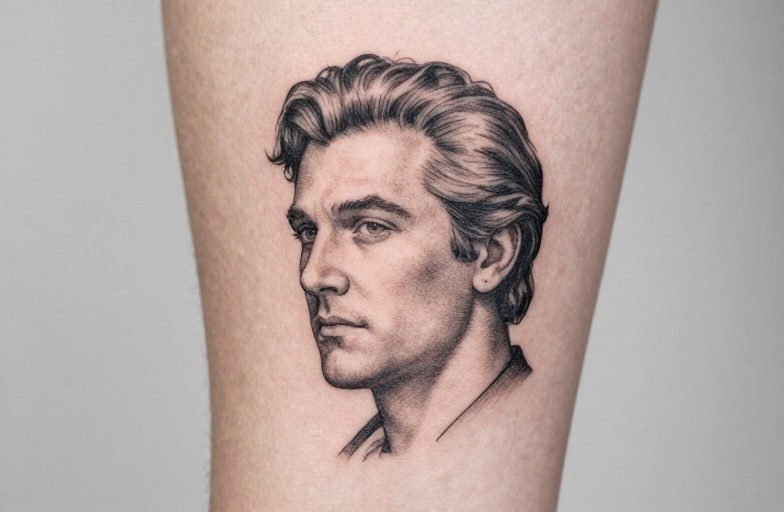
The Constantine tattoo draws from multiple sources: the historical Roman emperor Constantine the Great, the DC Comics/Vertigo character John Constantine, and the broader concept of constancy itself. Most people seeking this design want something tied to endurance, transformation, or protection, though the specific meaning depends heavily on which source material they reference and how the imagery is rendered.
Symbolism & History
Constantine the Great
Emperor Constantine, often linked to the Christianization of Rome, carries weight for those drawn to religious history. The Chi-Rho symbol, his famous battlefield emblem, appears frequently in tattoos connected to this figure. Some trace it to the legend of his vision before the Battle of Milvian Bridge, where he reportedly saw a cross of light. The Chi-Rho works well as a standalone piece, typically rendered in clean black line or with subtle gold accenting. It ages better than highly detailed portrait work, which tends to blur at smaller sizes.
John Constantine
The Hellblazer comics and subsequent film/television adaptations created a different visual language. This Constantine represents cunning, survival, and moral ambiguity, someone who operates in gray areas and lives with consequences. Tattoo imagery here often includes the trench coat silhouette, protective sigils, or the “Ace of Winchesters” playing card motif. These designs appeal to people who identify with the character’s resilience rather than his supernatural abilities.
The Word Itself
“Constantine” derives from Latin “constans”, steady, unwavering. Some choose the name purely for this etymological meaning, separate from any historical or pop-culture figure. This opens the door to abstract designs: anchors, unbroken lines, or geometric patterns suggesting continuity. The word itself, rendered in script, requires careful font selection; overly ornate lettering can become illegible as skin texture changes over time.
Common Variations & Styles
Line weight and shading approach dramatically affect how these tattoos read over decades.
- Chi-Rho with laurel: Combines the Christian symbol with Roman imperial imagery. Usually placed on upper arm or chest. Bold outlines hold; fine detail in laurel leaves may need touch-ups after 8-12 years.
- Portrait realism: Historical Constantine in profile or three-quarter view. Demands significant space, minimum 4-5 inches for facial features to remain distinct. Best on flat areas: outer thigh, upper back, outer upper arm.
- John Constantine sigil work: Fictional protective symbols from the comics. Often placed on forearms or ribs, locations visible to the wearer. These work best in solid black with minimal graywash; color tends to fade unevenly on these detailed patterns.
- Typography-focused: The name itself, sometimes with Latin phrases like “In Hoc Signo Vinces” (in this sign you shall conquer). Script tattoos need generous spacing between letters; cramped lettering blurs into indistinguishable shapes.
- Abstract/constancy themes: Geometric knots, unbroken circular designs, or paired symbols (anchor and rope, mountain and horizon). These age exceptionally well and suit smaller placements.
Color versus black-and-gray is a practical consideration. Chi-Rho designs with gold halo effects look striking initially but require more maintenance; yellow and orange pigments fade fastest in sun-exposed areas. Black and gray with white highlights offers longevity and sharper contrast on most skin tones.
Best Placements
Visibility and Scale
Chi-Rho symbols function at 2-3 inches, making them versatile for wrist, behind the ear, or ankle placement. The circular form reads clearly even at distance. Portrait work demands the opposite approach, large, flat surfaces where the artist can establish proper proportions without wrapping around muscle contours that distort the face.
Movement and Aging
Areas with frequent flexion, inner bicep, ribs, sternum, accelerate aging on detailed work. Simple symbols with bold lines survive better there. The upper back, outer thigh, and outer upper arm offer stability; skin stretches less predictably in these zones, preserving fine detail longer. For script work, the forearm provides natural reading orientation but exposes the tattoo to sun; SPF becomes essential maintenance.
Sigil and Symbolic Placement
Some who choose protective sigils from the Constantine comics want the tattoo positioned where they can see it, inner forearm, top of the foot, side of the hand. This practical choice affects design complexity; hand tattoos blur faster and often require multiple sessions to saturate properly.
Who Chooses This Tattoo / Personal Meanings
The overlap between religious history and dark fantasy creates an unusual demographic spread. People drawn to the historical Constantine often have specific moments of transformation they want marked, conversion experiences, recovery milestones, or military service connected to faith. The Chi-Rho specifically carries military resonance; it’s not uncommon among service members with Christian background.
The John Constantine audience skews differently: people who’ve survived difficult circumstances, who value survival skills over moral purity, who appreciate the character’s damaged competence. These tattoos sometimes mark periods of personal darkness navigated rather than avoided. The sigil designs particularly attract those who want symbolism that reads as decorative to outsiders but carries private significance.
The constancy/etymology group tends toward minimalism. They often have existing tattoos and want something that integrates cleanly without competing for attention. These designs suit collectors building cohesive sleeves or patchwork arrangements.
Similar Symbols
People considering Constantine imagery sometimes cross-reference related designs:
- Chi-Rho versus plain cross: The Chi-Rho offers specificity and historical weight; a standard cross is more immediately legible but less distinctive. The Chi-Rho also avoids some of the cultural baggage the cross carries in certain contexts.
- Constantine versus Marcus Aurelius: Both Roman emperors, both philosophical figures, but Marcus Aurelius tattoos lean Stoic, meditation, acceptance, emotional regulation. Constantine suggests decisive action and transformation.
- John Constantine versus other occult media tattoos: Supernatural’s anti-possession symbol, various pentacle variations. The Constantine sigils are more obscure, less likely to be recognized, which appeals to some wearers and disappoints others seeking connection.
- Anchor tattoos: For the constancy meaning alone, traditional anchor imagery is more universally understood but lacks the layered reference points.
Final Thoughts
A Constantine tattoo succeeds when the wearer knows which layer they’re accessing, historical, fictional, or linguistic, and chooses imagery that communicates that clearly. The most successful designs I’ve seen commit to one thread rather than trying to weave all three together, which usually produces visual confusion. Bold line work and appropriate scale for the chosen placement matter more than intricate detail that won’t survive five years of skin’s natural changes. Whether the reference is an emperor’s vision, a con man’s protective marks, or the Latin root of endurance, the tattoo works best when the visual language matches the personal meaning with no explanation required.
Frequently Asked Questions
Does a Constantine tattoo have to be religious?
No. While the historical emperor carries Christian associations, many designs reference the John Constantine character or the Latin concept of constancy. The meaning depends entirely on which source you choose and how you frame it.
How well does a Chi-Rho tattoo age compared to a portrait of Constantine?
The Chi-Rho ages significantly better. Its simple geometric form holds clarity even as lines soften slightly. Portrait work requires larger size and more maintenance, with facial details often blurring within a decade on smaller pieces.
What’s the difference between Constantine and Hellblazer tattoo imagery?
Constantine the emperor typically yields Roman military or Christian symbols, Chi-Rho, laurels, classical profiles. Hellblazer/John Constantine imagery draws from comics and film: trench coats, fictional sigils, playing cards, darker occult aesthetics.
Can the name ‘Constantine’ work as a tattoo without additional imagery?
Yes, but font choice becomes critical. Overly decorative scripts blur and become unreadable. Clean serif or well-spaced sans-serif lettering, sized large enough for letterforms to remain distinct, works best for longevity.
Related Tattoo Meanings
- Bible Say About Getting Tattoo Meaning: Faith, Ink, and Scripture
- Chi Rho Tattoo Meaning: Faith, History, and Personal Devotion
- Christian Tattoos With Meaning: Faith, Symbolism Style
- Explore more









