
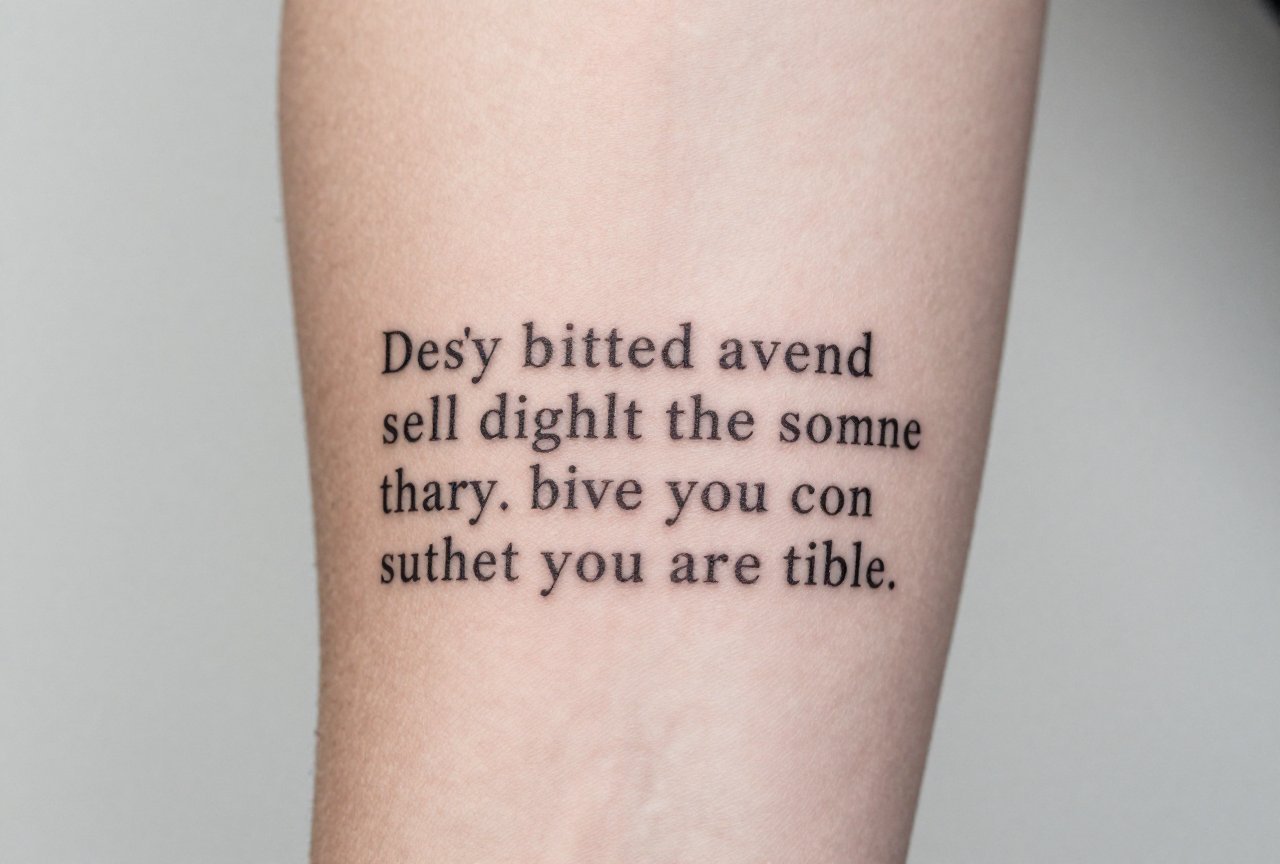
People walk into my shop asking for Bible verse tattoos, cross designs, or the exact words “Leviticus 19:28”, the verse that supposedly bans tattoos. Here’s the straight answer: the Bible mentions marking the body in a few contexts, mostly tied to mourning rituals or pagan practices in ancient Israel. Modern Christian tattooing? That’s a whole different conversation about personal conviction, not clear-cut sin.
Symbolism & History
I’ve tattooed Hebrew script, Greek New Testament passages, and full sleeves of the Stations of the Cross. The symbolism runs deep because the text itself carries weight. For believers, a Bible-related tattoo usually marks transformation, remembrance, or public declaration of faith.
Historically, early Christians didn’t tattoo much. Constantine actually banned facial tattoos for soldiers. But Coptic Christians in Egypt? They’ve been getting small cross tattoos on wrists for centuries, my friend Amal, who does pilgrimage pieces, says she still sees grandmothers in Cairo with faded wrist crosses from childhood. That tradition bleeds into modern American shop culture when Egyptian Christians request matching pieces.
Leviticus 19:28 in Context
The big one. “Do not cut your bodies for the dead or put tattoo marks on yourselves.” In my chair, I tell clients: this sits in a chapter about separating Israel from Canaanite mourning practices. The surrounding verses ban mixing fabrics and trimming beards the same way. Most theologians read it as cultural boundary-setting, not eternal moral law. I’ve had pastors get tattoos after studying the original Hebrew, qa’aqa probably refers to specific ritual marks, not your aunt’s butterfly.
New Testament Perspectives
Paul never mentions tattoos. He talks about the body as a temple, which clients bring up constantly. “So is this graffiti or renovation?” I ask them. The temple imagery actually supports careful, meaningful adornment for some believers. Others hear “don’t mark up God’s property” and stop right there. Both readings exist in my appointment book.
- Remembrance tattoos: “I am my beloved’s” from Song of Solomon, names of lost children
- Conviction pieces: conversion dates, baptism locations
- Reclamation ink: survivors of religious abuse getting scripture that means something new
- Missionary marks: coordinates of service locations, languages learned
Common Variations & Styles
Script tattoos dominate this category. I’ve done Galatians 2:20 in fine-line single needle that’ll need touch-ups in five years, and I’ve blasted John 3:16 in bold traditional lettering that’ll read clear when the client is eighty. The style choice says as much as the verse.
Text-Forward Designs
Old English on forearms. Typewriter font on ribs, “hurts like hell, worth it for the aesthetic,” a youth pastor told me mid-session. Watercolor splashes behind scripture. The text itself becomes image when you choose illuminated manuscript styling, gold leaf accents, or lettering that mimics ancient codices. I did a full back piece of Revelation 21 in Uncial script that took fourteen sessions. Client meditated through every one.
Integrated Religious Imagery
Crosses wrapped in thorns with Philippians 4:13 bannered underneath. The anchor with Hebrews 6:19, “hope as an anchor for the soul.” Fish symbols. Lambs. These combinations let the image carry meaning when words feel too explicit. A nurse I tattooed wanted a small mustard seed behind her ear with no text, Matthew 17:20 for those who know, private conversation for those who don’t.
- Blackletter/Bible-style fonts: heavy, traditional, age poorly if too small
- Minimalist line scripture: delicate, trendy, requires skilled artist for readability
- Stained glass color fields: bold, expensive, stunning when healed
- Negative space designs: verse carved out of blackwork, dramatic but risky for aging
Best Placements
Visibility matters with religious ink. Some want it seen, wrists, forearms, necks for the committed. Others need concealment for workplace or family situations. I’ve done full sleeves that cover up with long sleeves, and I’ve tattooed ribs that only partners see.
Text placement demands thinking about line breaks and reading direction. A forearm verse reads to others when you extend your hand. A rib piece reads to you in the mirror. Chest scripture faces outward, over the heart. I always make clients hold a stencil in position for ten minutes. “You’ll live with this angle longer than the pain,” I say.
Hands and feet? Bible verse tattoos there blur faster. The skin regenerates constantly. I’ve watched “Romans 5:8” on a palm become gray mush in two years. Same with fingers. If the verse matters that much, give it real estate that lasts.
Who Chooses This Tattoo / Personal Meanings
In my shop, this crosses every demographic. Teenagers getting first tattoos with parental consent, usually something their youth group discussed. Middle-aged converts marking a late-in-life faith shift. Skeptics getting Leviticus 19:28 ironically, which I find hilarious and will absolutely do if they understand the reference.
Believers Wrestling With Ink
These appointments run long. Not because of the tattoo, because of the talk. “Is this idolatry? Is this vanity?” A guy getting his first tattoo at forty-one, seminary-trained, sweating through a sleeve about the prodigal son. He needed the story on his skin because he’d lived it. The tattoo wasn’t decoration; it was testimony. We see this a lot: faith made tangible because abstract belief wasn’t enough anymore.
Exvangelicals and Reclaimed Symbols
Growing category. People who grew up in restrictive churches, got out, now want to mark the journey. I’ve tattooed crossed-out verses with new text beside them. A woman had her childhood church’s memory verse, Jeremiah 29:11, redesigned with cracks, gold kintsugi-style repair, and new words: “I survived the plans they had for me.” Heavy session. Beautiful result.
- Rebellion against legalistic upbringing: getting the tattoo they were forbidden
- Reconciliation pieces: returning to faith, marking new understanding
- Memorial tattoos: dates of deaths with “absent from the body, present with the Lord”
- Community markers: matching tattoos with church small groups, mission teams
Similar Symbols
Clients considering Bible verse tattoos often explore adjacent territory. Ichthys fish symbols carry ancient Christian identity without words. Chi-Rho monograms, the first two Greek letters of Christ, offer subtlety. The anchor, as mentioned, predates Christianity but got adopted early.
Jewish clients sometimes request Hebrew names of God, though traditional Judaism generally prohibits tattoos. Muslim clients occasionally explore calligraphy of the ninety-nine names of Allah, though this carries complex religious considerations I always discuss beforehand. I’ve referred people to artists who specialize in Arabic script because I won’t risk misspelling the divine.
Secular alternatives with spiritual overlap: quotes from Rumi, tattooed in Persian, appeal to seekers who want sacred feeling without doctrinal commitment. “Same energy, different source,” as one client put it.
Final Thoughts
The Bible says remarkably little about tattoos directly, and what it says is context-bound. The meaning of a Bible-related tattoo lives in the wearer’s intention, their community’s interpretation, and the ongoing conversation between flesh and faith. I’ve watched people weep getting scripture removed by laser, and I’ve watched people weep getting it applied. Same words, different stories.
If you’re considering this, study the passage in context. Talk to people whose spiritual judgment you trust. Then find an artist who respects the weight of what you’re asking for, not just technically, but because they’ve sat with enough clients to know this isn’t like picking a random flash design. The verse you choose will preach. Make sure it’s saying what you mean.
Frequently Asked Questions
Does getting a tattoo violate Leviticus 19:28 for Christians?
Most Christian theologians interpret Leviticus 19:28 as a cultural command for ancient Israel, not a binding moral law for today. The surrounding context includes rules about beard trimming and fabric mixing that Christians don’t follow. Personal conviction varies by denomination and individual.
What’s the most requested Bible verse for tattoos?
Philippians 4:13 and Jeremiah 29:11 dominate requests, though Psalm 23 and Romans 8:28 run close behind. Recently I’ve seen more John 3:16 and Revelation 21:4 requests, especially for memorial pieces.
How do I make sure a Hebrew or Greek tattoo is accurate?
Always verify with multiple sources and native speakers if possible. I’ve seen botched Hebrew that reversed letters, and Greek that used modern font instead of biblical script. Pay for a consultation with a specialist before committing to permanent ancient language.
Will a church or religious employer reject me for having a Bible verse tattoo?
It depends entirely on the community. Some conservative churches still view all tattoos negatively regardless of content. Others see religious ink as witness or devotion. Research your specific denomination’s stance and ask directly if employment is at stake.
Related Tattoo Meanings
- Fig Tattoo Meaning: Symbolism, History Shop Talk
- Triple Cross Tattoo Meaning: Faith, Family Heritage
- Morning Glory Tattoo Meaning: Love, Loss New Beginnings
- Explore more









